
印刷电路

Search documents
2025年11月中国印刷电路进出口数量分别为26亿块和52亿块
Chan Ye Xin Xi Wang· 2026-01-09 03:14
Core Insights - The report by Zhiyan Consulting highlights the operational landscape and competitive strategies of the PCB industry in China from 2026 to 2032 [1] Import and Export Data - In November 2025, China imported 2.6 billion printed circuit boards (PCBs), representing a year-on-year decrease of 9.1%, with an import value of $629 million, down 5.1% year-on-year [1] - In the same month, China exported 5.2 billion PCBs, showing a year-on-year increase of 40.3%, with an export value of $2.282 billion, up 29.5% year-on-year [1] Industry Analysis - Zhiyan Consulting is recognized as a leading industry consulting firm in China, specializing in in-depth industry research reports, business plans, feasibility studies, and customized services [1] - The firm emphasizes its commitment to providing comprehensive industry solutions to empower investment decisions through professional insights and market acumen [1]


前11月江西对东盟进出口同比增长36.6%,锂电池出口大增
Zhong Guo Xin Wen Wang· 2025-12-23 00:44
Group 1 - The core viewpoint is that Jiangxi's trade with ASEAN has significantly increased, with a year-on-year growth of 36.6% in the first 11 months of the year [1] - Jiangxi's total foreign trade import and export value reached 440.61 billion yuan, reflecting a growth of 2.8% [2] - The province's trade with countries involved in the Belt and Road Initiative amounted to 241.53 billion yuan, showing a growth of 13.9% [1] Group 2 - The production-oriented enterprises have played a more significant role in Jiangxi's foreign trade, with a total import and export value of 356.93 billion yuan, an increase of 4.4% [1] - Private enterprises and foreign-funded enterprises saw import and export growth of 2.7% and 8%, respectively [1] - The electronic information industry, a key pillar industry in Jiangxi, recorded an import and export value of 152.91 billion yuan, growing by 4.7% [1] Group 3 - The automotive industry in Jiangxi has experienced accelerated growth, with an import and export value of 24.63 billion yuan, increasing by 24% [1] - Exports of automobiles and auto parts grew by 23.2% and 61.9%, respectively [1] - Major export products in the electronic information sector, such as flat panel display modules, printed circuits, and lithium batteries, saw growth rates of 26.2%, 33.6%, and 54% [1]
前11月江西对东盟进出口同比增长36.6% 锂电池出口大增
Zhong Guo Xin Wen Wang· 2025-12-22 12:42
Group 1 - The core viewpoint of the article highlights that Jiangxi's import and export to ASEAN increased by 36.6% in the first 11 months of the year [1] - Jiangxi's total foreign trade value reached 440.61 billion yuan, reflecting a growth of 2.8% [2] - The main trade partners for Jiangxi are ASEAN, Hong Kong, and the EU, with respective growth rates of 36.6%, 1.8%, and 4.3% [1] Group 2 - The import and export value to countries involved in the Belt and Road Initiative was 241.53 billion yuan, marking a growth of 13.9% [1] - The electronic information industry, a key pillar for Jiangxi, saw an import and export value of 152.91 billion yuan, growing by 4.7% [1] - Exports of lithium batteries surged by 54%, while other major products like flat panel display modules and printed circuits also showed significant growth [1] Group 3 - The automotive industry in Jiangxi experienced accelerated growth, with import and export values reaching 24.63 billion yuan, an increase of 24% [1] - Exports of automobiles and auto parts grew by 23.2% and 61.9%, respectively [1] - The cumulative import and export value of production-oriented enterprises in Jiangxi was 356.93 billion yuan, reflecting a growth of 4.4% [1]
2025年10月中国印刷电路进出口数量分别为27亿块和45亿块
Chan Ye Xin Xi Wang· 2025-12-13 02:48
Core Viewpoint - The report by Zhiyan Consulting highlights the operational landscape and competitive strategies of the printed circuit board (PCB) industry in China from 2026 to 2032, emphasizing significant trends in imports and exports as of October 2025 [1] Import and Export Analysis - In October 2025, China imported 2.7 billion PCBs, marking a year-on-year decrease of 10%, with an import value of $68.2 million, down 2.8% compared to the previous year [1] - Conversely, PCB exports reached 4.5 billion units in October 2025, reflecting a year-on-year increase of 37.4%, with an export value of $211.8 million, up 23.4% year-on-year [1] Industry Insights - Zhiyan Consulting is recognized as a leading industry consulting firm in China, specializing in in-depth industry research, business plans, feasibility studies, and customized services, providing comprehensive solutions to empower investment decisions [1]

宋雪涛:2026中国经济展望,走出价格低谷
Xin Lang Cai Jing· 2025-12-11 15:03
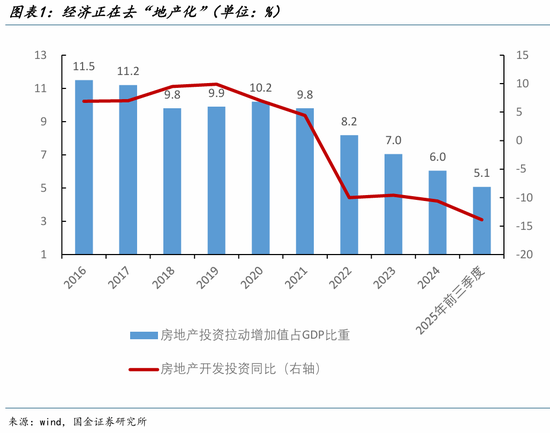
Economic Transformation - The economic transformation during the 14th Five-Year Plan is characterized by a shift from real estate as the main economic driver to the "three new economies" (new industries, new business formats, and new models) becoming the new engine of growth [2][3][4] - The GDP growth rate in Guangdong has been around 4%, significantly lower than the 5.5% growth rates in Jiangsu, Shandong, Zhejiang, and Sichuan, indicating regional disparities in economic transformation [2][3] - The contribution of real estate development to GDP is projected to decline from 10.2% in 2020 to approximately 5.1% by 2025, reflecting a diminishing impact of the real estate sector on the economy [2][3][4] Credit Market and De-leveraging - The credit market is showing a clear trend of de-leveraging from real estate, with new real estate loans decreasing by 330 billion yuan from 2023 to the first three quarters of 2025 [3][4] - The shift towards low-leverage industries indicates a transition in economic drivers, with the financial sector moving away from high-leverage real estate industries [3][4] New Economic Sectors - The "three new economies" are expected to increase their share of China's GDP from 16% in 2020 to 18% by 2024, with high-tech manufacturing growth rates significantly outpacing overall industrial growth [4][6] - Investment in information transmission, software, and IT services is growing at a rate much higher than the overall fixed asset investment growth [4][6] Export Dynamics - The export share of China is expected to continue rising, with the automotive sector, particularly in new energy vehicles, playing a crucial role in this growth [9][10] - Despite trade tensions, China's export share remains stable at 14.2%, with a combined share with Hong Kong rising to 17% [9][10] - China is projected to become the world's largest automobile exporter, surpassing Germany and Japan, with exports expected to reach 586 million vehicles by 2024 [9][10] Regional Price Disparities - Different regions are experiencing varying pressures on price levels, with provinces reliant on traditional industries facing greater deflationary pressures compared to more dynamic regions like Beijing and Shanghai [10][11] - The GDP deflator index in regions like Shanxi and Inner Mongolia is significantly lower than the national average, indicating economic challenges in these areas [10][11] Future Economic Outlook - The economic growth trajectory for 2026 is expected to follow a "V" shape, with initial low growth followed by a recovery, driven by resilient export growth and adjustments in the real estate sector [13][14] - The GDP growth target for 2026 is set at around 5%, aligning with the long-term goal of doubling per capita GDP by 2035 [13][14]
2026中国经济展望:走出价格低谷(国金宏观孙永乐)
雪涛宏观笔记· 2025-12-11 14:29
Core Viewpoint - The article discusses the transformation of the Chinese economy during the 14th Five-Year Plan, highlighting the shift from real estate as the main economic driver to the emergence of the "three new economies" (new industries, new business formats, and new business models) as the new engine of growth [4][7]. Group 1: Economic Transformation - The real estate sector has gradually exited the central stage of the economy, with GDP growth rates in regions heavily tied to real estate, such as Guangdong, lagging behind others like Jiangsu and Zhejiang [4]. - By 2025, the contribution of real estate development investment to GDP is expected to drop significantly from 10.2% in 2020 to around 5.1% [4][30]. - The "three new economies" are projected to increase their share of China's GDP from 16% in 2020 to 18% by 2024, indicating a growing importance of high-tech manufacturing and information technology investments [7]. Group 2: Credit Market and De-leveraging - The credit market is showing a clear trend of de-leveraging from real estate, with new real estate loans decreasing by 330 billion yuan from 2023 to the first three quarters of 2025 [5]. - The shift reflects a broader economic transition where low-leverage sectors are becoming the main drivers of growth, as households work to reduce debt [5]. Group 3: Export Dynamics - Despite trade tensions, China's export share remained stable at 14.2% in the first half of 2025, with significant growth in exports to Africa and the Middle East [13][21][24]. - The automotive sector, particularly in new energy vehicles, has become a key player in boosting China's export performance, with exports projected to reach 586 million units by 2024, surpassing Germany and Japan [13]. Group 4: Real Estate Market Trends - The real estate market is experiencing a second downturn, with housing prices expected to revert to levels seen in 2016, and total sales area projected to decline by nearly 50% from 2020 highs [30][31]. - The overall demand for real estate is stabilizing, with indicators like the price-to-income ratio and rental yields approaching mid-term stability [30]. Group 5: Consumer Behavior and Spending - The impact of real estate on consumer spending is diminishing, as evidenced by rising retail sales growth in first-tier cities despite falling housing prices [36]. - Service consumption is expected to grow, supported by policy measures, while traditional goods consumption faces challenges due to the decline in "old-for-new" subsidies [43][44]. Group 6: Price Trends and Inflation - The article anticipates a gradual recovery in prices driven by economic recovery, with CPI expected to rise to around 0.2% in 2026, influenced by various factors including the stabilization of housing prices [45][55]. - The PPI is projected to show a "front low, back high" trend, with overall PPI expected to be around -1.3% for the year [55].

江门前10个月经济运行总体平稳,外贸进出口值增长3.8%
Nan Fang Du Shi Bao· 2025-11-28 08:15
Economic Overview - From January to October 2023, the overall economic operation in Jiangmen remained stable, with the industrial added value above designated size increasing by 2.4% year-on-year [1][2] - The local general public budget revenue reached 25.437 billion yuan, reflecting a year-on-year growth of 2.1% [4] - The total value of foreign trade imports and exports was 163.11 billion yuan, marking a year-on-year increase of 3.8%, outpacing the national and provincial average growth rates [1][5] Industrial Performance - The manufacturing sector saw an added value growth of 3.6%, while the electricity, heat, gas, and water production and supply industry experienced a decline of 4.7%, and the mining industry decreased by 29.7% [2] - By economic type, the added value of joint-stock enterprises grew by 4.0%, while foreign and Hong Kong, Macao, and Taiwan investment enterprises saw a minimal increase of 0.1% [2] - In terms of enterprise size, large enterprises reported a 2.6% increase in added value, medium-sized enterprises experienced a slight decline of 0.1%, and small and micro enterprises grew by 4.0% [2] Foreign Trade Dynamics - Exports totaled 139.91 billion yuan, with a growth rate of 5.8%, ranking fifth in the province, while imports were 23.2 billion yuan, showing a decline of 7.1% [5] - Private enterprises' imports and exports reached 95.07 billion yuan, increasing by 10.4% and accounting for 58.3% of the total [6] - Trade with traditional markets remained resilient, with exports to the EU, ASEAN, and Hong Kong growing by 8%, 4.4%, and 11.4% respectively, while emerging markets like Latin America and Africa saw significant growth [6] Consumer and Investment Trends - The total retail sales of consumer goods amounted to 110.005 billion yuan, reflecting a year-on-year increase of 2.6% [4] - Fixed asset investment in the city saw a significant decline of 29.5% [4] - The Consumer Price Index (CPI) decreased by 0.4% year-on-year, with a slight increase of 0.1% in October compared to the previous month [4] Key Export Products - The top five export products included household appliances (17.96 billion yuan, down 4.9%), motorcycles (15.73 billion yuan, up 51.2%), general machinery (8.27 billion yuan, up 7%), textiles and clothing (7.47 billion yuan, down 12.3%), and printed circuits (7.25 billion yuan, up 7.1%), collectively accounting for 40.5% of total exports [8] - Notable growth was observed in the import of integrated circuits (2.5 billion yuan, up 21.5%) and metal ores (440 million yuan, up 26.5%) [8]
新兴领域增长矩阵渐成 激发外贸新动能
Zheng Quan Ri Bao· 2025-11-18 16:09
Core Insights - The export performance of China's "new three items" (electric passenger vehicles, lithium-ion batteries, and solar cells) shows strong structural growth in the first ten months of the year, particularly in electric vehicles and lithium batteries, indicating China's increasing global competitiveness in the renewable energy sector amid rising international demand [1][2] Group 1: Export Data - From January to October, the export amounts for electric passenger vehicles, lithium-ion batteries, and solar cells reached 390.12552 billion, 446.74110 billion, and 168.21841 billion yuan respectively, with year-on-year growth rates of 35.6%, 27.5%, and a decline of 11.9% for solar cells [1] - In October alone, the export volumes for these items were 374,995 units, 40,498 million units, and 128,274 million units, showing year-on-year growth rates of 69.3%, 17.2%, and 73.1% respectively [1] Group 2: Market Dynamics - The decline in solar cell export value is attributed to intensified competition in the global photovoltaic market and fluctuations in raw material prices, leading to a decrease in unit prices; however, the export quantity remains robust, indicating strong global demand for China's solar products [2] - Emerging sectors beyond the traditional "new three items" are contributing to foreign trade growth, including high-end equipment and robotics, as well as new business models like cross-border e-commerce and service trade [2] Group 3: Industry Trends - The export of products such as printed circuits and integrated circuits benefits from China's complete electronic information industry chain, ensuring production capacity; the global digital transformation is driving demand for electronic components and agricultural machinery, aligning with the modernization needs of developing countries [3] - High-end manufacturing is gaining scale advantages due to China's comprehensive industrial system and resilient supply chains, coupled with the deep integration of digital technology and manufacturing, facilitating rapid iteration and export of high-tech, high-value-added products [3][4] Group 4: Future Outlook - The diversification of foreign trade growth is no longer reliant on a single category, forming a growth matrix across multiple fields such as electronic information and high-end equipment, effectively mitigating risks from industry fluctuations [4] - The export of technology-intensive products signifies a shift in China's foreign trade from "scale expansion" to "technology empowerment," enhancing the sustainability of trade growth through the synergy of upstream and downstream products [4] - Recommendations for future actions include precise policy support, increased investment in technological innovation, and fostering international cooperation to enhance global market share and sustain new trade momentum [4]
前十月广西外贸进出口增长12.1%
Ren Min Ri Bao Hai Wai Ban· 2025-11-15 13:48
Core Insights - Guangxi's foreign trade in the first ten months of this year reached 650.35 billion yuan, a year-on-year increase of 12.1% [1] - Exports amounted to 381.28 billion yuan, growing by 18.3%, while imports were 269.07 billion yuan, increasing by 4.4% [1] - Trade with ASEAN countries showed robust growth, with imports and exports totaling 344.74 billion yuan, a 12.1% increase, accounting for 53% of Guangxi's total foreign trade [1] Trade with ASEAN - Guangxi's trade with the top three ASEAN partners—Vietnam, Thailand, and Indonesia—grew by 8.4%, 7%, and 53.6% respectively [1] - Trade with Timor-Leste reached 3.405 million yuan, marking a 19.6% increase [1] - The signing of the upgraded version of the China-ASEAN Free Trade Area 3.0 during the 47th ASEAN Summit is expected to create new opportunities for cooperation in new energy and electronic information industries, intermediate goods trade, and cross-border e-commerce [1] Industrial Performance - Guangxi's industrial economy has shown steady growth, with the added value of industrial enterprises above designated size maintaining a strong growth momentum [2] - Lithium battery exports surged to 20.54 billion yuan, a remarkable increase of 76.6% [2] - The cross-border electronic information industry has driven rapid growth in related product exports, with flat panel display modules, computer accessories, printed circuits, and integrated circuits increasing by 86%, 41.8%, 225.8%, and 8.1% respectively [2] Import Trends - The import value of major commodities rose significantly, with metal ore imports reaching 103.14 billion yuan, a growth of 16.1% [2] - Copper ore imports experienced rapid growth of 27.6%, benefiting from the "bonded mixed mining" policy [2]
广西外贸进出口增长12.1%
Ren Min Ri Bao· 2025-11-14 20:04
Core Insights - Guangxi's foreign trade in the first ten months of the year reached 650.35 billion yuan, marking a year-on-year growth of 12.1% [1] - Exports totaled 381.28 billion yuan, increasing by 18.3%, while imports were 269.07 billion yuan, up by 4.4% [1] - Trade with ASEAN countries showed robust growth, with imports and exports amounting to 344.74 billion yuan, a 12.1% increase, accounting for 53% of Guangxi's total foreign trade [1] Trade with ASEAN - Guangxi's trade with the top three ASEAN partners—Vietnam, Thailand, and Indonesia—grew by 8.4%, 7%, and 53.6% respectively [1] - Trade with Timor-Leste reached 3.405 million yuan, reflecting a growth of 19.6% [1] - The signing of the upgraded version of the China-ASEAN Free Trade Area 3.0 agreement during the 47th ASEAN Summit is expected to create new opportunities for cooperation in new energy and electronic information industries, intermediate goods trade, and cross-border e-commerce [1] Industrial Performance - Guangxi's industrial economy has shown steady growth, with the added value of industrial enterprises above designated size maintaining a strong growth momentum [2] - Lithium battery exports surged to 20.54 billion yuan, a remarkable increase of 76.6% [2] - The cross-border electronic information industry has driven significant growth in related product exports, with flat panel display modules, computer accessories, printed circuits, and integrated circuits growing by 86%, 41.8%, 225.8%, and 8.1% respectively [2] Import Dynamics - The import value of major commodities rose, with metal ore imports reaching 103.14 billion yuan, an increase of 16.1% [2] - Copper ore imports experienced rapid growth of 27.6%, attributed to the benefits of the "bonded mixed mining" policy [2]