
印刷OLED车载屏

Search documents
CES还是消费电子展吗?中企给出正确答案
Guan Cha Zhe Wang· 2026-01-17 01:40
Core Insights - The CES 2026 has shifted from a consumer electronics showcase to a platform dominated by discussions on data centers and AI, primarily led by American tech giants like Nvidia and AMD, while Chinese companies focus on consumer-oriented products [1][2][13] - Nvidia's data center revenue reached $51.25 billion in Q3 2025, a 66% year-over-year increase, highlighting a structural imbalance in focus away from consumer needs [1][15] - Chinese companies like TCL and Hisense showcased tangible consumer products, emphasizing practical applications and user-friendly technology, contrasting with the abstract discussions of their American counterparts [3][4][6][15] Group 1: Industry Trends - The trend of "edge computing" is emphasized by Chinese firms, focusing on local processing power rather than cloud dependency, reflecting a deep understanding of consumer needs [13][14] - The evolution of product forms is evident, with innovations like the Honor ROBOT PHONE and the Stone G-Rover, which address real-life consumer challenges [13][14] - Chinese companies are showcasing products that are ready for mass production and purchase, unlike many Western firms that present conceptual prototypes [14][15] Group 2: Consumer Focus - Chinese enterprises are prioritizing consumer needs, as seen in TCL's and Hisense's product offerings that are accessible and understandable to the average user [3][4][6] - The consumer response to AI PCs has been lukewarm, with many users expressing confusion rather than excitement, indicating a disconnect between tech advancements and consumer expectations [2][12] - The success of products like the Stone G-Rover and the Lenovo Qira demonstrates a shift towards practical, user-friendly technology that resonates with everyday consumers [8][12][15] Group 3: Competitive Landscape - The disparity in focus between American and Chinese companies is evident, with the former leaning towards high-performance computing and the latter addressing everyday consumer problems [1][15] - The CES 2026 highlighted a potential future where American tech firms continue to dominate technical discussions while Chinese companies redefine consumer electronics with practical products [16][17] - The ongoing competition suggests that understanding consumer needs will be crucial for success in the evolving tech landscape, with Chinese firms currently leading in this regard [16][17]





CES被广东承包?超530家企业展示中国力量
Zhong Guo Jing Ying Bao· 2026-01-15 16:01
Core Insights - The CES 2023 showcased a significant presence of Chinese brands, particularly from Guangdong, highlighting a narrative of Chinese manufacturing and innovation [1][2] - Guangdong enterprises demonstrated a multi-faceted approach, focusing on both foundational technology and consumer products, indicating a shift from single-point technology displays to comprehensive industrial solutions [1][2][3] Group 1: Guangdong Enterprises at CES - Over 3302 companies participated in CES, with 837 from mainland China, 127 from Taiwan, and 98 from Hong Kong; Guangdong alone had over 530 exhibitors, with Shenzhen contributing 370, representing 44.2% of mainland China's participation [2] - Companies like SUTENG, PAXIN, Yingshi Innovation, and TCL showcased not just hardware but integrated solutions embedded in the global industrial system, marking a transition from "technically feasible" to "commercially replicable" [2][3] Group 2: Technological Advancements - Guangdong's embodied intelligent robots demonstrated operational capabilities beyond mere concept validation, with SUTENG's robot performing nearly 20 complex tasks autonomously, indicating a maturity in system capabilities [3] - The TORA-ONE humanoid robot by PAXIN showcased practical applications in new retail, reflecting a shift in focus from feasibility to value in usage [3] Group 3: Innovations in Hardware and Infrastructure - Yingshi Innovation's "Yingling A1" drone received international recognition for integrating 360-degree imaging with AI, showcasing the technological barriers being established in niche markets [4] - Daotong Technology's smart charging robot is designed to integrate into fleet operations, enhancing the efficiency and stability of autonomous vehicle charging, which is crucial for the commercial viability of autonomous fleets [4] Group 4: TCL's Strategic Positioning - TCL's participation emphasized a long-term narrative of foundational capabilities and application expansion, with a focus on technologies like printed OLED, which has been in development for 12 years and offers significant advantages in efficiency and color consistency [5] - The presence of Guangdong enterprises at CES illustrates a clear path from core technology to industrial application, reinforcing their role in global technology and industry competition [5] Group 5: Structural Changes in the Industry - The high density of Guangdong enterprises at CES reflects a structural shift in the global consumer electronics industry, moving from a supply chain role to becoming co-builders of technology and standards [2][6] - Shenzhen's transformation from a low-cost manufacturing hub to a center of innovation is evidenced by its high R&D investment, which consistently accounts for over 93% of the city's total R&D funding, and its leading position in PCT international patent applications [7] Group 6: Ecosystem Development - The emergence of a cluster of small and medium-sized "hidden champion" companies in Guangdong, driven by leaders like Huawei and BYD, is pushing the technology industry towards ecological competition [8] - The CES event highlighted the culmination of long-term efforts by Guangdong enterprises to establish a significant presence on the global stage, showcasing their advancements in various cutting-edge sectors [8]
TCL亮相国际消费类电子产品展览会
Sou Hu Cai Jing· 2026-01-12 13:46
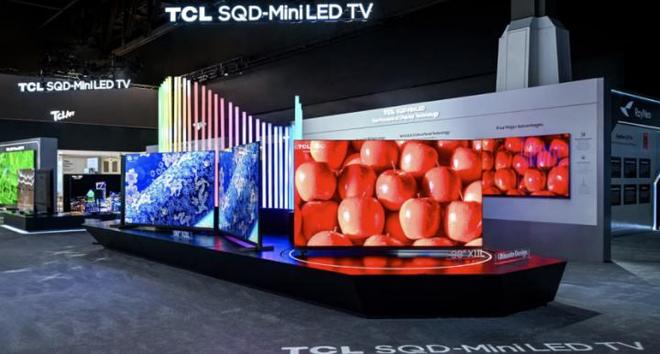
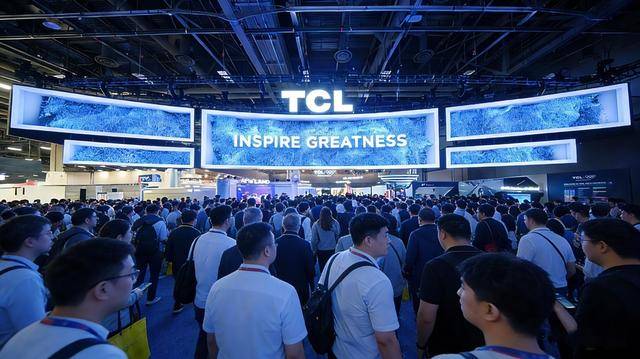
Group 1 - The North American International Consumer Electronics Show (CES 2026) has commenced in Las Vegas, showcasing TCL's innovations across its three core industries: smart terminals, semiconductor displays, and new energy photovoltaics, under the themes of "Screen Universe" and "AI Life" [1] - TCL is participating in CES for the 33rd time, with a booth area of 2,453 square meters, making it the largest Chinese brand at the event for several consecutive years [1] Group 2 - TCL's display products are positioned as key interactive carriers in the AI era, with a focus on creating a comprehensive "Screen Universe" ecosystem through full-size and multi-scenario layouts [3] - The flagship TCL X11L SQD-Mini LED TV, featuring Super Quantum Dot and Super Butterfly Wing technology, offers five core advantages including high color gamut, no color bleeding, more zones, higher brightness, and a thinner design [3] - The newly launched SQD-Mini LED TV Q10M series aims to break the barriers of top-tier picture quality, making premium audiovisual experiences accessible to a wider audience [3] Group 3 - TCL's founder and chairman, Li Dongsheng, highlighted the company's 27-year global journey since its expansion into Vietnam in 1999, with a goal to "recreate five TCLs" overseas as it celebrates its 45th anniversary [5] - The North American regional operations center serves as a model for entering high-end markets, with TCL establishing a research center in Silicon Valley and a manufacturing base in Mexico to support its North American business [5] - TCL ranks second in TV shipment volume in the North American market, leveraging local R&D, production, and marketing [5] - As a global partner of the Olympics, TCL enhances communication with consumers through sports and cultural initiatives, including sponsorship of the NFL and the TCL Chinese Theatre in Hollywood [5] - The company plans to strengthen its position in technology-intensive industries, focusing on R&D in AI applications and next-generation display technologies, while exploring foundational and cutting-edge "technology deep waters" [5]
CES 2026观察:“物理AI时刻”要靠中国制造落地
Jing Ji Guan Cha Wang· 2026-01-10 11:01
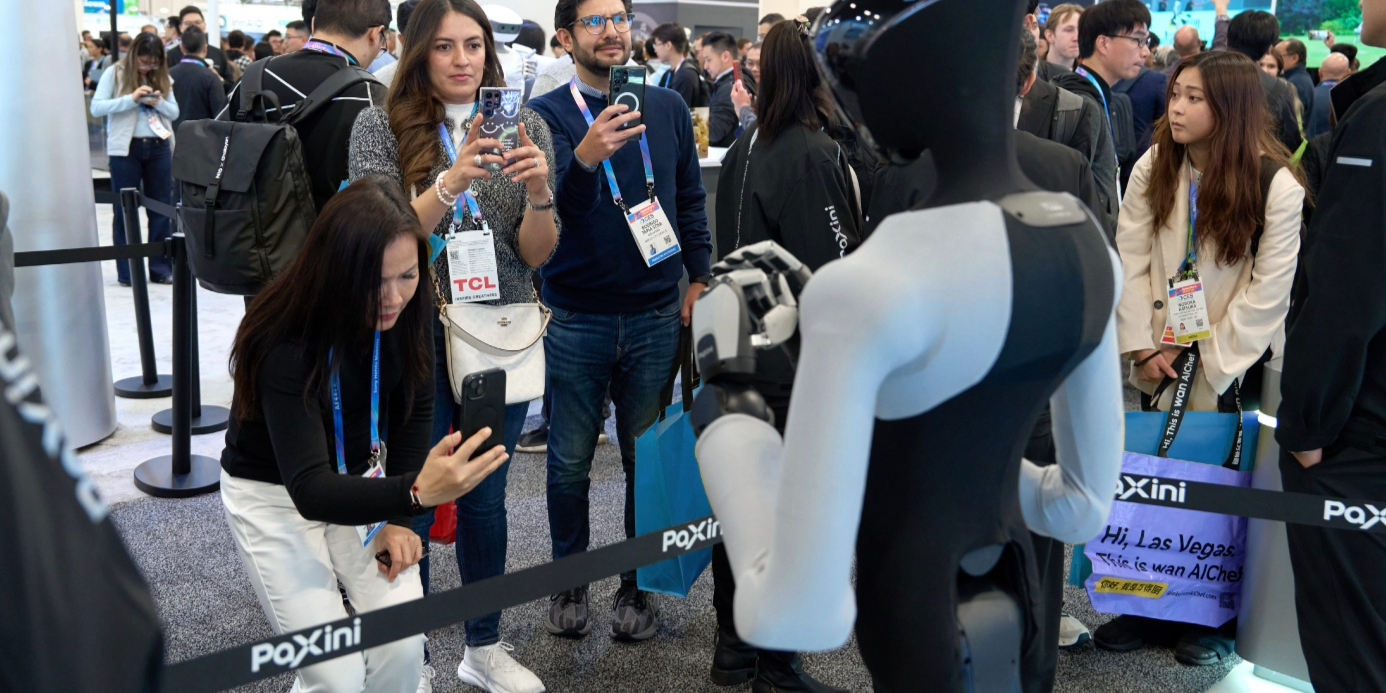
Group 1: Physical AI and Computing Power - The core theme of CES 2026 is the emergence of "Physical AI," where AI technology is transitioning from generating text or video to interacting with physical hardware [4][10] - AMD's chairwoman, Lisa Su, highlighted the increasing demand for computing power, predicting a 100-fold increase in global computing capacity over the next five years [3][4] - The presence of over 200 Chinese companies at CES indicates a strong support for the "Physical AI moment," showcasing various AI applications in physical products [4][23] Group 2: Robotics Innovations - The robotics sector at CES has shifted focus from mere physical movement to specific job functions and operational scenarios, with Chinese companies leading this evolution [5][9] - Companies like Pasoni and Fourier Intelligence showcased advanced robots capable of performing intricate tasks, such as ice cream making and automotive part sorting, demonstrating significant advancements in robotic dexterity [5][6] - The global sales of robots are projected to reach approximately $45 billion by 2026, with expectations to exceed $60 billion by 2030, driven by rising labor costs and efficiency in Chinese manufacturing [8][9] Group 3: Smart Glasses and AR Technology - Chinese companies are aggressively entering the AR/AI glasses market, aiming to redefine the concept of a "second screen" beyond smartphones [11][12] - Innovations include the launch of the world's first dual-lens AR glasses with eSIM functionality by Thunderbird Innovation, allowing users to make calls and connect to the internet without a smartphone [12][13] - The global market for smart glasses is expected to see significant growth, with sales projected to reach around $10.7 billion by 2026, reflecting an over 80% year-on-year increase [18][23] Group 4: Display and Chip Technology - Companies like Tianma Microelectronics and TCL Huaxing are pushing the boundaries of display technology, with innovations such as large-scale OLED screens and advanced automotive displays [19][20] - Lenovo and NVIDIA announced a partnership to enhance AI infrastructure, aiming to quadruple their business collaboration over the next few years [22] - The trend in AI chip development is moving towards high computing power, low energy consumption, and integration, with significant growth expected in AI terminal sales by 2028 [22][23]


CES变成中国科技秀:机器人跳舞、熊猫获奖
3 6 Ke· 2026-01-09 08:24
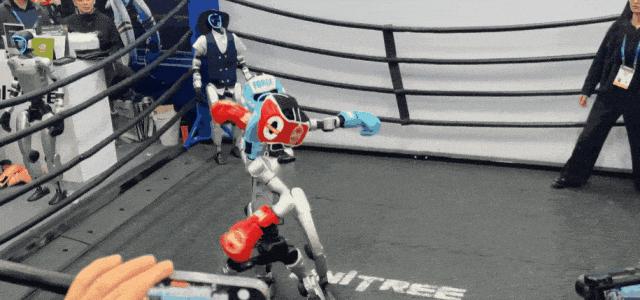
Group 1: Core Themes of CES 2026 - The main theme of CES 2026 is "human-centered" AI applications, marking a shift from traditional consumer electronics to AI-centric technological transformations [1] - Chinese companies are increasingly taking center stage at CES, with 942 exhibitors, accounting for approximately 22% of the total, maintaining their position as the second-largest exhibiting nation [1] - In specific sectors, Chinese firms dominate, with 55% of humanoid robot exhibitors and nearly 70% of AI glasses brands coming from China [1] Group 2: Robotics and AI Innovations - Chinese manufacturers are expected to continue leading in cost reduction and efficiency improvements in humanoid robots, showcasing their capabilities in unstructured environments [2] - Notable products include the Unitree H1 humanoid robot with advanced sensing capabilities and the latest generation of the "绝影" series robotic dogs, which excel in indoor navigation [4][11] - The "Care-bot" humanoid robot by Fourier demonstrates embodied intelligence in real-life interaction scenarios [7] Group 3: Consumer Electronics and Smart Devices - Over 80% of global smart glasses supply chain manufacturers are from China, with 16 Chinese companies showcasing their products at CES [15] - Innovations in smart home devices include the AI-driven "安安" companion robot designed for elderly and cognitively impaired individuals [16] - Companies like Alibaba and XREAL are launching advanced AI glasses, with features such as ultra-lightweight designs and integration with various AI services [19][20] Group 4: Automotive and AI Integration - The automotive industry is transitioning from "software-defined" to "AI-defined" vehicles, with companies like Geely and Great Wall showcasing new technologies [28] - Geely's G-ASD smart driving solution and Great Wall's focus on new energy technologies highlight the industry's shift towards AI integration [30][32] - New products like the AI-driven logistics solutions from New Stone and advanced lidar technology from Hesai demonstrate the growing importance of AI in transportation [34][35] Group 5: Home Appliances and AI - Hisense introduced new RGB-Mini LED display technology and AI-controlled smart refrigerators, showcasing the integration of AI in home appliances [41] - TCL's innovations in display technology, including the world's first printed OLED car screen, reflect advancements in consumer electronics [43][44] - Companies are increasingly focusing on AI capabilities in home security and smart home management systems [51][49] Group 6: Overall Impact of AI - CES 2026 emphasizes the profound impact of AI on the consumer electronics industry, with expectations for AI user numbers to grow significantly [59] - The event serves as a platform for global tech companies to set the foundation for future technological development and transformation [59] - The integration of AI into various sectors, including robotics, automotive, and consumer electronics, indicates a trend towards deeper AI adoption in everyday life [59]




TCL携印刷OLED车载屏及独立通信AR眼镜亮相CES 2026
Feng Huang Wang· 2026-01-07 06:22
Group 1 - TCL participated in CES 2026 with a booth area of 2,453 square meters, making it the largest Chinese brand at the event for several consecutive years [1] - The company showcased the TCL X11L SQD-Mini LED TV and the world's first printed OLED car display, which utilizes over 90% material efficiency and targets high-end smart cockpit interaction scenarios [1] - TCL's subsidiary, Thunderbird Innovation, launched the Thunderbird X3 Pro Project eSIM, a consumer-grade AR glasses with independent communication capabilities, supporting 4G networks without needing a mobile phone [1] Group 2 - From 2019 to 2024, TCL's cumulative R&D investment exceeded 60 billion yuan, with a total of 119,352 patents filed as of November last year [2] - In the North American market, TCL ranks second in TV shipments and has established an R&D center in Silicon Valley, along with a manufacturing base in Mexico [2] - According to Counterpoint Research, Thunderbird Innovation held a 24% market share in the global AR glasses market in Q3 2025, leading in shipment volume for two consecutive quarters [1]