含光800芯片

Search documents
自研芯片露真容 阿里“通云哥”角逐全球AI赛场
Shang Hai Zheng Quan Bao· 2026-01-29 18:46
Core Insights - Alibaba has officially launched its high-end AI chip "Zhenwu 810E," marking a significant milestone in its transition from an e-commerce company to a high-tech enterprise driven by both e-commerce and AI [1][9] - The company has established a robust AI ecosystem, referred to as the "AI Golden Triangle," which integrates its self-developed chips, cloud computing capabilities, and top-tier open-source models [1][6] Group 1: AI Chip Development - The "Zhenwu" PPU features a self-developed parallel computing architecture and inter-chip communication technology, with a memory of 96G HBM2e and an inter-chip bandwidth of 700GB/s, suitable for AI training, inference, and autonomous driving [3] - The performance of the "Zhenwu" PPU surpasses that of mainstream domestic GPUs, and it has been deployed in over 400 clients, including major organizations like State Grid and Xpeng Motors [5] Group 2: AI Ecosystem and Market Position - Alibaba Cloud, established in 2009, has become one of the top four AI clouds globally, serving over 5 million customers and holding the largest market share in the Asia-Pacific region [6] - The company has launched over 400 open-source models, with the "Qianwen" model family exceeding 200,000 derivatives and over 1 billion downloads, making it the most popular large model in China [6] Group 3: Strategic Investments and Future Outlook - Alibaba is investing 380 billion yuan in AI infrastructure over three years, with plans for further investments to enhance its AI capabilities [9] - The company's cloud revenue reached 39.824 billion yuan in Q2 of the 2026 fiscal year, reflecting a 34% year-on-year growth, indicating potential for further acceleration in revenue and valuation [9]


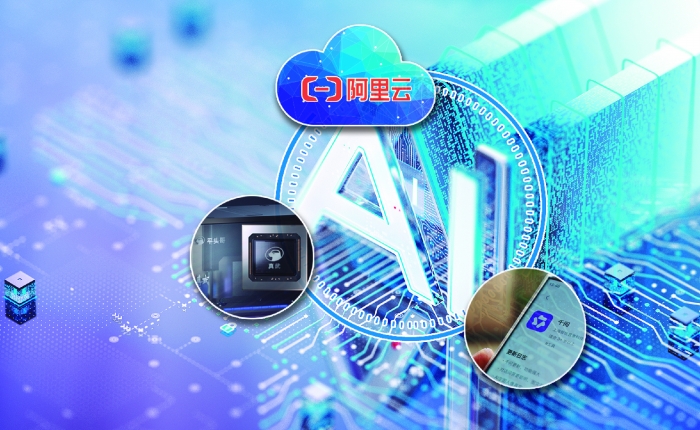
“真武”亮相,“通云哥”出道,阿里打出AI“同花顺”
Shang Hai Zheng Quan Bao· 2026-01-29 06:45
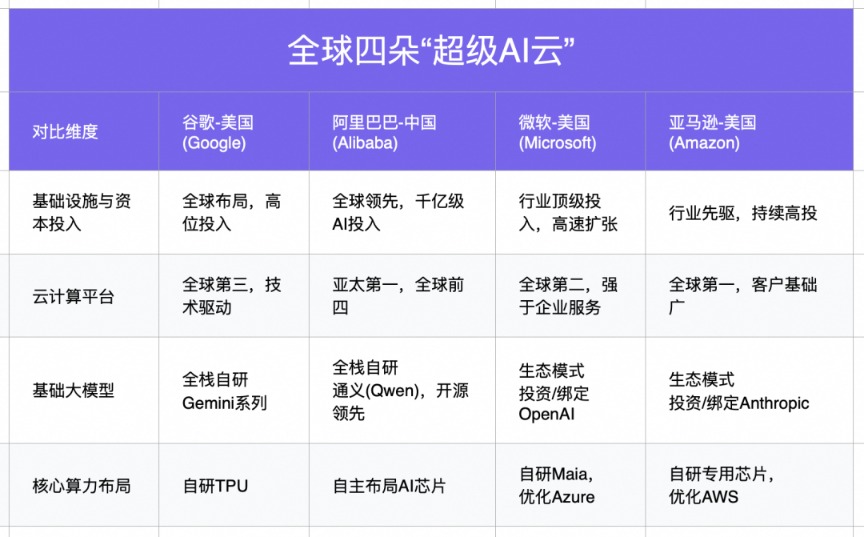
Core Viewpoint - Alibaba has officially launched its high-end AI chip "Zhenwu 810E," marking a significant milestone in its transformation from an e-commerce company to a high-tech enterprise driven by both e-commerce and AI [1][16]. Group 1: Product Launch and Technology - The "Zhenwu" PPU chip features a self-developed parallel computing architecture and inter-chip interconnection technology, with a memory of 96G HBM2e and an interconnection bandwidth of 700GB/s, suitable for AI training, inference, and autonomous driving [5]. - The performance of the "Zhenwu" PPU surpasses mainstream domestic GPUs and is comparable to NVIDIA's H20, receiving positive feedback from industry professionals [5][7]. - The chip has been deployed in multiple clusters on Alibaba Cloud, serving over 400 clients, including major organizations like the State Grid and Xpeng Motors [5][7]. Group 2: Strategic Development - Alibaba has established a comprehensive AI ecosystem, referred to as "Tongyun Ge," which integrates self-developed chips, leading cloud services, and top-tier open-source models [6][9]. - The company has been investing in AI since 2009, with Alibaba Cloud becoming a leading player in the Asia-Pacific region, serving over 5 million customers [7][11]. - The "Tongyun Ge" strategy represents a culmination of 17 years of strategic investment and vertical integration, positioning Alibaba as a key competitor in the global AI landscape [7][16]. Group 3: Market Position and Future Outlook - Alibaba is one of only two companies globally that possess top-tier capabilities in large models, cloud computing, and AI chips, alongside Google [1][13]. - The company is focusing on becoming a leading full-stack AI service provider, with plans for significant investments in AI infrastructure, amounting to 380 billion yuan over three years [15][17]. - The AI-related products of Alibaba Cloud have shown consistent triple-digit growth for nine consecutive quarters, indicating strong market demand and potential for revenue acceleration [15][17].

追平英伟达 H20!阿里真武 810E 芯片亮王牌
是说芯语· 2026-01-29 02:29
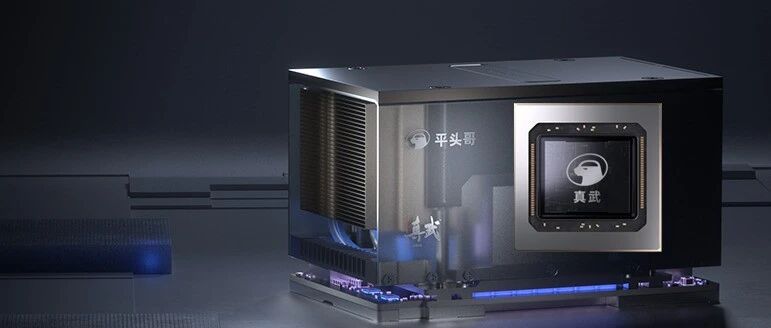
Core Viewpoint - Alibaba's semiconductor subsidiary, Pingtouge, has officially launched the high-end AI training and inference chip, Zhenwu 810E, marking a significant step in its AI chip strategy [1][3]. Group 1: Product Launch and Applications - The Zhenwu 810E chip has been deployed in multiple large-scale clusters on Alibaba Cloud, serving over 400 government and enterprise clients across various sectors, including energy, research, automotive, and internet [3]. - The chip is part of Alibaba's AI ecosystem, "Tongyun Ge," which integrates chip development, cloud services, and model algorithms, creating a comprehensive AI solution [3][4]. Group 2: Technical Specifications - Zhenwu 810E features a self-developed parallel computing architecture and ICN interconnect technology, equipped with 96GB HBM2e memory and a high interconnect bandwidth of 700GB/s [4]. - The chip's performance surpasses Nvidia's A800 and is on par with Nvidia's H20, with reports indicating that its upgraded version outperforms Nvidia's A100 [4]. Group 3: Core Advantages - The chip boasts six core advantages: fully self-developed architecture, high-performance computing power, strong interconnect capabilities, high usability, large-scale validation, and synergy between chip and cloud [5]. - Pingtouge's self-developed ICN technology is crucial for supporting large model training and inference, enabling efficient multi-card collaboration [5]. Group 4: Application Scenarios - Zhenwu 810E supports various application scenarios, including over 50 common models in autonomous driving, high-performance training capabilities, and optimization for large model inference [6]. - The chip has shown outstanding performance in multi-modal applications, providing cost-effective computing support for diverse scenarios [6]. Group 5: Strategic Development - Since the establishment of Alibaba Cloud in 2009 and Pingtouge in 2018, Alibaba has invested 17 years in strategic integration to complete the "Tongyun Ge" AI ecosystem [7]. - Pingtouge aims to innovate chip infrastructure for the AI era, focusing on data center chips and IoT chip development to support the digital and intelligent transformation [7].
H200批准对华出口,2026年GPU还扛得住吗?
Tai Mei Ti A P P· 2026-01-14 11:13
Group 1 - The U.S. government has approved NVIDIA to export its AI chip H200 to China, which is expected to restart shipments to Chinese customers [1] - The approval process will involve the U.S. Department of Commerce, which will charge approximately 25% fees on related transactions [1] - NVIDIA's CEO Jensen Huang emphasized the importance of the Chinese AI market, predicting it could reach $50 billion in the next two to three years [1] Group 2 - The adjustment in export policy coincides with a surge in domestic GPU companies going public [2] - Domestic GPU companies like Moore Threads and Muxi have successfully listed on the STAR Market, with significant stock price increases on their debut [3][4] - The global GPU market is expected to exceed $350 billion by 2025, with China accounting for nearly 40% of that market [4] Group 3 - Despite the growth of domestic GPU companies, there is a recognition that they have not yet formed a complete ecosystem to compete with NVIDIA's integrated approach [5] - The shift in the external market is notable, with cloud giants increasingly favoring ASICs over GPUs for specific applications [6][7] - ASIC demand is projected to grow at 44.6%, significantly outpacing GPU growth at 16.1% by 2026 [9] Group 4 - Major cloud service providers are developing their own ASIC chips, with Google and Amazon leading the way in production capacity [10][11] - Reports indicate that NVIDIA currently holds over 80% of the AI server market, but this share may decline as ASIC shipments from companies like Google and Amazon increase [11][12] - The introduction of storage-compute integration technology poses a challenge to traditional GPU architectures, addressing inefficiencies in data handling [13][15] Group 5 - NVIDIA is responding to competitive pressures by acquiring Groq, a company specializing in inference chips, to enhance its capabilities in the inference market [19][20] - This acquisition aligns with NVIDIA's historical strategy of using mergers and acquisitions to strengthen its market position and ecosystem [20] - The future landscape suggests that while GPUs will remain relevant, their dominance may be challenged by the rise of ASICs and storage-compute integrated solutions [18][20]

AI让边缘更智能 边缘让AI无处不在
Sou Hu Cai Jing· 2025-12-13 02:18
Core Insights - The article discusses the increasing trend of smart city development in China, with 100% of sub-provincial cities, over 95% of prefecture-level cities, and more than 50% of county-level cities proposing the construction of new smart cities by the end of 2019 [1][3][15] - The demand for visual AI analysis is growing due to the increasing amount of video data in urban management and services, necessitating higher professional standards in visual AI [1][3][15] Group 1: Smart City Development - By the end of 2019, 32 major cities in China established dedicated big data management agencies for smart city construction [3][15] - The shift towards intelligent urban management and services has been supported by various policies and regulations since 2012 [3][15] Group 2: Hybrid Cloud Visual AI Appliance - The "Hybrid Cloud Visual AI Appliance" (Apsara Stack Appliance) is designed for edge computing scenarios, providing an integrated hardware and software solution that enhances system availability and operational efficiency [3][4][15] - This appliance targets urban transportation and services, featuring a unified IaaS foundation and built-in visual AI PaaS components, such as video gateways and visual algorithm scheduling engines [4][16] Group 3: Product Specifications - The "Hybrid Cloud Visual AI Appliance" offers four main specifications: dense computing type, computing storage type, NPU-enhanced type, and embedded array, with the NPU-enhanced type utilizing Alibaba's self-developed chip, the Hanguang 800, significantly boosting video analysis capabilities [5][29] - The embedded array is designed for human-machine coexistence, reducing power consumption and noise, making it suitable for office environments [5][29] Group 4: Unified Management and Performance - The appliance employs a hybrid cloud unified base, facilitating integrated management of PaaS and IaaS, and is aligned with cloud-native solutions to drive continuous business upgrades [6][30] - The self-developed NPU chip enhances hardware performance by 60%, and the rapid vector comparison algorithm allows for quick retrieval from large databases [9][33] Group 5: Intelligent Analysis and Applications - The appliance includes over 100 visual AI algorithms developed by the Damo Academy, providing comprehensive, real-time intelligent analysis capabilities [11][35] - It addresses challenges such as the high bandwidth and infrastructure demands of large-scale video data, and is applicable in various scenarios including traffic management, safety production, and housing construction [11][35]