哈雷戴维森摩托车

Search documents
成年男人的大玩具,印度免税
汽车商业评论· 2026-02-09 23:05
Core Viewpoint - The article discusses a temporary trade agreement framework between India and the United States, focusing on the reduction of import tariffs on certain high-end fuel vehicles while excluding electric vehicles from concessions, indicating India's strategic approach to protect its domestic automotive industry [4][6][30]. Group 1: Trade Agreement Details - India will gradually reduce import tariffs on certain high-end fuel vehicles from a maximum of 110% to 30% over ten years, specifically targeting vehicles with engine displacement over 3000cc [9][11]. - The agreement will also eliminate tariffs on Harley-Davidson motorcycles, which are categorized as high-end, low-volume imports, while electric vehicles remain excluded from this framework [5][20]. - The framework is expected to be signed in March 2024, but detailed terms are still being finalized [6][11]. Group 2: Market Implications - India is the third-largest automotive market globally, with projected passenger vehicle sales of approximately 4.27 million units in 2024, of which electric vehicles account for only about 2.5% [11][40]. - The high import tariffs are designed to protect the domestic automotive industry, particularly mainstream vehicles, while allowing limited access for high-end models [10][12]. - The concessions made in the agreement are seen as symbolic, providing measurable outcomes for negotiations without significantly impacting local manufacturers [15][42]. Group 3: Electric Vehicle Exclusion - Electric vehicles were explicitly excluded from tariff reductions in the agreement, reflecting India's intention to use them as a bargaining chip in future negotiations [30][32]. - The Indian government has previously discussed lowering electric vehicle tariffs but has not committed to immediate reductions, indicating a cautious approach to protect local investments in electric vehicle production [33][40]. - Domestic manufacturers like Tata Motors and Mahindra have invested heavily in local electric vehicle production and oppose lowering import tariffs on electric vehicles [40][41].



印度下调美国豪华车关税至30%,不包括特斯拉
Guan Cha Zhe Wang· 2026-02-08 07:17
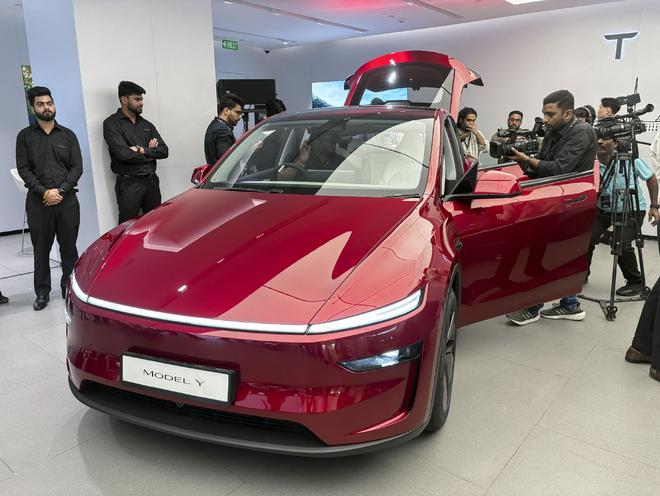
Group 1 - India will reduce tariffs on luxury cars from up to 110% to 30% under a temporary trade agreement with the US, while maintaining high tariffs on electric vehicles, including those from Tesla [1][3] - The US will lower tariffs on Indian goods from 50% to 18% as part of the agreement, with the implementation of these tariff reductions expected after a formal agreement is signed in March [1] - The agreement contrasts with India's previous deal with the EU, where it agreed to reduce tariffs on more car models to 10%, including some concessions for electric vehicles [4] Group 2 - Tesla faces challenges in the Indian market due to high tariffs, with the starting price of the Model Y reaching nearly $70,000, leading to unsold inventory and a significant discount being offered to clear stock [3] - Despite initial interest, Tesla's sales in India have been disappointing, with only 227 registrations for the year and a large portion of exported vehicles remaining unsold [3]
出头鸟来了!德国突然宣布恢复对美关税,欧盟:反抗美国霸权!
Sou Hu Cai Jing· 2026-01-22 13:27
Group 1 - Germany's Vice Chancellor, Olaf Scholz, announced a strong response to U.S. tariffs, indicating a shift in European stance against American pressure [1][4] - The immediate reaction from Germany included freezing a previously planned trade agreement and reinstating tariffs on U.S. goods, signaling a breakdown in negotiations [6][8] - Germany's position is particularly significant as it is the largest exporter to the U.S. in Europe, with key industries like automotive and machinery heavily reliant on the American market [11][20] Group 2 - A report from the Kiel Institute for the World Economy provided data showing that U.S. tariffs primarily harm American consumers rather than foreign exporters, giving Germany confidence to retaliate [20][22] - The report indicated that a 10% increase in tariffs results in only a 0.39% decrease in import prices, meaning the burden largely falls on U.S. consumers [22][24] - Germany's industrial leaders have expressed that U.S. tariffs will not only impact European companies but will also severely damage the U.S. economy itself [24][26] Group 3 - The European Union has prepared a retaliation strategy, including a €93 billion list of U.S. goods for potential tariffs, targeting major American exports [32][34] - Germany is considering a 10% digital services tax on U.S. tech giants, which could significantly impact their profits in Europe [34][36] - The EU's "anti-coercion instrument" could serve as a powerful tool against U.S. pressure, although it requires broad consensus among member states to activate [36][40] Group 4 - The current geopolitical tensions reflect a shift in the EU's approach, moving from passive compliance to active resistance against U.S. economic coercion [42][44] - The situation illustrates the fragility of U.S.-EU relations, as allies may turn adversarial when faced with aggressive tactics from the U.S. [44][48] - The potential economic fallout from this conflict could lead to increased prices for consumers in both the U.S. and Europe, affecting everyday goods [56][59]
美欧“贸易火箭筒”要点燃?欧盟对美930亿欧元报复性关税清单上会有什么
第一财经· 2026-01-21 12:08
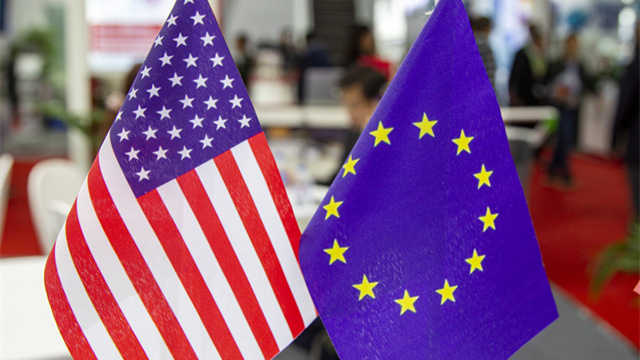
Core Viewpoint - The European Parliament has announced the suspension of the approval process for the trade agreement reached with the United States last July, marking the EU's first response to President Trump's recent pressure tactics [3][4]. Group 1: Trade Measures and Implications - The EU is considering imposing tariffs on US goods worth €93 billion as a countermeasure against Trump's tariffs on European countries [3][4]. - The proposed tariffs include a 25% duty on US-made aircraft, which could significantly impact Boeing, as its products account for a large portion of the €11 billion in aircraft exports from the US to Europe in 2024 [4]. - Other high-value products on the tariff list include automobiles, bourbon whiskey, and soybeans, along with iconic American products like Harley-Davidson motorcycles and Levi's jeans [4][5]. Group 2: Selection Criteria for Tariffs - The EU has carefully selected products for the tariff list, focusing on items that can be easily sourced from other regions to minimize backlash from EU consumers [5]. - The selection also targets products linked to specific US politicians and their constituencies, aiming to exert political pressure while reducing economic harm to the EU [5]. Group 3: Internal EU Dynamics - The implementation of these tariffs requires support from EU member states, with some countries advocating for the removal of certain products from the list to protect their own exports [5]. - Over €20 billion worth of products have already been removed from the initial tariff list due to internal disagreements among member states [5]. Group 4: Response to US Tariffs - The EU has agreed to impose export controls on aluminum scrap, which is crucial for US metal production [6]. - The "anti-coercion instrument" (ACI) is being discussed as a potential tool to limit access for US companies in the EU market, with Macron emphasizing the need to use strong measures in response to disrespect from the US [7]. Group 5: Economic Impact on EU - The current 15% tariffs imposed by the US have already led to a 0.3% decline in Germany's GDP, highlighting the economic repercussions of the trade conflict [8]. - Germany's exports to the US have plummeted by 9.4% due to the tariffs, significantly affecting its automotive and engineering sectors [8]. - Estimates suggest that Trump's tariffs could reduce exports from targeted countries to the US by up to 50% compared to pre-2025 levels [8][9].
美欧“贸易火箭筒”要点燃?欧盟对美930亿欧元报复性关税清单上会有什么
Di Yi Cai Jing· 2026-01-21 10:01
Group 1 - European Parliament has announced the suspension of the approval process for the trade agreement reached with the United States last July, marking the EU's first response to recent pressures from President Trump [1] - The EU is considering imposing tariffs on US goods worth €93 billion as a countermeasure against the tariffs imposed by the US on eight European countries [1][3] - The proposed tariffs include a 25% duty on US-made aircraft, which could significantly impact Boeing, as its products account for a large portion of US aircraft exports to Europe [3][4] Group 2 - The EU's retaliation list includes high-value items such as automobiles, bourbon whiskey, and soybeans, as well as iconic American products like Harley-Davidson motorcycles and Levi's jeans [3][4] - The selection of products for the retaliation list is strategic, aiming to minimize economic damage to the EU while targeting products linked to specific US politicians and voters [4] - The EU has agreed to impose export controls on aluminum scrap, which is crucial for producing new metals, further indicating the strategic nature of its trade measures [5] Group 3 - The "anti-coercion instrument" (ACI) is being discussed as a powerful tool for the EU to respond to US trade pressures, allowing restrictions on major US companies and potentially affecting various sectors [6] - The ACI can be activated relatively quickly, with investigations taking up to four months, but there is internal disagreement among EU member states regarding its implementation [6][7] - Germany's economy has already been impacted by US tariffs, with a reported 0.3% decline in GDP due to existing tariffs, highlighting the economic stakes involved [7][8]

黑暗的一天,特朗普生吞冯德莱恩
36氪· 2025-08-06 13:35
Core Viewpoint - The article discusses the unequal trade agreement reached between the European Union (EU) and the United States under the pressure of former President Donald Trump, highlighting the significant concessions made by the EU and the implications for future trade relations [5][6][7]. Trade Agreement Details - Ursula von der Leyen, the President of the European Commission, accepted the majority of Trump's demands, resulting in a trade deal that is characterized as an "unequal treaty" [6][7]. - The agreement includes a reduction of tariffs on most European goods to 15%, while the EU will continue to face a 50% tariff on steel, aluminum, and copper from the US [9]. - The EU committed to purchasing $750 billion worth of US energy products over the next three years and promised $600 billion in investments in the US [10]. Economic Impact - The article notes that the EU's concessions will lead to a significant increase in tariffs on European products entering the US, with an estimated fivefold increase compared to previous rates [9]. - German automaker Audi reported a profit decline of over 30% in the first half of the year due to the impact of US tariffs [11]. - General Motors announced a loss of $1.1 billion in the second quarter, with a 35.4% year-on-year drop in net profit, attributed to the tariffs [16]. Strategic Responses - The "Donald Trump Task Force" was established to identify weaknesses in US-EU trade and develop countermeasures, including a $100 billion retaliation list targeting US products [13]. - The task force proposed measures against US tech giants like Google and Meta, citing market monopolization and tax evasion as justifications for potential sanctions [14]. - The EU's strategy included preparing for rapid and large-scale retaliatory measures if trade negotiations failed, although there was hesitation in executing these plans [18]. Political Dynamics - The article suggests that von der Leyen's decision to compromise was influenced by the broader consensus among European leaders, prioritizing security and political stability over trade disputes [22][25]. - German Chancellor Merz emphasized the importance of maintaining good relations with the US, viewing the 15% tariff as a manageable cost to avoid escalating tensions [24][25]. - The article concludes that the EU's approach reflects a painful but pragmatic decision to avoid a protracted conflict with the unpredictable Trump administration [27].
传哈雷戴维森(HOG.US)接近向太平洋投资管理公司、KKR出售金融子公司部分股权
Zhi Tong Cai Jing· 2025-07-29 02:21
Group 1 - Harley-Davidson is in advanced negotiations with Pimco and KKR to sell a stake in its financial subsidiary and existing motorcycle loan portfolio, with a potential deal size of $5 billion [1] - The financial services subsidiary, Harley-Davidson Financial Services (HDFS), provides inventory financing for dealers and loans for consumers purchasing Harley-Davidson and LiveWire motorcycles [1] - The transaction may be announced in the coming weeks, although details and scale could change as negotiations are ongoing [1] Group 2 - Harley-Davidson is facing challenges with sluggish sales growth and intense competition from rivals like Honda and BMW, with its stock price down approximately 22% this year [2] - The CEO, Jochen Zeitz, indicated in May that the HDFS transaction is progressing, with multiple institutions expressing interest [2] - The private credit market, valued at $5.2 trillion, is expanding, with firms acquiring stakes in consumer loan issuing entities and purchasing the loans they issue [2]


冯德莱恩对华表态后!欧盟态度变了,千亿关税砸向美国,这一次的反击不会妥协
Sou Hu Cai Jing· 2025-07-28 04:43
Group 1 - The European Union (EU) has passed a €93 billion counter-tariff list against the US, indicating a significant escalation in trade tensions [1][8] - The counter-tariff list includes products like bourbon whiskey and Harley-Davidson motorcycles, targeting key political bases of President Trump [3] - The EU's response is a result of a breakdown in trust with the US, as previous cooperation did not yield the expected benefits [3][6] Group 2 - Germany's shift to a more hardline stance against the US is notable, contrasting its previous moderate position [3] - The EU's strong response reflects a broader geopolitical strategy, aiming to assert its influence in global trade rules [6][8] - The upcoming deadlines for negotiations (August 1 and August 7) could lead to a historic turning point in US-EU trade relations [8] Group 3 - The EU's economic recovery provides it with leverage in negotiations, but risks remain for key industries like automotive and aerospace [6] - The trade dispute signifies a profound change in transatlantic relations, with the EU employing unprecedented measures against the US [6][8] - The EU's approach to China may create new opportunities for cooperation, despite its ongoing reliance on NATO for security [6][4]
准备反制!若对美谈判失败,欧盟将对波音飞机征收关税
Hua Er Jie Jian Wen· 2025-05-07 12:49
Core Points - The EU is preparing to include Boeing aircraft in its countermeasures against the US due to failed negotiations [1] - The EU has suspended retaliatory tariffs on $210 billion worth of US goods until July 14, 2023, to promote negotiation progress [2] - The aerospace and defense sector in the US has a significant trade surplus, with exports nearing $136 billion and imports just below $22 billion in 2023 [3] Group 1: EU's Trade Measures - The EU Commission plans to add civil aircraft to a target list of US imports worth €100 billion if negotiations do not progress by July 14 [1] - The EU Trade Commissioner stated that currently, 70% of EU exports to the US are subject to tariffs, which could rise to 97% if the US continues imposing tariffs on various sectors [2] - The EU is prepared with alternative plans to restore fair competition if negotiations with the US do not yield necessary results [2] Group 2: Impact on the Aerospace Industry - Airlines are considering delaying deliveries of Boeing or Airbus aircraft to avoid increased costs from tariffs [2] - Airbus CEO expressed concerns about the negative impact of tariffs on both European and American stakeholders, emphasizing the need for resolution [3] - The current trade tensions are damaging the high-performance transatlantic ecosystem in the aerospace sector [3]