国产EDA设计软件

Search documents
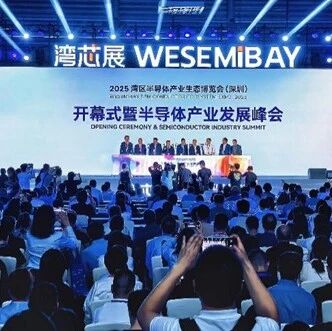
湾芯展:执棋破局,筑就中国集成电路全球引领新标杆
半导体行业观察· 2026-03-23 02:10
当全球半导体产业进入"后摩尔时代"的关键博弈期,集成电路作为科技竞争的核心壁垒、高质量发 展的战略支撑,其发展格局直接决定国家科技话语权。2026年,"十五五"规划纲要明确提出"超常 规"布局集成电路产业,推动关键核心技术自主可控,这一战略部署为中国半导体产业指明了前进 方向。 与此同时,全球半导体市场迎来强劲复苏,WSTS数据显示,2026年全球市场规模预计攀升至 9800亿美元,同比增幅达27%;粤港澳大湾区凭借完善的产业链配套、雄厚的创新实力,已成为 中国半导体产业的"增长引擎",集聚超1.2万家产业链企业,深圳、广州、珠海等地形成错位发 展、协同发力的产业集群,成为全球半导体产业的重要增长极。 在此背景下, 湾区半导体产业生态博览会 (湾芯展)以 "全局思维" 布局,以 "引领姿态" 破 局,全力冲刺"具有全球引领力的中国集成电路第一展"目标,为中国半导体产业高质量发展注入强 劲动能。 在全球半导体产业"本土化布局、国际化协同"的趋势下,湾芯展精准把握产业脉搏,搭建起全球半 导体资源高效对接的桥梁,实现"引进来"与"走出去"的双向赋能。 2025年展会期间,全球半导体TOP30企业悉数亮相,参展企业覆 ...





关注PCB设备、工程机械、叉车等板块投资机会 | 投研报告
Zhong Guo Neng Yuan Wang· 2025-10-30 01:34
Core Insights - The mechanical equipment industry experienced a 5.3% increase from October 20 to October 24, 2025, ranking 4th among 31 primary industries [2][3] - Sub-sectors such as specialized equipment (+6.1%), general equipment (+5.97%), and automation equipment (+5.69%) showed strong performance, indicating a positive trend in the industry [2][3] Industry Performance - The overall mechanical equipment sector recorded an increase, with specialized and general equipment performing particularly well [2][3] - The engineering machinery import and export trade in September reached $5.505 billion, a year-on-year increase of 29.1%, with exports contributing significantly to this growth [3] Market Trends - The upcoming Asia International Logistics Technology and Transportation Systems Exhibition will focus on smart equipment upgrades and low-carbon technologies, which are expected to positively impact the forklift sector [4] - The forklift industry is seeing significant sales growth, driven by a low base effect from the previous year, and is expected to maintain this growth trajectory [4] Investment Opportunities - Recommendations include focusing on companies with strong performance support, such as XCMG Machinery and SANY Heavy Industry in the engineering machinery sector [3] - In the semiconductor equipment sector, domestic companies are expected to benefit from increased demand due to local production expansion plans [5] - The industrial robot sector saw a 28.3% increase in production in September, indicating potential investment opportunities as the industry may be on the verge of recovery [5]
主要产品销量超预期,工程机械行业持续复苏 | 投研报告
Zhong Guo Neng Yuan Wang· 2025-10-21 02:04
Core Viewpoint - The mechanical equipment industry experienced a decline of 5.2% last week, influenced by market risk appetite, with specific sub-sectors like rail transit equipment and construction machinery showing smaller declines. The company suggests a balanced investment approach focusing on technology growth and cyclical sectors, maintaining a "recommended" rating for the industry [1][2]. Industry Summary - The mechanical equipment industry ranked 25th among 31 primary industries last week, with sub-sectors showing varying declines: rail transit equipment (-1.97%), construction machinery (-3.18%), general equipment (-4.89%), specialized equipment (-5.26%), and automation equipment (-8.77%) [2]. - Excavator sales in September reached 19,858 units, a year-on-year increase of 25.4%, with domestic sales at 9,249 units (+21.5%) and exports at 10,609 units (+29%). The industry is recovering, supported by new replacement cycles and large project initiations [3]. - Forklift sales in September totaled 130,380 units, up 23% year-on-year, with domestic sales at 81,119 units (+29.3%) and exports at 49,261 units (+13.9%). The industry is experiencing significant growth, driven by low base effects and advancements in automation technology [4]. - Industrial robot production in September reached 76,287 units, a 28.3% increase year-on-year, attributed to government policies promoting equipment upgrades and reduced costs for enterprises. This indicates potential investment opportunities as the industry may be reversing its previous downturn [5].
美国不愿看到的情况出现了!比尔盖茨一语中的?中国不再依赖美芯
Sou Hu Cai Jing· 2025-09-29 05:21
Core Viewpoint - The article discusses the ongoing technological and economic competition between the U.S. and China, particularly focusing on the semiconductor industry, highlighting how U.S. restrictions have inadvertently accelerated China's technological advancements [1][5][12]. Group 1: U.S.-China Semiconductor Competition - The technological rivalry between the U.S. and China began in 2018, centered around semiconductors, which are crucial for national security and various consumer technologies [3]. - U.S. actions, including export restrictions on semiconductor technology, are seen as counterproductive, potentially harming the U.S. semiconductor industry more than benefiting it [5][12]. - The U.S. restrictions have led to a significant increase in China's focus on self-reliance in semiconductor technology, with a reported self-sufficiency rate of nearly 70% in mature chips [10]. Group 2: Impact of U.S. Restrictions - Prominent figures like Bill Gates have warned that U.S. efforts to contain China could backfire, igniting innovation within China's semiconductor sector [5][8]. - Despite initial setbacks from U.S. restrictions, Chinese companies like Huawei have made significant strides in developing their own technologies, including the Kirin chip and Harmony OS [10]. - The market share of U.S. companies in China has declined, with Nvidia reportedly losing 10% of its market share and over $10 billion in revenue due to export restrictions [12]. Group 3: Future Outlook - The article suggests that the current challenges faced by Chinese tech companies will eventually lead to a brighter future, as they continue to innovate and reduce dependency on U.S. technology [12]. - China's advancements in AI and semiconductor technology are closing the gap with U.S. companies, indicating a shift in the global tech landscape [8].