
奥迪A5L乾崑智驾版

Search documents
“一汽奥迪千万用户礼遇季”首发礼上线
Ren Min Wang· 2025-12-25 03:30
Core Insights - FAW Audi has reached a milestone of 10 million users, launching a themed campaign "Achieving 10 Million Beauties" to celebrate this achievement [1] - The company is offering exclusive rewards to users through the "FAW Audi 10 Million User Appreciation Season," including various discounts and services [1][2] Group 1: User Rewards and Benefits - FAW Audi APP members can enjoy three types of rewards: luxury hotel privileges, shopping discounts, and significant mall gifts [1] - Existing car owners can benefit from a comprehensive maintenance service package at a discount of 50-80% off the suggested retail price, with additional discounts for package renewals [1] Group 2: Special Offers and Promotions - During the appreciation season, existing car owners can access four limited-time offers, including cash subsidies of up to 10,000 yuan for purchasing additional vehicles, and cash or maintenance service for trade-ins [1] - A referral program allows existing owners to earn Audi mall points for recommending friends, with additional rewards for multiple referrals [1] Group 3: New Product Launches - The new Audi Q5L is now available for pre-sale, accompanied by promotional offers such as equipment upgrade gifts and benefits for loyal customers [1] - A special edition of the Audi Q5L, exclusive for the 10 million users, features upgraded packages and is limited to 10,000 units nationwide [1]
奥迪中国罗英瀚:品牌传承仍是汽车业的竞争维度
Jing Ji Guan Cha Wang· 2025-11-30 02:29
Core Insights - Audi is advancing its product lineup in China, launching new models equipped with advanced technologies, including the A5L QianKun Intelligent Driving version and the A6L e-tron, showcasing its commitment to both fuel and electric vehicles [2][3][4] - The brand's strategy emphasizes the importance of heritage and brand recognition, particularly for repeat buyers, as it seeks to differentiate itself in a competitive market [3][4] - Audi's participation in Formula 1 (F1) is seen as a strategic move to enhance brand image and leverage racing technology for production vehicles, aligning with the new F1 regulations that bring race cars closer to consumer models [5] Product Development - Audi has introduced two new models at the Guangzhou Auto Show: the A5L QianKun Intelligent Driving version and the E5 Sportback, both featuring advanced driving technologies developed in collaboration with Huawei and Momenta [3][4] - The A5L QianKun is noted as the first fuel vehicle to incorporate Huawei's intelligent driving technology, while the E5 Sportback is the first model under the Audi brand to utilize a new integrated driving assistance system [3][4] Market Strategy - Audi's strategy in China involves a dual approach with FAW Audi focusing on localizing global models and SAIC Audi developing exclusive models for the Chinese market [4] - The company aims to address the challenge of maintaining competitiveness in a market where local brands are rapidly advancing in technology [3][4] F1 Investment Rationale - Audi's investment in F1 is part of a broader strategy to utilize racing as a testing ground for new technologies that can be applied to production vehicles, enhancing innovation and brand prestige [5] - The decision to participate in F1 aligns with the company's goal to establish itself as a leader in the electric vehicle era, with plans to fully acquire the Sauber Group to support its racing ambitions [5]


合资燃油车集体“开窍”,杀回“智能化”牌桌
Tai Mei Ti A P P· 2025-11-26 04:16
Core Insights - Traditional fuel vehicles are shedding the label of being "non-intelligent" as they integrate advanced driving technologies, indicating a shift in the market dynamics towards smarter fuel vehicles [2][4][5] - Despite the rise of electric vehicles, fuel cars still hold a significant market share, with 49.9% in China and over 70% globally, suggesting that the competition for smart features is not exclusive to electric vehicles [4][5][6] Group 1: Market Trends - In the first ten months of this year, domestic sales of traditional fuel vehicles in China saw a 0.6% year-on-year increase, totaling 11.143 million units, indicating a stable demand amidst fierce competition [2] - Major automakers are launching high-level intelligent driving features in fuel vehicles, with models like Dongfeng Nissan's Teana and GAC Toyota's new-generation RAV4 priced around 150,000 yuan [2][6] Group 2: Technological Challenges - The complexity of traditional fuel vehicle architectures poses significant challenges for achieving smart capabilities, as their distributed electronic systems hinder efficient data processing and real-time communication [3][9] - The power supply and heat dissipation requirements for intelligent driving systems exceed the capabilities of traditional low-voltage platforms, creating additional barriers to integration [3][9] Group 3: Innovations and Strategies - Automakers are innovating their electronic architectures to support advanced driving features, with models like Audi A5L and GAC Toyota's new RAV4 adopting centralized domain control systems to enhance performance [4][6] - The trend of reducing prices for intelligent fuel vehicles is evident, with models like Audi A5L starting at 286,800 yuan, significantly lower than comparable electric vehicles, reflecting cost optimization strategies [6][7] Group 4: Industry Collaboration - Partnerships with local tech firms are accelerating the smart transformation of fuel vehicles, as seen with Audi's collaboration with Huawei for the A5L and SAIC Volkswagen's work with Zhuoyue Technology [8][9] - Toyota's approach focuses on in-house development of intelligent systems, exemplified by the launch of the TSS 4.0 system in the new RAV4, enhancing its capabilities with increased sensor performance [9] Group 5: Future Outlook - The industry consensus is shifting towards the feasibility of smart features in fuel vehicles, with predictions that by 2026, fuel vehicles will widely adopt mid-level intelligent driving technologies [5][6] - The automotive market is expected to evolve beyond a binary oil-electric competition, with the focus on addressing user pain points and maintaining competitive advantages in both fuel and electric vehicle segments [9]

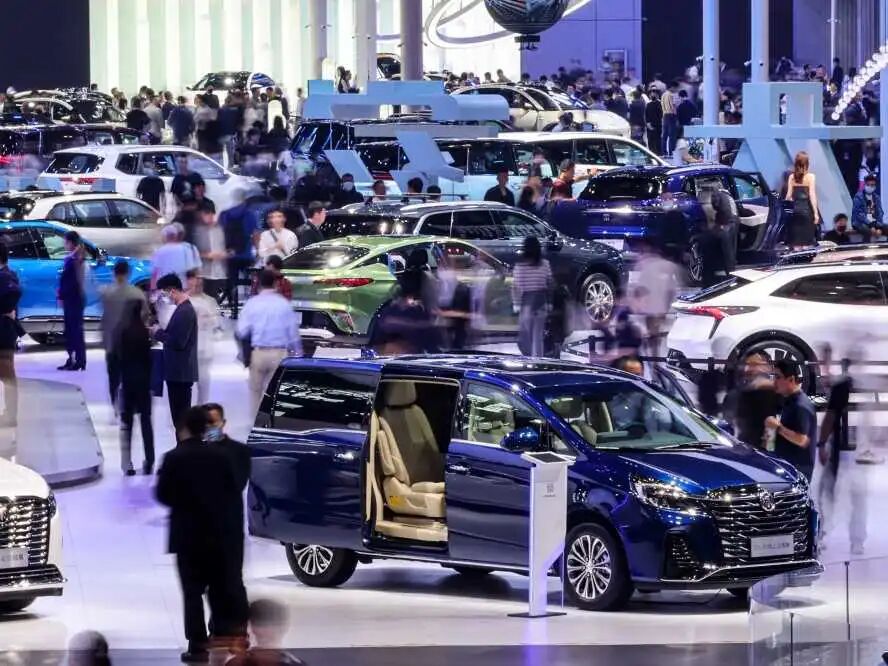
广州车展众生相:“鸿蒙”“乾崑”高频出现,小米发10000个车模
Di Yi Cai Jing· 2025-11-24 10:12
Core Insights - The 2025 Guangzhou Auto Show reflects a shift in the automotive industry from a focus on "traffic-driven" marketing to a more pragmatic and rational approach, with companies becoming more grounded in their strategies [2][3] Group 1: Market Trends - The Chinese automotive market is transitioning from a "traffic-driven" model to a "rational and pragmatic" one, moving away from the previous two years characterized by high-profile marketing and celebrity appearances [3] - Major companies like Huawei and Xiaomi, which previously attracted significant attention, have seen a decline in their marketing hype, leading to a more subdued atmosphere at the Guangzhou Auto Show [3][6] - The focus on core user needs and vehicle quality is becoming more pronounced, as evidenced by new product launches from companies like FAW Toyota and Dongfeng Nissan, which emphasize safety and reliability [6] Group 2: Technological Advancements - Huawei's smart technology, such as the Hongmeng cockpit and Qian Kun intelligent driving, is being highlighted as a key selling point by multiple automakers [4] - Xiaomi is emphasizing the upgrade of its intelligent assisted driving technology, with a strong focus on safety as a foundational aspect of its offerings [5] Group 3: Competitive Landscape - The competition among automakers is intensifying, with domestic brands showing a 4% year-on-year increase in retail sales, while mainstream joint venture brands experienced a 10% decline [6] - The sales environment is becoming increasingly challenging, with sales representatives facing pressure to meet targets amid a more competitive market [7] - The automotive industry is witnessing a shift towards a focus on "value ratio," where consumers seek more performance and experience for the same price, leading to a need for companies to adjust their cost structures to maintain profitability [8]
广州车展众生相:“鸿蒙”“乾崑”高频出现,小米发10000个车模
第一财经· 2025-11-24 09:29
Core Viewpoint - The automotive industry in China is undergoing a significant shift from a focus on "traffic-driven" marketing to a more pragmatic and rational approach, as evidenced by the subdued atmosphere at the 2025 Guangzhou Auto Show [3][4]. Group 1: Marketing Trends - The previous two years were characterized by a surge in "celebrity executive" marketing, with high-profile executives engaging in live broadcasts and social media promotions [4]. - Companies like Huawei and Xiaomi have been at the forefront of this trend, leveraging their founders' presence to attract attention at auto shows [5]. - The current auto show saw a decline in such marketing tactics, with a focus on showcasing core vehicle technologies and features instead [8]. Group 2: Industry Competition - The decline in hype around "star companies" has led many automakers to return to fundamental vehicle manufacturing principles and focus on core consumer needs [8]. - The latest data shows that in October, retail sales of domestic brands reached 1.55 million units, a 4% increase year-on-year, while mainstream joint venture brands saw a 10% decline to 510,000 units [9]. - The competition is intensifying as joint venture brands accelerate their efforts to address gaps in electrification and intelligence, leading to a more competitive landscape [9]. Group 3: Sales Strategies - Sales strategies at the auto show have adapted to the competitive environment, with sales consultants actively engaging potential customers through incentives and promotions [9][10]. - The pressure on sales performance has increased, with sales targets becoming more challenging to meet compared to previous years [9]. - The automotive industry is experiencing a shift towards maintaining lower price levels while focusing on the "value ratio" that consumers receive for their spending [10].

奥迪携“油电双智”阵容亮剑广州,开启豪华出行新纪元
Zhong Guo Qi Che Bao Wang· 2025-11-22 02:26
Core Insights - Audi is launching a new strategic declaration in the context of the 2025 Guangzhou Auto Show, emphasizing its commitment to intelligent products in the luxury segment [1] - The company is leveraging two technological platforms, the PPC luxury fuel intelligent platform and the PPE luxury pure electric platform, to drive its growth in China [3][5] - Audi is the first international automaker to deploy next-generation intelligent driving technology across both fuel and electric models, thanks to collaborations with leading Chinese tech companies like Huawei [5] Product Innovations - The A5L Qiankun Intelligent Driving Edition is introduced as the world's first fuel vehicle equipped with Huawei's Qiankun Intelligent Driving technology, priced at 286,800 yuan [7] - The A6L e-tron, built on the PPE platform, represents Audi's flagship electric vehicle, showcasing a new understanding of luxury in the electric era [10][12] - The A6L e-tron features a 107 kWh battery providing a range of 785 km under CLTC conditions and supports 302 km of charging in just 10 minutes, addressing user concerns about range anxiety [12] Market Commitment - Audi is approaching its 10 millionth customer milestone in China, reflecting its deep-rooted presence and trust built over 37 years [13] - The company plans to launch new models, including the Q5L, A5L, Q6L e-tron, and A6L e-tron by 2026, reinforcing its commitment to a comprehensive intelligent strategy [13] - Audi's collaboration with Huawei represents a new model of integrating cutting-edge Chinese technology into its operations, enhancing its competitive edge in the luxury automotive market [15]
