好时巧克力

Search documents
鸣鸣很忙今起招股;来伊份年度预亏1.7亿;君乐宝冲刺港股
Sou Hu Cai Jing· 2026-01-20 16:32
Group 1: Company Announcements - Hunan Mingming Hen Mang Commercial Chain Co., Ltd. (Mingming Hen Mang) has officially launched its global offering and plans to list on the Hong Kong Stock Exchange on January 28, 2024, with a total of 14.1011 million shares available for sale, expecting to raise approximately HKD 3.124 billion after expenses [1] - Good Products Co. has announced an expected net loss of RMB 120 million to RMB 160 million for the fiscal year 2025, primarily due to a decline in sales revenue and adjustments affecting gross margins [3] - Junlebao Dairy has submitted its prospectus to the Hong Kong Stock Exchange, reporting revenues of RMB 175.5 billion, RMB 198.3 billion, and RMB 151.3 billion for the years 2023 to 2025, with net profit increasing from RMB 558,000 to RMB 9 billion, a growth of over 700% [4] Group 2: Market Trends and Consumer Behavior - Taobao Flash Delivery has announced a subsidy of nearly RMB 2 billion for city couriers during the 2026 Spring Festival to enhance their income and reward their commitment [8] - Recent data indicates that trophy-related searches on Taobao have increased by over 50% year-on-year, with customized trophies for self-gifting seeing the highest demand [8] - The convenience food market in China shows that Kang Shifu has further increased its market share, with new products accounting for 2.51% of the market in Q4 2025, significantly ahead of competitors [17] Group 3: Financial Performance and Projections - Salia reported a net profit increase of 16% to 3 billion yen for the period from September to November 2025, with sales reaching 70.2 billion yen, a 15% increase [9] - Nanjing Xinbai expects a net loss of between RMB 839 million and RMB 1.026 billion for 2025, primarily due to goodwill and intangible asset impairments [18] - Laiyifen anticipates a net loss of approximately RMB 170 million for 2025, with adjustments to store numbers and gross margins impacting performance [18]



运动巨头渠道策:销售下滑 门店升级丨消费参考
2 1 Shi Ji Jing Ji Bao Dao· 2026-01-20 05:10
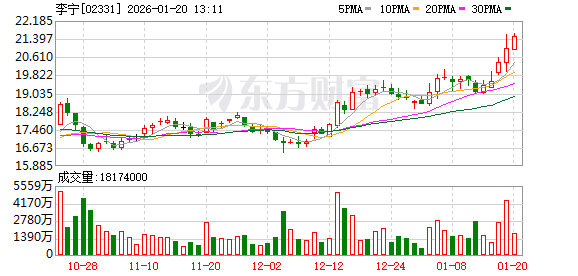
Group 1: Li Ning Company Overview - Li Ning remains optimistic about its future despite a low single-digit decline in retail sales for the fourth quarter ending December 31, 2025, excluding Li Ning YOUNG [2] - The number of sales points in China for Li Ning (excluding Li Ning YOUNG) decreased by 41 to a total of 6,091, with retail points down by 59 and wholesale points up by 33 [3] - Li Ning is investing in flagship stores, launching its first "Dragon Store" in Beijing, which is expected to create a strong synergy with the new "Honor Gold Standard" product line [3] Group 2: Market Trends and Competitors - The trend in the industry shows major brands like Nike upgrading key stores in China, with a reported 25% sales increase in upgraded locations, despite a 16% decline in overall sales [4] - Li Ning's stock price increased by 2.94% to HKD 21 per share on January 19, 2026, indicating positive market sentiment [4] Group 3: Financial Performance and Projections - Li Ning's e-commerce virtual store business remained flat, indicating stability in that segment amidst overall sales declines [2] - The company is focusing on enhancing customer experience through flagship stores, aligning with broader industry trends of investing in experiential retail [4]
美国营养科学的悲剧
Hu Xiu· 2025-05-15 13:28
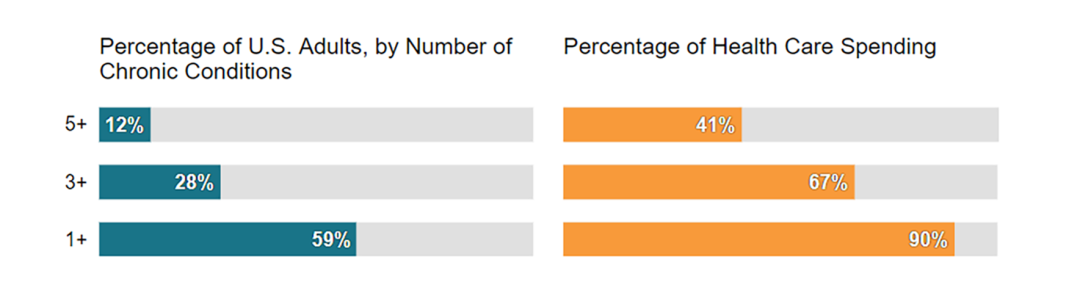
Core Argument - The article discusses the corruption of science in the United States, particularly in the fields of nutrition and health, due to the influence of big capital and military funding, which has transformed science from a creative force for human progress into a destructive one [1][2]. Group 1: Nutrition Science Critique - Nutrition science is essential for human health, yet nearly half of American adults suffer from diet-related chronic diseases, leading to significant mortality [2][3]. - A significant portion of chronic disease patients (12% of adults) accounts for over 40% of national healthcare spending [3]. - The article highlights scandals in nutrition research, such as the case of Brian Wansink, whose academic misconduct revealed deeper issues of corruption in food and health research [3][4][5]. Group 2: Government Dietary Guidelines - The U.S. government releases dietary guidelines every five years, which significantly influence American eating habits and are foundational for nutrition education and food assistance programs [8][9]. - The latest guidelines received unprecedented public attention, with 29,000 comments, indicating widespread concern over their scientific validity and potential conflicts of interest [12]. - Criticism arose regarding the reliance on data from health organizations funded by food and pharmaceutical companies, undermining the credibility of the guidelines [12][16]. Group 3: Sugar Industry Influence - Evidence suggests that the sugar industry has historically influenced nutrition and heart disease research, leading to misleading dietary recommendations [17][18]. - Internal documents reveal that the sugar industry funded research to downplay sugar's role in heart disease while promoting saturated fats as the primary culprit [17][18]. - The article emphasizes that the corruption in nutrition science has long-term implications for public health policies, contributing to the obesity epidemic in the U.S. [19]. Group 4: Corporate Influence on Research - Companies like Coca-Cola have funded research to shift blame for obesity from sugary drinks to lack of exercise, manipulating scientific discourse [20][21]. - The Global Energy Balance Network, funded by Coca-Cola, falsely claimed that obesity was primarily due to insufficient physical activity, rather than dietary intake [20][21]. - Investigations revealed that influential scientists collaborated with corporations to promote misleading scientific narratives, further complicating public health messaging [22][23]. Group 5: Nutritional Reductionism - The article critiques the reductionist approach in nutrition science, which focuses on isolated nutrients rather than whole foods, leading to misleading conclusions about health [37][41]. - This reductionism has been shaped by corporate interests, which prioritize profit over comprehensive food research, ultimately threatening public health [42].