小米汽车SU7标准版

Search documents
新能源汽车:迭代过快下的市场焦虑
Xin Lang Cai Jing· 2025-11-11 09:41
Core Insights - The rapid development of China's new energy vehicle (NEV) industry is marked by a significant increase in the number of new models launched, with nearly 80 new vehicles released in September alone, indicating a competitive and fast-paced market environment [1][2] - However, the accelerated pace of product iteration is causing consumer dissatisfaction and safety concerns, as frequent updates lead to complaints about obsolescence and quality issues [5][6][10] Industry Development - Since 2013, China's NEV production and sales have skyrocketed from 17,500 units to over 5 million units in 2022, with projections to reach 10 million units by 2024 [2] - The average number of new models launched by domestic automakers has reached 1,158 annually over the past five years, translating to an average of 3.2 new models per day [2][3] Consumer Experience - The rapid iteration of new models has led to consumer complaints about feeling misled, as new versions are released shortly after purchases, diminishing the perceived value of their vehicles [5][6] - Safety concerns have escalated due to incidents involving NEVs, including recalls related to quality defects, which have raised questions about the reliability of these vehicles [7][10] Market Competition - The intense competition in the NEV market is driving companies to innovate quickly, but this has resulted in a proliferation of similar products, leading to a lack of differentiation and increased market saturation [8][9] - The profit margins in the automotive industry remain low, with only a small percentage of new models achieving significant sales, indicating a potential oversupply in the market [9] Future Outlook - Experts suggest that while rapid growth has characterized the NEV sector, a more balanced and sustainable approach is necessary to avoid pitfalls associated with excessive speed, such as safety issues and market instability [11][12] - The upcoming regulatory changes and market dynamics may lead to a consolidation of the industry, favoring companies that can maintain quality and innovation over those that merely compete on speed [12]
今年已有166万辆,汽车OTA升级,为什么也能叫召回?
3 6 Ke· 2025-09-22 01:46
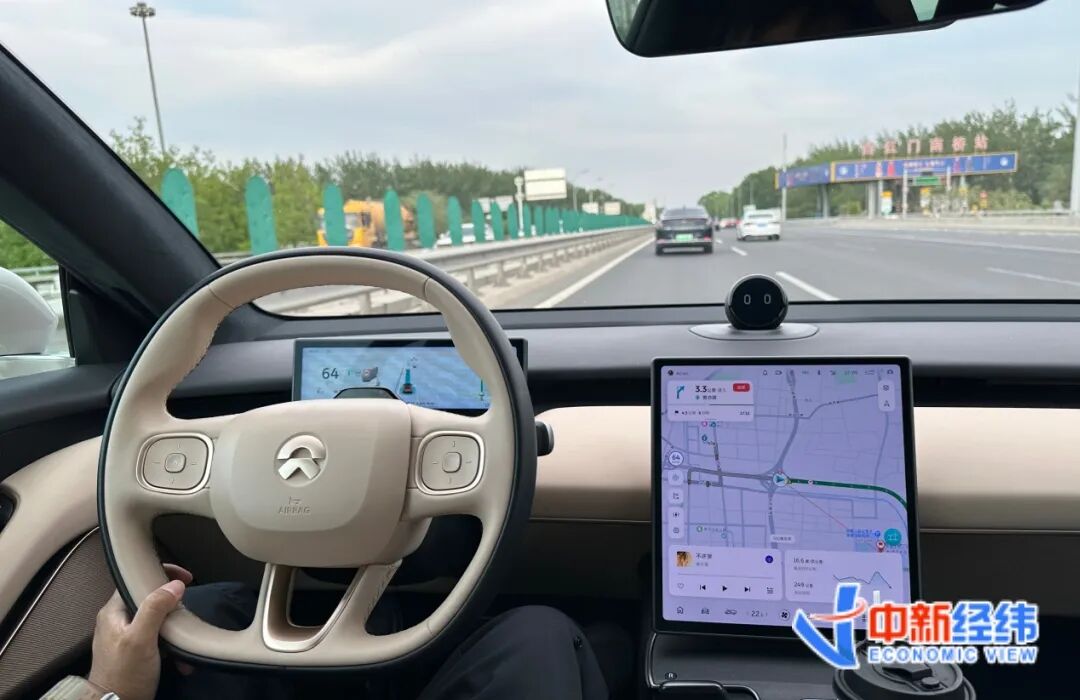
Core Viewpoint - Xiaomi's recall of certain SU7 standard electric vehicles highlights the evolving nature of automotive recalls, particularly in the context of software updates via Over-The-Air (OTA) technology, which is now recognized as a legitimate method for addressing product defects [1][6][7]. Group 1: Definition and Context of Recall - A recall is defined as the manufacturer's free action to eliminate defects in sold vehicles, which includes providing information about product defects and taking corrective measures [1]. - Defects can arise from design, manufacturing, or labeling issues that compromise safety standards, including critical failures like engine loss of power, brake failure, and battery fires [1]. Group 2: OTA Technology in Automotive Industry - OTA technology allows manufacturers to wirelessly update vehicle software systems to fix defects, enhance performance, and expand functionalities [2]. - The Ministry of Industry and Information Technology and the State Administration for Market Regulation have categorized OTA upgrades into four management types, including those for defect recalls [2]. Group 3: Implications of Software Defects - The recall of Xiaomi vehicles was prompted by insufficient recognition and response to extreme scenarios in the L2 highway navigation assist feature, which could increase collision risks if not addressed [5]. - Experts emphasize that the concept of recalls must adapt to the increasing role of software in vehicles, as software issues now warrant recalls just as mechanical defects do [3][6]. Group 4: Industry Trends and Statistics - As of 2025, there have been five OTA recall events affecting 1.6675 million vehicles, with significant growth in OTA recalls noted in 2024, which saw a 246.8% increase from the previous year [7]. - The growing reliance on OTA for recalls raises questions about the impact on vehicle resale value, with software issues potentially having less effect on depreciation compared to hardware defects [7]. Group 5: Regulatory and Future Considerations - There is a call for national or industry standards to regulate OTA upgrades and ensure transparency regarding vehicle issues and adjustments made during OTA processes [8]. - The State Administration for Market Regulation has indicated that companies must not conduct OTA upgrades without proper testing and must disclose any defects to customers [8].

陆家嘴财经早餐2025年9月20日星期六
Wind万得· 2025-09-19 22:33
Group 1 - President Xi Jinping and President Trump had a constructive phone call regarding the current state of China-US relations, emphasizing the need to avoid unilateral trade restrictions and ensure a fair business environment for Chinese companies in the US [2] - Shanghai has optimized its property tax policy, exempting first-time homebuyers with residence permits and families with residence permits for over three years from taxes on their first home and on second homes under 60 square meters [2] Group 2 - The State Council, led by Premier Li Qiang, discussed the implementation of domestic product standards in government procurement, ensuring fair competition among various business entities [3] - The National Foreign Exchange Administration reported that in August, China's foreign exchange market operated smoothly, with non-bank sectors' cross-border receipts and payments reaching $1.3 trillion, a year-on-year increase of 8% [3] - The Ministry of Commerce disclosed that from January to August, actual foreign investment in China amounted to 506.58 billion yuan, a year-on-year decrease of 12.7%, while certain sectors like e-commerce services and aerospace manufacturing saw significant growth [3] Group 3 - The China Securities Regulatory Commission emphasized the importance of risk prevention and high-quality development in the capital market, accelerating the next round of reforms and opening up [5] - The A-share market saw a collective decline in major indices, with the Shanghai Composite Index closing down 0.3% at 3820.09 points, while the total trading volume for the day reached 2.35 trillion yuan [5] Group 4 - The Hong Kong Hang Seng Index closed nearly flat at 26545.1 points, with the technology index rising by 0.37% [6] - The Shanghai Stock Exchange is monitoring stocks with significant price fluctuations, including Tianpu Co. and Shoukai Co., and has initiated special investigations into major corporate events [6] Group 5 - The Ministry of Commerce held a meeting to discuss the development of the automotive aftermarket, aiming to eliminate restrictive measures and boost consumption in this sector [9] - The Ministry of Industry and Information Technology announced a plan to introduce 300 upgraded innovative products by 2026 and cultivate ten industry clusters with over 100 billion yuan in scale [9] Group 6 - The international gold futures market saw a rise, with COMEX gold futures increasing by 1.12% to $3719.4 per ounce, supported by a weaker dollar and ongoing global central bank purchases [18] - International oil prices weakened, with WTI crude oil futures falling by 1.42% to $62.36 per barrel, amid ongoing geopolitical risks and supply-demand dynamics [18] Group 7 - The onshore RMB against the US dollar closed at 7.1125, down 46 basis points from the previous trading day, while the offshore RMB also saw a decline [19] - The Bank of Thailand stated it is closely monitoring the Thai baht and has not observed any abnormal speculative behavior [19]

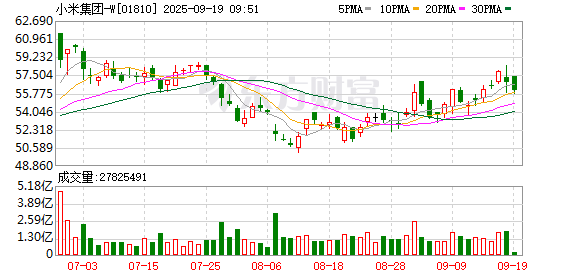
港股小米集团转跌
Xin Lang Cai Jing· 2025-09-19 06:59
Group 1 - The core point of the article is that Xiaomi Group's stock experienced a decline after initially rising over 1%, influenced by news regarding a recall of a significant number of vehicles [1] Group 2 - Xiaomi Auto Technology Co., Ltd. has announced a recall of approximately 116,900 units of the SU7 standard version [1]

小米集团跌幅扩大至2%
Mei Ri Jing Ji Xin Wen· 2025-09-19 02:01
Core Viewpoint - Xiaomi Group's stock price has declined by 2% following the announcement from the State Administration for Market Regulation regarding the recall of certain vehicles from its subsidiary, Xiaomi Automobile Technology Co., Ltd. [1] Group 1 - Xiaomi Automobile Technology Co., Ltd. is recalling a total of 116,887 units of the SU7 standard version [1]
港股小米集团跌近2%
Zheng Quan Shi Bao Wang· 2025-09-19 01:57
Group 1 - The core point of the article is that Xiaomi Group's stock has declined nearly 2% following the announcement of a recall plan for its electric vehicles [1] - Xiaomi Auto Technology Co., Ltd. has filed a recall plan with the State Administration for Market Regulation, in accordance with the regulations on defective automotive products [1] - The recall affects a total of 116,887 units of the SU7 standard version electric vehicles produced between February 6, 2024, and August 30, 2025 [1]
港股小米集团转跌,跌超1%
Mei Ri Jing Ji Xin Wen· 2025-09-19 01:52
Group 1 - The core point of the article is that Xiaomi Group's stock has turned downward, dropping over 1% following an announcement from the market regulatory authority regarding a recall of certain SU7 standard electric vehicles by Xiaomi Automobile Technology Co., Ltd [2] Group 2 - The recall involves a specific model of electric vehicles, indicating potential quality or safety concerns that could impact consumer confidence and sales [2] - The market reaction to the recall announcement has resulted in a decline in Xiaomi's stock price, reflecting investor sentiment regarding the implications of the recall [2]
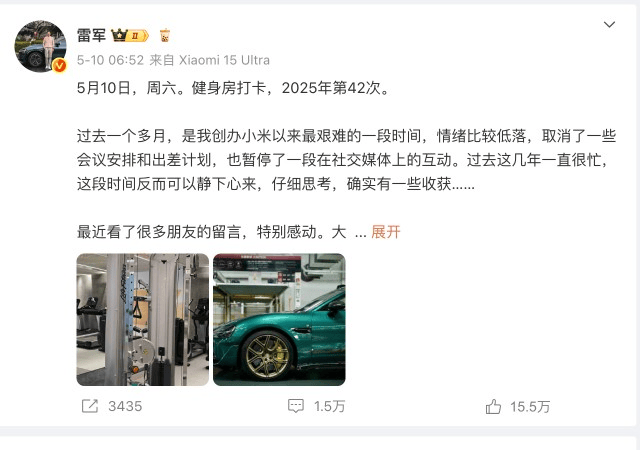
小米雷军发文,状态开始逐步恢复
Sou Hu Cai Jing· 2025-05-12 01:44
Group 1 - Xiaomi's CEO Lei Jun expressed that the past month has been the most challenging period since the company's founding, leading to a temporary pause in meetings and social media interactions [1] - Lei Jun reflected on the support from friends and the community, which has helped him regain confidence and motivation [1] Group 2 - A tragic traffic accident involving a Xiaomi SU7 vehicle occurred on March 29, 2025, resulting in the deaths of three female university students [3] - The accident took place while the vehicle was in NOA (Navigation on Autopilot) mode, traveling at a speed of 116 km/h before the collision [3] - The vehicle collided with a concrete barrier after the driver took control, with the last confirmed speed before impact being approximately 97 km/h [3] - Witnesses reported that the vehicle caught fire rapidly after the collision, complicating rescue efforts [3] Group 3 - Following the accident, Xiaomi established a special task force to cooperate with police investigations and provided vehicle data and system information [4] - The company contacted the vehicle owner immediately after the incident to understand the circumstances and initiated emergency rescue calls [4] - As of May 12, the investigation into the accident is ongoing, with no final results released yet [4]