小米SU7 Ultra

Search documents
雷军用两年走完祛魅之路
汽车商业评论· 2026-03-21 02:38
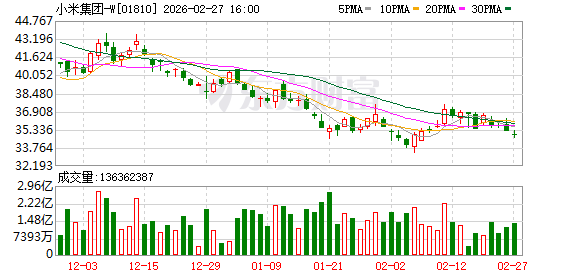
Core Viewpoint - The narrative surrounding the Chinese automotive industry has been subtly rewritten, particularly through the marketing strategies employed by Xiaomi and its founder Lei Jun, who has deeply intertwined his personal brand with the company's identity [3][9]. Group 1: Marketing Strategies and Consumer Engagement - The initial launch of the SU7 saw overwhelming consumer engagement, with 50,000 pre-orders in 27 minutes and 88,898 in 24 hours, creating a mythos around the idea that "ordinary people can make great cars" [3]. - The recent launch of the new SU7 saw a significant drop in stock price by 8.59% the following day, indicating a disconnect between consumer enthusiasm and market confidence [5]. - Xiaomi's marketing strategy shifted from "pre-orders" to "lock orders," which the company claims are more reflective of genuine consumer intent, although this change has raised questions about transparency [5][42]. Group 2: The Role of Lei Jun - Lei Jun's personal narrative as an entrepreneur has been pivotal in shaping Xiaomi's automotive identity, leveraging emotional engagement rather than purely rational product assessments [10]. - The marketing approach has included a strong emphasis on community involvement and real-time engagement during product launches, mirroring successful strategies from the smartphone industry [12]. - The messaging around the SU7 has focused on high performance and value, positioning it as a disruptor in the automotive market, which has resonated with consumers seeking high cost-performance ratios [13]. Group 3: Challenges and Market Response - The SU7 Ultra faced significant backlash following a fatal accident, leading to public scrutiny over safety and the company's response, which was perceived as inadequate [16]. - Subsequent issues with product specifications and consumer dissatisfaction have highlighted the gap between marketing promises and actual product performance, leading to a crisis of trust [19][20]. - The automotive market is shifting, with traditional manufacturers like Geely gaining strength, contrasting with Xiaomi's declining stock and market enthusiasm, emphasizing the need for long-term commitment over short-term hype [47][48]. Group 4: Future Outlook and Strategic Shifts - The new SU7's pricing strategy reflects an attempt to stimulate demand despite rising production costs, with hopes of achieving economies of scale in the future [34][35]. - Analysts predict a potential decline in gross margins due to increased competition and reduced subsidies, placing additional pressure on Xiaomi's automotive ambitions [37]. - The automotive industry is characterized by long-term narratives rather than fleeting trends, suggesting that Xiaomi must adapt its strategy to align with industry norms and consumer expectations [48].

本田突发暴雷:因撤回电动化战略损失1000亿元;对标小米SU7 Ultra,追觅汽车售价或超60万元;爱诗科技近期完成3亿美元C轮融资丨邦早报
创业邦· 2026-03-13 00:07
Group 1 - Honda announced a significant loss of 1 trillion yen due to the withdrawal of its electrification strategy, with expected operating losses of 270 billion to 570 billion yen for FY2025 [2] - Tencent's SkillHub platform faced accusations of plagiarism from OpenClaw's creator, but Tencent clarified that it only serves as a local mirror for Chinese users and has contributed to the original project's bandwidth [2] - The launch of the Chasing Car series at AWE2026 is positioned against Xiaomi's SU7 Ultra, with a price range of 600,000 to 700,000 yuan and impressive performance metrics [7] Group 2 - Li Auto reported a revenue of 112.3 billion yuan and a net profit of 1.1 billion yuan for the fiscal year, marking three consecutive years of profitability [9] - ByteDance welcomed Yu Bowen, a former Alibaba executive, to lead its visual model and multimodal interaction team, indicating a strategic move in AI development [9] - Nvidia plans to invest 26 billion USD (approximately 178.8 billion yuan) over the next five years to develop open-source AI models, significantly surpassing OpenAI's investment in GPT-4 [21] Group 3 - BYD is conducting large-scale recruitment, with over 90,000 employees, making it the largest employer among A-share listed companies [13] - Apple celebrated its 50th anniversary, with CEO Tim Cook expressing gratitude to users for their role in shaping the company's innovations [14][15] - Atlassian announced a 10% workforce reduction, affecting around 1,600 employees, to adapt to the rise of AI and strengthen its financial position [21]






对标小米SU7 Ultra!追觅汽车全系展出,价格或超60万元;宝马集团2025年净利润同比下降3%丨汽车交通日报
创业邦· 2026-03-12 10:22
Group 1 - The core viewpoint of the article highlights the advancements and competitive positioning of various automotive companies, particularly in the electric and autonomous vehicle sectors [2][3][4]. Group 2 - Chasing Car showcased its entire lineup at AWE 2026, with models priced between 600,000 to 700,000 yuan, targeting a sporty market segment and achieving a 0-100 km/h acceleration in 1.8 seconds with a range of 1000 km [2]. - NVIDIA's CEO Jensen Huang demonstrated the company's DRIVE AV autonomous driving platform in a 22-minute video, successfully completing a journey without human intervention [2]. - BMW Group reported a 3% decline in net profit for 2025, with total revenue of 133.45 billion euros, a 6.3% decrease year-on-year, despite a slight increase in vehicle deliveries [3]. - Nissan, Uber, and Wayve announced a collaboration to develop robot taxis, planning to launch a pilot project in Tokyo by the end of 2026 using Nissan Leaf electric vehicles equipped with Wayve technology [4].

小米虚假宣传案大反转,全网炸锅了!
商业洞察· 2026-03-03 09:22
Core Viewpoint - The article discusses the legal resolution of a dispute involving Xiaomi's "hole version" car hood, highlighting the implications for consumer trust and corporate responsibility in marketing practices [3][4][21]. Summary by Sections Background of the Dispute - The dispute began in February 2025 when Xiaomi launched the SU7 Ultra with a carbon fiber hood priced at 42,000 yuan, marketed as having "racing-level features" [7]. - Initial consumer expectations were set high by Xiaomi's promotional statements, including comments from CEO Lei Jun about performance upgrades [7][8]. Consumer Reactions and Legal Actions - After receiving the product, consumers found discrepancies between the advertised features and the actual performance, leading to feelings of being misled [9][10]. - Xiaomi's response included acknowledging unclear communication and offering compensation, which consumers deemed insufficient compared to the high cost of the optional hood [11][10]. Court Ruling - The court ruled in favor of Xiaomi, stating three main points: 1. A third-party report confirmed the hood's aerodynamic benefits, countering claims of it being merely decorative [14]. 2. The court noted the essential differences between the production model and the prototype, indicating consumers should have been aware of these distinctions [14]. 3. The promotional statements did not constitute binding contractual obligations, as the purchase agreement lacked specific performance metrics [14][15]. Implications for Xiaomi and the Industry - The ruling is significant but only the first of its kind, with other similar cases pending in different jurisdictions [16]. - Despite the legal victory, the incident has raised concerns about consumer trust and the need for companies to balance marketing effectiveness with product reality [20][21]. - Xiaomi's future success in the electric vehicle market will depend on learning from this experience and maintaining transparent communication with consumers [20][21]. Future Outlook - Xiaomi plans to accelerate its electric vehicle initiatives, with six new models expected in 2026, covering a price range of 200,000 to 550,000 yuan [17]. - The company has prepared its Beijing factory for a production capacity exceeding 600,000 units annually, indicating ambitious growth plans [19].


小米舞超跑,意在“欧公子”?
虎嗅APP· 2026-03-02 09:43
Core Viewpoint - Xiaomi is expanding its automotive business by launching the concept supercar Xiaomi Vision Gran Turismo, aiming to enhance its brand image and prepare for its entry into the European market [2][3][6]. Group 1: Product Launch and Brand Strategy - The launch of the Xiaomi Vision Gran Turismo serves to showcase technological capabilities and elevate brand positioning, inviting top global manufacturers to push the boundaries of technology and design [3][6]. - The concept supercar is part of Xiaomi's strategy to establish a high-end brand image in Europe, which is identified as the first target market for its automotive business [8][11]. Group 2: Market Entry and Challenges - Xiaomi plans to enter the European market by 2027, with the concept supercar's debut aimed at increasing brand recognition among European consumers [8][12]. - The pricing strategy for Chinese cars in Europe is challenging, with a reported markup of 118% compared to local brands, which could position the Xiaomi SU7 at over €53,000, higher than the starting price of the Model 3 [12][16]. Group 3: Competitive Landscape and Production Considerations - Xiaomi's late entry into the European market mirrors its initial domestic challenges, as competitors like NIO and Xpeng have already established a presence [15]. - The company has established a research center in Munich and aims to expand its retail presence in the UK, indicating a strategic approach to leverage its existing smartphone user base [9][15]. - Local production in Europe is crucial for Xiaomi to ensure supply stability and reduce costs, with plans to consider building a factory, although specific timelines are not yet disclosed [16][17].

小米汽车预热新车,或为超跑概念车,雷军:明天见
Sou Hu Cai Jing· 2026-02-28 02:20
Group 1 - Xiaomi is set to unveil a new car, with CEO Lei Jun teasing the announcement on social media [1] - A mysterious supercar from Xiaomi has been spotted in Barcelona, featuring the "xiaomi" logo, coinciding with the upcoming Mobile World Congress [3] - The new vehicle is likely the Vision GT concept car, developed in collaboration with the racing game "GT Racing," showcasing futuristic design and technology rather than being a production model [4] Group 2 - The Vision GT concept car features a streamlined body, muscular lines, and hidden tail lights, emphasizing Xiaomi's design capabilities [4] - The introduction of the Vision GT concept car aims to enhance Xiaomi's brand value and establish a technological reputation for future high-performance vehicles [4]
事关事故调查过程,小米最新回应
Shang Hai Zheng Quan Bao· 2026-02-27 14:59
Group 1 - The core issue of the news revolves around the ongoing investigation into the traffic accident involving the Xiaomi SU7 Ultra, highlighting the procedural steps taken by authorities in such cases [1][2] - Xiaomi's safety experts emphasized that during an investigation, the car manufacturer is restricted from accessing the vehicle and must provide information truthfully, with no interference allowed from the company [2] - Xiaomi announced a five-layer safety system for its vehicles, focusing on human-centered design, priority for safety assistance, redundancy in passive safety, rapid emergency response, and the importance of driver attention while using assisted driving features [4] Group 2 - Xiaomi's CEO Lei Jun stated the company's commitment to developing its own battery packs, having established a strong research and development team and a dedicated battery pack factory to enhance manufacturing capabilities [6] - The company aims to set a benchmark in battery manufacturing and improve the overall supply chain efficiency within the industry [6] - Xiaomi plans to rebuild its automotive safety advisory committee and engage with experts from various institutions to ensure comprehensive safety evaluations for its vehicles [4]
小米应主动召回37万辆初代SU7,以彻底消除门把手安全隐患
Di Yi Cai Jing· 2026-02-27 07:05
Core Viewpoint - The article discusses the safety concerns regarding the first-generation Xiaomi SU7 vehicles, particularly focusing on the door handle design that poses risks during emergencies, and emphasizes the need for Xiaomi to recall these vehicles to ensure user safety and uphold corporate responsibility [1][5][6]. Group 1: Incident Details - A collision involving a Xiaomi SU7 Ultra led to a fire, resulting in the driver's death, which was attributed to the vehicle's inability to open the doors due to electrical failure after the accident [1][3]. - The judicial report highlighted that the vehicle's external door handles were electrically released without mechanical backup, making it impossible to open the doors when the power was cut off [2][5]. Group 2: Regulatory Changes - A new mandatory national standard for automotive door handles (GB 48001-2026) will require mechanical release mechanisms for both external and internal door handles, effective from January 1, 2027 [4]. - Xiaomi's upcoming models, including the YU7 and the next-generation SU7, will comply with this new standard, indicating a shift towards improved vehicle safety [4]. Group 3: Call for Recall - There are calls for Xiaomi to proactively recall the first-generation SU7 vehicles to address the identified safety hazards, which affect approximately 370,000 units that have been delivered [5][6]. - A recall is seen as a responsible action for the company to take towards its initial users and as a necessary step to enhance brand reputation and consumer trust [7][8]. Group 4: Corporate Responsibility - The article argues that a recall is not merely a business inefficiency but a reflection of a company's commitment to product improvement and social responsibility [8][9]. - The need for companies to take on greater social responsibility is emphasized, especially in light of recent regulatory developments aimed at enhancing safety in the automotive industry [10].
还原小米SU7成都事故最后时刻:撞击后9秒断电致门把手失效,燃爆前6.5s曾三次制动
Di Yi Cai Jing· 2026-02-26 12:57
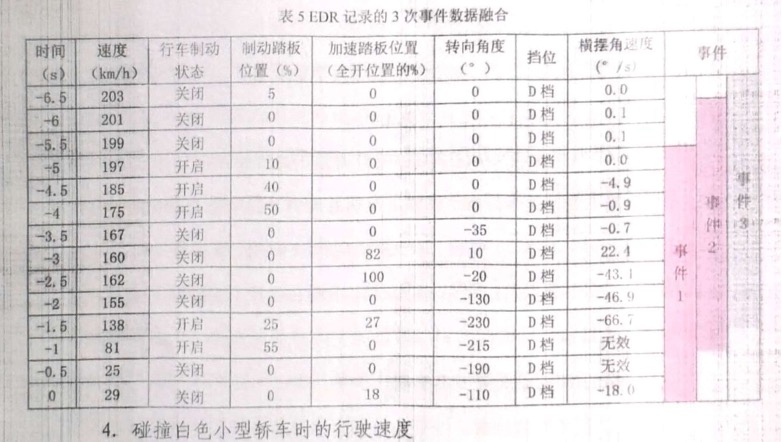
Core Viewpoint - The investigation into the Xiaomi SU7 Ultra vehicle explosion accident reveals critical details regarding the circumstances of the incident, including the vehicle's speed, the failure of the door release mechanism, and the cause of death of the driver [1][2]. Group 1: Accident Details - The vehicle was traveling at a speed of 167 km/h at the time of collision, significantly exceeding the speed limit [1] - The driver was found to have full responsibility for the accident, but the cause of death was attributed to the fire rather than the collision itself [2] - The vehicle's doors could not be opened from the outside due to a failure in the electric release mechanism after the low-voltage system was cut off post-collision [1][4] Group 2: Technical Findings - The vehicle was equipped with emergency mechanical handles, but both external door handles were electric releases, which failed after the collision [4] - The accident report indicates that the doors remained closed after the collision, and the electric release function was disabled due to the power loss [4][5] - The time available for rescuers to open the doors from the outside was approximately 9 seconds after the vehicle hit the barrier [5] Group 3: Driver Behavior and Vehicle Performance - Data from the Event Data Recorder (EDR) shows that the driver attempted to brake three times in the 6.5 seconds leading up to the explosion, but the vehicle remained out of control [6][8] - The vehicle's speed was recorded at 203 km/h just before the collision, with the driver applying the brakes but only achieving a slight reduction in speed [8] - The maximum brake pedal position reached 55% during the attempts to slow down, yet the vehicle still collided with the barrier at a high speed [8]
小米SU7成都碰撞燃烧事故调查公布,车门因断电无法开启致车主身亡
3 6 Ke· 2026-02-26 10:45
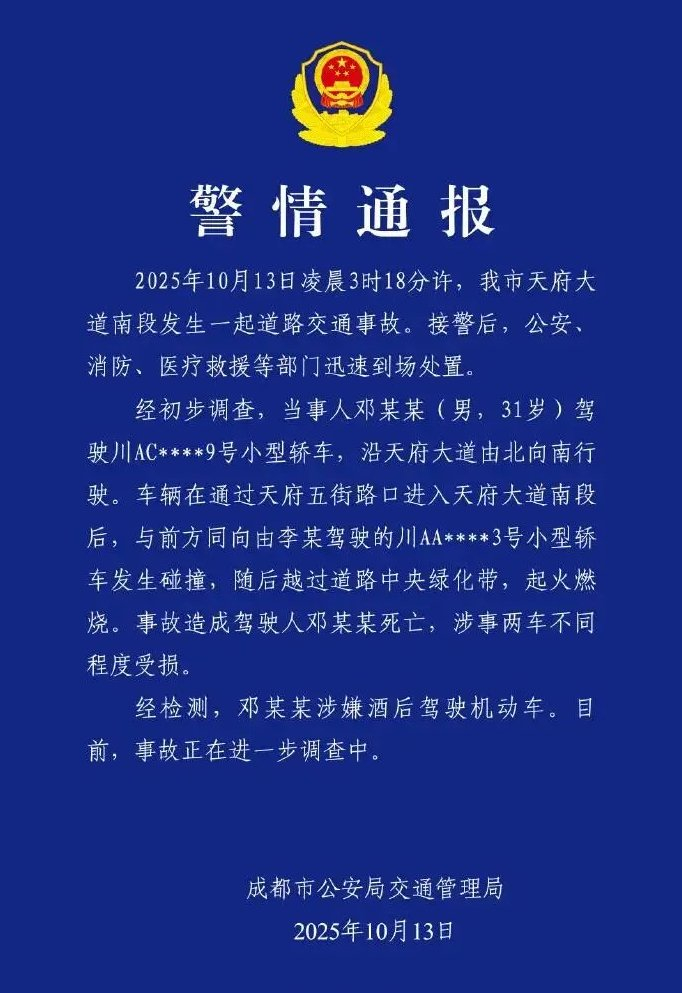
Core Viewpoint - The investigation into the Xiaomi SU7 Ultra collision and fire incident has raised significant concerns regarding the safety of electric vehicles, particularly in relation to emergency access and battery management systems [1][2]. Group 1: Incident Details - The accident occurred on October 13, 2025, at approximately 3:00 AM, involving a Xiaomi SU7 Ultra and another vehicle, resulting in the death of the driver, who was suspected of driving under the influence [2][3]. - The collision speed was recorded at 167 kilometers per hour, leading to a short circuit in the vehicle's power battery, which caused a failure in the low-voltage system and rendered the car doors inoperable [1]. Group 2: Safety Concerns - The report highlighted that the vehicle was equipped only with an electric release button for the doors and lacked an external emergency mechanical handle, which contributed to the inability to escape during the fire [1]. - The incident has sparked ongoing public discourse regarding the safety protocols and design features of new energy vehicles, particularly in emergency situations [1].