小路NGP

Search documents
小鹏为什么选择物理AI这条路
雷峰网· 2025-11-07 00:43
Core Viewpoint - The future of automobiles is envisioned as four-wheeled robots, with intelligent driving becoming the core competitive point in the industry by 2025, as electric vehicle technology matures and becomes a basic threshold for entry [2][9]. Group 1: Industry Trends - The development of the new energy industry has shifted focus from electrification to intelligent driving, marking a new cycle of competition [2]. - Major tech companies are investing in physical AI, indicating a consensus that the next generation of human-machine interaction will be through robotics [2][9]. - The emergence of physical AI is expected to revolutionize various sectors, including automotive, robotics, and flying cars, creating a more integrated technological ecosystem [7][28]. Group 2: Company Developments - Xiaopeng Motors has been an early adopter of AI in the automotive sector, positioning itself in the first tier of intelligent driving companies in China [3]. - The company has achieved significant breakthroughs with its second-generation VLA model, which allows for autonomous understanding of physical laws, enhancing its intelligent driving capabilities [5][20]. - Xiaopeng's investment in AI infrastructure includes a 4.5 billion yuan annual investment in computing power, establishing a large-scale intelligent computing cluster to support its AI model training [16]. Group 3: Product Innovations - Xiaopeng plans to launch multiple products, including three Robotaxi models and a highly humanoid robot named IRON, aiming for mass production by the end of 2026 [22][30]. - The second-generation VLA model is designed to eliminate reliance on high-precision maps, enabling more flexible and cost-effective deployment of Robotaxi services [28]. - The company is also advancing in the flying car sector, with over 7,000 orders for its land carrier and ongoing flight verification for its multi-person tilt-rotor flying car [30]. Group 4: Competitive Landscape - The competition in the physical AI space is intensifying, with Xiaopeng and Tesla both recognizing the need for a combination of diverse hardware and unified software architecture to support AI's development in the physical world [12][17]. - Xiaopeng's approach to physical AI aims to create a synergistic effect across its various business lines, optimizing costs and enhancing overall competitiveness [26]. - The industry is witnessing a shift from a single-direction chase to a collaborative innovation model, where breakthroughs are achieved through the convergence of multiple fields [33].


闪电快讯 | 小鹏汽车推出第二代VLA并围绕该架构发布Robotaxi、机器人
Xin Lang Cai Jing· 2025-11-05 15:49
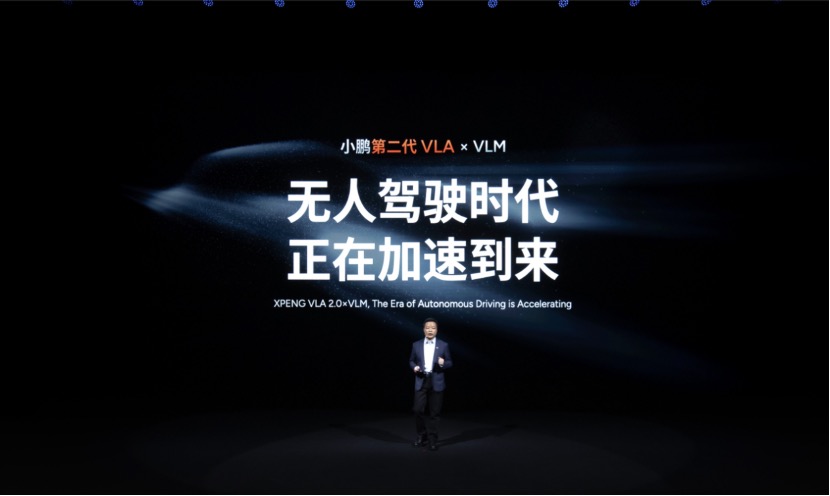
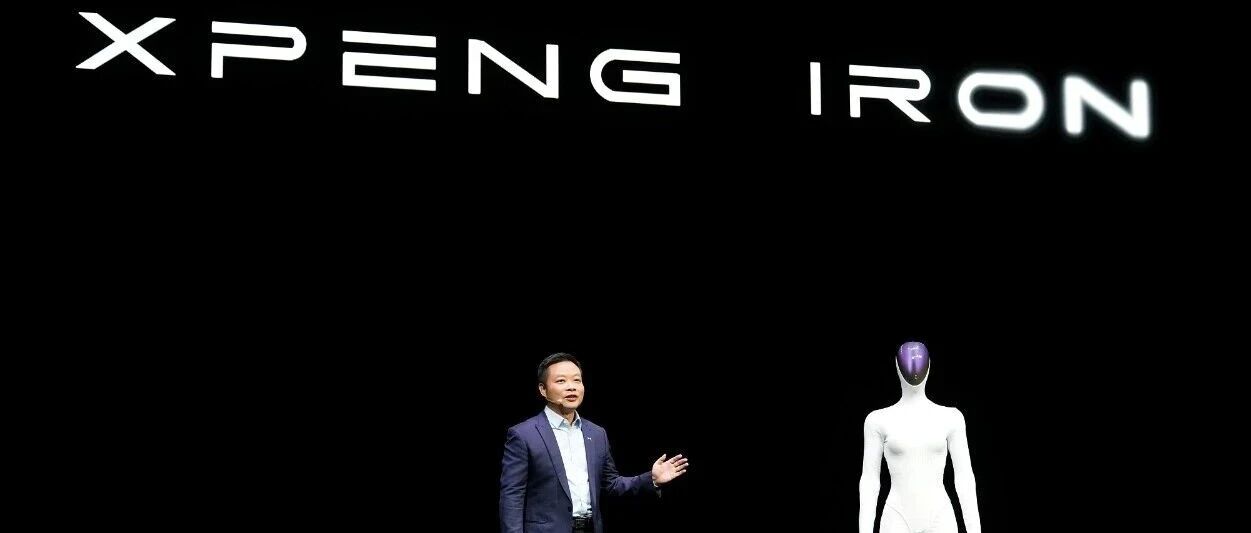
Core Insights - Xiaopeng Motors unveiled its second-generation VLA (Vision-Language-Action) architecture, which allows for direct output from visual signals to action commands without language translation [1] - The second-generation VLA is Xiaopeng's first mass-produced physical world model, featuring billions of parameters and trained on nearly 100 million clips [1] - Xiaopeng plans to launch three Robotaxi models and a new humanoid robot, IRON, by 2026, with the Robotaxi supporting both personal and commercial use globally [2][4] Group 1: Second-Generation VLA - The second-generation VLA is integrated into the Ultra model with a computing power of 2250 TOPS and enhances the average takeover mileage for complex roads by 13 times [1] - The model will be available for pioneer co-creation experiences in December 2025 and will be fully rolled out in Q1 2026 [1] - Volkswagen has become the first strategic partner for the second-generation VLA, and Xiaopeng's Turing AI chip has been designated for Volkswagen [1] Group 2: Robotaxi and Humanoid Robot - The Robotaxi will feature dual redundant hardware and four Turing AI chips, achieving a computing power of 3000 TOPS, and will have an open SDK for global developers [2] - The humanoid robot IRON will utilize three Turing AI chips with an effective computing power of 2250 TOPS and will be designed for commercial applications in guiding and service roles [4][6] - IRON is expected to achieve mass production by the end of 2026, with a height not exceeding 170 cm [6] Group 3: A868 Flying Car and Land Carrier - Xiaopeng is developing the A868 flying car, which is expected to have a range of 500 km and a maximum speed of 360 km/h, designed for business travel with a six-seat cabin [6] - The land carrier has received over 7000 global orders, with a production facility capable of producing 10,000 units annually, and the first unit has successfully completed trial production [7]

涉智能驾驶、机器人 小鹏汽车展现最新成果
财联社· 2025-11-05 14:46
Core Viewpoint - Xiaopeng Motors is leveraging its advancements in AI technology to enhance its product offerings, particularly in smart driving, Robotaxi, robotics, and low-altitude flying vehicles, with clear timelines for mass production and collaboration with major partners [1][2][3][4]. Group 1: Smart Driving Innovations - Xiaopeng Motors introduced the second-generation VLA, which serves as a foundational model for its smart driving capabilities, enabling significant improvements in autonomous driving performance, such as a 13-fold increase in average takeover mileage on complex roads [2]. - The company plans to invite pioneer users to co-create experiences with the second-generation VLA by the end of December 2025, with full deployment of the Ultra model expected in the first quarter of 2026 [2]. Group 2: Robotaxi Development - Xiaopeng Motors aims to launch three Robotaxi models by 2026, featuring L4-level driving experiences and equipped with dual hardware systems and four Turing AI chips, achieving a computing power of 3000 TOPS [3]. - The company will open the Robotaxi SDK for global partners to build an ecosystem, with Gaode being the first global ecological partner [3]. Group 3: Robotics and AI Integration - The new generation of the IRON robot will utilize three Turing AI chips, providing a computing power of 2250 TOPS, and will be integrated with the second-generation VLA model for advanced intelligence [3]. - Xiaopeng Motors is prioritizing commercial applications for its robots, focusing on services such as guiding and shopping assistance, and will collaborate with Baosteel for industrial applications [3]. Group 4: Low-Altitude Flying Vehicles - Xiaopeng Huitian has introduced the "land aircraft carrier" for personal low-altitude travel and the A868, a hybrid flying car for efficient group travel, with over 7,000 global orders for the land aircraft carrier [4]. - The A868 is currently in a critical phase of flight verification [4]. Group 5: Market Position and Future Outlook - Xiaopeng Motors is recognized as the most similar company to Tesla in terms of technology and product offerings, although it acknowledges that Tesla has a more global presence [4]. - As of November 4, Xiaopeng Motors' market capitalization reached 21.629 billion, surpassing competitors like Li Auto and NIO, while the company continues to optimize operational efficiency [4].
小鹏第二代VLA重磅发布,带来“物理世界模型”新范式
Zhi Tong Cai Jing· 2025-11-05 07:58
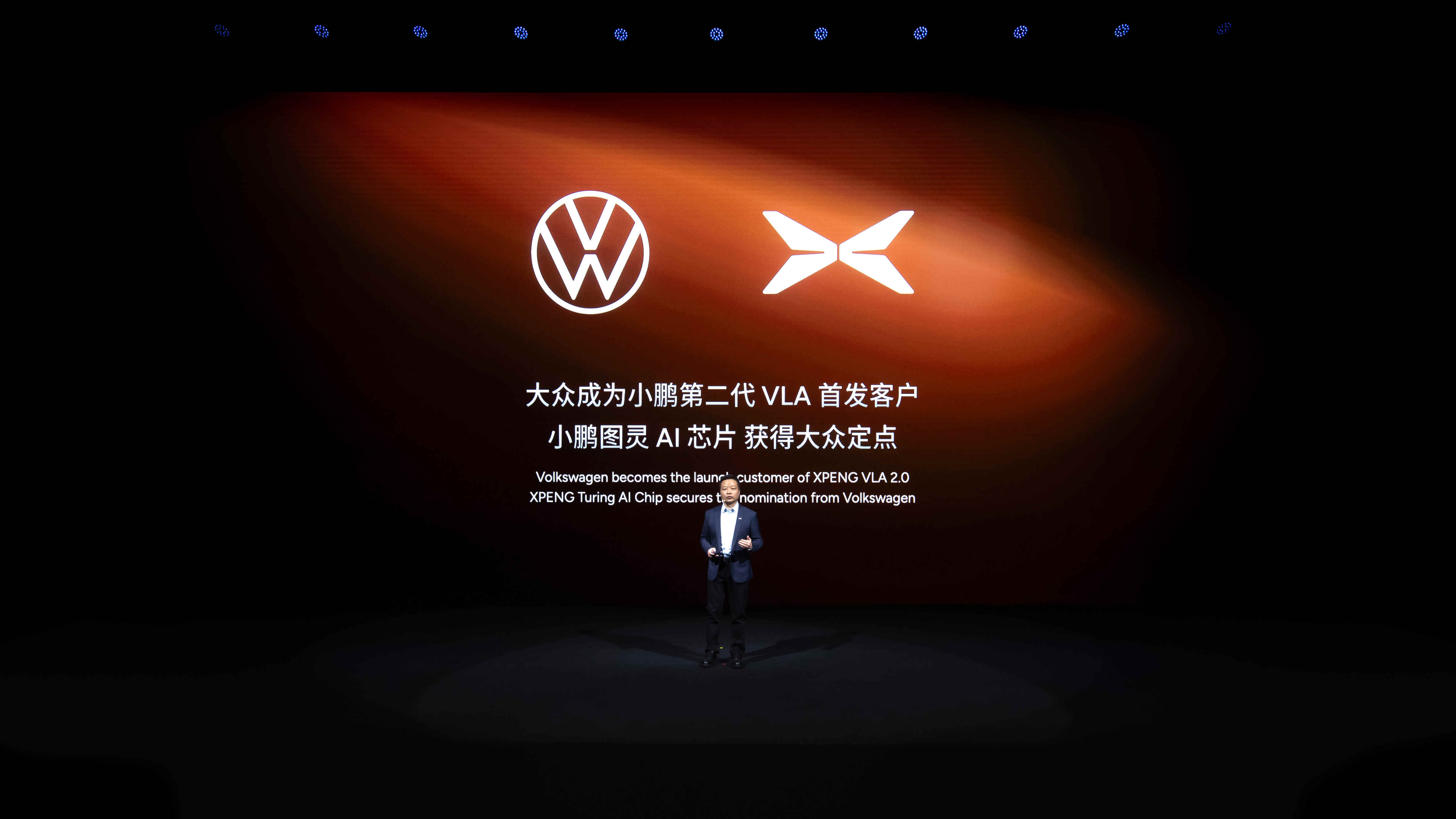
Core Insights - The second-generation VLA from XPeng Motors represents a significant shift in the traditional "vision-language-action" framework, enabling direct output from visual signals to action commands without language translation [1] - This model is the first mass-produced physical world model from XPeng, serving as both an action generation model and a physical world understanding model, applicable across various domains including AI vehicles, humanoid robots, and flying cars [1][2] - The second-generation VLA is equipped with a parameter scale in the billions, significantly surpassing the industry standard of tens of millions, and is trained on nearly 100 million clips, equivalent to the driving experience of a human driver over 65,000 years [1] Technical Advancements - The second-generation VLA has achieved a breakthrough in computing power and model architecture, leading to a significant evolution in XPeng's intelligent driving capabilities [1] - The introduction of "Xiaolu NGP" has increased the average takeover mileage on complex roads by 13 times, showcasing the model's generalized learning and intelligent emergence capabilities [1] - The industry-first "navigation-free automatic assisted driving" feature, Super LCC+ human-machine co-driving, can be activated globally without reliance on navigation [1] Future Plans - XPeng's second-generation VLA is set to launch a pioneer co-creation experience in December 2025, with full rollout in the first quarter of 2026 alongside the Ultra model [2] - Volkswagen has been announced as the strategic partner for the launch of the second-generation VLA, and XPeng's Turing AI chip has been designated for Volkswagen [2]
小鹏(09868)第二代VLA重磅发布,带来“物理世界模型”新范式
智通财经网· 2025-11-05 07:52
Core Insights - The release of the second-generation VLA by XPeng Motors represents a significant advancement in the automotive industry, introducing a new paradigm in physical modeling that allows for direct output from visual signals to action commands without language translation [1][2] - The second-generation VLA is XPeng's first mass-produced physical world model, capable of driving AI applications across various domains, including AI cars, humanoid robots, and flying cars [1] - The model boasts a parameter scale in the billions, significantly surpassing the industry standard of tens of millions, and has been trained on nearly 100 million clips, equivalent to the driving experience of a human driver over 65,000 years [1] Technological Advancements - The second-generation VLA is built on a fully optimized "chip-operator-model" chain, achieving 2,250 TOPS in the Ultra version, which enhances the capabilities of XPeng's intelligent driving systems [1] - The introduction of "Xiaolu NGP" has increased the average takeover mileage on complex roads by 13 times, showcasing the model's advanced learning and generalization capabilities [1] - The industry-first "No Navigation Automatic Assisted Driving" feature, Super LCC+ Human-Machine Co-Driving, can be activated globally without reliance on navigation, demonstrating the model's emergent intelligence [1] Future Plans - XPeng plans to launch the second-generation VLA for pioneer co-creation experiences in December 2025, with a full rollout in the first quarter of 2026 alongside the Ultra model [2] - Volkswagen has been announced as the strategic partner for the launch of the second-generation VLA, with XPeng's Turing AI chip already secured for Volkswagen [2]