
小鹏第二代VLA大模型

Search documents
【重磅深度】2026年智驾平权之车企智驾方案梳理
东吴汽车黄细里团队· 2026-03-04 15:36
Investment Recommendations - The current investment suggestion for the smart automotive sector is to maintain a strong outlook on the L4 RoboX theme for 2026, favoring B-end software over C-end hardware [2][6] - Preferred H-shares include Xpeng Motors, Horizon Robotics, Pony.ai, WeRide, Cao Cao Mobility, and Black Sesame Intelligence; A-shares include Qianli Technology, Desay SV, and Jingwei Hirain [2][6] Downstream Application Dimensions - Robotaxi perspective includes: 1. Integrated model: Tesla and Xpeng Motors 2. Technology providers + operational sharing model: Horizon, Baidu, Pony.ai, WeRide, and Qianli Technology 3. Transformation of ride-hailing/taxi services: Didi, Cao Cao Mobility, Ruqi Mobility, public transport, and Jinjiang Online [2][6] - Robovan perspective includes Desay SV and Jiushi Intelligent/New Stone Technology [2][6] - Other autonomous vehicle perspectives include mining trucks (e.g., HiDi Intelligent Driving), ports (e.g., Jingwei Hirain), sanitation vehicles (e.g., Yingfeng Environment), and buses (e.g., WeRide) [2][6] Upstream Supply Chain Dimensions - B-end autonomous vehicle OEMs include BAIC BluePark, GAC Group, Jiangling Motors, and Tongli Co. - Key upstream suppliers include: 1. Testing services (China Automotive Research and China Automotive Industry Corporation) 2. Chips (Horizon Robotics and Black Sesame Intelligence) 3. Domain controllers (Desay SV, Jingwei Hirain, Joyson Electronics, Huayang Group, and Coboda) 4. Sensors (Sunny Optical Technology, Hesai, and Suteng Juchuang) 5. Steer-by-wire chassis (Bertel and Nexperia) 6. Lighting (Xingyu Co.) 7. Glass (Fuyao Glass) [2][6] Mainstream Automakers' Autonomous Driving Strategies - A detailed comparison of major domestic automakers' autonomous driving strategies shows various approaches, including self-research and external supply partnerships, with notable collaborations with companies like Huawei, Momenta, and Horizon [4][5][20][21][30][32][39][40] - Chery's strategy includes a mixed model of multiple external algorithm suppliers and self-research platforms, with significant investments in partnerships [28][29] - Geely's integration of its autonomous driving team into Qianli Technology aims to streamline operations and enhance technological capabilities [20][22][23] BYD's Autonomous Driving Development - BYD's "Tianshen Eye" system has evolved to version 5.0, featuring advanced capabilities such as automatic emergency steering and braking, with a focus on enhancing user safety and efficiency [15][16] - The company emphasizes a dual approach of self-research and external collaboration, maintaining a significant investment in autonomous driving technology [10][14][47] Xiaomi's Strategic Investment in Autonomous Driving - Xiaomi has adopted a phased approach to its autonomous driving strategy, transitioning from strategic investments to full-scale self-research and development, with a significant increase in team size and R&D investment [47][48]





2026年智驾平权之车企智驾方案梳理-20260304
Soochow Securities· 2026-03-04 12:51
Core Insights - The report emphasizes the growing importance of L4 RoboX as a key investment theme in the smart automotive sector by 2026, suggesting a preference for B-end software companies over C-end hardware companies [4] - It identifies specific investment opportunities in both H-shares and A-shares, highlighting companies like Xpeng Motors, Horizon Robotics, and Momenta as preferred choices in the H-share market, while recommending Qianli Technology and Desay SV as top picks in the A-share market [4] - The report outlines various downstream application scenarios, including Robotaxi and Robovan perspectives, and suggests relevant companies for each segment [4] Group 1: Smart Driving Strategies of Major Automakers - The report provides a detailed comparison of smart driving strategies among major domestic automakers, indicating a mix of self-developed and externally supplied technologies [2][3] - It highlights that companies like BYD and Chery are adopting a hybrid model, combining self-research with partnerships with external algorithm suppliers to mitigate risks and control costs [22][23] - The report notes that automakers such as Great Wall and Changan are also pursuing a dual approach of self-research and external collaboration, with specific emphasis on their organizational structures and technology strategies [26][30] Group 2: BYD's Smart Driving Developments - BYD's "全民智驾" strategy aims to shift from standard configurations to a pay-per-use model for smart driving features, reflecting a response to market demand and consumer sensitivity to pricing [7] - The company has established a comprehensive self-research team, integrating various departments to enhance efficiency and innovation in smart driving technology [11] - The latest iteration of BYD's smart driving system, 天神之眼5.0, introduces advanced features such as automatic emergency steering and enhanced obstacle avoidance capabilities [12] Group 3: Geely's Smart Driving Integration - Geely has completed the integration of its smart driving teams under 千里智驾, focusing on consolidating resources and optimizing technology platforms [17] - The company has introduced a tiered smart driving solution, offering various configurations and features across different vehicle models, maintaining a flexible approach to technology deployment [19] - Geely's strategic focus includes leveraging partnerships with algorithm suppliers to enhance its smart driving capabilities while ensuring a robust internal development framework [18] Group 4: Chery's Smart Driving Innovations - Chery has launched the "猎鹰智驾" series, which includes multiple versions of smart driving technology aimed at achieving full scene coverage and enhancing user experience [22] - The automaker has established a dedicated smart driving center to streamline its research and development efforts, integrating various technological components [21] - Chery's strategy involves collaborating with multiple external suppliers while maintaining a strong self-research capability to ensure flexibility and innovation [23] Group 5: Great Wall's Smart Driving Strategy - Great Wall has developed a multi-tiered smart driving platform, with varying levels of computational power and features tailored to different market segments [26][29] - The company is actively exploring partnerships with external algorithm suppliers to enhance its smart driving offerings, while also focusing on internal development [27] - Great Wall's approach includes a clear differentiation between low, medium, and high computational power platforms to cater to diverse consumer needs [26] Group 6: Other Automakers' Strategies - SAIC Group is primarily relying on external suppliers for its smart driving solutions, while also establishing internal research capabilities to enhance product offerings [34][35] - GAC Group is pursuing a dual strategy of self-research and collaboration with partners like Huawei and Momenta to develop advanced smart driving technologies [37] - Leap Motor is focusing on an end-to-end model for its smart driving system, aiming to provide comprehensive features at competitive price points [39]
2026年智驾平权之车企智驾方案梳理
Soochow Securities· 2026-03-04 12:24
Investment Rating - The report maintains a positive outlook on the smart automotive sector, particularly emphasizing the L4 RoboX theme for 2026 [4] Core Insights - The report suggests a preference for B-end software companies over C-end hardware companies, recommending specific stocks in both H-shares and A-shares [4] - It highlights various downstream application perspectives, including Robotaxi and Robovan, and identifies key players and their business models [4] - The report also discusses upstream supply chain opportunities, including core suppliers and manufacturing partners [4] Summary by Sections Mainstream Automotive Companies' Smart Driving Technology Solutions - The report provides a comprehensive overview of the smart driving strategies of major automotive companies, detailing their partnerships and technology approaches [5][6][7][15][22][24][30][33] - Companies like BYD, Geely, Chery, and Great Wall are noted for their mixed strategies of self-research and external collaboration, with specific technology and supplier partnerships outlined [7][15][22][24][30][33] BYD's Smart Driving Strategy - BYD has shifted its smart driving approach from standard configuration to a pay-per-use model, emphasizing self-research while maintaining partnerships with algorithm companies [7][8] - The company has launched the "Tianshen Eye 5.0" system, which features advanced capabilities such as emergency steering and obstacle avoidance [12][13] Geely's Smart Driving Team Integration - Geely has completed the integration of its smart driving team under the "Qianli Zhijia" brand, focusing on enhancing its autonomous driving capabilities [15][17][19] - The company has established a structured approach to its smart driving solutions, offering multiple versions with varying hardware and software capabilities [19] Chery's Smart Driving Development - Chery has introduced the "Falcon Smart Driving" strategy, which includes multiple versions of its smart driving system, aiming for comprehensive coverage across various scenarios [22][23] - The company has also consolidated its smart driving R&D teams to enhance efficiency and innovation [22][23] Great Wall's Smart Driving Solutions - Great Wall has adopted a dual approach of self-research and external collaboration, with a focus on enhancing its computing power and algorithm capabilities [26][29] - The company has developed a tiered computing platform to support various levels of autonomous driving features [26][29] Changan's Smart Driving Framework - Changan has implemented a strategy that combines procurement from Huawei with its own smart driving research, aiming for a comprehensive autonomous driving solution [32][33] Other Companies' Strategies - The report also covers the smart driving strategies of other companies such as SAIC, GAC, and Leap Motor, highlighting their partnerships and technological advancements [33][36][38]
中国新能源汽车持续领跑全球
Ren Min Ri Bao· 2026-01-29 00:29
Core Insights - The article highlights the significant advancements in China's electric vehicle (EV) industry, showcasing the achievements of companies like Seris Group and the government's commitment to developing high-quality manufacturing and core technologies in the automotive sector [1][2]. Group 1: Industry Growth and Government Support - The Chinese EV market is experiencing robust growth, with production and sales expected to reach 16.626 million and 16.49 million units respectively in 2025, marking year-on-year increases of 29% and 28.2% [1]. - The government's emphasis on developing new energy vehicles is seen as essential for transitioning from a major automotive nation to a strong automotive power, focusing on self-reliance in key technologies and components [1]. Group 2: Technological Advancements - The integration of artificial intelligence in the EV sector is enhancing competitiveness, with companies like Xpeng and Geely making strides in autonomous driving and AI applications [3]. - Geely's Starry Smart Computing Center, with a computing power of 23.5 quintillion operations per second, is accelerating the implementation of "full-domain AI" in the automotive industry [3]. Group 3: Market Dynamics and Competition - Measures to combat "involution" in the automotive industry, such as product consistency checks and anti-unfair competition enforcement, are beginning to yield results, correcting issues like chaotic price wars [4]. - The shift from resource-intensive, low-price competition to technology innovation and value enhancement is evident, with mainstream automakers focusing on high-quality supply and brand elevation [4]. Group 4: Safety Standards and Innovations - New safety standards are being established to enhance the safety baseline for EVs, with rigorous testing protocols being implemented to ensure vehicle safety in various scenarios [5][6]. - As of October 2025, the installation rate of automatic emergency braking systems in new passenger EVs reached 72.1%, reflecting a growing focus on safety innovations [6].

480亿新势力首富,终于要“熬出头”了
Sou Hu Cai Jing· 2025-11-21 14:19
Core Insights - Xiaopeng Motors has reported significant improvements in its third-quarter performance, including a doubling of revenue and a substantial reduction in losses, indicating a potential turnaround for the company [2][4][8] - The company achieved a record delivery of 116,000 vehicles in the third quarter, a year-on-year increase of 149.3%, and aims for a total delivery of between 125,000 and 132,000 vehicles in the fourth quarter [8][14] - CEO He Xiaopeng highlighted the company's focus on "physical AI" applications and ambitious plans for future product launches, including a new range of vehicles and advanced technologies [15][18] Financial Performance - Xiaopeng Motors reported a revenue of 54.466 billion yuan for the first three quarters of the year, a year-on-year increase of 119.96%, with a net loss reduced by 65.86% to 1.523 billion yuan [4][5] - In the third quarter alone, the company achieved a revenue of 20.38 billion yuan, up 101.8% year-on-year, with a net loss of 380 million yuan, down from 1.81 billion yuan in the same period last year [4][5] - The overall gross margin improved to 20.1%, up from 15.3% year-on-year, driven by effective cost control and increased sales [5][11] Delivery and Sales Growth - The company delivered 116,000 vehicles in the third quarter, with a significant contribution from the MONA M03 model, which has seen over 200,000 units delivered since its launch [8][9] - In October, Xiaopeng Motors set a new monthly delivery record of 42,000 vehicles, marking a 76% year-on-year increase [8][9] - The total vehicle deliveries for the year exceeded 355,000 units by the end of October, reflecting a 190% increase compared to the previous year [8] Research and Development - R&D expenses reached 2.43 billion yuan in the third quarter, a 48.7% increase year-on-year, as the company expanded its product offerings and technology development [6] - The company is also investing in technology services for other automakers, which has contributed to its gross margin improvement [12][13] Future Outlook - Xiaopeng Motors aims to achieve breakeven in the fourth quarter, with projected revenues between 21.5 billion and 23 billion yuan, representing a year-on-year growth of 33.5% to 42.8% [14] - The company plans to launch seven new products in the extended-range vehicle market by 2026, further diversifying its offerings [15][18] - He Xiaopeng emphasized the company's commitment to becoming a leader in the field of embodied intelligence and physical AI applications [18]
小鹏汽车-W(9868.HK):三季度亏损进一步收窄 物理AI与新车周期共振
Ge Long Hui· 2025-11-19 11:55
Core Insights - The company reported its Q3 2025 earnings, achieving a revenue of 20.38 billion yuan, with year-on-year and quarter-on-quarter increases of 101.8% and 11.5% respectively, while the net profit attributable to shareholders was -0.38 billion yuan, narrowing by 78.9% year-on-year and 20.3% quarter-on-quarter [1] Group 1: Financial Performance - In Q3, the company delivered 116,000 vehicles, representing a year-on-year growth of 149.3% and a quarter-on-quarter increase of 12.4% [1] - The automotive business revenue reached 18.05 billion yuan, with year-on-year and quarter-on-quarter growth of 105.3% and 6.9% respectively [1] - The average selling price (ASP) per vehicle in Q3 was 156,000 yuan, showing a slight decline of 0.8 thousand yuan quarter-on-quarter [1] - The automotive gross margin for Q3 was 13.1%, down by 1.2 percentage points from the previous quarter, attributed to product upgrades [1] Group 2: Strategic Partnerships and Revenue Growth - The overall gross margin for the company in Q3 was 20.1%, an increase of 4.8 and 2.8 percentage points year-on-year and quarter-on-quarter respectively, driven by improved profitability from service and other income [2] - Revenue from service and other income reached 2.33 billion yuan, with year-on-year and quarter-on-quarter increases of 78.1% and 67.3% respectively, and a gross margin of 74.6%, up by 14.5 and 21.1 percentage points [2] - The company expanded its collaboration with Volkswagen, which became a strategic partner for the second-generation VLA, indicating potential for increased revenue from R&D services [2] Group 3: Product Development and Future Outlook - The company launched the Kunpeng Super Range Extender, featuring a fast-charging lithium iron phosphate battery with a pure electric range exceeding 450 km, and plans to release seven new models with super range extender configurations by 2026 [3] - The second-generation VLA model was introduced, enabling direct output from visual signals to action commands, with a full rollout planned for Q1 2026 [3] - The company aims to launch three Robotaxi models in 2026 and initiate trial operations in cities like Guangzhou, with plans to open the SDK for global partners [3] Group 4: Profit Forecast and Investment Recommendations - The company adjusted its net profit forecasts for 2025-2027 to -1.4 billion, +2 billion, and +4.5 billion yuan respectively, reflecting expectations for growth driven by the new range extender models and AI capabilities [4] - The company maintains a "recommended" rating, anticipating new business models emerging from advancements in AI and mass production capabilities [4]
年销量100万台:老实人何小鹏,搞AI比李想更激进
3 6 Ke· 2025-11-19 02:09
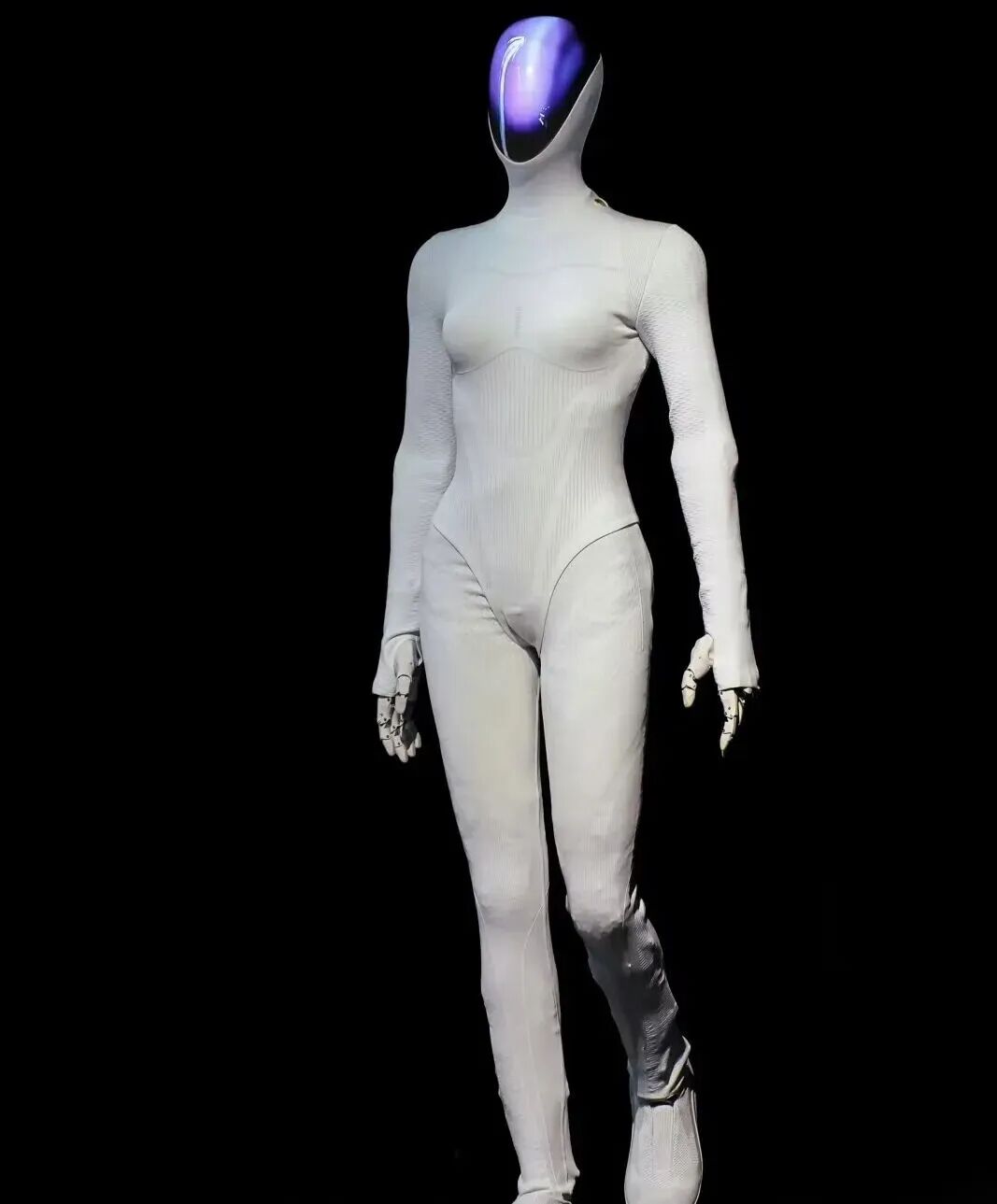
Core Insights - Xiaopeng Motors aims to produce over 1 million humanoid robots annually by 2030, indicating a belief in a market potential that surpasses that of automobiles [1][2] - The company has gained significant market attention and stock price increases due to its ambitious plans for Robotaxi and humanoid robots, surpassing competitors like Li Auto and NIO in market capitalization [1][5] Group 1: Company Strategy and Vision - Xiaopeng Motors is recognized for setting ambitious goals, such as developing flying cars and humanoid robots, positioning itself as a leader in AI-driven automotive technology [2][6] - The company has established a strategic focus on AI, launching "Pengxing Intelligent" in 2020 and committing to an "AI-driven" strategy, with plans to transition from software-defined to AI-defined vehicles [2][3] - The second-generation VLA (Vision-Language-Action) model is positioned as a foundational technology for various applications, including Robotaxi and humanoid robots, aiming to create a cross-hardware ecosystem [11][18] Group 2: Market Position and Competition - Xiaopeng Motors is seen as a direct competitor to Tesla, with a focus on innovative products like Robotaxi and humanoid robots, while also facing challenges from other automakers entering the robotics space [6][10] - Despite being in a loss-making position, Xiaopeng's market valuation has surpassed that of profitable competitors, highlighting the importance of narrative and vision in attracting investor interest [5][20] - The company faces competition not only from traditional automakers but also from established players in the robotics field, with at least 20 other car manufacturers announcing plans to develop humanoid robots [15][20] Group 3: Technological Challenges and Development - The humanoid robot IRON is set for mass production by the end of 2026, but its high cost (estimated around $30,000) may limit its competitiveness against cheaper alternatives [15][20] - The VLA model has undergone significant changes, with a shift to an end-to-end approach that aims to enhance its capabilities in understanding and interacting with the physical world [18][19] - The commercial viability of Robotaxi and humanoid robots remains uncertain, with challenges such as high costs, regulatory hurdles, and public safety concerns impacting the broader adoption of these technologies [20][21]
小鹏发布第三季度财报:多项指标创历史新高,品牌向上仍存挑战
Guan Cha Zhe Wang· 2025-11-18 11:21
Core Insights - Xiaopeng Motors reported strong performance in Q3 2025, with record delivery volume, revenue, gross margin, and cash reserves [2][4] - The average selling price per vehicle was 155,000 yuan, indicating challenges in brand elevation [5][6] Financial Performance - Total delivery volume reached 116,007 units, a year-on-year increase of 149.3% and a quarter-on-quarter increase of 12.4% [2] - Total revenue for Q3 was 20.38 billion yuan, up 101.8% year-on-year and 11.5% quarter-on-quarter [2] - Gross margin for Q3 was 20.1%, an increase of 4.8 percentage points year-on-year, while automotive gross margin was 13.1%, up 4.5 percentage points [3] Revenue Streams - Revenue from "services and other businesses" reached 2.33 billion yuan, a year-on-year increase of 78.1% and a quarter-on-quarter increase of 67.3% [2] - The partnership with Volkswagen significantly boosted revenue, with potential for future growth [2] Cost Management - Net loss for the quarter was 380 million yuan, a significant reduction from 1.81 billion yuan in the same period last year [4] - R&D expenses were 2.43 billion yuan, a year-on-year increase of 48.7%, driven by new model and technology development [5] - Selling, general, and administrative expenses rose to 2.49 billion yuan, up 52.6% year-on-year [5] Cash Position - Cash and cash equivalents, restricted cash, short-term investments, and time deposits totaled 48.33 billion yuan, an increase of approximately 760 million yuan from the previous quarter [5] Market Position and Challenges - Xiaopeng Motors faces challenges in brand elevation, particularly in the 200,000 yuan and above segment, following the launch of lower-end models [6] - The company aims to enhance its brand influence through investments in advanced driving technology and other innovative areas [7] Future Outlook - For Q4, Xiaopeng Motors expects vehicle deliveries between 125,000 and 132,000 units, a year-on-year growth of approximately 36.6% to 44.3% [7] - Total revenue is projected to reach between 21.5 billion and 23 billion yuan, representing a year-on-year growth of approximately 33.5% to 42.8% [7]

小鹏汽车三季度净亏损收窄至3.8亿元,交付量同比增长1.5倍
Xin Lang Cai Jing· 2025-11-17 10:55
Group 1 - The core viewpoint of the articles highlights Xiaopeng Motors' significant growth in revenue and vehicle deliveries in Q3, alongside a reduction in net losses [1][2] - In Q3, Xiaopeng Motors reported total revenue of 20.38 billion yuan, a year-on-year increase of 101.8%, and a net loss attributable to ordinary shareholders of 380 million yuan, narrowing by 79% [1] - The total delivery volume for Q3 reached 116,000 vehicles, representing a year-on-year growth of 149.3%, with a gross margin of 20.1%, up 4.8 percentage points year-on-year [1] Group 2 - For Q4 2025, Xiaopeng Motors anticipates vehicle deliveries between 125,000 and 132,000 units, an annual increase of approximately 36.6% to 44.3%, with total revenue projected between 21 billion and 23 billion yuan, reflecting a year-on-year increase of about 33.5% to 42.8% [2] - The company has recently launched several key applications, including the second-generation VLA model, Robotaxi, the new generation of IRON humanoid robots, and the flying car [2] - As of September 30, 2025, Xiaopeng Motors had a physical sales network of 690 stores and a self-operated charging station network comprising 2,676 stations [2] Group 3 - As of November 17, Xiaopeng Motors' stock price closed at 96 HKD per share, with a market capitalization of 183.34 billion HKD, and its US stock was down 3.92% to 24 USD per share in pre-market trading [3]
港股异动 | 小鹏汽车-W(09868)高开低走现跌超4% 小鹏科技日完善AI布局 多家大行发研报唱好
智通财经网· 2025-11-12 03:14
Core Viewpoint - Xiaopeng Motors (09868) experienced a significant stock price fluctuation, with an 18% surge followed by a 4.24% decline, indicating volatility in market sentiment [1] Group 1: Company Developments - Xiaopeng Motors recently launched several new products, including the second-generation VLA large model, Robotaxi, the new generation IRON humanoid robot, and the Huitian flying car [1] - Citigroup believes that Xiaopeng Motors is in the early stages of quantifying the profitability of its new business ventures, which could enhance market sentiment and gradually elevate its valuation from traditional new energy vehicle levels to higher premiums associated with AI, technology, and Robotaxi [1] Group 2: Analyst Ratings and Price Targets - Morgan Stanley raised the target price for Xiaopeng Motors' Hong Kong stock to 131 HKD, reflecting the growth potential and valuation re-evaluation opportunities presented by the newly launched humanoid robot and autonomous taxi [1] - Morgan Stanley anticipates that market sentiment will significantly improve starting mid-2026 as Xiaopeng begins large-scale production of physical AI products, leading to an upward adjustment of the target price for its U.S. stock to 34 USD [1]