
干炒牛河

Search documents
(新春走基层)从“空心村”到“网红村”:乡贤反哺故土,深山古村添“港味”
Xin Lang Cai Jing· 2026-02-24 14:10
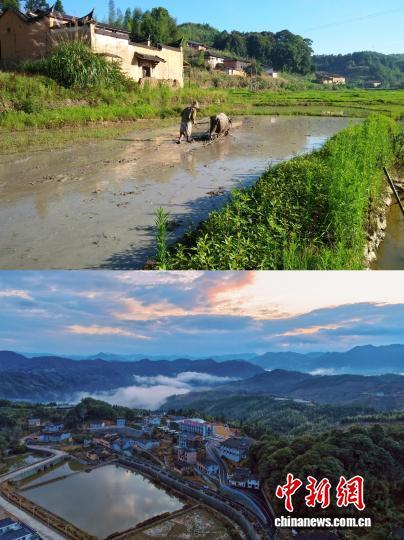
Core Viewpoint - The transformation of Jialong Village from a remote area to a vibrant tourist destination is driven by cultural preservation and economic revitalization efforts led by Lin Zhonghao, who aims to create a "Hong Kong-style countryside" that integrates local culture and history [1][5]. Group 1: Village Transformation - Jialong Village has evolved from a "hollow village" to a recognized model for rural revitalization, earning titles such as provincial-level rural revitalization demonstration village and gold medal tourism village in Ningde City [5]. - The village's development strategy focuses on leveraging its tea industry, with significant investments made to enhance tea production and establish a tea factory, which has revitalized the local economy [5][9]. Group 2: Tourism Development - The village has successfully attracted over 1,700 visitors during the recent Spring Festival, showcasing its transformation into a "net celebrity village" with various cultural and recreational activities [3][9]. - Jialong Village has developed a cherry blossom tea garden scenic area, covering 18,500 acres, which has become a national 2A-level tourist attraction, offering seasonal experiences for visitors [8]. Group 3: Economic Impact - During the Spring Festival, Jialong Village received an average of over 3,000 visitors per day, generating daily tourism revenue of approximately 10,000 to 20,000 yuan [9]. - Investments in new business formats, such as coffee shops and Hong Kong-style restaurants, have diversified the local economy and improved the overall visitor experience [9].

百年粤沪情,潮起广东味:上海人为何钟爱粤菜?
Nan Fang Nong Cun Bao· 2026-01-21 10:36
Core Viewpoint - The article discusses the deep-rooted cultural and culinary connections between Guangdong and Shanghai, highlighting the popularity of Cantonese cuisine in Shanghai and its historical significance in the region's dining culture [1][5][72]. Group 1: Historical Context - The culinary relationship between Guangdong and Shanghai dates back to the late Qing Dynasty, with Cantonese merchants establishing a presence in Shanghai, bringing various goods and culinary traditions [15][19]. - The first Cantonese restaurant in Shanghai, Xinghualou, was established in 1851 and remains a prominent establishment today [21]. - By the late Qing and early Republican periods, Cantonese cuisine gained significant popularity in Shanghai, becoming a dominant force in the local dining scene [25][30]. Group 2: Cultural Exchange - The article emphasizes that the flow of food is a reflection of cultural symbiosis, with both regions sharing a maritime civilization that values trade and cultural exchange [8][72]. - Cantonese cuisine has become an integral part of Shanghai's urban culture, transcending mere food to symbolize identity and community for both Guangdong and Shanghai residents [86]. Group 3: Contemporary Developments - The upcoming "Guangdong Year Dish Festival" in Shanghai aims to promote Guangdong's culinary offerings, showcasing the importance of food in cultural dialogue and economic collaboration between the two regions [11][99]. - The festival is part of a broader initiative to enhance cooperation in various sectors, including agriculture, logistics, and brand marketing, driven by the cultural significance of the dishes [108][110]. Group 4: Culinary Trends - Cantonese cuisine continues to thrive in Shanghai, with a notable presence in Michelin-starred restaurants, indicating its ongoing appeal and influence in the city's dining landscape [47][49]. - The introduction of live seafood tanks and innovative dining experiences by Cantonese restaurants has reshaped Shanghai's culinary expectations, aligning with the city's dynamic food culture [81][84].

【行走中环】 香港的大牌档
Zheng Quan Shi Bao· 2025-09-29 22:36
Core Viewpoint - The article discusses the cultural and historical significance of "Dai Pai Dong" (大牌档) in Hong Kong, highlighting its evolution, challenges, and the need for preservation of this unique street food culture [1][3][4]. Group 1: Historical Background - The origins of Dai Pai Dong can be traced back to the establishment of hawker licenses in 1847, leading to the first licensed Dai Pai Dong in 1921 [1]. - In the 1950s, the Hong Kong government merged the licenses for fixed and mobile hawkers, formalizing the concept of Dai Pai Dong [1][2]. - By 2005, only 28 licensed Dai Pai Dong remained in Hong Kong due to urban redevelopment and government restrictions [3]. Group 2: Cultural Significance - Dai Pai Dong represents a microcosm of Hong Kong's grassroots spirit and culinary culture, showcasing popular dishes that appeal to various social classes [3]. - The success of the film "Dumpling Queen" reflects the cultural and emotional ties associated with Dai Pai Dong, emphasizing its role as a community connector [4]. - The article compares Hong Kong's street food culture with that of Singapore, which has successfully preserved its hawker culture through government support and community engagement [4]. Group 3: Current Challenges and Future Prospects - The government has imposed restrictions on Dai Pai Dong operations since the 1970s, leading to a decline in their numbers and cultural presence [2][3]. - The article suggests that a shift in policy perspective could enhance the cultural value and economic sustainability of Dai Pai Dong, moving beyond mere regulation to recognize its broader social significance [5].
香港的大牌档
Sou Hu Cai Jing· 2025-09-29 22:16
Core Viewpoint - The article discusses the cultural and historical significance of "Dai Pai Dong" (大牌档) in Hong Kong, highlighting its evolution, challenges, and the need for preservation of this unique street food culture [1][3][4]. Group 1: Historical Background - The origins of Dai Pai Dong can be traced back to the establishment of street vendor licenses in Hong Kong in 1847, leading to the first licensed Dai Pai Dong in 1921 [1]. - In the 1950s, the government merged the licenses for fixed and mobile food vendors, solidifying the concept of Dai Pai Dong as a recognized street food establishment [1][2]. - By 2005, only 28 licensed Dai Pai Dong remained in Hong Kong, with the government halting the issuance of new licenses in 1972 [3]. Group 2: Cultural Significance - Dai Pai Dong represents more than just street food; it embodies the grassroots spirit and culinary culture of Hong Kong, showcasing unique dishes that appeal to various social classes [3][4]. - The success of the film "Dumpling Queen," which reflects the resilience of Hong Kong's grassroots culture, emphasizes the importance of Dai Pai Dong as a cultural incubator and community connector [4]. Group 3: Current Challenges and Comparisons - The government has imposed restrictions on Dai Pai Dong operations since the 1970s, leading to the closure of many establishments due to urban redevelopment and aging license holders [2][3]. - In contrast, other regions like Singapore have successfully preserved their street food culture through supportive policies, allowing for license transfer and training programs to sustain the industry [4]. - The article suggests that Hong Kong's approach to public space and street vendors needs to evolve beyond mere regulation to recognize the cultural and economic value of Dai Pai Dong [5].
深圳口岸200万客流背后:港人为何疯狂“北上消费”?
Sou Hu Cai Jing· 2025-08-17 13:12
Core Insights - The phenomenon of Hong Kong residents flocking to Shenzhen for shopping highlights significant price differences and evolving consumer trends between the two regions [1][3]. Price Discrepancies - There is a notable price gap between similar products in Hong Kong and Shenzhen, with items like milk tea costing 35 HKD (approximately 32 RMB) in Hong Kong compared to 15 RMB in Shenzhen, and a plate of fried rice noodles priced at 78 HKD in Hong Kong versus 38 RMB in Shenzhen [3]. - Service costs also show a stark contrast, with basic nail services in Shenzhen costing 60-80 RMB, while the same service in Hong Kong ranges from 300-400 HKD [3]. Weekend Economic Trends - The trend of Hong Kong residents traveling to Shenzhen for weekend shopping has become common, with many using empty suitcases for grocery shopping, as imported beef in Shenzhen is 30% cheaper than in Hong Kong [5]. - Shenzhen's dining and entertainment complexes are increasingly popular among Hong Kong consumers, with over 30% of visitors to places like Shenzhen's Joy City coming from Hong Kong, spending an average of 800-1200 RMB [6]. Consumer Behavior Dynamics - Hong Kong residents are engaging in both "consumption downgrade" by seeking better value and "consumption upgrade" by enjoying superior service experiences in Shenzhen [8]. - Shenzhen businesses are adapting to this trend by offering "Hong Kong-style" packages and services in Cantonese, indicating a shift towards a new consumer ecosystem [8]. Socioeconomic Transformation - The integration of consumer behaviors between Hong Kong and Shenzhen signifies a deeper socioeconomic change, as boundaries between the two cities blur through shared lifestyles and payment methods [8].

喀什镬气足!新疆首家粤菜学院传来喜报
Nan Fang Nong Cun Bao· 2025-06-14 13:38
Core Viewpoint - The establishment of the first Cantonese cuisine academy in Xinjiang, specifically in Kashgar, marks a significant cultural and culinary development, showcasing the integration of Guangdong culinary traditions with local practices and fostering ethnic unity through food [1][33]. Group 1: Achievements and Events - At the recent Kashgar region's third vocational skills competition, students from the Cantonese cuisine academy won two first prizes and one third prize, highlighting their exceptional skills and dedication [2][3]. - The academy's achievements reflect the rising popularity of Cantonese cuisine in the northwest region of China, symbolizing the deep connections between Guangdong and Xinjiang [4][28]. Group 2: Educational Initiatives - The Cantonese cuisine academy was officially established in November 2023, with the aim of teaching students the culinary arts of Cantonese cooking and promoting Lingnan food culture [19][33]. - Lin Guanghui, a seasoned chef with 30 years of experience, plays a pivotal role in training students and local culinary professionals, emphasizing the importance of respecting local food customs while innovating with local ingredients [21][22]. Group 3: Cultural Integration - Lin Guanghui has developed a series of "Cantonese-New Fusion" dishes that creatively incorporate local ingredients, symbolizing the blending of different culinary traditions and promoting ethnic harmony [22][24]. - The academy has established partnerships with local restaurants, enhancing the practical training of students and contributing to the professional development of local culinary practitioners [29][30]. Group 4: Future Aspirations - Students express aspirations to open their own restaurants, aiming to introduce more Xinjiang residents to the flavors of Cantonese cuisine, showcasing the transformative potential of culinary education [10][12]. - The initiative is seen as a bridge for cultural exchange and ethnic unity, with food serving as a universal language that fosters connections among diverse communities [34][36].