
智驾域控制器

Search documents
补偿N+4!德国巨头博世在华启动人员优化,燃油汽车项目成「重灾区」
Xin Lang Ke Ji· 2026-02-03 01:53
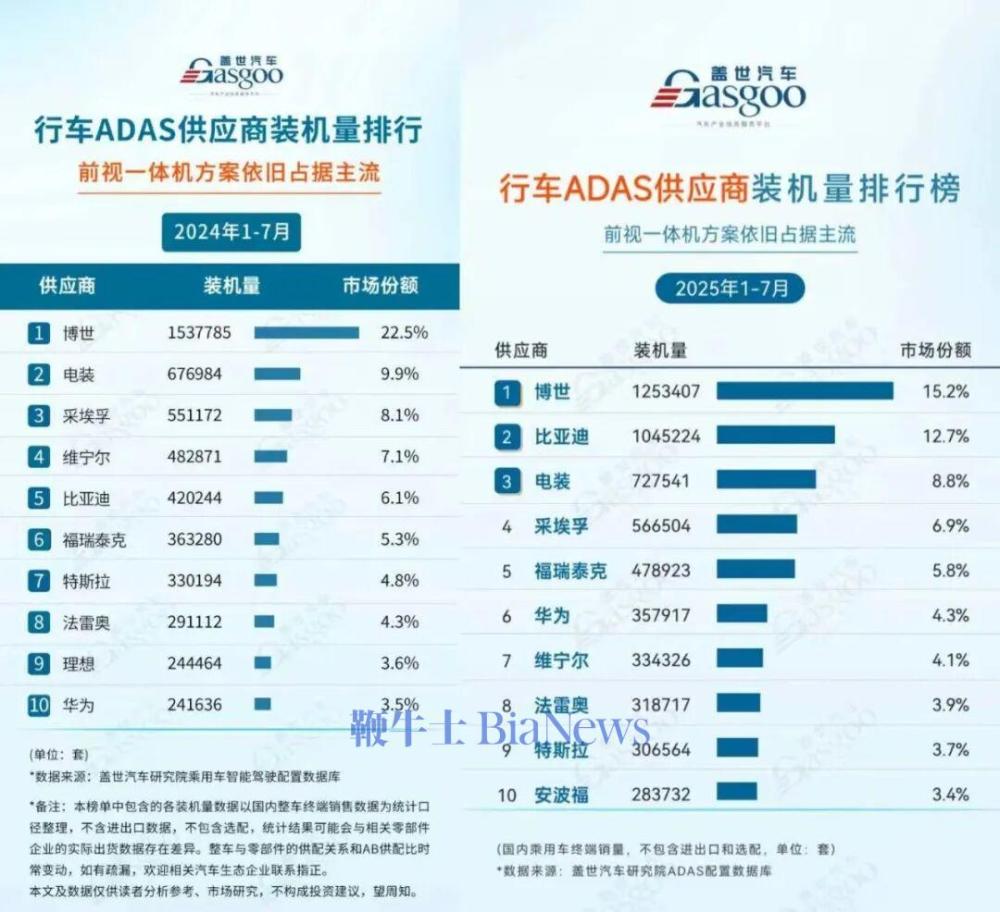
Core Viewpoint - Bosch is undergoing significant layoffs, particularly in its fuel vehicle projects in China, due to declining profitability and increased competition from local companies like Huawei and BYD, which are gaining market share in the automotive sector [2][5][11]. Group 1: Layoffs and Company Response - Bosch has confirmed layoffs affecting nearly 200 employees in China, primarily in its fuel vehicle and hydrogen projects, citing economic reasons for these cuts [2][5]. - Bosch China has denied the layoffs as a sign of distress, framing them instead as part of normal operational management [2]. - The company has previously announced substantial layoffs in Germany, with plans to cut 22,000 jobs by 2030, indicating a broader trend of workforce reduction [2]. Group 2: Financial Performance and Market Position - Bosch's sales in China are projected to grow modestly, with expected revenues of approximately €142.7 billion in 2024, reflecting a 2.7% increase from the previous year [4]. - The company's profitability has been under pressure, with an EBIT margin of only about 2% in 2024, below the expected 3.5% [2]. - Bosch's market share in advanced driver-assistance systems (ADAS) has declined significantly, with its share dropping from 22.5% in early 2024 to 15.2% in 2025, as competitors like BYD and Huawei gain ground [7][8]. Group 3: Competitive Landscape - The automotive industry is witnessing a shift in competitive dynamics, with local companies like Huawei and BYD rapidly advancing in technology and market presence, leading to Bosch's diminishing influence [11]. - Bosch's challenges are compounded by a broad product line and a complex organizational structure, making it difficult to maintain competitive advantages in every segment [10]. - The transition from traditional fuel vehicles to electric and smart technologies is critical for Bosch, as failure to adapt could result in further market share loss [11].

【2025年三季报点评/德赛西威】短期业绩承压,看好智驾出海及产业外拓
东吴汽车黄细里团队· 2025-10-30 15:34
Core Viewpoint - The company reported lower-than-expected performance in Q3 2025, with revenue and net profit showing slight declines compared to previous quarters, but overall growth remains strong year-on-year [2][3]. Financial Performance - In Q3 2025, the company achieved revenue of 7.69 billion, with a quarter-on-quarter change of +6%/-2%. The net profit attributable to the parent company was 570 million, reflecting a quarter-on-quarter decline of -0.57%/-11.74% [2]. - For the first three quarters of 2025, the company reported total revenue of 22.337 billion, a year-on-year increase of +17.72%, and a net profit of 1.788 billion, up +27.08% year-on-year [2]. Customer Impact - The sales volume from major client Ideal Automotive decreased by 40% quarter-on-quarter, impacting the company's performance. However, new clients like Xiaomi and Great Wall Motors, along with increased penetration of smart driving technologies, helped maintain overall revenue stability [3]. Profitability and Costs - The gross margin in Q3 2025 was 18.51%, down by 1.95 percentage points quarter-on-quarter, primarily due to intense price competition among downstream automakers. The gross margin for domestic operations was 19.7%, while overseas operations achieved a significantly higher margin of 29.0% [5]. - The expense ratio for Q3 2025 was 12.04%, slightly up by 0.58 percentage points year-on-year, attributed to increased R&D investments. Sales expenses for January to September totaled 254 million, a year-on-year increase of 75.89% [6]. Capacity Expansion - The company's construction projects increased from 445 million at the beginning of the year to 820 million by the end of September, a year-on-year growth of 84.08%. This investment is expected to support capacity for smart driving controllers and cockpit products [7]. Global Strategy - The company is steadily advancing its globalization strategy, with new production capacities established in Indonesia and Mexico, and a smart factory in Spain expected to be completed by the end of 2025. This global expansion is anticipated to become a significant support for future performance [8]. Earnings Forecast - The company has adjusted its revenue forecasts for 2025-2027 to 33.4 billion, 42 billion, and 50.4 billion respectively, with year-on-year growth rates of +21%, +26%, and +20%. The net profit forecasts for the same period have been revised to 2.59 billion, 3.33 billion, and 4.01 billion, with corresponding year-on-year growth rates of +29%, +28%, and +21% [9].

【2025年三季报点评/德赛西威】短期业绩承压,看好智驾出海及产业外拓
东吴汽车黄细里团队· 2025-10-28 14:26
Core Viewpoint - The company reported its Q3 2025 results, showing a mixed performance with revenue growth but a decline in net profit, indicating challenges in the current market environment [3][4]. Financial Performance - In Q3 2025, the company achieved revenue of 7.69 billion, with a quarter-on-quarter increase of 6% but a year-on-year decrease of 2%. The net profit attributable to shareholders was 570 million, reflecting a quarter-on-quarter decline of 0.57% and a year-on-year decline of 11.74% [3]. - For the first three quarters of 2025, the company reported total revenue of 22.337 billion, a year-on-year increase of 17.72%, and a net profit of 1.788 billion, up 27.08% year-on-year, indicating strong cumulative growth [3]. Customer Impact - The sales volume from major client Li Auto decreased significantly, with a quarter-on-quarter drop of 40% and a year-on-year drop of 16%, which pressured the company's performance. However, new clients like Xiaomi and Great Wall Motors, along with increased penetration of smart driving technologies, helped maintain overall revenue stability [4]. Profitability and Cost Structure - The gross margin in Q3 2025 was 18.51%, down 1.95 percentage points quarter-on-quarter and 1.65 percentage points year-on-year, primarily due to intense price competition among downstream automakers. The overseas gross margin was significantly higher than domestic, with domestic gross margin at 19.7% and overseas at 29.0% [5]. - The company’s operating expense ratio increased to 12.04%, up 0.58 percentage points year-on-year, mainly due to increased R&D investments. Sales expenses for January to September totaled 254 million, a year-on-year increase of 75.89% [6]. Capacity Expansion - The company is actively expanding its production capacity, with construction projects increasing from 445 million at the beginning of the year to 820 million by the end of September, a year-on-year increase of 84.08%. This expansion is expected to support production for smart driving controllers and cockpit products [7]. Global Strategy - The company is steadily advancing its globalization strategy, with production capacity contributions starting in Indonesia in May 2025, and the Monterrey plant in Mexico beginning production in June 2025. A smart factory in Spain is expected to be completed by the end of 2025, providing localized production for the European market [8]. Earnings Forecast - The company is viewed as a leading player in the smart driving components sector, with revised revenue forecasts for 2025-2027 set at 33.4 billion, 42 billion, and 50.4 billion respectively, reflecting year-on-year growth rates of 21%, 26%, and 20%. The net profit forecasts remain at 2.59 billion, 3.33 billion, and 4.01 billion for the same period, with corresponding P/E ratios of 30, 23, and 19 [9].

科博达系列二十二-公司快评:科博达收购参股公司智能科技60%股权,打开高单价驾驶域控成长曲线【国信汽车】
车中旭霞· 2025-09-05 05:50
Core Viewpoint - The article discusses the strategic acquisition of a 60% stake in Shanghai Kebo Da Intelligent Technology Co., Ltd. by Kebo Da Technology Co., Ltd. for 345 million yuan, aimed at enhancing its position in the automotive intelligent driving domain and expanding its product offerings in high-value domain controllers [6][7][10]. Financial Performance - Kebo Da's net profit for the second quarter increased by 61% year-on-year, indicating strong financial health and a robust order backlog [2]. - The company anticipates revenues of 7.2 billion, 9.27 billion, and 11.4 billion yuan for the years 2025, 2026, and 2027, respectively, with profits projected at 1.01 billion, 1.28 billion, and 1.54 billion yuan [5]. Strategic Acquisition - The acquisition of Kebo Da Intelligent Technology is a response to national policies promoting the intelligent transformation of the automotive industry, aligning with the government's goal of having over 50% of new energy vehicles by 2030 [10]. - The deal is expected to open new growth avenues for Kebo Da, enhancing its product matrix in the intelligent driving sector and solidifying its market position [11][12]. Market Positioning - Kebo Da has established deep partnerships with global automotive brands such as Volkswagen, BMW, and General Motors, positioning itself as a key player in the intelligent driving technology ecosystem [4][11]. - The company aims to enhance customer loyalty and expand market share by integrating its intelligent central computing platform and domain controller products into the automotive supply chain [12][13]. Product Development - Kebo Da Intelligent Technology focuses on high-performance intelligent driving domain controllers, with lifecycle sales expected to exceed 20 billion yuan for specific projects [11]. - The integration of Kebo Da Intelligent Technology is set to improve the company's technological capabilities and product offerings, addressing existing gaps in the automotive intelligent technology sector [13][14]. Supply Chain and Manufacturing - The acquisition will enhance Kebo Da's supply chain capabilities, particularly in high-end semiconductor components, which are crucial for the development of intelligent automotive products [14][15]. - The company plans to leverage the manufacturing expertise of Kebo Da Intelligent Technology to upgrade its production processes, transitioning towards more efficient and intelligent manufacturing systems [15].


供应链新军丨德赛西威如何成为中国座舱、智驾域控第二
晚点LatePost· 2024-04-29 11:13
以下文章来源于晚点Auto ,作者晚点团队 晚点Auto . 从制造到创造,从不可能到可能。《晚点LatePost》旗下汽车品牌。 先和新势力联合开发,然后用成熟产品拿下传统车企的订单。 当燃油车变成新能源车,一辆车用到的零件数从 30000 变成 10000,最有潜力的汽车品牌大多是新面孔。时代机遇下,供 应商们各显本领,老牌供应商转型、新型供应商崛起,一些其他行业的龙头企业也进入汽车零部件市场,共同重构整个产 业链条。《晚点 Auto》推出供应链新军系列文章,关注汽车供应链的重塑。 文丨司雯雯 编辑丨王海璐 大多数智能电动车公司都早早出现在德赛西威的合作名单里。 蔚来 2017 年发布 ES8 ,10.8 英寸的屏幕出自德赛西威的产线;理想 ONE 不仅让德赛西威做了四块 显示屏,还搭载了这家公司的座舱域控制器。英伟达 Xavier 芯片首度量产,从全球挑选六家授权合 作方,德赛西威是其中唯一一家中国公司。此后 5 年,任何中国公司想用英伟达的芯片做智驾,找 德赛西威是最便利的选择。 许多大供应商会把门关上。2015 年前后,大众在中国的年销量超过 300 万,是所有供应商最想要的 客户。至于初创车企,就 ...