
车载显示屏

Search documents
宸展光电拟6.5亿元向子公司增资并建设海外智能制造基地
Zhi Tong Cai Jing· 2026-02-12 11:42
Group 1 - The company plans to invest 650 million RMB (approximately 100 million USD) into its wholly-owned subsidiary TES Technology (Hong Kong) Limited for the construction of an overseas smart manufacturing base [1] - The investment aims to enhance the production capacity of the smart manufacturing base in Thailand, focusing on assembling smart displays and automated production lines for automotive displays [1] - This investment aligns with the company's development strategy and operational needs of TES Technology (Thailand) Co., Ltd, building on the existing "China + Thailand" dual production base [1] Group 2 - The company will optimize supply chain integration to achieve flexible allocation of global and local resources, enhancing lean production management [2] - The significant improvement in global smart manufacturing and localized service capabilities will better meet the personalized needs of global customers, providing superior service experiences and balanced cost-efficiency ratios [2] - This strategy not only aligns with the company's operational development strategy but also mitigates the impact of the increasingly complex international trade landscape, thereby enhancing the company's international competitiveness [2]

宸展光电(003019.SZ)拟6.5亿元向子公司增资并建设海外智能制造基地
智通财经网· 2026-02-12 11:40
Group 1 - The company plans to invest 650 million RMB (approximately 100 million USD) into its wholly-owned subsidiary TES Technology (Hong Kong) Limited for the construction of an overseas smart manufacturing base [1] - The investment aims to enhance the production capacity of the smart manufacturing base in Thailand, focusing on assembling smart displays and automated production lines for automotive displays [1] - This investment aligns with the company's development strategy and operational needs of TES Technology (Thailand) Co., Ltd, building on the existing "China + Thailand" dual production base [1] Group 2 - The company will optimize supply chain integration to achieve flexible allocation of global and local resources, enhancing lean production management [2] - The significant improvement in global smart manufacturing and localized service capabilities will better meet personalized customer demands, providing superior service experiences and balanced cost-efficiency ratios [2] - This strategy not only aligns with the company's operational development strategy but also mitigates the impact of increasingly complex international trade dynamics, thereby enhancing the company's international competitiveness [2]
全球市场进入“热战”阶段!车载显示屏与其他显示屏有何不同?
Zhong Guo Qi Che Bao Wang· 2026-01-19 04:13
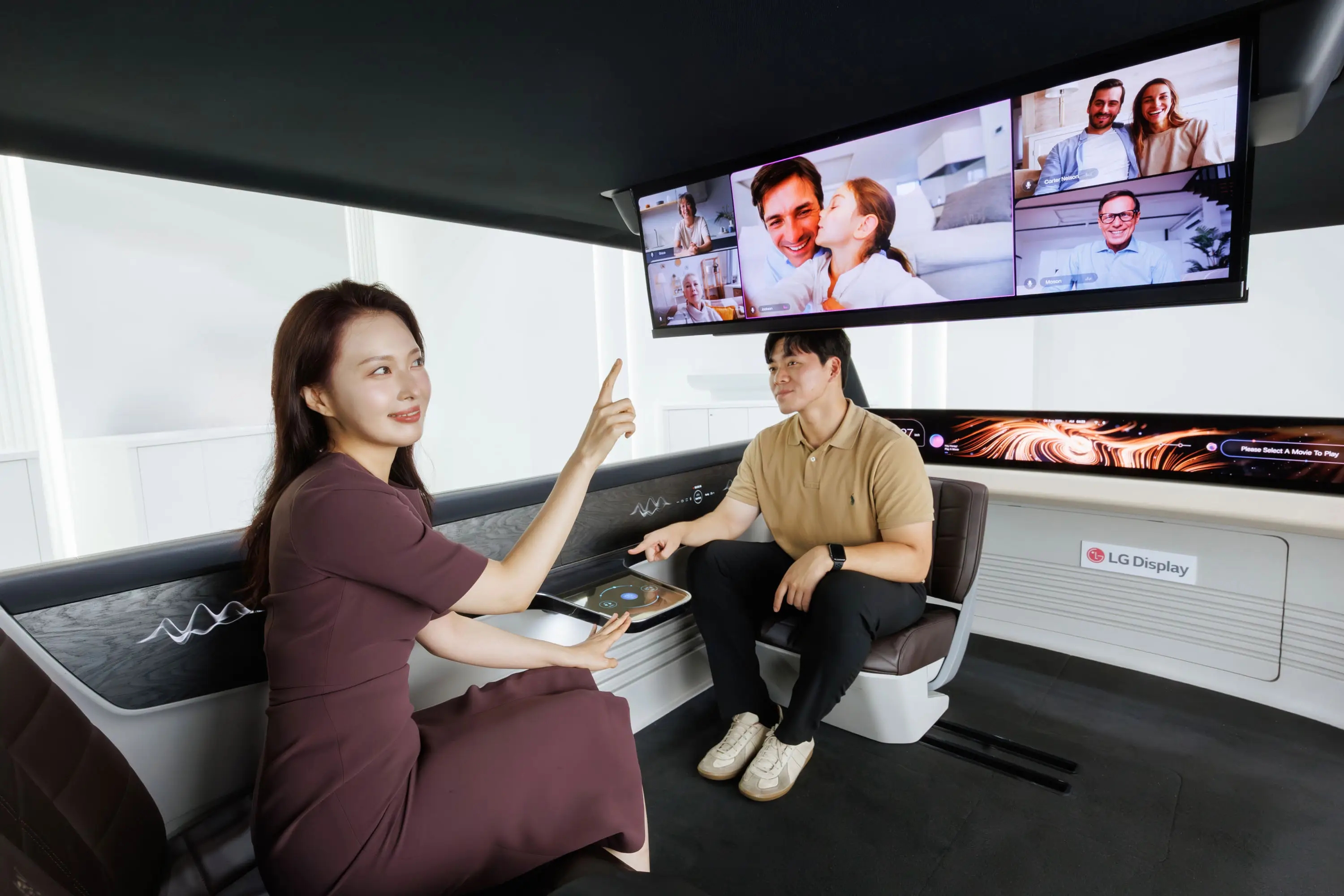
Core Insights - The automotive display market is experiencing rapid growth, driven by the increasing demand for larger and more interactive screens in vehicles [5][10] - LG Display has introduced advanced automotive displays, including a 51-inch P2P OLED display and a flexible OLED display for dashboards, highlighting the trend towards larger and more sophisticated in-car screens [4][5] - The transition from traditional displays to multifunctional, interactive screens is reshaping the automotive experience, making displays central to smart cockpit technology [10][12] Industry Trends - The global automotive display market is entering a competitive phase, with a shift from consumer electronics to automotive displays as a key growth driver [5][10] - The trend towards multi-screen setups in vehicles is becoming prevalent, with configurations including center screens, instrument panels, passenger entertainment screens, and rear displays [6][10] - The integration of advanced features such as touch interaction, voice control, and augmented reality navigation is enhancing the functionality of automotive displays [6][10] Technical Requirements - Automotive displays face unique challenges due to their operating environment, requiring them to withstand extreme temperatures (-30°C to 90°C) and vibrations from various road conditions [7][8] - The longevity of automotive displays is significantly higher than consumer electronics, with a lifespan of over ten years compared to 3-5 years for typical consumer displays [8] - Strict automotive certifications (e.g., IATF16949) ensure that automotive displays meet rigorous safety and performance standards, differentiating them from consumer-grade displays [8][9] Design Innovations - Special design features, such as anti-glare technology and multi-layer coatings, are being implemented to enhance visibility and user experience in automotive displays [9] - The future of automotive displays is leaning towards "display + interaction + intelligence" integration, which will require advanced technology and manufacturing capabilities [10][12] - Emerging display technologies like Mini-LED and MicroLED are gaining traction, promising higher brightness, contrast, and longevity for automotive applications [11][12] Market Opportunities - The automotive display market is poised for unprecedented growth, driven by the increasing adoption of smart cockpit concepts and the demand for larger, flexible displays [10][12] - Companies that invest in technology development and product innovation will be better positioned to compete in this evolving market landscape [12] - The automotive display is evolving from a simple display to a central hub for smart interactions, enhancing the overall travel experience for consumers [10][12]

武汉打造“光车融合”全国示范标杆
Chang Jiang Ri Bao· 2026-01-19 00:43
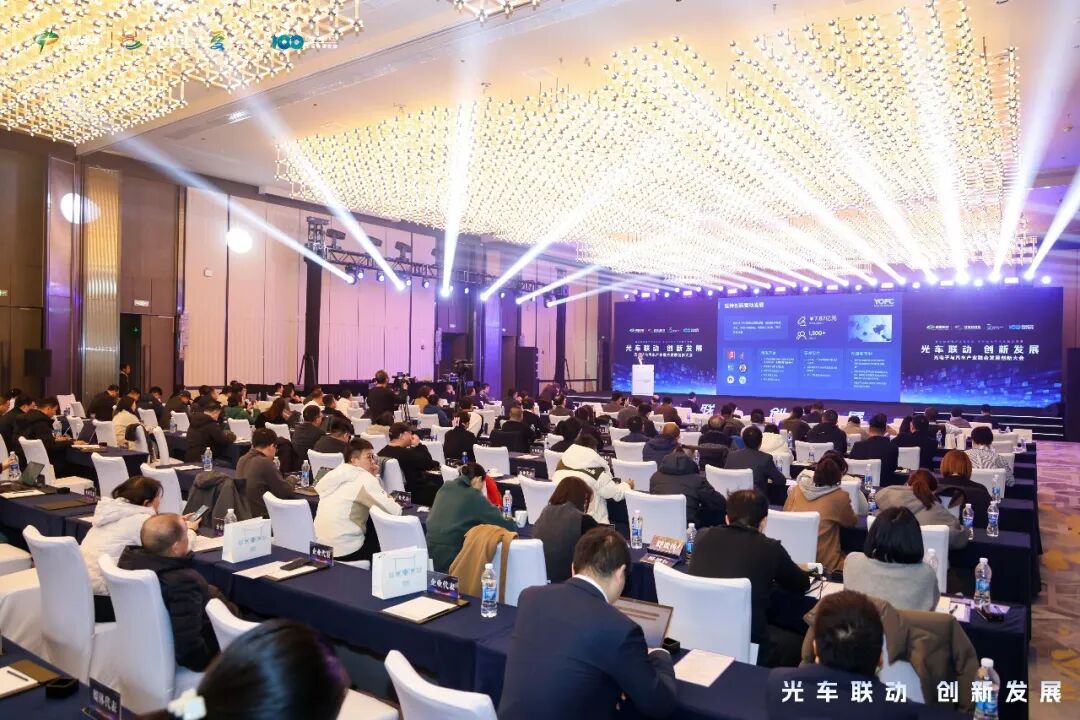
Core Insights - The "Light and Vehicle" dialogue in Wuhan emphasizes the integration of optoelectronics and the automotive industry, marking a significant step in promoting intelligent and connected vehicles in the region [1][2] Group 1: Industry Integration - The automotive industry is characterized by fusion development, integrating technologies like communication, optoelectronics, and artificial intelligence to enhance competitiveness [2] - Wuhan is home to the "Optics Valley" and "Automobile Valley," creating a unique environment for the convergence of these two industries, with a focus on building a trillion-yuan industry cluster centered around "light, chip, screen, terminal, and network" [2] - The initiative aims to establish unified industry standards and create a collaborative ecosystem to drive innovation and development [1][6] Group 2: Technological Advancements - Wuhan has made breakthroughs in core technologies, such as the development of a domestically produced automotive-grade high-performance MCU chip, expected to be mass-produced by 2026 [4] - The transition from copper to fiber optics in automotive applications is anticipated, with fiber optics offering advantages in bandwidth, weight, and electromagnetic interference resistance [5] - Companies like Haiwei Technology are advancing in the smart cockpit sector, integrating high-quality display technologies into vehicles, enhancing user experience [5] Group 3: Challenges and Solutions - The integration path faces challenges, including a lack of successful cross-industry experiences, difficulties in technology alignment, and the absence of standardized testing and certification systems [3] - To address these issues, the establishment of collaborative innovation platforms and supply chain integration is essential for fostering a sustainable industrial ecosystem [6] Group 4: Economic Impact and Future Outlook - The economic benefits from the "fiber optics in vehicles" initiative are projected to reach the billion-yuan level, significantly impacting the upstream and downstream industries [6] - The potential for technology spillover into other sectors, such as robotics and low-altitude economy, is highlighted, showcasing the automotive industry's capacity for cost reduction and scalability [6] - The internationalization of the industry is crucial, with Chinese smart components already leading in various fields, positioning them for global competitiveness through the "light and vehicle" integration [6][7]
重要倡议,武汉发起!
Chang Jiang Ri Bao· 2026-01-19 00:43
Core Viewpoint - The "Light and Vehicle" dialogue in Wuhan emphasizes the integration of optoelectronics and the automotive industry, marking a significant step in promoting the deep fusion of these two key sectors in the context of intelligent and connected vehicles [1][3]. Group 1: Industry Integration - The initiative aims to create a development blueprint, focus on key innovations, build an open ecosystem, unify industry standards, and establish demonstration benchmarks, highlighting Wuhan's strategy to leverage its strengths in both optoelectronics and automotive sectors [3][5]. - The automotive industry is seen as a hallmark of integrated development, with the fusion of communication, optoelectronics, and artificial intelligence being crucial for China's automotive sector to surpass its competitors [5][9]. - Wuhan has established a trillion-yuan industry cluster centered around "light, chip, screen, terminal, and network," positioning itself as a global leader in optical fiber and cable manufacturing [5][7]. Group 2: Technological Advancements - Wuhan's industry is making strides in core technologies, with the establishment of Wuhan Binary Semiconductor Co., which is on the verge of mass production of a domestically developed automotive-grade MCU chip, expected to be on vehicles by 2026 [10][11]. - The transition from copper to fiber optics in automotive applications is anticipated, with fiber optics offering advantages in bandwidth, weight, and electromagnetic interference resistance, making it ideal for next-generation vehicle networks [10][11]. - Companies like Longfei and Dongfeng are collaborating on smart automotive optical communication solutions, demonstrating the reliability of these technologies through extensive road tests [11]. Group 3: Ecosystem Development - The initiative for "light-vehicle fusion" is just the beginning; a sustainable industrial ecosystem must be built to deepen this integration, addressing technical links, vehicle standards, and certification issues [12][14]. - Standardization is identified as a cornerstone for high-quality industry development, with participants committing to collaboratively advance standard-setting efforts [12]. - The potential economic benefits from the integration of fiber optics into vehicles are projected to reach billions, significantly enhancing the synergy across the supply chain [12][14]. Group 4: Future Outlook - The automotive sector's components can be adapted for use in robotics and other fields, indicating a broader application of technologies developed through "light-vehicle fusion" [14]. - The internationalization of these innovations is crucial, as Chinese smart components are already leading in various fields, and the integration could yield globally competitive optical devices [14]. - The presence of a complete upstream and downstream industrial chain in Wuhan is attracting interest from companies looking to establish a foothold in this promising market [14].

信利仁寿拟新增电子纸项目
WitsView睿智显示· 2025-12-26 04:09
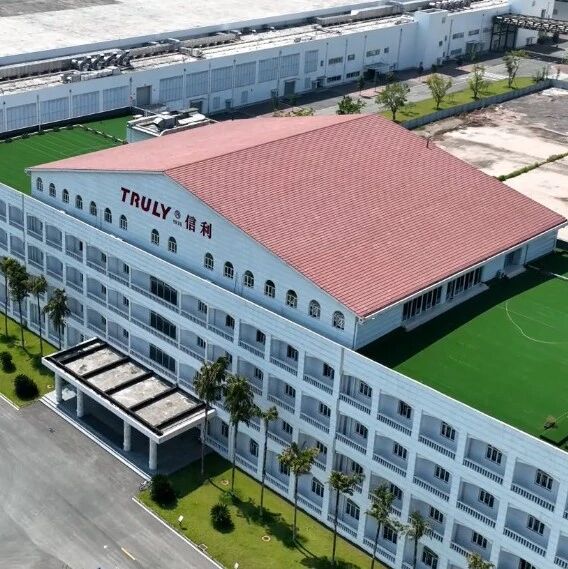
Core Viewpoint - Xinyi Renshou is expanding its production capacity while exploring new markets, including a new electronic paper display project for e-readers and notebooks in 2024 [1]. Group 1: Company Operations - Xinyi Renshou primarily produces thin-film transistor (TFT-LCD) displays and modules, as well as semiconductor products for consumer electronics, including smart wearables [2]. - The company’s fifth-generation TFT-LCD project has all 27 production lines fully operational, with a 20% increase in production capacity compared to last year, raising monthly output from 110k to an expected 130k units in 2024 [2]. - The company has developed a vehicle display that is now ready for mass production, which will diversify its product offerings [2]. Group 2: Capital Operations - Xinyi International, the parent company, announced plans to acquire approximately 11.43% of Xinyi Renshou's shares from Renshou Chantuo for a total of up to RMB 1.05 billion through a public bidding process [2]. - The acquisition will occur in two rounds, with the first round expected to start in the first half of 2026, and if both rounds are successful, Xinyi International will hold 41.13% of Xinyi Renshou [2]. Group 3: Shareholding Structure - The current shareholding structure of Xinyi Renshou shows that Xinyi Optical holds about 29.69%, Renshou Chantuo holds approximately 64.29%, and Renshou Ji'an No. 1 Investment Center holds about 6.02% [3].
联创电子实控人变更为江西国资 聚焦光学业务营收占超五成
Chang Jiang Shang Bao· 2025-12-26 00:20
Core Viewpoint - The control of Lianchuang Electronics has officially changed hands to Jiangxi State-owned Assets Supervision and Administration Commission, marking a significant shift in the company's governance structure while the company continues to show improved financial performance [1][2]. Group 1: Control Change - Lianchuang Electronics' control change was executed through a combination of share transfer and a private placement, with Jiangxi State-owned Assets becoming the actual controller [2]. - The share transfer agreement involves North Source Intelligent paying 900 million yuan to acquire 6.71% of the company's total shares, making it the controlling shareholder [2]. - A private placement is planned to raise up to 1.63 billion yuan, with funds allocated for working capital and debt repayment, further solidifying the control by Jiangxi State-owned Assets [2]. Group 2: Financial Performance - In the first half of 2025, the company achieved a revenue of 4.22 billion yuan and a net profit of 24.09 million yuan, successfully turning a profit [4]. - For the first three quarters of 2025, revenue reached 6.489 billion yuan, with net profit increasing to 50.92 million yuan, a significant year-on-year growth of 210.26% [4]. - The core optical business has become the main revenue driver, contributing 3.304 billion yuan, which accounts for 50.91% of total revenue [4]. Group 3: Optical Business Growth - The automotive optical segment has emerged as a key growth engine, with revenue of 2.363 billion yuan, reflecting a year-on-year increase of 46.75% [4]. - The revenue from automotive lenses reached 1.381 billion yuan, showing a remarkable growth rate of 88.82% [4]. - Lianchuang Electronics has established strong technical barriers and customer resources in the automotive optical field, collaborating with major companies like Mobileye and Nvidia [5]. Group 4: Innovation and Patents - The company has accumulated 697 authorized invention patents and has been recognized as a national intellectual property demonstration enterprise [6]. - Digital upgrades have been implemented to achieve full lifecycle management of production, laying a solid foundation for technology transfer and market expansion [6].

筹划控制权变更,这家公司明起继续停牌!
Zheng Quan Ri Bao Wang· 2025-12-21 13:47
Group 1 - The company, Lianchuang Electronics Technology Co., Ltd., announced a potential change in control due to the planned transfer of shares by its controlling shareholder, Jiangxi Xingsheng Investment Co., Ltd. [1] - The company's stock has been suspended since December 18, 2025, with an expected suspension period of no more than three trading days due to ongoing negotiations and the absence of a formal agreement among the parties involved [1] - Lianchuang Electronics specializes in the research, production, and sales of optical lenses, imaging, and touch display integrated modules, focusing on sectors such as smartphones, tablets, smart driving, and machine vision [1] Group 2 - The company has adopted a strategy of concentrating resources on the optical industry, continuously enhancing competitiveness and optimizing product structure with a focus on profitability [2] - In the automotive optical sector, the company is a key supplier of ADAS lenses, collaborating with international partners like Mobileye and Nvidia, and domestic platforms such as Horizon, supplying major automotive brands like NIO and Geely [2] - In the mobile optical field, the company is transitioning towards high-end products, optimizing the proportion of high-value products like hybrid lenses and OIS stabilization modules, while expanding partnerships with ODM manufacturers and brand clients [2] - The company is also strengthening its position in professional fields such as action cameras and drones, providing customized optical support for emerging smart terminals [2]
京东方精电车载显示项目在广东正式开工
WitsView睿智显示· 2025-11-26 03:38
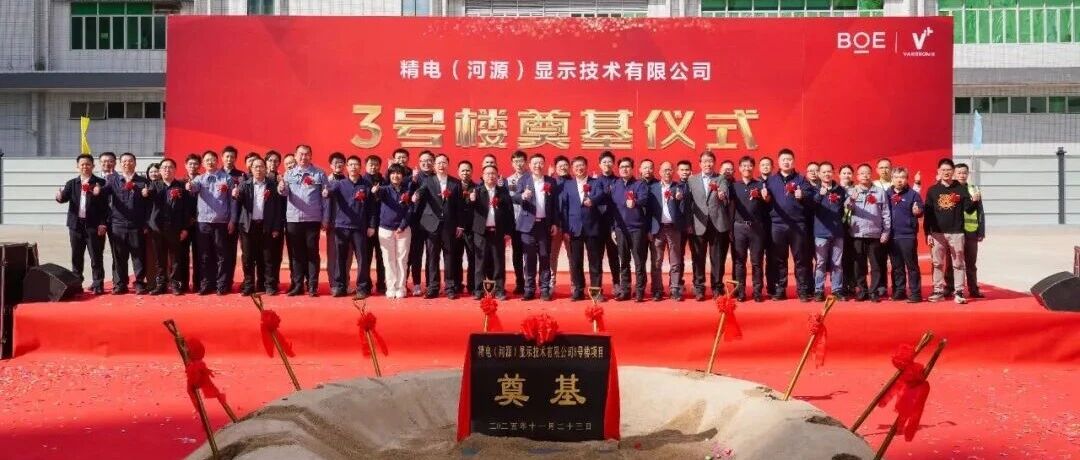
Core Viewpoint - The article highlights the groundbreaking ceremony for the third phase of BOE's manufacturing base in Heyuan, Guangdong, which aims to enhance the company's capacity in the automotive display sector and support its global operations [1][4]. Group 1: Project Overview - The third phase project will establish an intelligent production line for automotive displays, a research and development center, and core laboratories, creating a manufacturing platform that integrates R&D and mass production [4]. - The project is expected to complete the first phase of equipment installation by November 2026 and achieve large-scale production by December 2026, with an anticipated annual production capacity exceeding 10 million units [4]. Group 2: Financial Performance - In the first half of this year, BOE's automotive display business generated revenue of HKD 6.245 billion, reflecting a year-on-year increase of approximately 9% [4]. - For 2024, BOE's overall revenue is projected to be around HKD 13.449 billion, with the automotive business accounting for 94% of this revenue, representing a year-on-year growth of 25% [4]. Group 3: Manufacturing Base Expansion - BOE has established three major manufacturing bases in Heyuan, Chengdu, and Vietnam to support its global automotive display business [4]. - The ongoing project in Vietnam is significant as it is BOE's first overseas self-built smart factory, with an investment exceeding RMB 300 million, focusing on high-end automotive display products [6]. Group 4: Project Milestones - In September, the Vietnam automotive display base successfully lit its first full-process product, with a designed capacity of 50,000 modules per month [6]. - The Vietnam base has secured major projects from leading Korean automotive companies and is expected to achieve large-scale production by the end of the year [6].

宸展光电(003019) - 投资者关系活动记录表 IR2025-007
2025-11-19 07:44
Group 1: Company Performance - In Q3 2025, the company achieved revenue of 669 million CNY, a year-on-year increase of 20.17% [3] - The net profit attributable to shareholders was 44 million CNY, up 34.49% year-on-year [3] - For the first three quarters, total revenue reached 1.865 billion CNY, with a net profit of 156 million CNY [3] Group 2: Impact of Tariff Changes - The company's direct exports to the U.S. account for less than 10%, limiting the direct impact of tariff changes on revenue and profit [4] - The suspension and reduction of tariffs may lower trade costs and stimulate economic growth, potentially increasing orders from European and American clients [4] Group 3: Manufacturing Capacity and Global Strategy - The Thailand factory primarily produces vehicle display screens and commercial all-in-one machines, meeting the needs of major North American electric vehicle manufacturers [5][6] - The company plans to enhance global manufacturing capabilities by potentially establishing new production lines in Southeast Asia and North America [7] Group 4: ODM Business Development - Since 2024, the ODM segment has been actively expanding into new markets, achieving successful product launches with a globally recognized digital tablet company [8] Group 5: Technological Advancements - The company is closely following industry changes driven by new technologies like AI and is increasing R&D investments to capture new market opportunities [9] Group 6: Vehicle Display Segment Profitability - The vehicle display segment has not yet turned profitable due to various factors, including the ramp-up of the Thailand factory's capacity [10] - The company plans to focus on key clients in the U.S. electric vehicle sector and improve operational efficiency to enhance revenue and profitability [10] Group 7: Compliance and Disclosure - The company adhered to regulations during the investor relations activities, ensuring no significant undisclosed information was leaked [11]