
康复护理机器人

Search documents
养老消费“时尚潮品”催生银发经济新蓝海 扶持再加码激发经营主体新活力
Yang Shi Wang· 2026-01-14 02:22
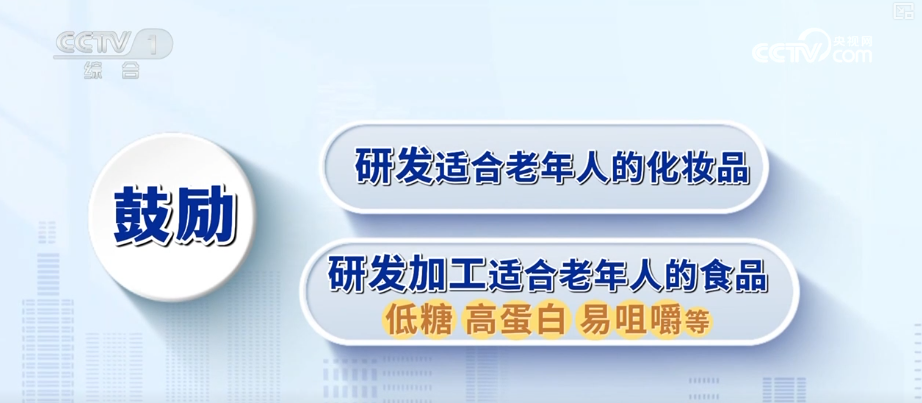
Core Viewpoint - The aging population in China, exceeding 310 million people aged 60 and above, necessitates the development of a suitable elderly care service system and the promotion of the silver economy as a means to stimulate economic growth and expand domestic demand [1] Group 1: Silver Economy Development - The Ministry of Civil Affairs and eight other departments have jointly issued measures to cultivate elderly care service operators and promote the silver economy [1] - The measures encourage the development of age-appropriate cosmetics and foods that are low in sugar, high in protein, and easy to chew for the elderly [4] - There is a push for clothing companies to create product lines for seniors, focusing on safety features, warmth, and specific functionalities [4] Group 2: Enhancing Elderly Consumer Experience - Plans are in place to establish specialized shopping districts for the elderly and rental/sale points for age-friendly products to facilitate local consumption [8] - E-commerce platforms are encouraged to optimize "senior modes" and create dedicated channels for elderly consumers, simplifying the purchasing process [8] Group 3: Technological Integration in Elderly Care - The measures promote the development of elderly care robots to meet the daily care, emotional support, and social needs of seniors [12] - There is an emphasis on exploring advanced technologies such as brain-machine interfaces and exoskeleton robots to assist elderly individuals with declining physical functions [12] Group 4: Support for Elderly Care Service Providers - By the end of 2025, there will be approximately 41,700 elderly care institutions in China, with private and public-private institutions making up 71.9% of the total [16] - The measures provide substantial support for elderly care service operators in terms of land, funding, and operational environment, ensuring fair competition [16][17] - Administrative inspections of elderly care institutions will be rationalized to minimize disruptions to normal operations, addressing issues like excessive fees and inspections [21]

21社论丨坚持需求导向,让科技更好赋能银发经济
21世纪经济报道· 2026-01-14 01:42
Core Viewpoint - The article discusses the recent policy measures introduced by the Ministry of Civil Affairs and eight other departments to foster the development of the elderly care service industry, emphasizing technological innovation as a key driver for upgrading service models and addressing the needs of the aging population [1][2]. Group 1: Policy Measures and Objectives - The new measures focus on nurturing innovative business entities in the elderly care sector, shifting from previous policies that primarily emphasized infrastructure and operational subsidies to a model driven by technological advancements [1]. - By 2035, the elderly population aged 60 and above in China is expected to exceed 400 million, accounting for over 30% of the total population, indicating a significant market potential for the silver economy [1]. Group 2: Technological Empowerment in Elderly Care - The policy supports the development of smart elderly care devices and rehabilitation robots, encouraging collaboration between technology developers and care service providers to enhance product applicability for the elderly [3]. - The initiative aims to create smart elderly care communities and integrated home care platforms, leveraging big data, cloud computing, and AI to improve the digitalization and intelligence of elderly care services [3]. Group 3: Economic Implications - The integration of technology in elderly care is seen as a dual opportunity: addressing the challenges of an aging population while also driving high-quality economic growth through the creation of new business models and expanding domestic consumption [2]. - The silver economy is expected to stimulate various industries, including new materials and manufacturing, while also creating new job roles in the service sector, such as remote health managers and digital care planners [4]. Group 4: Challenges and Solutions - Despite the promising outlook for the silver economy, challenges remain, such as the limited diversity of products and the need for improved service experiences [4]. - Addressing the issue of technology adaptation for the elderly is crucial, as many existing smart products do not meet the specific needs of older users, necessitating the development of accessible and user-friendly technology [5].

上市公司竞相“抢风口” 谁能驶入银发经济蓝海
Shang Hai Zheng Quan Bao· 2026-01-14 00:12
Group 1 - The government is promoting the integration of technology in elderly care services, emphasizing the use of big data, cloud computing, artificial intelligence, and other advanced technologies for health monitoring and personalized services [1] - There is a strong growth in the silver economy, particularly in industries catering to both disabled and semi-disabled individuals, as well as active elderly consumers, driven by advancements in AI, robotics, and IoT [2] - Companies are focusing on rehabilitation and elderly care services, with significant investments planned in smart elderly care projects to capitalize on the silver economy [3] Group 2 - The development of smart and digital products for the elderly is a primary focus, with companies creating multi-layered, scenario-based smart elderly care products and services [4] - Companies are launching various rehabilitation robots and smart solutions for elderly care, with ongoing pilot tests in real-life scenarios [5] - Cross-industry collaborations are emerging, with companies in education and real estate exploring opportunities in the silver economy to enhance their service offerings [6]

21社论丨坚持需求导向,让科技更好赋能银发经济
2 1 Shi Ji Jing Ji Bao Dao· 2026-01-13 22:32
Core Viewpoint - The Ministry of Civil Affairs and eight other departments have jointly issued measures to cultivate the elderly care service industry and promote the silver economy, focusing on technological innovation to upgrade service models rather than just infrastructure and subsidies [1][2]. Group 1: Policy Measures - The new measures emphasize the importance of technology-driven upgrades in elderly care services, encouraging research and development in elderly care technology and products [1][2]. - The policy aims to foster a new ecosystem of elderly care services that integrates technology, creating new business models and expanding domestic consumption [2][3]. Group 2: Market Potential - By 2035, the population aged 60 and above in China is expected to exceed 400 million, accounting for over 30% of the total population, indicating a significant consumer demand potential [1]. - The shift in consumption behavior among the elderly, from basic life security to a pursuit of quality living, presents opportunities for high-quality, personalized elderly care services and products [1][2]. Group 3: Technological Integration - The policy supports the development of smart elderly care devices and rehabilitation robots, promoting their integration with elderly care institutions to enhance the application of new technologies [2][3]. - The construction of smart elderly care communities and integrated home care platforms is encouraged, utilizing big data, cloud computing, and AI to improve service levels [3]. Group 4: Challenges and Solutions - Despite the promising outlook for the silver economy, challenges such as limited product supply and service experience need to be addressed, particularly the adaptation of technology for the elderly [4]. - To tackle the issue of technology adaptation, there is a need for demand-driven and problem-oriented approaches, including the establishment of standards for elderly-friendly technology [4].
坚持需求导向,让科技更好赋能银发经济
2 1 Shi Ji Jing Ji Bao Dao· 2026-01-13 22:23
Core Viewpoint - The Ministry of Civil Affairs and seven other departments have jointly issued measures to cultivate innovative business entities in the elderly care service sector, focusing on technological innovation to upgrade service models, contrasting with previous policies that emphasized infrastructure and subsidies [1][2]. Group 1: Policy Measures - The new measures aim to drive the structural upgrade of elderly care services by encouraging technological innovation and product development, particularly in the field of elderly care robotics [1][2]. - By 2035, the elderly population aged 60 and above in China is expected to exceed 400 million, accounting for over 30% of the total population, indicating a significant market potential for the silver economy [1][2]. Group 2: Economic Implications - The policy is seen as a dual opportunity: addressing the challenges of an aging population while also creating new economic growth points through the development of technology-enabled elderly care services [2][3]. - The support for smart elderly care devices and rehabilitation robots is expected to enhance the integration of technology in elderly care, leading to improved safety and convenience for seniors [2][3]. Group 3: Technological Integration - The initiative promotes the establishment of smart elderly care communities and integrated home care platforms, utilizing advanced technologies like big data and artificial intelligence to enhance service delivery [3]. - The integration of technology in elderly care is anticipated to create diverse and high-quality new consumption demands, such as remote health management and online education services [3]. Group 4: Challenges and Solutions - Despite the promising outlook for the silver economy, challenges remain, including a lack of diverse product offerings and the need for improved service experiences [4]. - Addressing the issue of technology adaptation for the elderly is crucial, necessitating the development of accessible and user-friendly smart devices tailored to their needs [4].
促进银发经济发展 养老服务扩容提质
Bei Jing Shang Bao· 2026-01-13 14:05
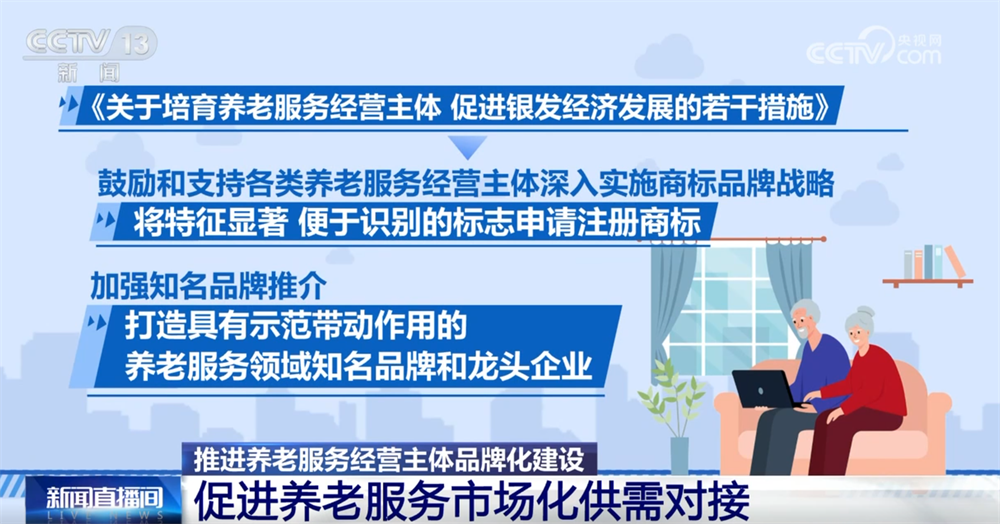
Core Viewpoint - The Ministry of Civil Affairs introduced measures to cultivate the elderly care service industry and promote the silver economy through systematic and targeted policy support, aiming to optimize the development environment and stimulate operational vitality [2] Group 1: Brand Development - The measures emphasize strengthening brand creation for elderly care services, encouraging the establishment of distinctive signage and trademarks to enhance brand recognition [3] - Provincial civil affairs departments are encouraged to standardize the names and signage of various elderly care service providers to improve brand identification [3] - The initiative aims to promote high-quality elderly care service brands and leading enterprises through various activities, including the "Respect for the Elderly Civilization" campaign [3] Group 2: Market Supply and Demand - The measures propose optimizing the supply of elderly care services and age-friendly products, promoting community-based service integration through chain operations [4] - The National Intellectual Property Administration will collaborate with the Ministry of Civil Affairs to implement the measures and enhance brand strategy in the elderly care sector [4] - The goal is to improve accessibility, convenience, and intelligence in elderly care services to meet diverse needs [4] Group 3: Technological Empowerment - Technological innovation is identified as a key driver for addressing labor shortages and enhancing service quality in elderly care [5] - The Ministry of Industry and Information Technology is focused on promoting high-quality development in the elderly products industry and the application of smart health services [5] - The measures encourage the development of elderly care technology, including the use of big data, AI, and robotics to provide comprehensive support for the elderly [5][6] Group 4: Development Environment - The measures aim to create a fair competitive environment for elderly care institutions, optimizing support policies and preventing restrictive clauses in government procurement [7] - There is a focus on protecting the rights of service providers by reducing administrative inspections and addressing issues of arbitrary charges and inspections [7] - The initiative includes promoting public awareness of elderly care services through various media channels [7] Group 5: Operational Support - The measures provide support in terms of land, operational stability, and funding for elderly care facilities [8] - There is an emphasis on ensuring land availability for elderly care projects and stabilizing operational timelines for market entities [8] - Financial support policies are to be optimized to alleviate the financial pressure on service providers [8] Group 6: Industry Outlook - The policy is expected to drive upgrades in existing elderly care services and foster new segments such as brand operations, community services, and elderly care technology [8] - This comprehensive approach aims to attract more enterprises, capital, and talent into the silver economy, creating a new ecosystem of "service-technology-industry" collaboration [8]

八部门出台措施促进银发经济向“新”向“优”发展 托起老年人“稳稳”的幸福
Yang Shi Wang· 2026-01-13 03:22
Group 1 - The core viewpoint of the news is the introduction of measures by the Ministry of Civil Affairs and eight other departments to foster the development of the elderly care service industry and promote the silver economy through brand building and supply-demand matching platforms [1][10]. Group 2 - The measures encourage various elderly care service providers to implement trademark brand strategies and register distinctive logos, aiming to strengthen brand promotion and create leading enterprises in the elderly care sector [1][10]. - There is a focus on optimizing the supply of elderly care services and age-friendly products, promoting the expansion of the "15-minute convenient living circle," and encouraging community-based service integration through chain operations [3][5]. Group 3 - Support is provided for the cultivation of specialized medical escort services and mobile bathing services, as well as the development of age-appropriate cosmetics, food, and clothing [5]. - The initiative emphasizes the importance of technology in enhancing elderly care services, encouraging the development of elderly care robots and smart home technologies [7]. Group 4 - There is a push for the rapid establishment of national standards for elderly products and services, along with the implementation of a certification system for silver products and services [9][10]. - Local civil affairs departments are tasked with regularly publishing information on the elderly population, distribution of care facilities, and existing support policies, while also promoting cross-regional service integration through digital platforms [12].
八部门鼓励养老服务机器人产业发展!机器人ETF(562500) 早盘放量上行,成交额突破9亿元
Mei Ri Jing Ji Xin Wen· 2026-01-13 02:55
Group 1 - The robot ETF (562500) has risen by 0.37%, showing strong trading activity with a turnover exceeding 9.20 billion yuan within the first hour of trading, indicating high market interest in the robotics sector [1] - Key stocks in the ETF include Optoelectronics, which has increased by over 1.6%, along with Dingzhi Technology, Aofeite-U, and Jiangsu Beiren, reflecting heightened activity among core upstream players in the industry [1] - The current market dynamics suggest a significant exchange of holdings, with investors remaining sensitive to the long-term value of the robotics sector, marking a potential window for observing future upward trends [1] Group 2 - The Ministry of Civil Affairs and seven other departments have introduced measures to promote the development of the elderly care service industry, emphasizing the integration of technology such as big data, cloud computing, and AI into elderly care [2] - The initiative encourages the development of elderly care robots to meet the daily care, emotional support, and social needs of the elderly, promoting collaboration across industries like robotics, medical rehabilitation, and smart home technology [2] - Support will be provided for the research and development of technologies such as exoskeleton robots and brain-machine interfaces to assist elderly individuals with declining physical functions, enhancing the overall technological support for elderly care [2] Group 3 - Macquarie Securities suggests that domestic humanoid robot manufacturers are likely to gain a competitive advantage during the mass production phase, recommending attention to these manufacturers and their supply chains [3] - The domestic market is identified as the best early-stage market for humanoid robots, with a well-established supply chain and a rich pool of high-quality labor, positioning domestic manufacturers favorably in international competition [3] - The robot ETF (562500) is the only robot-themed ETF in the market with a scale exceeding 20 billion yuan, covering various segments including humanoid robots, industrial robots, and service robots, facilitating investor access to the entire robotics industry chain [3]

八部门发文助力培育养老服务经营主体
Mei Ri Jing Ji Xin Wen· 2026-01-13 02:05
Core Viewpoint - The article outlines measures to promote the development of the silver economy and enhance the vitality of various elderly care service providers, aiming to meet the diverse needs of the aging population [1] Group 1: Brand Development - Support for the establishment of distinctive branding for chain elderly care service providers to enhance brand recognition [2] - Encouragement for elderly care service providers to implement trademark strategies and protect their brands [2] - Promotion of quality elderly care brands through various initiatives to create leading enterprises in the sector [2] Group 2: Market Supply and Demand - Optimization of elderly care services and age-friendly products by integrating resources within communities [3] - Establishment of platforms for supply and demand matching to enhance resource utilization in regional elderly care services [4] - Encouragement for e-commerce platforms and supermarkets to create dedicated sections for elderly products [4] Group 3: Technological Empowerment - Promotion of technological advancements in elderly care services, including the use of big data, AI, and robotics [5] - Support for the application and validation of smart elderly care products within service institutions [5] Group 4: Development Environment Optimization - Creation of a fair competitive environment for elderly care institutions through regulatory reforms [7] - Establishment of standards and certification systems for elderly products and services to guide procurement [7] - Protection of elderly rights through education and regulation against fraudulent practices [7] Group 5: Support for Operational Stability - Improvement of government services to provide efficient guidance and information for elderly care service providers [9] - Optimization of licensing processes for elderly care institutions to facilitate operations [9] - Support for stable operations through land supply and financial incentives for elderly care facilities [9]
民政部等八部门:大力支持科技赋能养老服务
Xin Lang Cai Jing· 2026-01-13 01:56
Core Viewpoint - The Ministry of Civil Affairs and seven other departments have introduced measures to foster the elderly care service sector and promote the silver economy through technological advancements and product development [1] Group 1: Encouragement of Technological Development - The measures encourage breakthroughs in elderly care technology and product research and development [1] - There is a focus on the digital transformation of elderly care services, utilizing big data, cloud computing, artificial intelligence, and Beidou technology for health monitoring and personalized services [1] Group 2: Support for Robotics and Cross-Industry Collaboration - The initiative promotes the development of elderly care robots to meet the daily care, emotional support, and social needs of the elderly [1] - It aims to facilitate collaboration and technological integration across industries, including robotics, medical rehabilitation, and smart home technologies [1] Group 3: Product Development and Application - The measures advocate for the acceleration of research and development in embodied intelligence technology, new materials, genetic technology, and rehabilitation aids [1] - There is an emphasis on exploring advanced technologies such as brain-machine interfaces, exoskeleton robots, and muscle exosuits to support elderly individuals with declining physical functions [1] Group 4: Enhancing User Experience - Support is provided for the integration of smart elderly care devices and rehabilitation robots into care institutions, enhancing user experience through shared services, equipment leasing, and pilot testing [1] - The initiative encourages collaboration between various elderly care institutions and smart product developers to create demonstration and experience areas for elderly-friendly technology [1]