
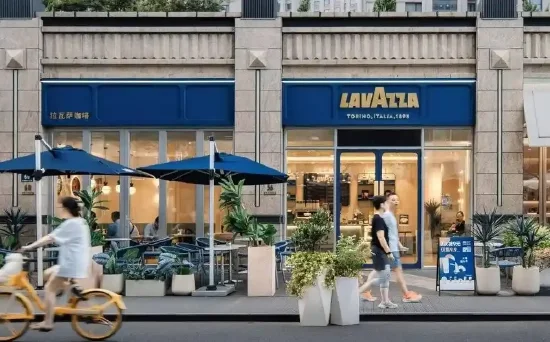
拉瓦萨咖啡

Search documents
百胜中国(09987):同店销售提速,26年展望积极
China Post Securities· 2026-02-12 08:55
Investment Rating - The report maintains a "Buy" rating for Yum China (9987.HK) [5][15] Core Insights - The company reported a revenue of $2.823 billion for Q4 2025, a year-on-year increase of 9%, with operating profit rising by 25% to $187 million and net profit increasing by 24% to $140 million [5][6] - For the full year 2025, the company achieved a revenue of $11.797 billion, up 4% year-on-year, with operating profit of $1.29 billion, an 11% increase, and net profit of $929 million, a 2% increase [5][6] Summary by Sections Company Overview - Latest closing price: HKD 445.60 - Total shares: 354 million - Total market capitalization: HKD 1,578.99 billion - 52-week high/low: HKD 450.00 / HKD 363.80 - Debt-to-asset ratio: 42.21% - Price-to-earnings ratio: 22.05 [4] Financial Performance - Q4 2025 saw a same-store sales growth of 3%, marking the third consecutive quarter of growth, with same-store transaction volume increasing for twelve consecutive quarters [6][7] - The company added 587 new stores in Q4 2025, the highest for the quarter, with a 36% increase in franchise store ratio [7] - The restaurant profit margin for Q4 2025 was 13%, up 70 basis points year-on-year, while the operating profit margin was 6.6%, up 80 basis points [7][8] Growth Drivers - The company’s delivery sales grew by 34% year-on-year, accounting for 53% of restaurant revenue, up from 42% the previous year [8][11] - Membership numbers for KFC and Pizza Hut exceeded 590 million, with active members growing by 13% [8] Future Outlook - The company plans to add 1,900 new stores in 2026, aiming for over 20,000 total stores, with capital expenditures projected at $600-700 million [14] - Revenue growth is expected to be 6.3% in 2026, with net profit growth of 10.1% [15][17]
财通证券:百胜中国(09987)公布RGM3.0战略 维持“增持”评级
智通财经网· 2025-12-25 03:23
Core Viewpoint - Company maintains resilient same-store growth and continues to expand its store network, with a positive outlook for the future [1] Group 1: RGM3.0 Strategy - Company announced the RGM3.0 strategy focusing on resilience, growth, and competitive advantage, driven by innovation and efficiency [2] Group 2: Store Network Expansion - As of Q3 2025, the company has 17,514 stores nationwide, with a net addition of 1,119 stores compared to 2024. The goal is to reach 20,000 stores by 2026, over 25,000 by 2028, and aim for more than 30,000 by 2030 [3] - The company plans to increase the proportion of franchise stores, targeting 40%-50% for KFC and 20%-30% for Pizza Hut in net new stores by 2025 [3] Group 3: Shareholder Return Plan - In the first nine months of 2025, the company returned $9.5 billion to shareholders, with an expected total return of approximately $15 billion for the year. The target for shareholder returns from 2025 to 2026 is $30 billion [4] Group 4: KFC and Pizza Hut Profit Goals - KFC aims to add 992 new stores in the first nine months and plans to increase its total to over 17,000 by 2028, with a target operating profit exceeding 10 billion RMB [5] - Pizza Hut plans to add over 600 new stores annually for the next three years, aiming to exceed 6,000 stores by 2028 and double its operating profit by 2029 compared to 2024 [6] Group 5: Lavazza Coffee Expansion - Lavazza Coffee is optimizing its store model to enhance economic efficiency and plans to accelerate expansion in first and select second-tier cities, targeting over 1,000 stores and retail sales of $60 million by 2029 [7]

财通证券:百胜中国公布RGM3.0战略 维持“增持”评级
Zhi Tong Cai Jing· 2025-12-25 03:19
Core Viewpoint - The company, Yum China (09987), demonstrates resilient same-store growth and continuous expansion of its store network, maintaining an upward trend. The firm possesses long-term advantages in scale, brand influence, industry management capabilities, and digital capabilities. The projected net profit for the company from 2025 to 2027 is estimated at $9.2 billion, $9.91 billion, and $10.57 billion, respectively, with corresponding P/E ratios of 19X, 17X, and 16X, maintaining a "Buy" rating [1] Group 1: Strategic Initiatives - The company announced its RGM 3.0 strategy during the Investor Day, focusing on resilience, growth, and competitive moat, driven by a dual strategy of "innovation and efficiency." The development concept involves a "front-end layering and back-end aggregation" approach, utilizing a multi-brand portfolio and diversified product lines to cover a wide range of consumer scenarios and demographics [2] Group 2: Store Expansion - As of Q3 2025, the company has 17,514 stores nationwide, with a net addition of 1,119 stores compared to 2024. The company aims to steadily reach a total of 20,000 stores by 2026, over 25,000 stores by 2028, and strive to exceed 30,000 stores by 2030. In terms of franchise stores, the company plans for 40%-50% of new KFC stores and 20%-30% of new Pizza Hut stores to be franchises by 2025, gradually increasing the franchise ratio in the coming years [3] Group 3: Shareholder Return Plans - By Q3 2025, the company has returned $9.5 billion to shareholders in the first nine months, with an expected total return of approximately $15 billion for the entire year of 2025. Building on the $15 billion returned in 2024, the company targets a total of $30 billion in shareholder returns between 2025 and 2026. Starting in 2027, the company plans to return approximately 100% of its free cash flow, after deducting dividends paid to minority shareholders [4] Group 4: Profit Goals for Brands - KFC aims to add 992 new stores in the first nine months, with a plan to increase the total number of stores to over 17,000 by 2028, targeting an operating profit exceeding RMB 10 billion, making it the first restaurant brand in China to achieve this milestone [5] - Pizza Hut added 298 new stores in the first nine months, with plans to add over 600 new stores annually for the next three years, aiming to surpass 6,000 stores by 2028 and double its operating profit by 2029 compared to 2024 [6] Group 5: Lavazza Coffee Expansion - Lavazza Coffee is optimizing its store model to enhance economic efficiency and is innovating its menu with localized support to drive growth. The company plans to accelerate expansion in first-tier and select second-tier cities over the next three to five years, targeting over 1,000 stores and retail sales of $60 million by 2029 [7]
气泡咖啡哪家好?百胜中国CEO屈翠容:肯德基比拉瓦萨更好
Xin Lang Ke Ji· 2025-12-16 02:03
Group 1 - The CEO of Yum China, Qu Cui Rong, stated that the profit from K COFFEE's sparkling coffee is slightly higher than that of lattes due to the cost of raw materials, particularly milk, which is the most expensive ingredient in the Chinese market [1] - K COFFEE was launched in October 2022 in Shanghai, focusing on a quick and convenient coffee experience, and has expanded to over 1,800 stores by Q3 2025, targeting lower-tier cities [1] - Yum China also operates Lavazza, an Italian coffee brand, which aims to provide an authentic Italian coffee experience and plans to open over 1,000 stores in China by 2028 [2] Group 2 - K COFFEE offers a variety of flavors for its sparkling coffee, including apple and pineapple, appealing to young consumers who are willing to try new products [1] - The technology used in K COFFEE's sparkling coffee production is different from that of Lavazza, with K COFFEE utilizing specialized equipment to create a distinct carbonation experience [1]

三万店“野心”背后,百胜中国如何重塑增长逻辑?
Sou Hu Cai Jing· 2025-12-09 03:32
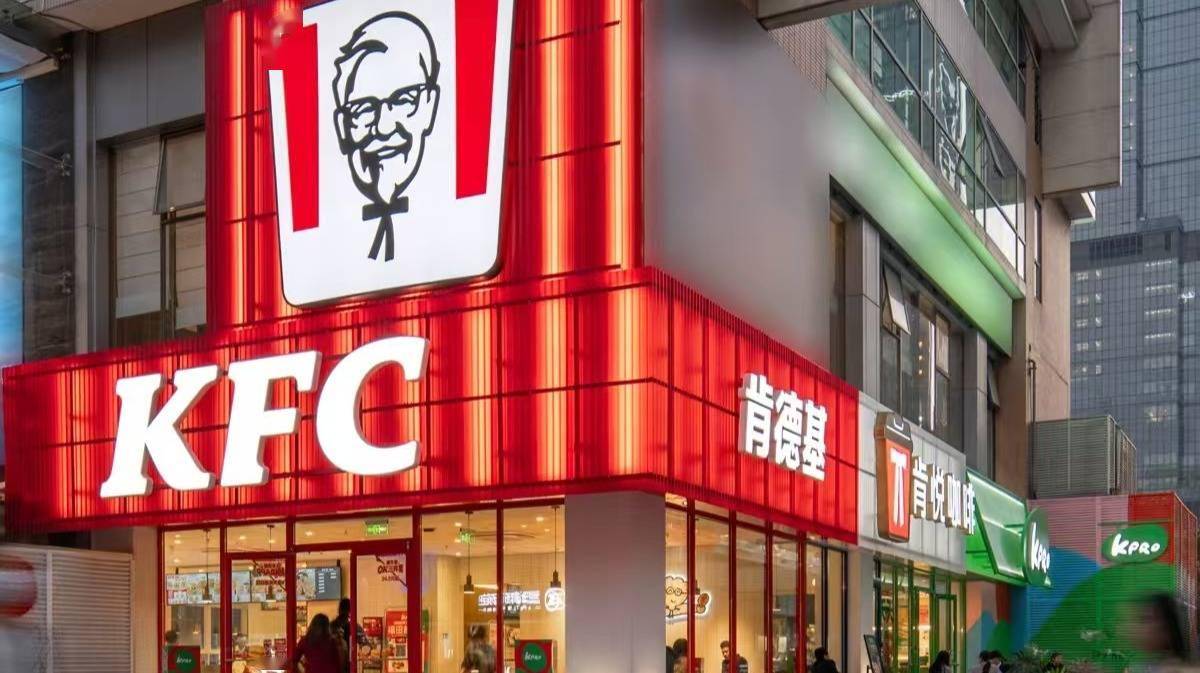
Core Insights - Yum China plans to rapidly expand its store count from 10,000 to 20,000 in less than a decade, aiming for 30,000 by 2030, significantly accelerating its growth trajectory established over the past 33 years [2] - KFC aims to exceed 17,000 stores by 2028 and become the first restaurant brand in China to achieve an operating profit of 10 billion yuan, while Pizza Hut targets over 6,000 stores by 2028 and aims to double its operating profit by 2029 compared to 2024 [2] - The company is also expanding its coffee and light meal brands, with KFC Coffee projected to surpass 5,000 stores by 2029 and KPRO already opening over 100 locations in just one year [2] Expansion Strategy - The "Bamboo Forest Effect" describes Yum China's diverse brand portfolio, supported by a robust supply chain, digitalization, and membership systems developed over nearly 40 years in the Chinese market [3] - The company faces challenges in balancing scale, innovation, and profitability, especially as competitors adjust their strategies in a saturated market [3][4] - Yum China's CEO emphasizes the importance of focusing on internal strengths and adapting to market conditions rather than solely emphasizing localization [4] Digital Transformation - Yum China is integrating AI technology across its operations, from smart ordering to quality control, although challenges remain in unifying different technological platforms [7][8] - The company acknowledges that employee trust in AI will take time to develop, and human decision-making remains crucial in the restaurant management process [8] Financial Performance - Despite rapid expansion, Yum China maintains a strong investment return cycle, with KFC's return period around two years and Pizza Hut's reduced to 2-3 years [9] - The company has consistently added over 1,000 new stores annually, with same-store sales showing positive growth for two consecutive quarters [9] Business Model Innovation - Yum China is focusing on its main brands while incubating new modules and store formats, leveraging KFC's extensive network and infrastructure [11] - The "Shoulder-to-Shoulder" model allows KFC to share space and resources with new brands like KFC Coffee, optimizing costs and enhancing operational efficiency [13] - The company is adopting flexible rental agreements, with 70% of new store leases based on revenue sharing rather than fixed rents, allowing for better adaptability to market conditions [15] Organizational Adaptability - Yum China is learning to balance the advantages of a large corporation with the agility of smaller businesses, aiming to create a resilient and efficient growth model [16] - The company recognizes the importance of maintaining human elements in decision-making processes, even as it embraces technological advancements [16]
三万店“野心”背后,百胜中国如何重塑增长逻辑?
虎嗅APP· 2025-12-08 13:48
Core Viewpoint - Yum China is aggressively expanding its store network, aiming to reach 30,000 stores by 2030, significantly accelerating its growth compared to the past 33 years when it opened 10,000 stores [4][5]. Expansion Plans - KFC plans to exceed 17,000 stores by 2028 and aims to become the first restaurant brand in China to achieve an operating profit of 10 billion [4]. - Pizza Hut targets over 6,000 stores by 2028 and aims to double its operating profit by 2029 compared to 2024 [4]. - New brands like K Coffee and KPRO are also expanding rapidly, with K Coffee expected to surpass 5,000 stores by 2029 [4][5]. "Bamboo Forest Effect" - The "Bamboo Forest Effect" refers to the diverse growth of various brands under Yum China, supported by a robust supply chain, digitalization, and membership systems developed over nearly 40 years in the Chinese market [5][6]. Challenges and Strategies - The company faces challenges from local brands and market saturation, with management emphasizing the importance of maintaining scale while being agile [6][9]. - Yum China's CEO highlighted the need to "do well" and adapt to market demands without overly focusing on localization [6]. Digital Transformation and AI - Yum China is integrating AI across its operations, from smart ordering to quality control, although challenges remain in unifying different technological platforms [11][12]. - The company acknowledges that while AI can enhance operations, human factors and trust in AI are crucial for successful implementation [12]. Financial Performance - Despite rapid expansion, Yum China has maintained a net new store growth of over 1,000 stores annually, with KFC's investment return period remaining around 2 years and Pizza Hut's reduced to 2-3 years [13][14]. - The company’s growth forecasts do not rely on macroeconomic improvements, indicating resilience in its business model [13]. New Business Models - Yum China is focusing on its main brands while incubating new modules and store types, leveraging KFC's infrastructure for new concepts like K Coffee and KPRO [14][16]. - The company is adopting flexible rental agreements for new stores, with 70% of new leases based on revenue sharing rather than fixed rents [18]. Conclusion - Yum China is navigating a transformative phase, balancing scale with agility, and leveraging technology while maintaining a human-centric approach to management and decision-making [20].

百胜中国(9987.HK):创新与提效双轮驱动 目标2030年门店超3万家
Ge Long Hui· 2025-11-19 21:34
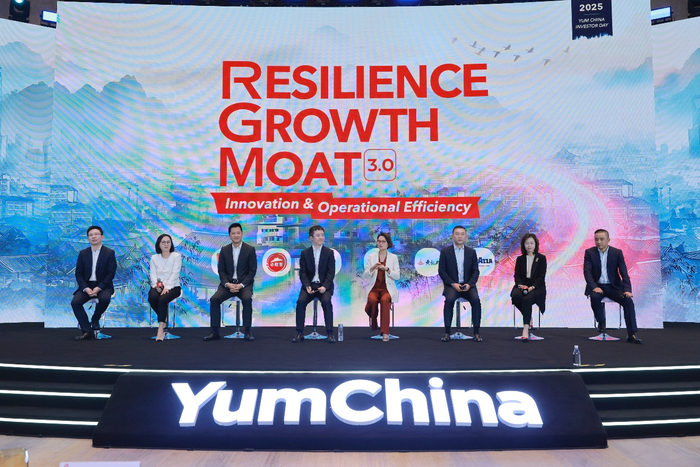
Core Viewpoint - Yum China launched its "RGM 3.0" strategy on November 17, 2023, focusing on resilience, growth, and competitive advantage, driven by innovation and efficiency [1] Group 1: Growth Targets - The company aims for same-store sales index growth of 100-102 from 2026 to 2028, with system sales achieving mid to high single-digit CAGR [1] - Operating profit is targeted to achieve high single-digit CAGR, with KFC aiming for over 10 billion yuan in operating profit by 2028 and Pizza Hut planning to double its operating profit by 2029 compared to 2024 [1] - Diluted earnings per share and free cash flow per share are expected to achieve double-digit CAGR [1] - Capital expenditure is projected at an average of 600-700 million USD per year from 2026 to 2028, based on a cautious assumption of the macro consumption environment [1] Group 2: Store Expansion - The company plans to exceed 30,000 total stores by 2030, with specific targets of 20,000 by 2026 and over 25,000 by 2028 [2] - KFC aims to surpass 17,000 stores by 2028, while Pizza Hut plans to exceed 6,000 stores by the same year [2] Group 3: Franchise Model - The company plans to open over 3,000 new franchise stores from 2026 to 2028, with franchise stores accounting for 40%-50% of net new KFC and Pizza Hut stores [3] - The share of system sales from franchise operations is expected to rise from 9%-10% in 2025 to mid-double digits by 2028 [3] - Operating profit margin is projected to increase to at least 11.5% by 2028, with restaurant profit margins expected to be no less than 16.7% [3] Group 4: New Business Development - New businesses like KFC Coffee and KPRO are growing rapidly, with KFC Coffee expected to exceed 5,000 stores by 2029 [4] - Lavazza Coffee aims to reach 1,000 stores and achieve 60 million USD in retail sales by 2029 [4] - The company plans to return approximately 100% of free cash flow to shareholders starting in 2027, with expected annual shareholder returns of about 900-1,000 million USD in 2027 and 2028 [4] Group 5: Financial Projections - Revenue projections for 2025-2027 are 11.63 billion, 12.16 billion, and 12.76 billion USD, with year-on-year growth rates of 2.9%, 4.6%, and 4.9% respectively [4] - Adjusted net profit estimates for the same period are 910 million, 1.03 billion, and 1.13 billion USD, with growth rates of 0.0%, 12.8%, and 10.2% respectively [4] - The company maintains a target price of 423.2 HKD per share, corresponding to a 22x PE ratio for 2025, with a reasonable market capitalization target of 155.7 billion HKD [4]
快餐业务全面下沉,百胜中国计划2030年门店总数突破3万家
Tai Mei Ti A P P· 2025-11-19 13:02
Core Insights - Yum China plans to expand its store count significantly, aiming for over 30,000 stores by 2030, with a target of 20,000 by 2026 and 25,000 by 2028 [2][4] - The company expects to maintain a steady operating profit margin of 10.8% to 10.9% in 2025, with restaurant profit margins projected at approximately 16.2% to 16.3% [2] - Despite intense competition, Yum China sees substantial growth opportunities, currently serving only about one-third of Chinese consumers, with a goal to increase this to nearly half [2] Expansion Strategy - Yum China's RGM 3.0 strategy focuses on resilience, growth, and competitive advantage, emphasizing innovation and efficiency [3] - The company is diversifying its front-end operations while integrating resources across stores and brands to enhance synergy [3] - KFC plans to increase its store count by about one-third to over 17,000 by 2028, targeting more than 3,700 cities [4] Brand-Specific Goals - Pizza Hut aims to "rebuild" itself within five years, planning to add over 600 stores annually for the next three years, reaching over 6,000 stores by 2028 [4] - KFC is focusing on expanding into lower-tier cities with a small store model, while also densifying its presence in higher-tier cities [4] - Pizza Hut has introduced the WOW store model, targeting cost-effective offerings to cater to single diners, with a price range of 10 to 30 yuan [5] Coffee Business Expansion - KFC is also expanding its coffee business, with the Kenuo Coffee brand expected to exceed 5,000 stores by 2029 [6] - The "shoulder-to-shoulder" strategy allows Kenuo Coffee to share resources with KFC, significantly reducing costs and improving operational efficiency [6] - Lavazza Coffee plans to accelerate its expansion in first- and second-tier cities, aiming for over 1,000 stores by 2029 [7] Overall Market Positioning - Yum China's expansion is not just about increasing store numbers but also involves upgrading product offerings, store models, and operational efficiency [9] - The company is exploring consumer trends amid a highly competitive market, seeking to determine if larger and more diverse chain operations can provide better solutions [9]
百胜中国(9987.HK)剑指3万门店,RGM3.0打开“快增长+提效益”扩张周期
Ge Long Hui· 2025-11-19 07:17
Core Viewpoint - Yum China is signaling positive long-term growth amidst a complex environment, with a strategic upgrade to "RGM 3.0" focusing on resilience, growth, and competitive advantage [1][12] Group 1: Strategic Focus - The company emphasizes a dual-driven strategy of "innovation + efficiency" to enhance collaboration among stores, regions, and brands [1] - The RGM strategy has led to high-quality and steady growth since its initiation in 2021, with positive same-store sales and improved profit margins despite market challenges [1] - Management expresses strong confidence in achieving rapid growth and efficiency improvements over the next three years, with ambitious store expansion and sales growth targets [1] Group 2: Financial Goals and Shareholder Returns - Yum China plans to return approximately 100% of free cash flow to shareholders starting in 2027, with expected annual returns between $900 million and over $1 billion from 2027 to 2028 [2] - The company aims for system sales to achieve mid to high single-digit compound growth and operating profit to achieve high single-digit compound growth from 2026 to 2028 [1] Group 3: Brand and Product Expansion - The growth model is based on a "multi-brand, multi-product, multi-module" approach, enhancing user coverage and consumption scenarios [3] - KFC remains the core brand, with significant single product sales exceeding 4 billion yuan annually, supporting new business expansions [3] - The company plans to expand KFC stores to 17,000 by 2028 and achieve over 10 billion yuan in operating profit [3] Group 4: Operational Efficiency and Innovation - Pizza Hut has accelerated growth with a focus on value positioning, achieving a 17% increase in same-store transaction volume for three consecutive quarters [4] - The company is implementing a simplified operational model and product innovations to penetrate deeper into the market [4] - Lavazza Coffee is also expanding rapidly, with plans to reach 1,000 stores and $60 million in retail sales by 2029 [4] Group 5: Supply Chain and Technology - The company’s supply chain, digital technology, and talent development are crucial for supporting business growth and profitability [6][7] - Yum China is transitioning to an AI-driven operational system, enhancing efficiency in various operational aspects [6] - The company is expanding its supplier base and implementing direct procurement strategies to maintain cost advantages [6] Group 6: Market Potential and Industry Outlook - The Chinese restaurant market has significant growth potential, with a current chain penetration rate of about 20%, compared to over 50% in mature markets [12] - The company aims to increase its consumer service coverage from one-third to approximately half by 2028 [12] - The restaurant industry is entering a mild recovery phase, supported by policy incentives and improving consumer sentiment [8][11]
百胜中国(09987):创新与提效双轮驱动,目标2030年门店超3万家
Haitong Securities International· 2025-11-18 00:03
Investment Rating - The report maintains an "Outperform" rating for Yum China Holdings [2][7] Core Insights - Yum China held its 2025 Investor Day on November 17, launching the "RGM 3.0" strategy, focusing on resilience, growth, and competitive advantage, with innovation and efficiency as dual drivers [3][13] - The company targets over 30,000 stores by 2030, with specific store count goals of 20,000 by 2026 and 25,000+ by 2028 [4] - Revenue projections for 2025-2027 are USD 11.63 billion, USD 12.16 billion, and USD 12.76 billion, with year-over-year growth rates of 2.9%, 4.6%, and 4.9% respectively [7][14] Financial Projections - Adjusted net profits are expected to be USD 911 million in 2025, USD 1.03 billion in 2026, and USD 1.13 billion in 2027, with growth rates of 0.0%, 12.8%, and 10.2% respectively [7][14] - The company anticipates a gross profit margin (GPM) of 68.7% in 2025, increasing to 69.9% by 2027 [10][12] - The report projects a diluted EPS of USD 2.52 for 2025, increasing to USD 3.13 by 2027 [10][12] Expansion Strategy - Franchise empowerment is a core strategy, with plans to open over 3,000 new franchise stores from 2026 to 2028, with franchise stores making up 40%-50% of new openings for both KFC and Pizza Hut [4] - The company aims to enhance restaurant profitability, targeting an operating profit margin of at least 11.5% by 2028 [4] New Business Developments - New business initiatives, including KFC Coffee and KPRO, are expected to exceed initial growth expectations, with KFC Coffee projected to surpass 5,000 stores by 2029 [5] - The company plans to return approximately 100% of free cash flow to shareholders starting in 2027, with expected annual shareholder returns of USD 900 million to USD 1 billion [5]