
智能产品

Search documents
挖掘经济潜能系列二:消费补贴和信贷贴息如何推动扩内需?
East Money Securities· 2026-02-27 06:05
Group 1: Consumption Subsidies - In 2025, over 360 million people applied for consumption subsidies, driving related sales exceeding 2.6 trillion yuan, directly boosting social retail sales by 0.6 percentage points[17] - The retail sales of key subsidized products such as furniture, home appliances, and communication equipment grew by 14.6%, 11.0%, and 20.9% respectively, significantly outpacing the overall retail sales growth of 3.7%[18] - The government allocated 300 billion yuan in special bonds for consumption subsidies in 2025, doubling the amount from 2024[12] Group 2: Investment Support - Fixed asset investment in China decreased by 3.8% in 2025, with equipment updates and high-tech services countering declines in real estate and private investment[23] - The government supported 1,459 projects with 800 billion yuan in "two heavy" investments in 2025, an increase from 700 billion yuan in 2024[27] - Equipment investment grew by 11.8% in 2025, accounting for 18.0% of total fixed asset investment, contributing 1.8 percentage points to overall investment growth[23] Group 3: Policy Optimization - The "two new" policies were optimized in 2026, expanding support for old equipment updates and consumption subsidies to include more product categories and enhance subsidy standards[30] - Structural monetary policy tools were adjusted, with a 0.25 percentage point reduction in interest rates, expected to lower interest costs by approximately 12.5 billion yuan[37] - Fiscal policies in 2026 will focus on increasing total expenditure while optimizing the structure to enhance the effectiveness of spending on consumption and investment[42]
晶采观察丨开门红!春节假期创多项“新高” 中国经济“马”力十足
Yang Guang Wang· 2026-02-26 08:09
Group 1 - The domestic tourism market saw significant growth during the Spring Festival, with 596 million domestic trips taken, an increase of 95 million trips compared to the previous year, and total spending reaching 803.48 billion yuan [3] - There was a notable shift in travel patterns, with a 40% increase in ticket bookings by individuals aged 60 and above, while younger travelers showed a preference for smaller towns, with hotel bookings in places like Yangshuo and Pingtan increasing over fourfold [2][3] - The popularity of traditional experiences surged, with significant attendance at events like the Harbin Ice and Snow Festival and the Luoyang Night Tour, indicating a willingness to spend on cultural experiences [3][4] Group 2 - The demand for green appliances, smart products, and health-oriented goods has risen, reflecting a shift in consumer preferences towards quality and experience rather than just price [5] - The government initiated a reward invoice pilot program in 50 cities, with a budget of 10 billion yuan for the Spring Festival period, aimed at boosting consumer confidence and spending [5] - Overall, the Spring Festival consumption market is characterized by three keywords: popularity, confidence, and vitality, showcasing the resilience and potential of the Chinese consumer market [5]


开门红!春节假期创多项“新高” 中国经济“马”力十足
Yang Guang Wang· 2026-02-26 07:59
Group 1 - The domestic tourism market saw significant growth during the Spring Festival, with 596 million domestic trips taken, an increase of 95 million trips compared to the previous year, and total spending reaching 803.48 billion yuan [2] - There was a notable shift in travel patterns, with a 40% increase in ticket bookings by individuals aged 60 and above, while younger travelers showed a preference for smaller towns, with hotel bookings in places like Yangshuo and Pingtan increasing over fourfold [1][2] - The popularity of traditional cultural experiences surged, with significant attendance at events like the Harbin Ice and Snow Festival and the Luoyang Night Tour, indicating a willingness to spend on cultural experiences [2][3] Group 2 - The consumption trend shifted towards higher quality and healthier products, with green appliances and smart products gaining popularity, reflecting a move towards quality over quantity in consumer spending [4] - The government initiated a reward invoice pilot program in 50 cities, distributing 10 billion yuan in bonuses during the Spring Festival, which contributed to consumer confidence and spending [4] - Overall, the Spring Festival consumption market was characterized by high enthusiasm, strong support from government policies, and a trend towards consumption upgrades, showcasing the resilience and potential of the Chinese economy [4]
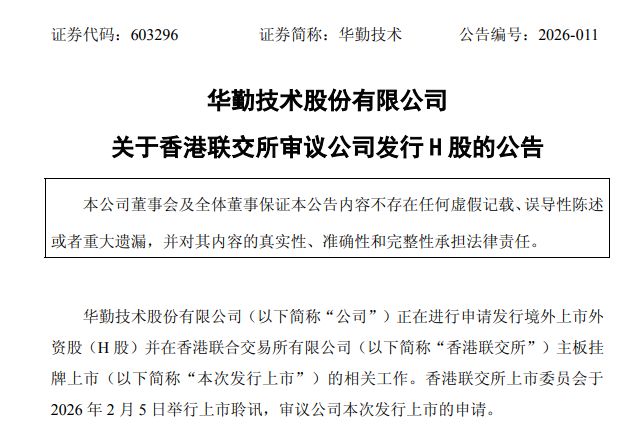
华勤技术已举行香港上市聆讯,保荐人收到相关信函、但不构成正式的上市批准
Xin Lang Cai Jing· 2026-02-25 05:45
Group 1 - Huqin Technology, a leading A-share listed company from Shanghai, announced that the Hong Kong Stock Exchange Listing Committee will hold a hearing on February 5, 2026, to review its application for issuing H-shares and listing [2] - The joint sponsors of Huqin Technology's H-share issuance received a letter from the Hong Kong Stock Exchange on February 6, 2026, indicating that the Listing Committee has reviewed the company's application, but this letter does not constitute formal approval for listing [2] - The issuance and listing of H-shares still require final approval from relevant regulatory bodies, including the Hong Kong Securities and Futures Commission and the Hong Kong Stock Exchange, indicating uncertainty in the process [2] Group 2 - Huqin Technology is recognized as a globally leading, technology-driven intelligent product platform company, primarily providing smart products across mobile terminals, computing and data centers, AIoT, and innovative business sectors [3] - According to Zhaoshang Consulting, Huqin Technology is the world's leading full-stack intelligent product ODM platform, achieving the largest market share of 22.5% in global consumer electronics ODM shipments in 2024, including smartphones, tablets, smartwatches, TWS earphones, and laptops [3]

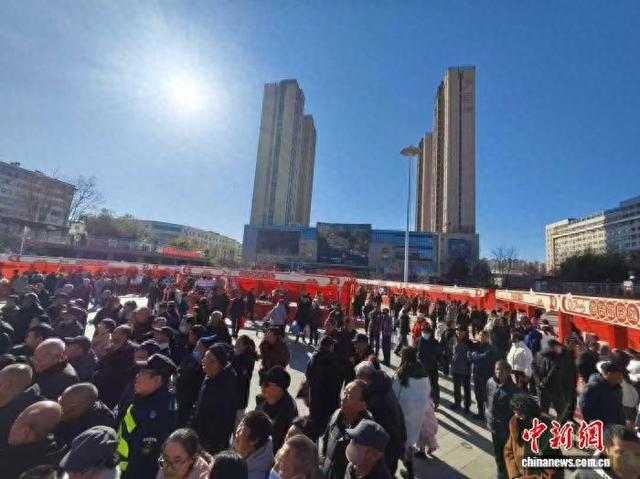
(新春走基层)年味足消费旺 山西晋城春节消费市场“马”力全开
Xin Lang Cai Jing· 2026-02-24 12:07
Group 1 - The consumption market in Jincheng, Shanxi, showed strong demand and vitality during the 2026 Spring Festival, with bustling crowds in major commercial areas and a blend of traditional and modern consumer experiences [1][3] - A promotional wave covering popular categories such as clothing and daily necessities was observed, with online and offline sales reaching nearly 1.8 million yuan in just three days during the New Year market and online goods festival [3] - The restaurant sector thrived with dining gatherings becoming mainstream, as many restaurants maintained a high occupancy rate of over 95%, and food stalls at Longma Lake generated over 280,000 yuan in sales [3][5] Group 2 - The 2026 consumption upgrade policy continued to gain traction during the Spring Festival, with efforts to promote the sale of automobiles, home appliances, and smart products, resulting in over 48,000 transactions in smart product purchases [5] - Jincheng issued 11 million yuan in digital consumption vouchers to stimulate spending in retail and dining sectors, effectively driving over 11 million yuan in consumption and enhancing market activity [5]
各地经济增长目标设定更趋务实
Jing Ji Ri Bao· 2026-02-12 23:17
Core Viewpoint - The setting of economic growth targets by provinces is aimed at better consensus building, guiding expectations, and enhancing confidence, reflecting a pragmatic approach towards high-quality development in response to national strategies [1][2]. Provincial Growth Targets - Over 70% of provinces set their growth targets at or above "around 5%," with Tibet having the highest target of "over 7%," and Hainan at "around 6%," significantly higher than its 2025 actual growth of 4% [2][3]. - Eleven provinces, including Beijing, Shanghai, and Henan, set their targets at "around 5%," while Guangdong, Shanxi, and Heilongjiang aim for "4.5%—5%" [2][3]. - Notably, nine provinces maintained their targets from the previous year, while Jiangxi increased its target from "around 5%" to "5%—5.5%" [2][3]. Characteristics of Growth Targets - The growth targets are more pragmatic and stable, reflecting a deepening commitment to high-quality development rather than a reduction in growth momentum [3]. - The number of provinces setting flexible growth ranges has increased to seven, allowing for greater adaptability in achieving better outcomes [3]. - Major economic provinces continue to play a crucial role, with nine of the top ten provinces maintaining growth targets in the "5" range, indicating their importance in driving national economic growth [3]. Focus on High-Quality Development - There is a shift from merely pursuing GDP growth to emphasizing substantial and quality improvements, aligning with the "14th Five-Year Plan" and central economic work meetings [3]. - Provinces are prioritizing the integration of technological and industrial innovation, with a focus on emerging industries and the transformation of traditional sectors [4]. Expansion of Domestic Demand - Provinces are emphasizing the importance of expanding domestic demand, with specific initiatives to boost consumption in sectors like automobiles and electronics [4]. - Investment strategies are becoming more targeted, focusing on new productivity and urbanization, with efforts to stimulate private investment [4]. Improvement of Livelihoods - Economic development is increasingly linked to improving living standards, with specific job creation targets and initiatives in healthcare and elderly care being highlighted by various provinces [5].
贝仕达克2025年业绩预告发布,净利润预计大幅下滑
Jing Ji Guan Cha Wang· 2026-02-12 07:22
Core Viewpoint - The company Beishidake (300822) is expected to experience a significant decline in net profit for 2025, with changes in shareholder structure and involvement in smart home and AI sectors [1] Group 1: Performance and Financial Outlook - The company forecasts a net profit attributable to shareholders for 2025 to be between 8.6 million and 12.9 million yuan, representing a year-on-year decline of 76.65% to 84.43% [2] - The expected non-recurring net profit is projected to be between 8.14 million and 12.21 million yuan, also reflecting a decline of 76.85% to 84.57% year-on-year [2] Group 2: Shareholder Structure - As of September 30, 2025, the number of shareholders is reported to be 20,400, a decrease of 11.71% compared to the previous period [3] - Hong Kong Central Clearing Limited holds 739,800 shares, which is a reduction of 106,400 shares from the previous period [3] Group 3: Business Operations - The company's main business includes smart controllers and smart products, accounting for 67.14% and 18.47% of revenue, respectively, and is involved in smart home and artificial intelligence sectors [4] - In December 2025, the company announced a joint investment with professional investment institutions, although specific timelines were not disclosed [4]

经济日报金观平:提振消费离不开系统思维
Xin Lang Cai Jing· 2026-02-11 23:58
Core Viewpoint - The article emphasizes the importance of boosting consumer spending as a strategic initiative to expand domestic demand, with a focus on implementing various measures to stimulate consumption effectively [1]. Group 1: Policy Initiatives - New policies for consumer goods trade-in and unique cultural tourism projects have been introduced to stimulate consumption, yielding positive results [1]. - The central economic work conference prioritizes "domestic demand as the main driver" for economic tasks in 2026, highlighting the need for integrated policy effects to enhance consumer motivation [1]. Group 2: Support for Durable Goods - Local governments are prioritizing support for trade-in programs for high-value durable goods such as electric vehicles and home appliances, which have shown significant short-term effects on consumption [2]. - However, the long lifespan and replacement cycles of these products may lead to diminishing marginal effects over time, necessitating a broader approach to subsidies and support [2]. Group 3: Supply and Demand Alignment - There is a current mismatch between strong supply and weak demand, with insufficient quality supply limiting consumption potential [3]. - The need to enhance the adaptability of supply and demand is critical, focusing on leading new supply with new demand and creating a virtuous cycle of domestic demand [3]. Group 4: Enhancing Consumer Capacity - Improving subsidy policies and optimizing the supply of goods and services can enhance consumer willingness to spend [3]. - It is essential to ensure that residents have the ability and confidence to consume, linking industrial development with job creation and income stability to foster a positive cycle of consumption [3].
武汉发布数智经济发展行动方案到2028年,人工智能产业规模超两千亿元
Chang Jiang Ri Bao· 2026-02-04 01:03
Core Insights - The article discusses the launch of the "Wuhan Smart Economy Development Action Plan (2026-2028)" aimed at establishing Wuhan as a leading city in smart economy by 2028, with a target of over 200 billion yuan in AI industry scale and more than 1,500 AI-related enterprises [1][2][3] Group 1: Development Goals - By 2028, Wuhan aims for an AI industry scale exceeding 200 billion yuan and over 1,500 AI-related companies, establishing itself as a super-large AI city [1][6] - The plan emphasizes the integration of smart technologies with economic and social development across various sectors, including manufacturing, agriculture, and services [1][2] Group 2: Key Initiatives - The action plan includes eight major projects focusing on industrial upgrades, scene cultivation, infrastructure enhancement, data element development, and smart governance [7][14] - Specific targets include the production of high-performance computing power exceeding 15,000 P, a cumulative data transaction volume of 3 billion yuan, and the establishment of 1,000 large-scale data enterprises [6][10] Group 3: Infrastructure and Ecosystem - The plan outlines the construction of a multi-layered application ecosystem and advanced infrastructure to support smart economy initiatives, including enhanced 5G coverage and high-quality data sets [2][10] - It aims to create a collaborative innovation ecosystem that encourages technological breakthroughs and supports talent development [2][11] Group 4: Strategic Focus Areas - The strategy includes a shift from "Internet+" to "AI+" and emphasizes the importance of integrating smart technologies into various industries and public services [13][15] - The focus will be on three core industries: sensors, optical communication, and integrated computing, along with the development of application service providers and intelligent products [16][17] Group 5: Future Outlook - The plan anticipates that by 2025, the core industries of Wuhan's smart economy will reach a scale of 1.1 trillion yuan, positioning the city as a strategic growth engine for industrial upgrades [16][18] - The city aims to enhance its overall competitiveness and ensure the successful implementation of the smart economy development blueprint through detailed task assignments and organizational support [2][14]

将更多财力用于促消费和惠民生
2 1 Shi Ji Jing Ji Bao Dao· 2026-01-30 22:16
Group 1 - The core viewpoint of the news is that China's fiscal revenue is expected to maintain stable growth in 2025, with strong support for key expenditures, reflecting an improving economic situation [1] - Fiscal revenue showed a trend of slight decline in Q1, turning to growth in Q2, and stabilizing in Q3 and Q4, indicating a gradual recovery in economic operations [1] - The proactive fiscal policy has increased counter-cyclical adjustments, with the deficit rate raised by 1 percentage point to 4%, and the issuance of special bonds to support state-owned banks [1] Group 2 - The fiscal policy aims to boost market consumption confidence by allocating 300 billion yuan for special long-term bonds to support consumer upgrades, promoting green and intelligent products [2] - Measures include personal consumption loan subsidies and support for new consumption models, enhancing both supply and demand sides to stimulate consumption potential [2] - Continuous strengthening of social welfare is emphasized, with increased funding for healthcare, pensions, and childcare subsidies, effectively enhancing residents' consumption capacity [2] Group 3 - In 2026, a more proactive fiscal policy will be implemented, maintaining necessary deficit levels and expanding total fiscal expenditure to support key areas like national strategy and basic livelihoods [3] - The focus will shift towards enhancing local financial autonomy and optimizing transfer payment structures to stimulate local economic vitality [3] - More funds will be directed towards consumption and social welfare, aiming to increase disposable income and consumption propensity, thus expanding domestic demand [3] Group 4 - Fiscal support will concentrate on high-level technological self-reliance, with increased investment in key laboratories and research institutions to strengthen foundational research [4] - The government will leverage investment funds to support leading enterprises in pioneering technological advancements in cutting-edge fields [4] - Collaboration between fiscal and financial sectors will be enhanced through special funds and risk compensation tools to support industries like AI, quantum information, and biomanufacturing [4]