数码绿色债券

Search documents
香港11月份认可机构存款总额按月升0.7%
Sou Hu Cai Jing· 2025-12-31 10:29
Group 1 - The total deposits of recognized institutions in Hong Kong increased by 0.7% month-on-month in November 2025, with Hong Kong dollar deposits rising by 0.2% and foreign currency deposits increasing by 1.1% [1][3] - From the beginning of the year until the end of November, total deposits and Hong Kong dollar deposits rose by 10.5% and 3.4% respectively [1] - The total amount of Renminbi deposits in Hong Kong reached 1,002 billion Renminbi in November, reflecting a month-on-month increase of 0.6% [1] Group 2 - As of November 30, 2025, the total assets of the Hong Kong Monetary Authority's foreign exchange fund amounted to 4,106.9 billion Hong Kong dollars, a decrease of 10.7 billion Hong Kong dollars from the previous month [3] - The decline in foreign currency assets was primarily due to a reduction in the month-end balance of securities purchased but not settled, although this was partially offset by funds from the issuance of digital green bonds and Renminbi bonds, as well as interest income from investments [3] - The decrease in Hong Kong dollar assets was mainly attributed to the revaluation of Hong Kong stocks [3]

香港金管局:截至11月30日 香港外汇基金总资产为41069亿港元
智通财经网· 2025-12-31 08:27
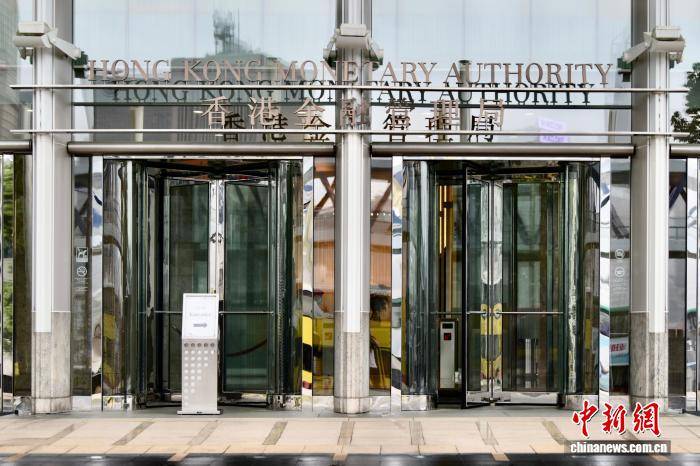
Core Viewpoint - The Hong Kong Monetary Authority reported a decrease in total assets of the foreign exchange fund as of November 30, 2025, primarily due to a reduction in foreign currency assets and a slight decline in Hong Kong dollar assets [1] Group 1: Foreign Exchange Fund Assets - As of November 30, 2025, the total assets of the Hong Kong foreign exchange fund amounted to HKD 4,106.9 billion, a decrease of HKD 10.7 billion from the end of October 2025 [1] - The reduction in foreign currency assets was mainly attributed to a decrease in the month-end balance of securities purchased but not settled, partially offset by funds from the issuance of digital green bonds, RMB bonds from government agencies, interest income from investments, and revaluation of investments at market prices [1] - The decline in Hong Kong dollar assets was primarily due to the revaluation of Hong Kong stocks at market prices [1] Group 2: Monetary Base and Support Assets - The monetary base at the end of November 2025 was HKD 2,032.2 billion, an increase of HKD 5.5 billion, representing a growth rate of 0.3% compared to the end of October 2025 [1] - The increase in the monetary base was mainly due to the rise in the market value of outstanding foreign exchange fund notes and bonds, as well as an increase in the total amount of liability certificates [1] - The total amount of supporting assets rose by HKD 14.2 billion to HKD 224.13 billion, with a growth rate of 0.6%, driven by interest income from investments and revaluation of investments at market prices [1] - The support ratio increased from 109.89% at the end of October 2025 to 110.29% at the end of November 2025 [1]
ESG动态跟踪月报(2025年11月):碳市场新增行业配额方案落地,国际政策分化下绿色金融保持活跃-20251209
CMS· 2025-12-09 15:08
Quantitative Models and Construction Methods Model 1: Carbon Emission Intensity Deviation and Carbon Emission Intensity Coefficient - **Model Name**: Carbon Emission Intensity Deviation and Carbon Emission Intensity Coefficient - **Model Construction Idea**: The model aims to allocate carbon quotas based on the deviation of a company's carbon emission intensity from the industry average, incentivizing companies to reduce emissions. - **Model Construction Process**: - The carbon emission intensity deviation (X) is calculated as the difference between a company's unit product carbon emission and the industry average, divided by the industry average: $$ X = \frac{I - BP}{BP} $$ where \( I \) is the company's unit product carbon emission, and \( BP \) is the industry average. - The carbon emission intensity coefficient (α) is determined based on the deviation (X): $$ \alpha = \begin{cases} -3\% & \text{if } X \leq -20\% \\ 15\% \times X & \text{if } -20\% < X \leq 20\% \\ +3\% & \text{if } X > 20\% \end{cases} $$ - The quota amount (A) is calculated as: $$ A = E \times (1 + \alpha) $$ where \( E \) is the company's verified emissions for the year. - **Model Evaluation**: This model ensures that differences in emission control levels among companies are reflected in their quota allocations, providing positive incentives for emission reduction while maintaining overall quota stability.[8][9][11] Model Backtesting Results - **Carbon Emission Intensity Deviation and Carbon Emission Intensity Coefficient**: - The model's implementation is expected to significantly expand the coverage of the national carbon market, enhancing the price discovery function of carbon prices and reflecting marginal abatement costs more clearly.[12][13] Quantitative Factors and Construction Methods Factor 1: National Certified Voluntary Emission Reduction (CCER) Methodology - **Factor Name**: National Certified Voluntary Emission Reduction (CCER) Methodology - **Factor Construction Idea**: The factor aims to provide a quantifiable method for voluntary emission reduction projects, converting emission reductions into tradable environmental credits. - **Factor Construction Process**: - The methodology includes three key scenarios: offshore oilfield associated gas recovery, onshore gas field test gas recovery, and onshore oilfield low-gas-volume associated gas recovery. - Each scenario has specific mechanisms for emission reduction, monitoring, and accounting requirements. - For example, the offshore oilfield associated gas recovery scenario involves recovering gas that would otherwise be flared, converting it into usable products, and reducing methane emissions. - **Factor Evaluation**: This methodology provides clear technical specifications and market incentives for methane emission reduction projects in the oil and gas industry, supporting the achievement of methane control targets.[14][15] Factor Backtesting Results - **National Certified Voluntary Emission Reduction (CCER) Methodology**: - The implementation of this methodology is expected to lead to the initiation of more associated gas recovery projects, contributing to the achievement of China's dual carbon goals and supporting the green and low-carbon transition of the oil and gas industry.[14][15]






ESG市场观察周报:欧洲议会批准下调可持续信披要求,国内碳价持续回升-20251117
CMS· 2025-11-17 13:18
- The National Development and Reform Commission and the National Energy Administration jointly issued the "Guiding Opinions on Promoting the Consumption and Regulation of New Energy"[12] - The National Energy Administration issued the "Guiding Opinions on Promoting the Integrated Development of New Energy"[13] - Hong Kong successfully issued approximately HKD 10 billion worth of digital green bonds[14]
今年前10个月广东外贸进出口同比增长3.7%;一机器人总部项目落子广州丨大湾区财经早参
Sou Hu Cai Jing· 2025-11-12 17:01
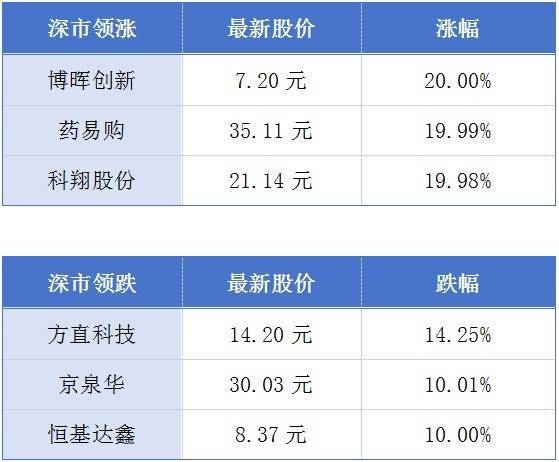
Group 1: Foreign Trade in Guangdong - Guangdong's foreign trade import and export value reached 7.8 trillion yuan in the first ten months of this year, reflecting a year-on-year growth of 3.7% and accounting for 20.9% of the national total [1] - Exports amounted to 4.98 trillion yuan, with a year-on-year increase of 1.7%, while imports were 2.82 trillion yuan, showing a growth of 7.5% [1] Group 2: Guangzhou Auto Show - The 23rd Guangzhou Auto Show will be held from November 21 to 30, covering an area of 220,000 square meters, featuring 93 new car launches and a total of 1,085 vehicles on display, including 629 new energy vehicles [2] - This event marks a significant milestone in China's transition from a major automotive nation to a strong automotive nation, showcasing the innovation capabilities of Guangzhou and the Greater Bay Area [2] Group 3: Digital Green Bonds in Hong Kong - The Hong Kong government successfully priced approximately 10 billion HKD worth of digital green bonds under its sustainable bond program, covering multiple currencies including HKD, RMB, USD, and EUR [3] - The issuance of this third batch of digital green bonds set a new record, indicating strong market support for tokenized products [3] Group 4: Robotics Headquarters in Guangzhou - The domestic autonomous driving solution provider, Sait Intelligent, inaugurated its new headquarters in the Guangzhou (Baiyun) Robotics Industrial Park, focusing on high-precision positioning navigation and machine vision technologies [4] - This new headquarters signifies a critical step in the company's industrial layout and highlights the positive outcomes of Guangzhou Baiyun District's strategy to promote industrial cluster development through investment [4] Group 5: Shenzhen Stock Market - The Shenzhen Component Index closed at 13,240.62 points, down 0.36% on November 12 [5] Group 6: Stock Performance - The top gainers in the Shenzhen market included Bohui Innovation at 7.20 yuan with a rise of 20.00%, Yiyigou at 35.11 yuan with a gain of 19.99%, and Kexiang Co. at 21.14 yuan with an increase of 19.98% [6] - The top decliners included Fangzhi Technology at 14.20 yuan, down 14.25%, Jingquan Hua at 30.03 yuan, down 10.01%, and Hengji Daxin at 8.37 yuan, down 10.00% [6]

当城市绿能项目上链:RWA正改写全球融资游戏规则
Sou Hu Cai Jing· 2025-11-12 10:59
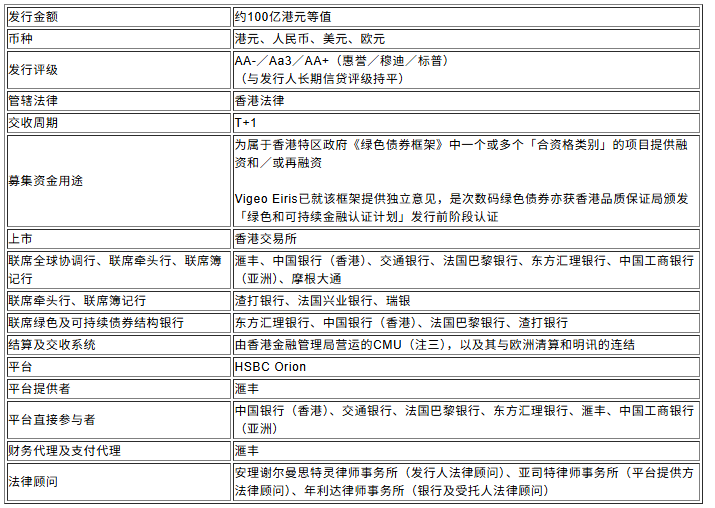
Core Insights - The issuance of Hong Kong's HKD 10 billion multi-currency digital green bonds is a significant step towards mainstream adoption of Real World Assets (RWA) through blockchain technology [3][4] - The bond issuance was oversubscribed by more than 13 times, totaling over HKD 130 billion, and introduced innovative features such as tokenized central bank currency settlements [3][4] - The project aims to enhance liquidity and reduce investment barriers, allowing fractional ownership of assets like real estate and art, thus democratizing access to investment opportunities [4][7] Summary by Sections Bond Issuance Details - Issued amount: Approximately HKD 10 billion equivalent [4] - Currencies involved: HKD, RMB, USD, EUR [4] - Ratings: AA-/Aa3/AA+ (Fitch/Moody's/S&P) [4] - Settlement cycle: T+1 [4] - Purpose: Financing and refinancing projects under the Hong Kong government's Green Bond Framework [4] Technological Integration - The bonds were issued directly on the HSBC Orion platform, bypassing traditional custodial processes [3][4] - The integration of the CMU system with distributed ledger technology represents a seamless connection between traditional finance and blockchain [5][7] Market Impact and Future Outlook - The initiative addresses traditional asset liquidity issues and lowers investment thresholds from millions to thousands [4][7] - The transformation of RWAs is accelerating, with HSBC supporting the implementation of tokenized fiat currency settlements [5] - The vision of 24/7 global asset circulation is becoming more attainable, with the potential for urban green projects and collectibles to be traded in fractionalized formats [7]

香港特区政府成功发行第三批数码绿色债券 总额约100亿港元
Zhi Tong Cai Jing· 2025-11-11 13:01
Core Insights - The Hong Kong SAR government successfully priced approximately HKD 10 billion worth of digital green bonds under its sustainable bond program, covering multiple currencies including HKD, RMB, USD, and EUR [1][2] Summary by Categories Issuance Details - The issuance includes HKD 2.5 billion two-year bonds at 2.5%, RMB 2.5 billion five-year bonds at 1.9%, USD 300 million three-year bonds at 3.633%, and EUR 300 million four-year bonds at 2.512% [2] - The total issuance amount reached HKD 10 billion, with total subscriptions exceeding HKD 130 billion, marking it as the largest digital bond issuance globally to date [2][3] Innovation and Technology - The bonds incorporate digital currency in the settlement process, allowing for tokenized central bank currency options, which helps reduce settlement time, costs, and counterparty credit risk [2] - The issuance utilizes Digital Token Identifiers (DTIs) in compliance with the ISO 24165 standard, linking the bonds to global standards [2][3] Market Impact and Future Outlook - The issuance reflects strong market support for tokenized products and aims to enhance the interoperability between traditional capital markets and digital industries [3][4] - The Hong Kong government plans to regularize the issuance of tokenized bonds to establish a comprehensive benchmark and promote broader applications of digital finance [3][4] Regulatory and Legal Framework - The bonds are governed by Hong Kong law, with a settlement cycle of T+1, and are certified under the "Green and Sustainable Finance Certification Scheme" by the Hong Kong Quality Assurance Agency [6] - The issuance received ratings of AA-/Aa3/AA+ from Fitch, Moody's, and S&P, respectively, aligning with the issuer's long-term credit rating [6]