星星人系列

Search documents
2029年中国情绪经济规模将超4.5万亿
Di Yi Cai Jing Zi Xun· 2026-01-29 13:27
Group 1 - The recent local two sessions highlighted the emergence of "emotional economy," "self-pleasure economy," and related new consumption trends [2][3] - Various provincial government reports emphasized the development of new consumption models, including "emotional economy," "silver economy," and "first-release economy" [2][3] - The emotional economy is driven by consumers' willingness to spend on experiences that provide happiness, healing, and a sense of belonging, moving beyond traditional needs [3][4] Group 2 - The emotional economy market in China is projected to grow significantly, reaching 2.31 trillion yuan in 2024 and expected to exceed 4.5 trillion yuan by 2029 [4] - Local representatives are advocating for the development of emotional economy strategies, focusing on creating emotional resonance in consumption and integrating cultural elements into modern expressions [5] - Suggestions include the establishment of a comprehensive emotional economy development plan in Guizhou, targeting therapeutic consumption, experiential consumption, and cultural IP [5]



2029年中国情绪经济规模将超4.5万亿
第一财经· 2026-01-29 13:09
Core Viewpoint - The article discusses the rise of the "emotional economy," driven by consumer demand for emotional satisfaction and experiences beyond basic needs, as highlighted in recent local government reports across various provinces in China [3][4][5]. Group 1: Government Reports and Initiatives - The Chongqing government report emphasizes the cultivation of new consumption types, including emotional economy and silver economy, to meet evolving consumer demands [3]. - The Hubei government report outlines plans to implement special actions to boost consumption, focusing on practical, emotional, and knowledge values by 2026 [3]. - The Jiangxi government aims to expand new consumption types, integrating technologies like AI and virtual reality into various sectors, while promoting emotional consumption and national trend economy [3][4]. Group 2: Emotional Economy Insights - The emotional economy is characterized by consumers willing to spend on happiness, healing, and a sense of belonging, moving beyond traditional necessities [5]. - The market size of China's emotional economy reached 2.31 trillion yuan in 2024, with projections to exceed 4.5 trillion yuan by 2029 [6]. - Emotional consumption is not limited to younger demographics; a significant portion of older consumers also engages in emotional spending, as evidenced by concert attendance statistics [5][6]. Group 3: Recommendations and Future Directions - Suggestions from industry experts include developing emotional economy strategies that integrate healing, experiential, and cultural IP consumption, as well as virtual services [7]. - The proposal for a comprehensive emotional economy development plan in Guizhou aims to create a robust ecosystem that combines products, services, and experiences to enhance consumer satisfaction [7].

2029年中国情绪经济规模将超4.5万亿,多地大力发展情绪经济
Di Yi Cai Jing Zi Xun· 2026-01-29 12:06
Core Insights - The concept of "emotional economy" is gaining traction in various local government reports, highlighting a shift towards consumption driven by emotional value rather than just practical needs [1][2][4] Group 1: Government Initiatives - Local government reports from regions like Chongqing, Hubei, and Jiangxi emphasize the development of new consumption models such as emotional economy, silver economy, and cultural economy [1][2] - The Guizhou provincial government aims to adapt to new consumption trends by promoting emotional economy and related sectors, including cultural night markets and youth-oriented products [2][5] Group 2: Market Trends - The emotional economy is characterized by consumers willing to spend on experiences that provide happiness, healing, and a sense of belonging, moving beyond traditional necessities [2] - The market size of China's emotional economy is projected to grow from 2.31 trillion yuan in 2024 to over 4.5 trillion yuan by 2029, indicating a significant upward trend [3] Group 3: Consumer Behavior - Emotional consumption is not limited to younger demographics; a notable percentage of older consumers, such as 49.5% of attendees at a concert, are also engaging in emotional spending [3] - Products like LABUBU toys are becoming popular among young consumers as a means of emotional relief and personal expression [3] Group 4: Recommendations and Future Directions - Suggestions from representatives include creating emotional resonance in products and services, leveraging digital media for cultural expression, and developing a comprehensive emotional economy strategy in Guizhou [4][5]
泡泡玛特股价暴跌背后:LABUBU二手价跳水 门店仍缺货
Nan Fang Du Shi Bao· 2025-12-30 15:44
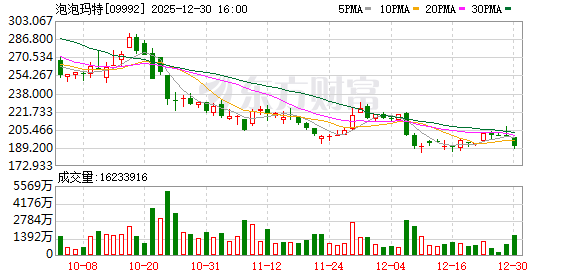
Core Viewpoint - The market sentiment towards Pop Mart is increasingly bearish, with a significant rise in short-selling activity and a notable decline in the resale prices of its core IP product, LABUBU [2][3][4]. Group 1: Market Sentiment and Short Selling - From December 2 to December 8, the number of shares sold short increased from 1.11 million to 5.39 million, and the short-selling amount rose from 241 million HKD to 1.09 billion HKD [2]. - On December 30, the short-selling amount for Pop Mart reached 458 million HKD, with 2.39 million shares sold short [2]. Group 2: LABUBU Product Performance - LABUBU, a core character of Pop Mart's THE MONSTERS family, generated revenue of 3.04 billion CNY in 2024, marking a year-on-year growth of 726.6% [3]. - The average transaction price for LABUBU products on second-hand platforms has decreased, with some styles selling below the official price [5]. - Recent data shows that the average transaction price for LABUBU on Xianyu platform was 83.5 CNY, with 68% of users expecting further price declines [5]. Group 3: Stock Performance and Market Capitalization - On December 30, Pop Mart's stock closed at 190.8 HKD per share, down 4.55%, with a total market capitalization of 256.23 billion HKD [4]. - Since reaching a peak in August, Pop Mart's stock has declined over 40%, resulting in a market value loss exceeding 200 billion HKD [4]. Group 4: Industry Analysis and Future Outlook - Analysts indicate that the decline in secondary market prices undermines the speculative value of collectible toys, leading to a shift from buying to selling among consumers and resellers [8]. - Deutsche Bank's report suggests that Pop Mart is gambling on short-term revenue growth at the expense of long-term brand value by increasing production capacity from 10 million units per month to 50 million units [8]. - The company is advised to diversify its IP strategy and create a content system rather than relying solely on LABUBU [10].
泡泡玛特,大跌
盐财经· 2025-10-23 09:05
Group 1 - The core viewpoint of the article highlights the recent decline in the Hong Kong new consumption sector, particularly the significant drop in Pop Mart's stock price, which fell by 10%, marking the largest single-day decline since April [3] - Despite the stock decline, several brokerages, including CMB International and Guojin Securities, maintain a "buy" rating on Pop Mart, citing sustained growth momentum and potential for overseas market expansion through localized operations [3] - Pop Mart's latest business update for Q3 2025 shows a substantial revenue increase of 245% to 250% year-on-year, with specific growth in China at 185% to 190%, and online sales soaring by 300% to 305% [3] Group 2 - The article notes that the Starry People series from Pop Mart has sparked another buying frenzy, following the success of the Labubu series [4]

泡泡玛特港股跌超10%,创4月来单日最大跌幅
2 1 Shi Ji Jing Ji Bao Dao· 2025-10-23 03:12
Core Viewpoint - The Hong Kong stock market's new consumption sector experienced a decline, with Pop Mart's stock price dropping by 10%, marking its largest single-day decline since April [1] Company Performance - Pop Mart announced its latest business situation for Q3 2025, reporting an overall revenue increase of 245% to 250% year-on-year [1] - Specifically, revenue from China for Q3 grew by 185% to 190% [1] - Offline channels saw a revenue increase of 130% to 135%, while online channels experienced a growth of 300% to 305% [1] - The overseas market showed even more significant growth, with a year-on-year increase of 365% to 370% [1] - Revenue growth in the Asia-Pacific region was 170% to 175%, in the Americas it was 1265% to 1270%, and in Europe and other regions it was 735% to 740% [1] Market Sentiment - Despite the stock price decline, brokerages like CMB International and Guojin Securities maintained a "buy" rating for Pop Mart, citing sustained growth momentum and potential for overseas market expansion through localized operations [1]
泡泡玛特港股跌超10%,创4月来单日最大跌幅
21世纪经济报道· 2025-10-23 03:08
Group 1 - The Hong Kong new consumption sector experienced a decline, with Pop Mart's stock price dropping by 10%, marking the largest single-day decline since April [1] - According to brokerage views, both CMB International and Guojin Securities maintained a "buy" rating for Pop Mart, highlighting its sustained growth momentum and potential for overseas market expansion through localized operations [3] - Pop Mart announced a significant increase in its third-quarter revenue, with an estimated growth of 245% to 250% year-on-year, driven by strong performance in both domestic and international markets [3] Group 2 - In the third quarter, Pop Mart's revenue in China grew by 185% to 190%, with offline channels increasing by 130% to 135% and online channels by 300% to 305% [3] - The overseas market showed even more impressive growth, with a year-on-year increase of 365% to 370%, including a 170% to 175% increase in the Asia-Pacific region and a staggering 1265% to 1270% increase in the Americas [3] - The launch of the Star People series, following the success of Labubu, has generated significant consumer demand, indicating strong brand engagement [3]

泡泡玛特,收益猛增245%
2 1 Shi Ji Jing Ji Bao Dao· 2025-10-21 10:13
Group 1 - The core viewpoint of the news is that Pop Mart has reported significant revenue growth for the third quarter of 2024, with overall revenue increasing by 245% to 250% year-on-year [1] - Revenue from China has increased by 185% to 190% year-on-year, while overseas revenue has surged by 365% to 370% [1] - As of October 21, Pop Mart's stock has dropped over 8%, with a market capitalization of HKD 336.3 billion [4] Group 2 - The Labubu series has previously generated significant consumer interest, and the new Star People series has also sparked a buying frenzy [6]
泡泡玛特,收益猛增245%
21世纪经济报道· 2025-10-21 10:10
Core Viewpoint - Pop Mart announced a significant increase in overall revenue for the third quarter, with a year-on-year growth of 245%-250% compared to the same period in 2024, driven by strong performance in both domestic and international markets [1]. Group 1: Revenue Growth - Overall revenue for the third quarter is expected to grow by 245%-250% year-on-year [1]. - Revenue from China is projected to increase by 185%-190% year-on-year [1]. - International revenue is anticipated to rise by 365%-370% year-on-year [1]. Group 2: Market Performance - As of October 21, Pop Mart's stock price has dropped over 8%, with a market capitalization of 336.3 billion HKD [4]. Group 3: Product Demand - The Starry People series from Pop Mart has sparked another buying frenzy, following the success of the Labubu series [5].
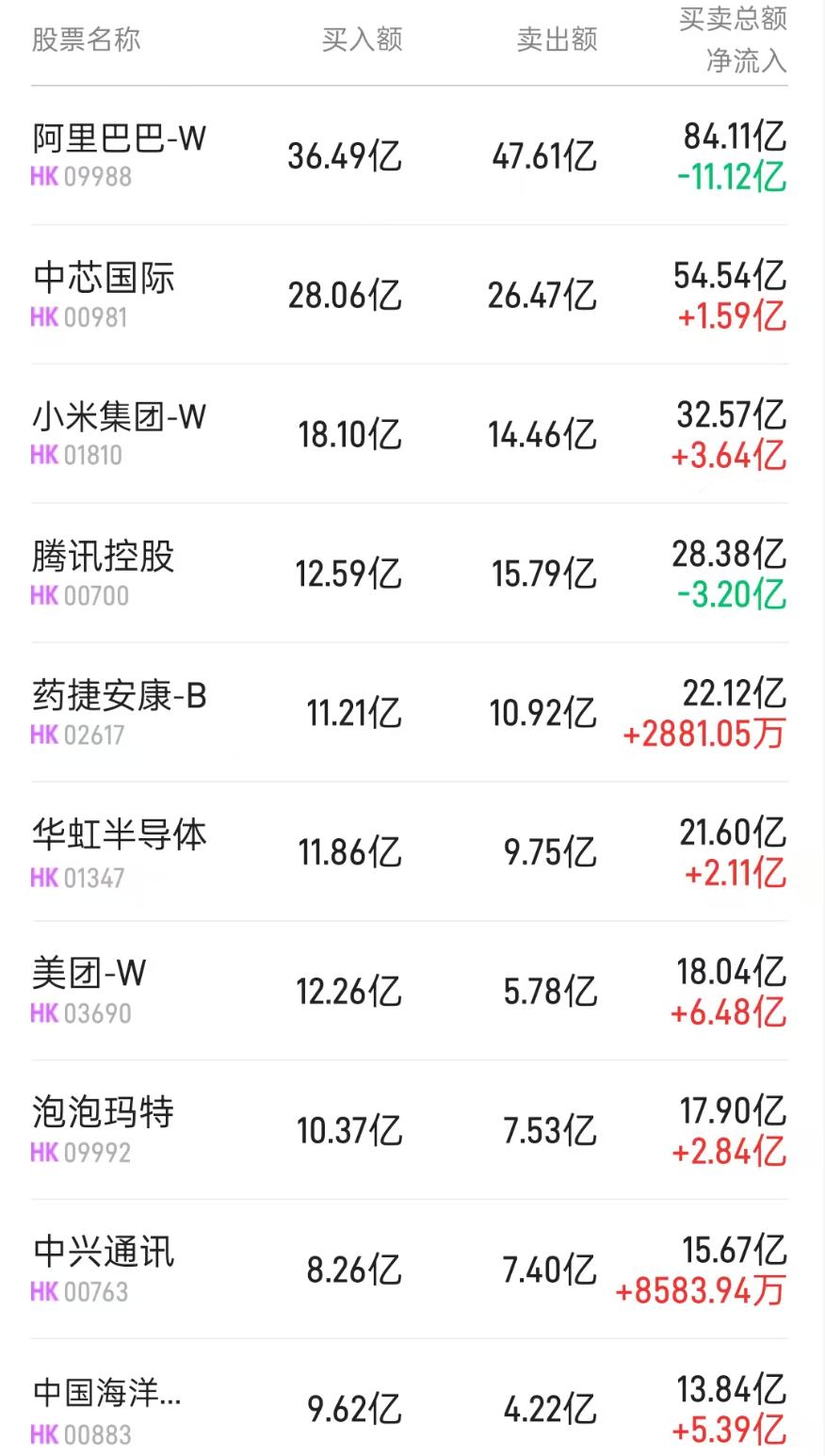
北水成交净买入63.03亿 北水继续抛售中芯华虹 全天抢筹美团超11亿港元
Zhi Tong Cai Jing· 2025-10-17 11:10
Core Insights - The Hong Kong stock market saw a net inflow of 63.03 billion HKD from northbound trading, with the Shanghai Stock Connect contributing 56.56 billion HKD and the Shenzhen Stock Connect contributing 6.47 billion HKD [1] Group 1: Stock Performance - The most bought stocks included Meituan-W (03690), Tracker Fund of Hong Kong (02800), and CNOOC (00883) [1] - The most sold stocks included Alibaba-W (09988), SMIC (00981), and Hua Hong Semiconductor (01347) [1] Group 2: Detailed Stock Transactions - Alibaba-W (09988) had a buy amount of 36.49 billion HKD and a sell amount of 47.61 billion HKD, resulting in a net outflow of 11.12 billion HKD [2] - SMIC (00981) saw a buy amount of 28.06 billion HKD and a sell amount of 26.47 billion HKD, resulting in a net inflow of 1.59 billion HKD [2] - Meituan-W (03690) had a buy amount of 12.26 billion HKD and a sell amount of 5.78 billion HKD, resulting in a net inflow of 6.48 billion HKD [2] Group 3: Market Trends and News - Meituan announced an upgrade to its "Prosperity Plan" for restaurant merchants, allocating an additional 2.8 billion HKD to support profit retention and healthy development [6] - CNOOC received a net inflow of 5.39 billion HKD, with analysts suggesting that stable oil prices and high dividends could enhance its valuation [6] - Alibaba's significant net outflow of 21.53 billion HKD comes amid the launch of its Double 11 promotional campaign, with substantial investments in marketing [8]