智能外骨骼机器人

Search documents
科技赋能中国年 为传统节日文旅消费注入新动能
Xin Lang Cai Jing· 2026-02-24 18:21
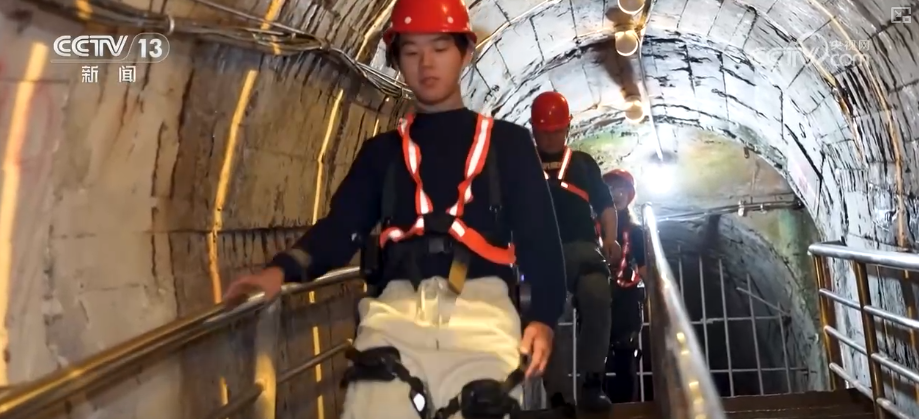
今年春节假期,科技与文旅的深度融合正在重新定义"年味",一系列科技元素正为传统节日文旅消费注入新动能。 春节期间,随处可见的科技元素助力提升游客体验。在陕西西安长安十二时辰主题街区,游客戴上XR设备,即可沉浸式开启长安 地宫探秘之旅。数据显示,春节期间,该街区游客量同比增长超30%,其中科技互动项目占比达40%。 (来源:千龙网) 湖北黄石国家矿山公园的井下探幽项目位于地下100多米,进出矿井要步行1400多级台阶。春节期间,景区上新了智能外骨骼机器 人和AI讲解员,帮助游客抵达地下矿井,让游客更轻松感受工业遗址的魅力。 在浙江衢州市龙游县的大南门历史文化街区,四足机器狗为巡游展演暖场,它们主动向游客挥手"拜年",瞬间被大人、小孩团团 围住。而另一边的机器人则和游客玩起"石头剪刀布",趣味十足。夜幕降临,踩街巡游正式开启。身背金元宝的四足机器狗迈着 精准灵活的步伐带队巡街,它们时而转身腾跃,时而摇头摆尾、躬身"拜年",迎来了观众的阵阵喝彩。 ...


公园“玩”出“花样”新年味 科技、运动、生态为游客解锁多元游园新体验
Yang Shi Wang· 2026-02-23 07:06
央视网消息:2026年春节假期,各种类型的机器人从"线上和屏幕前"走到了"公园百姓身边",为游客解锁了多元游园新体验。在一些公园,机 器人、机器狗还担任起了"新员工",给城市公园的新春活动增添了趣味。 春节期间,湖北黄石国家矿山公园上新了智能外骨骼机器人和AI讲解员,让游客更轻松感受工业遗址的魅力。据了解,位于地下100多米的井 下探幽项目,进出矿井要步行1400多级台阶。为此,景区为游客准备了智能外骨骼机器人,帮助他们轻松抵达地下矿井,体验井下寻宝的乐 趣。与此同时,为了满足游客深度游的需求,景区还推出了AI讲解小程序,以便游客加深对矿冶文化的了解。 而在贵州六盘水,当地举办的"福启新春·健康同行"活动也吸引了不少市民报名参与。篮球、足球、跳绳等8个体育项目和趣味活动,让大家在 欢乐互动中感受新春活力与运动乐趣。 科技不仅让游玩更有趣,也让公园服务暖心升级。在深圳莲花山公园,2026年春节期间,园内特别设置了无人机空投柜,在入园的高峰时段这 里吸引了不少游客排队下单、打卡尝试。奶茶、冷饮、广东特色小吃是热门的配送品类,每分钟有3到4架次无人机完成起降。 为了提升公园的科技体验感,深圳还在公园内增设了AI慧云 ...
杭州银行16年深耕科创赛道 铸就服务新质生产力深厚功底
Xin Hua Cai Jing· 2026-02-08 00:31
新华财经北京2月8日电(陈冉)在近日发布的《2025 胡润未来独角兽:全球瞪羚企业榜》中,云深处 科技凭借具身智能领域的技术实力、成熟的商业化落地能力及显著的高速增长态势,成功入选。 早在2022年 杭州银行就率先发放500万元纯信用贷款解燃眉之急,后续将综合授信提升至8000万元,并 通过 "浙科领航联合贷" 形成资金合力,更促成其产业合作。 云深处科技的快速发展,与杭州银行十六年深耕科创金融的经验探索息息相关。 在程天科技服务亚残运会运动员的时候,企业已经发展较为成熟。杭州银行通过旗下财资平台,帮助企 业解决了多银行账户管理难题,同时发挥投贷联动的优势,为企业对接投融资资源。"我们不光为其提 供贷款,更多是服务于企业多样化的金融需求。"杭州银行相关负责人如是说。 多维赋能体系 超越信贷的全生命周期陪伴 不同于传统金融服务的 "单点支持",杭州银行构建了涵盖资金融通、资源链接、政策对接、高效结算 的综合服务体系,让支持不止于贷款。 在足式与人形机器人赛道,杭州银行的陪伴式服务见证企业从初创到全球领跑。针对云深处科技B轮融 资后研发投入加码、订单周期错配的痛点,杭州银行不但于2022年率先发放信用贷款,更通过 ...

“供需适配”将释放多少消费潜力
Sou Hu Cai Jing· 2025-12-02 00:48
Core Viewpoint - The article discusses China's new implementation plan aimed at enhancing the adaptability of supply and demand in consumer goods, focusing on collaborative efforts between supply and demand sides to stimulate consumption potential and drive economic growth [3][5]. Group 1: Implementation Plan Overview - On November 26, six government departments released a plan with 19 key tasks to enhance supply-demand adaptability, focusing on expanding new markets, exploring existing markets, segmenting markets, empowering scenarios, and optimizing the environment [3][5]. - The plan emphasizes a shift from a one-sided consumption stimulation model to a collaborative approach, addressing structural contradictions in consumption and promoting high-quality economic development [3][5]. Group 2: Market Insights and Data - As of now, China has a total of 230 million consumer goods varieties, with over 100 categories like home appliances and furniture leading global production [5]. - The plan aims to create three trillion-yuan-level consumption sectors and ten hundred-billion-yuan-level consumption hotspots by 2027, focusing on areas such as elderly products, smart connected vehicles, and consumer electronics [8][9]. Group 3: Consumer Trends and Needs - The plan highlights the need for supply to match diverse consumer demands, particularly for different age groups and lifestyles, indicating a shift from quantity expansion to structural optimization in the consumer market [11][12]. - The elderly population in China is projected to reach 310 million by the end of 2024, with the elderly goods market expected to grow from 2.6 trillion yuan in 2014 to 5.4 trillion yuan by 2024, reflecting a compound annual growth rate of 7.3% [12]. Group 4: Technological Integration - The plan emphasizes the integration of artificial intelligence (AI) in consumer goods, aiming to enhance precision in supply and demand matching through AI applications across the industry [14][17]. - AI is expected to transform traditional supply methods into personalized manufacturing, allowing for rapid and flexible production that meets evolving consumer preferences [14][16].

长护险全国落地新机遇,护理机器人、智能辅具站上风口|长护险扩围探路
Di Yi Cai Jing· 2025-05-19 12:46
Core Insights - Long-term care insurance (LTCI) is expected to stimulate demand for nursing services, medical equipment, and rehabilitation devices, thereby driving economic growth and creating new economic opportunities [1][2]. Group 1: Industry Development - The LTCI pilot program has covered 180 million people, with over 2.6 million disabled insured individuals receiving benefits, and total fund expenditures exceeding 80 billion yuan [1]. - The "home care + assistive device service" model is anticipated to be promoted nationwide following the implementation of LTCI, presenting new development opportunities for related industries [2]. - The establishment of the first LTCI industrial park in Nantong is attracting service institutions, insurance companies, and assistive device R&D organizations, forming a complete care service industry chain [7]. Group 2: Assistive Devices and Services - Assistive device rental has become a popular policy among insured individuals in LTCI pilot areas, significantly alleviating the financial burden on families of disabled individuals [3]. - In Nantong, individuals can rent a multifunctional nursing bed for only 0.45 yuan per day, with an annual limit of 8,000 yuan, shared between the fund and individuals at an 80:20 ratio [3][4]. - The LTCI program has introduced a range of assistive devices, including electric nursing beds and multifunctional wheelchairs, which have benefited over 2,000 disabled families in recent years [4][6]. Group 3: Technological Advancements - The LTCI's implementation is expected to enhance payment capabilities, directly driving the development of products related to the care of disabled and elderly individuals, such as electric wheelchairs and nursing beds [7]. - The introduction of smart assistive devices, including intelligent nursing robots and home care beds, is gaining traction, with increased interest from companies in developing these technologies [10][12]. - The international standard for elderly care robots, led by China, aims to provide benchmarks for the design, manufacturing, testing, and certification of various elderly care robot products [10].