比萨自助

Search documents
透过比格比萨闯关IPO,看自助餐行业资本入局与存量博弈的新局
Sou Hu Cai Jing· 2026-02-02 10:00
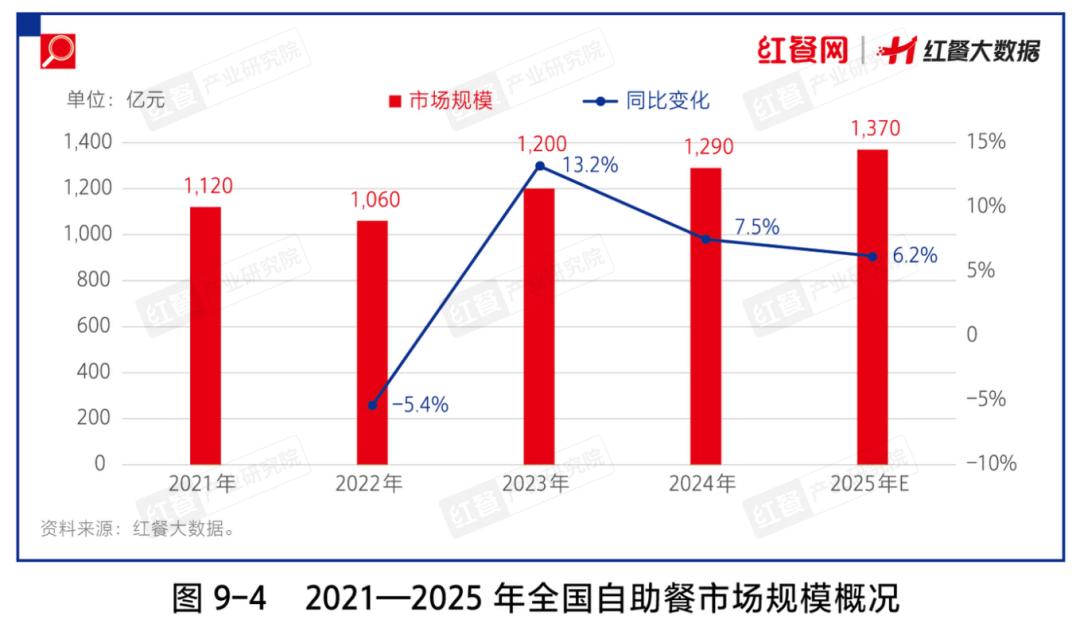
Core Viewpoint - The self-service restaurant industry in China is transitioning from intense price competition to value-driven segmentation, with companies like Big Restaurant International Holdings Ltd. seeking to capitalize on this shift by going public [1] Market Size and Growth - The self-service restaurant market in China is projected to reach 129 billion yuan in 2024, with a year-on-year growth of 7.5%, and is expected to surpass 130 billion yuan in 2025 [3] - The number of self-service restaurant enterprises registered annually has consistently exceeded 6,000 from 2023 to 2024, with over 2,300 registrations in the first five months of 2025 [3] - By May 2025, the total number of self-service restaurant outlets in China is expected to reach 66,000, reflecting a net increase of over 10,000 outlets compared to the previous year [3] Industry Structure and Trends - The industry is experiencing significant structural differentiation, with traditional comprehensive self-service models declining and a focus on niche markets and price reduction becoming the core trend [3][4] - As of May 2025, 80% of self-service restaurants have an average consumer price below 100 yuan, a 17.2 percentage point increase from 2022 [3] Popular Categories - The concentration of specific categories is increasing, with hot pot, barbecue, and pizza leading the market, collectively accounting for nearly 60% of the market share [4] Competitive Landscape - The trend towards lower prices has intensified competition, with major brands reducing prices to capture market share, leading to a price war in the 50-80 yuan range [6] - Major players like Haidilao are entering the low-cost self-service market, further driving down industry price points [6] Challenges for Brands - The influx of new entrants and the high closure rate of restaurants pose significant challenges for smaller brands, with many forced to close due to price wars [7] - Brands are exploring differentiation through product innovation and quality upgrades to build competitive barriers [7] Capital and Expansion - The self-service restaurant sector is entering a phase of accelerated chain expansion, particularly in lower-tier cities, where self-service restaurant outlets account for 51.6% of the total [8] - Capital investment is crucial for supporting expansion plans, with some brands planning to raise funds through IPOs to open hundreds of new outlets by 2028 [8][9] Regional Disparities - There is a notable imbalance in regional development, with northern brands dominating the market while southern regions lag behind in store numbers and market penetration [11] - Southern markets present unique challenges, including local taste preferences and intense competition from both national and local brands [12] Operational Efficiency - The low-margin model of budget self-service restaurants necessitates meticulous operational efficiency, with brands needing to optimize every aspect of their operations to sustain profitability [14][15] - Digital tools and centralized kitchen operations are essential for maintaining quality and controlling costs [15] Investment Logic - The investment logic in the pizza segment reflects a broader trend in the self-service industry, emphasizing the importance of clear category positioning and scalable business models [16] - Capital is increasingly focused on brands with strong supply chain capabilities and operational efficiency, which are critical for sustainable growth [16] Future Outlook - The self-service restaurant industry is expected to continue consolidating, with brands lacking differentiation and operational capabilities likely to exit the market [17][18]


比格比萨赴港IPO:高负债、低利润、食安争议成三重挑战
Feng Huang Wang Cai Jing· 2026-01-26 07:10
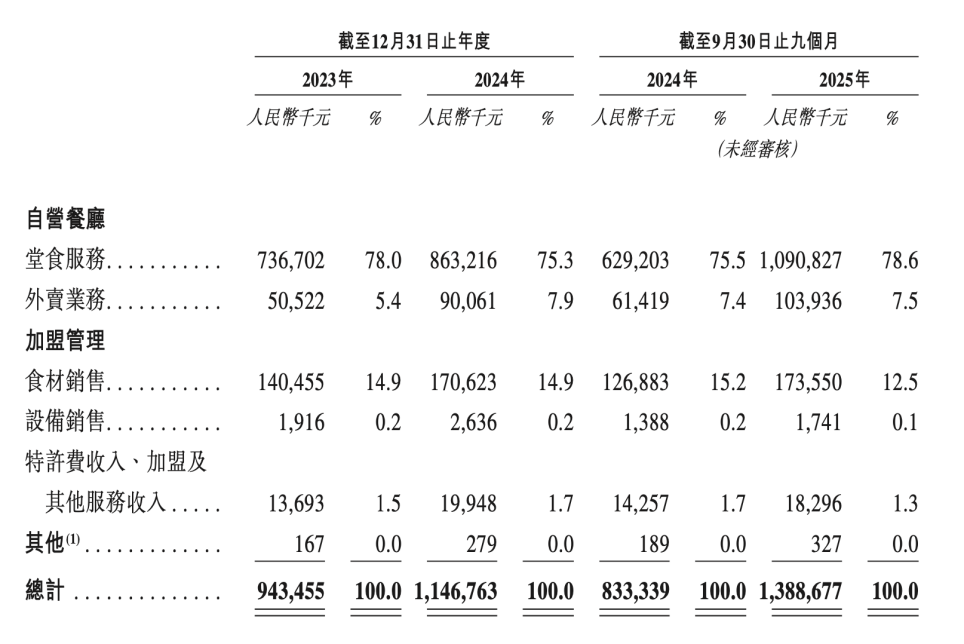
Core Viewpoint - Big Pizza's parent company, Big Catering, has submitted an IPO application to the Hong Kong Stock Exchange, aiming for market entry through revenue growth and store expansion, despite facing challenges such as declining profit margins, high debt levels, and food safety controversies [1][8]. Financial Performance - Revenue for Big Catering in the first nine months of 2023, 2024, and 2025 was RMB 944 million, RMB 1.147 billion, and RMB 1.389 billion, respectively, showing significant growth [1]. - The total number of stores increased from 210 at the end of 2023 to 342 by the end of September 2025, with 92 new stores opened in the first nine months of 2025 [1]. - Net profit figures were RMB 47.52 million, RMB 41.74 million, and RMB 51.65 million for the same periods, indicating volatility, with a net profit margin of only 3.7% in 2025, down from 5% in 2023 [1]. Consumer Spending Trends - The average spending per order decreased from RMB 70.9 in 2023 to RMB 66.3 in 2024, and further to RMB 62.8 in the first nine months of 2025, a decline of 11% [2]. - The average spending for takeout orders saw a more significant drop from RMB 60.7 in 2023 to RMB 43.1 in 2024, and then to RMB 34.7 in the first nine months of 2025, a decline of 43% [2]. Debt and Financial Health - The company's debt-to-asset ratio was high, at 107% in 2023 and 98% in 2024, decreasing to approximately 93% by the end of September 2025, still above the industry healthy level [3]. - As of November 30, 2025, the company had only RMB 67.6 million in cash on hand [3]. Corporate Governance - Big Catering operates under a typical family business structure, with the founder and family members holding 86% of the shares, raising concerns about governance and decision-making transparency post-IPO [4]. Food Safety Issues - The company has faced food safety and consumer experience controversies, including reports of unsanitary conditions in stores and complaints about food quality, which could impact consumer confidence and the company's market reputation [5][8].
比格比萨赴港IPO:高负债、低利润、食安争议成三重挑战
凤凰网财经· 2026-01-26 03:22
Core Viewpoint - The company "Big Pizza" is attempting to enter the capital market through revenue growth and store expansion, but faces challenges such as declining profit margins, high debt levels, and food safety controversies [1]. Financial Performance - Revenue for the first nine months of 2023, 2024, and 2025 was RMB 944 million, RMB 1.147 billion, and RMB 1.389 billion, respectively, showing significant growth [1]. - Net profit figures for the same periods were RMB 47.52 million, RMB 41.74 million, and RMB 51.65 million, indicating volatility, with a net profit margin of only 3.7% in 2025, down from 5% in 2023 [1]. - The average consumption per order decreased from RMB 70.9 in 2023 to RMB 66.3 in 2024, and further to RMB 62.8 in the first nine months of 2025, a decline of 11% [2]. Debt Situation - The company's debt-to-asset ratio was 107% in 2023 and 98% in 2024, dropping to approximately 93% by September 2025, still above the industry healthy level [3]. - As of November 30, 2025, the company had only RMB 67.6 million in cash on hand [3]. Corporate Structure - The company operates under a family business structure, with the founder and family members holding 86% of the shares, raising concerns about governance and decision-making transparency post-IPO [4]. Food Safety and Consumer Experience - The company has faced food safety issues, including reports of unsanitary conditions in stores and customer complaints about finding foreign objects in food [6][9]. - A notable incident involved a large rat being spotted in a store, which significantly impacted consumer confidence [6][8]. Conclusion - The company's ability to successfully list and gain market recognition hinges on maintaining profitability, improving financial structure, and ensuring strict food safety standards [9].

比格比萨冲刺港股:创始人刚怒批门店“恶心”,负债率已超90%
Xin Lang Cai Jing· 2026-01-18 07:01
Core Viewpoint - Big Pizza International Holdings Limited is preparing for an IPO on the Hong Kong Stock Exchange, with projected revenues increasing but profit margins declining due to rising costs [2][17]. Financial Performance - Projected revenues for Big Pizza from 2023 to 2025 are 943.5 million, 1.147 billion, and 1.389 billion yuan respectively [3][17]. - Net profits for the same periods are expected to be 47.5 million, 41.7 million, and 51.7 million yuan, with net profit margins decreasing to 5.0%, 3.6%, and 3.7% [6][22]. Expansion Plans - Big Pizza plans to open approximately 610 to 790 new stores over the next three years, potentially doubling its store count [4][20]. - As of September 30, 2025, the company operates 342 stores across 28 provinces and 105 cities in China, including 265 self-operated restaurants [5][20]. Profitability Concerns - Despite revenue growth, the profit growth has been unstable, with a 12.2% decline in net profit from 2023 to 2024 [6][22]. - The profit margin is expected to continue declining due to increased costs associated with store expansion and employee benefits [7][22]. Consumer Spending Trends - Average spending per transaction at self-operated stores has decreased from 70.9 yuan in 2023 to 62.8 yuan in 2025, indicating a downward trend in consumer spending [23][24]. Financial Health - As of September 30, 2025, Big Pizza's total liabilities are 838 million yuan against total assets of 901 million yuan, resulting in a debt-to-asset ratio exceeding 93% [8][25]. - The company’s debt levels are significantly higher than industry standards, raising concerns about financial stability [9][25]. Management Challenges - The rapid expansion has led to operational challenges, including issues with store hygiene and marketing controversies, which have been publicly criticized by the founder [10][26]. - The founder has expressed concerns about the adequacy of the operational system to handle the challenges posed by rapid growth [9][25].
新股消息 | 比格餐饮递表港交所 是中国比萨餐厅行业最大的本土公司
智通财经网· 2026-01-16 12:44
Company Overview - Big Pizza International Holdings Limited is a leading pizza buffet brand in China, established in 2002 in Beijing, with 387 restaurants across 127 cities, including 310 self-operated and 77 franchised locations [3] - The company focuses on a buffet model featuring a variety of pizza flavors and diverse Chinese and Western dishes, allowing customers to enjoy a personalized dining experience [3] Market Position - As of the nine months ending September 30, 2025, the company ranks first in the Chinese pizza restaurant market with a gross merchandise volume (GMV) of RMB 1.7 billion and a market share of 4.3% [1] - It also holds the top position in the buffet restaurant segment with a market share of 1.2% [1] Financial Performance - The company reported revenues of approximately RMB 943.5 million for the fiscal year 2023, RMB 1.146 billion for 2024, RMB 833.4 million for the nine months ending September 30, 2024, and projected revenues of RMB 1.389 billion for the nine months ending September 30, 2025 [7] - Net profits for the same periods were approximately RMB 47.5 million, RMB 41.7 million, RMB 32.4 million, and RMB 51.7 million respectively [8] Industry Overview - The Chinese restaurant market is the second largest globally, with a GMV of RMB 5.6 trillion expected in 2024, and a projected compound annual growth rate (CAGR) of 7.1% from 2024 to 2029 [9] - The buffet restaurant market is expected to grow from RMB 142.5 billion in 2019 to RMB 167.2 billion in 2024, with a CAGR of 3.9% [10] - The pizza restaurant segment is anticipated to grow at a CAGR of 12.9%, reaching RMB 88.5 billion by 2029 [17]
比格餐饮递表港交所
Zhi Tong Cai Jing· 2026-01-16 12:12
Group 1 - The core point of the article is that Big Pizza International Holdings Limited has submitted its listing application to the Hong Kong Stock Exchange, with CMB International as its sole sponsor [1] - Big Pizza is recognized as a leading pizza buffet brand in China, having expanded to 387 restaurants across 127 cities, including all provincial capitals [1] - According to data from Zhaoshang Consulting, Big Pizza ranks first among local pizza restaurants, buffet restaurants, and Western casual dining restaurants in China based on GMV for the nine months ending September 30, 2025 [1]
新股消息 | 比格餐饮递表港交所
智通财经网· 2026-01-16 12:04
Group 1 - The core point of the article is that Big Pizza International Holdings Limited has submitted its listing application to the Hong Kong Stock Exchange, with China International Capital Corporation as its sole sponsor [1] - Big Pizza is recognized as a leading pizza buffet brand in China, having expanded to 387 restaurants across 127 cities, including all provincial capitals [1] - According to ZhiShi Consulting, Big Pizza ranks first in terms of GMV among local pizza restaurants, buffet restaurants, and Western casual dining restaurants in China for the nine months ending September 30, 2025 [1]
49.99元环卫工自助活动引争议!知名比萨品牌回应
新浪财经· 2026-01-16 10:15
Core Viewpoint - The article discusses the controversy surrounding the "Sanitation Workers Welfare Day" event launched by the pizza chain Big Pizza, which offers a discounted self-service meal for sanitation workers, raising questions about the sincerity and pricing of the initiative [2][7][12]. Group 1: Event Details - Big Pizza announced a "Sanitation Workers Welfare Day" on January 26, coinciding with International Clean Energy Day, where sanitation workers can enjoy a self-service meal for 49.99 yuan, down from the market price of 79.99 yuan [2][4]. - The initiative aims to provide a warm gesture to sanitation workers, referred to as "city beauticians" [4]. Group 2: Public Reaction - The announcement sparked significant debate on social media, with hundreds of comments questioning the pricing and sincerity of the initiative, suggesting that it lacks genuine charitable intent [7][12]. - Critics pointed out that the average daily wage for frontline sanitation workers is around 100 yuan, making the 49.99 yuan meal still a considerable expense for them [12]. Group 3: Company Response - Zhao Zhijiang, the founder of Big Pizza, acknowledged the criticism and explained that the 49.99 yuan price is the maximum discount the company can offer, considering labor and ingredient costs [12]. - He emphasized that the initiative is part of a broader strategy that includes similar welfare days for various professions, maintaining a consistent pricing model across different groups [12][13]. Group 4: Business Performance - Big Pizza, established in 2002, has seen significant growth, opening approximately 160 new stores in 2025, bringing the total to nearly 400, with a revenue exceeding 2 billion yuan and a year-on-year growth of over 63% [13]. - The company employs a revenue management strategy that includes transforming underperforming stores into "super welfare experience stores" and implementing a tiered discount mechanism to attract specific customer groups during off-peak times [13].
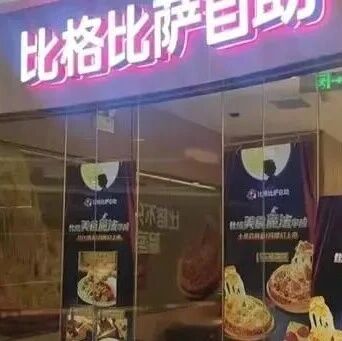
人均六七十吃到扶墙出,自助餐凭啥开出近7万家店?
3 6 Ke· 2025-08-15 03:39
Core Insights - The self-service restaurant sector is experiencing renewed growth driven by changing market conditions and consumer preferences, with the market size expected to exceed 1,300 billion yuan in 2025 [1][2]. Market Dynamics - The self-service restaurant market has seen a surge in new registrations, with over 6,000 new companies registered annually from 2023 to 2024, and more than 2,300 in the first five months of 2025, bringing the total number of self-service restaurants close to 40,000 [2]. - The market size for self-service restaurants reached 1,290 billion yuan in 2024, reflecting a year-on-year growth of 7.5% [2]. - As of May 2025, there are approximately 66,000 self-service restaurant outlets in China, with a net increase of over 10,000 outlets compared to the same period in 2024 [2]. Consumer Trends - The proportion of budget self-service restaurants, defined as those with an average spending of under 100 yuan per person, has increased significantly, accounting for 80% of all self-service outlets as of May 2025, up 17.2 percentage points from 2022 [4]. Competitive Landscape - The self-service restaurant market is becoming increasingly segmented, with a variety of specialized formats emerging, such as hot pot, barbecue, steak and seafood, and Japanese-style buffets [6]. - Hot pot self-service restaurants hold the largest market share at 29.3%, followed by barbecue and steak and seafood formats at 19.6% and 18.5%, respectively [6]. Brand Strategies - Brands are adapting to market competition by focusing on specific categories, optimizing their supply chains, and expanding into lower-tier markets [9]. - Notable examples include the "point steak + free self-service" model adopted by Hao De Heng Steakhouse, which has opened over 170 outlets in various regions [8]. Supply Chain Innovations - Companies are enhancing their supply chain capabilities through direct sourcing, self-built processing facilities, and partnerships with supply chain firms to control costs and ensure quality [15]. - The establishment of a 30,000 square meter processing facility by Jiangxi Linchuang Catering Group exemplifies this trend, supporting over 1,000 outlets nationwide [15]. Conclusion - The resurgence of the self-service restaurant sector indicates sustained consumer interest in flexible dining options, although the self-service model may not be a universal solution for all brands [16].