
氢化植物油(HVO)

Search documents
氢化植物油价格将保持坚挺
Zhong Guo Hua Gong Bao· 2026-01-16 02:44
Group 1 - The price of hydrogenated vegetable oil (HVO) is expected to remain strong in 2026, supported by stricter fuel blending policies in Europe and North America, and emerging demand in the Asia-Pacific region [1] - The European Union aims to reduce greenhouse gas emissions in the transportation sector by 14% by 2026, which will directly increase the blending ratio of HVO in diesel [2] - The removal of the "double counting" rule in countries like the Netherlands, Poland, and Italy is expected to double the demand for HVO in diesel, with Germany likely to follow suit [2] Group 2 - In 2025, the average import volume of renewable diesel in the U.S. dropped significantly to 5,000 barrels per day, down from 33,000 barrels per day in the same period of 2024, due to domestic tax incentives favoring local production [3] - The U.S. federal budget extended the 45Z tax credit for biofuels made from crops grown in the U.S., Canada, and Mexico, which has reduced the competitiveness of imported fuels [3] - The shift in U.S. policy has transformed the market from one that subsidized HVO exports to the EU to one that is dominated by domestic consumption, leading to a decrease in global HVO supply [4] Group 3 - In the Asia-Pacific region, countries like Australia are actively pursuing HVO initiatives, with an 11 billion AUD clean fuel plan aimed at low-carbon transitions in mining and aviation [4] - Emerging sectors such as heavy mining, aviation, and data centers are expected to drive global HVO demand growth in 2026 [4] - Some cruise companies are piloting 100% pure HVO fuel, although the higher costs compared to traditional fuels may limit widespread adoption [5] Group 4 - Analysts warn that increased competition in the raw material market due to new bio-refinery installations will put pressure on prices in 2026 [6] - The EU's sustainable aviation fuel policy and the U.S. domestic production incentives are expected to consume most of the market supply, leading to competition for resources in Asia and other emerging markets [6]
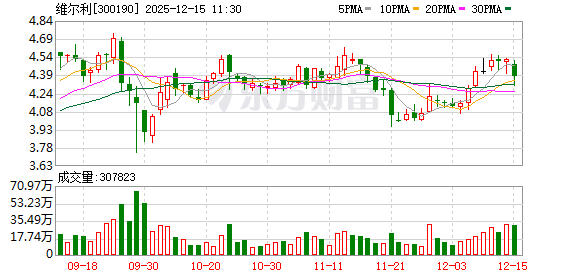
维尔利:公司在江苏南通合作设立的预处理工厂已投产,设计年处理能力约5万吨
Mei Ri Jing Ji Xin Wen· 2025-12-15 04:15
Core Viewpoint - The company is focusing on the waste cooking oil (UCO) business and is expanding its upstream raw material layout for bio-jet fuel (SAF) production, leveraging its experience in kitchen waste treatment [2] Group 1: Business Operations - The company has established a pre-treatment factory in Nantong, Jiangsu, with an annual processing capacity of approximately 50,000 tons [2] - Plans are in place to add 3 to 4 more pre-treatment factories, aiming to increase overall processing capacity to 300,000 tons per year in the future [2] Group 2: Industry Engagement - The company is committed to monitoring global biofuel industry policy dynamics and aims to deepen cooperation with downstream enterprises to seize industry development opportunities [2]


开源证券:生物柴油供需持续偏紧 坚定看好产业景气上行趋势
Zhi Tong Cai Jing· 2025-11-20 07:57
Core Viewpoint - The report from Kaiyuan Securities indicates that the demand for biodiesel is expected to increase due to the EU's enhanced carbon reduction targets and the upcoming verification of SAF (Sustainable Aviation Fuel) blending ratios by the end of the year, leading to a tightening supply-demand situation in the SAF market [2][3]. Price and Profitability - As of November 19, the FOB prices for SAF in the EU and China are $2,500 and $2,960 per ton, respectively, representing increases of 39% and 60% compared to early 2025. The profit margin for SAF in China exceeds 4,000 RMB per ton [1][2]. Regulatory Changes - The EU will gradually implement the Renewable Energy Directive III (RED III) starting in 2026, which raises carbon reduction targets and eliminates the double carbon reduction policy for biodiesel produced from used cooking oil (UCO). This is expected to significantly boost the demand for biodiesel and UCO [2][4]. Supply Chain Dynamics - Neste plans to conduct maintenance on its Rotterdam and Singapore SAF production facilities in late 2025, which may further tighten the supply of SAF. The UK is currently at a 1.6% SAF blending ratio, still short of the 2% target, which will be assessed at the year's end [3][4]. Future Demand Projections - By 2027, global SAF demand is projected to reach 3-4 million tons, driven by the CORSIA requirements for member countries to implement SAF blending ratios. The International Air Transport Association (IATA) anticipates that global SAF demand could reach 40 million tons by 2050 [3][4]. Beneficiary Companies - Companies likely to benefit from these trends include Jiaao Environmental Protection (603822.SH), Shanggou Environmental Energy (000803.SZ), Zhuoyue New Energy (688196.SH), Haineng Technology (300072.SZ), and Pengyao Environmental Protection (300664.SZ) [5].
SAF&生物柴油观点更新
2025-11-10 03:34
Summary of Conference Call on SAF and Biodiesel Market Industry Overview - The conference call focused on the Sustainable Aviation Fuel (SAF) and biodiesel market, particularly in Europe and China [1][2][3]. Key Points and Arguments 1. **Price Increase of SAF and HVO** - European FOB high-end price for aviation kerosene has risen to $2,860 per ton, marking a 51% increase year-to-date [1][2]. - The increase is attributed to rising HVO prices, which have led to a tighter SAF supply, and seasonal production adjustments in Europe [2]. 2. **Government Support for Biodiesel** - The Chinese Ministry of Commerce has proposed support for domestic biodiesel and marine fuel blending operations, which could significantly increase domestic biodiesel blending volumes if a 24% blending ratio is assumed [1][3]. - This policy is expected to create a substantial market increment for biodiesel in China [3]. 3. **EU Carbon Emission Regulations** - Starting January 1, 2024, the EU will include ship carbon emissions in its carbon market, with a full 100% carbon emission requirement for ships entering Europe from 2026 [1][4]. - This regulation is anticipated to further stimulate demand for biodiesel [4]. 4. **Market Demand and Supply Dynamics** - As of November 8, 2025, China has approved 11.06 million tons of biodiesel export licenses, with European SAF demand expected to rise to a 2% blending ratio, leading to a total demand nearing 1 million tons [1][5]. - The price gap between products and raw materials is widening, suggesting continued profitability for SaaS companies in Q4 [5]. 5. **Company Performance and Capacity Expansion** - 卓越新能 (Zhuoyue New Energy) has stable performance in the biodiesel sector, with production capacities of 200,000 tons in Singapore and 300,000 tons in Thailand, and plans to expand HVO capacity to 100,000 tons [1][6]. - 优蔻 (UCO) has seen a decline in export volume due to the cancellation of export tax rebates but remains competitive due to its high emission reduction efficiency [1][7]. - The export price for UCO has increased by 18.5% year-on-year, although this increase is less than that of downstream products [7]. Recommendations - The companies recommended for investment include 卓越新能 (Zhuoyue New Energy), 山高环能 (Shangao Environmental), and 嘉澳环保 (Jiaao Environmental), all of which have leading positions in their respective fields and significant growth potential [1][8].


环保行业跟踪周报:完善新能源就近消纳价格机制助力绿电直连落地,SAF价格新高利好UCO、SAF生产商-20250915
Soochow Securities· 2025-09-15 14:34
Investment Rating - The report maintains an "Overweight" rating for the environmental protection industry [1] Core Views - The improvement of the near-consumption pricing mechanism for renewable energy will facilitate the direct connection of green electricity, benefiting waste-to-energy projects [9][10] - The price of Sustainable Aviation Fuel (SAF) has reached a new high in Europe, positively impacting UCO and SAF producers in China [11][12] - The solid waste sector has seen significant acceleration in national subsidies for recycling, leading to improved cash flow and dividend payouts [15][16] Summary by Sections Industry Trends - The environmental protection industry is experiencing a positive trend with the implementation of new pricing mechanisms for renewable energy, which will enhance the economic viability of waste-to-energy projects [9][10] - The SAF market in Europe is tightening, leading to increased prices and benefiting UCO and SAF producers in China [11][12] Solid Waste Sector - National subsidies for recycling have accelerated significantly, with a reported 2.064 billion yuan received in July-August 2025, surpassing the previous year's figures [15] - The solid waste sector is seeing improvements in return on equity (ROE) and cash flow, with a focus on operational efficiency and reduced financial costs [15][16] Water Sector - The water sector is poised for growth with expected improvements in cash flow and dividend payouts, similar to trends observed in the waste-to-energy sector [19][20] - Recent water price reforms in cities like Guangzhou and Shenzhen are anticipated to drive further growth in the sector [19] Sanitation Equipment - The sales of sanitation vehicles have increased, with a notable rise in the penetration rate of new energy sanitation vehicles, reaching 16.14% [22][23] - The market for electric sanitation vehicles is expanding rapidly, with sales growth of 77.55% in the first seven months of 2025 [22][23] Biofuel Sector - The average price of waste cooking oil has decreased, leading to an increase in profit margins for biofuel producers [32] - The biofuel market is expected to remain stable, with ongoing demand for waste oils and limited supply growth [32] Lithium Battery Recycling - The profitability of lithium battery recycling is improving as the prices of lithium carbonate and other materials decline [33][34]