法国化妆品

Search documents
“稳定健康、不断进步的中国经济值得看好” ——外国媒体和国际人士热议中国春节经济
Ren Min Ri Bao· 2026-02-25 01:58
Core Insights - The Chinese Spring Festival has significantly boosted economic activity, showcasing the resilience and potential of China's large market, which in turn fosters global economic opportunities [1][4][6] Group 1: Consumer Market Performance - During the Spring Festival, China's consumer market experienced robust growth across various sectors, including tourism, retail, and entertainment, with notable sales increases reported [2][3] - In Sichuan, 411 monitored retail enterprises achieved sales of 2.78 billion yuan, a year-on-year increase of 10.9%, while Guangdong welcomed 86.59 million tourists, generating 84.89 billion yuan in tourism revenue, up 8.1% and 13.9% respectively compared to the previous year [2] - The overall cross-regional movement of people during the Spring Festival is expected to reach 9.5 billion, with railway and civil aviation passenger volumes projected at 540 million and 95 million respectively [2] Group 2: Emerging Consumption Trends - The consumption structure in China is evolving, with new growth points emerging, such as smart devices and organic foods becoming popular choices for consumers [3] - Su Ning's report indicated a 78% increase in foot traffic at its stores, with sales of smart watches and glasses rising by 62% [3] - The integration of various sectors, such as film and dining, is driving growth in related industries, reflecting a shift towards high-quality consumption [3] Group 3: International Trade and Economic Impact - The Spring Festival's economic activity has led to significant "spillover effects," benefiting international suppliers and enhancing trade relationships, particularly with countries like Peru and Egypt [4][5] - The demand for foreign products, such as chocolates and cosmetics, has surged in China, contributing to the growth of local industries in exporting countries [4] - Statistics show that 17.8 million people crossed borders during the Spring Festival, with foreign tourist flight bookings to China increasing by over four times compared to the previous year [4] Group 4: Long-term Economic Outlook - The Spring Festival's economic performance is seen as a strong indicator of China's economic health, laying a solid foundation for growth throughout the year [6] - Experts emphasize that the festival reflects consumer confidence and market vitality, which are crucial for assessing China's economic landscape [6] - The ongoing release of domestic demand and continuous reform measures are expected to drive China towards higher quality and sustainable economic development [6][7]
消费涌新潮 新春添活力——世界共享中国大市场红利
Xin Hua She· 2026-02-24 02:55
Group 1 - The core viewpoint of the articles highlights the vibrant economic activity in China during the Spring Festival, with increased consumer spending and a surge in cross-border tourism, benefiting global economies [1][7] - Overseas companies are capitalizing on the Chinese consumer's preference for quality and health by launching upgraded products and services, leading to a trend of premiumization and diversification in imported goods [2][6] - The Spring Festival has become a significant cultural and commercial event, attracting international participation and showcasing a variety of global products, enhancing the festive atmosphere for local consumers [3][4] Group 2 - The cross-border travel market is thriving, with predictions of over 2.05 million daily inbound and outbound travelers during the Spring Festival, marking a 14.1% increase from the previous year [3][4] - The Chinese market is increasingly seen as a vital opportunity for international brands, with many seeking to deepen their connections with Chinese consumers through limited-time products and festive services [6][7] - The strong consumer performance during the Spring Festival reflects a rapid release of domestic demand and a recovery in the service sector, indicating a shift from China as the "world's factory" to becoming a "world market" [6][7]
消费涌新潮 新春添活力
Xin Lang Cai Jing· 2026-02-23 20:39
Group 1 - The Chinese Spring Festival has become a significant driver of global economic activity, with increased consumer spending and cross-border trade opportunities [1][5] - Overseas companies are focusing on enhancing the quality and diversity of products for Chinese consumers, with trends towards healthier and more premium offerings [1][4] - The demand for innovative packaging in the export of products like cherries indicates a shift towards smaller, more consumer-friendly sizes [2] Group 2 - The influx of international brands participating in Chinese Spring Festival events highlights the growing importance of this holiday in global marketing strategies [2][4] - The travel and tourism sector is experiencing a surge, with predictions of over 2.05 million daily inbound and outbound travelers during the holiday, marking a 14.1% increase from the previous year [2][3] - The integration of cultural elements in product offerings, such as the Italian Vespa's special edition for the Year of the Horse, reflects a blend of local traditions with international design [2][3] Group 3 - The digital payment landscape is thriving, with a reported 49.31 billion transactions processed on New Year's Eve, representing a 21.64% increase year-on-year [4] - The Spring Festival is seen as a pivotal moment for international brands to deepen their connections with Chinese consumers, leveraging the holiday's cultural significance [4] - The shift from China as the "world's factory" to a "world market" is evident, with African countries adjusting their export strategies to meet the demands of the Chinese Spring Festival market [4]
美国对全球商品加征10%关税,欧洲行业集体警惕不确定性
Sou Hu Cai Jing· 2026-02-21 14:38
Group 1 - The U.S. government has announced a temporary global tariff of 10% on nearly all imported goods, effective February 24, 2024, to address trade imbalances [1][4] - Exemptions from the new tariffs include energy products, natural resources, fertilizers, pharmaceuticals, certain electronics, specific vehicles, aerospace equipment, information materials, and personal luggage [4] - The ruling from the U.S. Supreme Court, which rejected Trump's tariff measures, has raised concerns among global exporters about ongoing policy uncertainty, particularly affecting industries like Italian wine, which relies heavily on the U.S. market [6][8] Group 2 - The Italian wine industry, which exports approximately €1.9 billion (around $2.3 billion) worth of wine to the U.S., is particularly vulnerable to the impacts of tariff changes [8] - The German chemical and pharmaceutical industry has expressed that the Supreme Court's ruling does not signal the end of trade instability, as new tariffs could still be introduced under different legal provisions [10] - U.S. manufacturers and tech companies perceive the tariff relief as temporary, with ongoing policy uncertainty affecting order placements and market strategies [11] Group 3 - The global supply chain is experiencing irreversible trends towards "de-risking," with many companies suffering substantial damage that may not be recoverable even if tariff policies change [13] - The French cosmetics industry is closely monitoring the situation for potential adjustments to U.S. tariffs, indicating a cautious approach to future developments [13] - The Irish whiskey industry emphasizes that resolving tariff disputes will require negotiations rather than judicial rulings, viewing the Supreme Court's decision as just another twist in the ongoing tariff saga [13]


十里洋场“造梦机”:近代上海百货公司与南京路的景观
Xin Lang Cai Jing· 2025-12-20 06:57
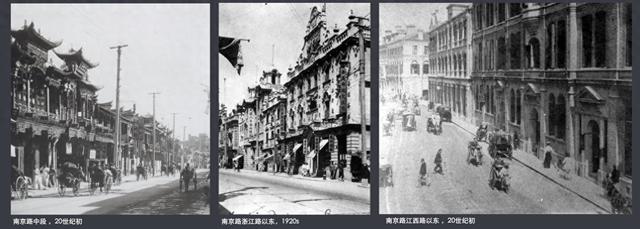
Core Concept - The article discusses the transformation of Nanjing Road in early 20th century Shanghai, driven by the rise of four major Chinese department stores: Sincere, Wing On, Sun Sun, and Taikoo. These stores acted as "dream machines," creating a collective fantasy of modernity through strategic capital operations, architectural practices, and cultural coding [1][2]. Group 1: Department Stores as "Dream Machines" - The focus on department stores is justified as they are pivotal in understanding Shanghai's modernity and urban culture, integrating capital, goods, space, and desires [1][2]. - The metaphor of "dream machines" highlights how department stores manufactured and showcased the dream of modernity, transforming abstract concepts into tangible goods and experiences [2]. Group 2: Spatial Positioning and Commercial Restructuring - Before the emergence of department stores, Nanjing Road was already a commercial hub, but its core was concentrated in the eastern section. The arrival of department stores shifted this focus westward, creating a new commercial geography [2][4]. - The founders of Sincere and Wing On strategically positioned their stores in a prime location, leading to a competitive landscape that established a high-density "scenic consumption belt" along Nanjing Road [4][5]. Group 3: Architectural Aesthetics and Modernization - The architectural styles of the four department stores, characterized by eclecticism, symbolized power and modernity, reshaping the urban skyline and breaking traditional spatial scales [6][10]. - The illumination of these buildings at night transformed Nanjing Road into a vibrant "city that never sleeps," enhancing the consumerist atmosphere [6][10]. Group 4: Consumer Practices and Urban Experience - The department stores transcended mere shopping, offering a multifaceted modern lifestyle experience, including dining, entertainment, and accommodation, thus becoming essential public spaces in Shanghai [10][11]. - The marketing of fashion and lifestyle products in these stores played a crucial role in shaping modern identities, linking consumption with social status and personal identity [11][12]. Group 5: Legacy and Contemporary Impact - The legacy of these department stores continues to influence the character of modern Shanghai, with contemporary shopping venues still reflecting the consumerist and modernist ethos established during that era [13].
马克龙任内第四次访华,传递哪些信号
第一财经· 2025-12-03 09:37
Core Viewpoint - French President Macron's visit to China aims to enhance economic and trade cooperation, focusing on sustainable and balanced growth that benefits all parties involved [3][4]. Economic and Trade Cooperation - Macron's visit will prioritize economic collaboration, particularly in the aerospace sector and agricultural products trade [3][7]. - In 2024, the bilateral trade volume between China and France is projected to be $79.58 billion, a year-on-year increase of 0.8%, with Chinese exports at $44.49 billion (up 6.9%) and imports at $35.09 billion (down 5.9%) [7]. - In the first half of 2025, the trade volume reached $39.09 billion, a 1.2% increase year-on-year, with exports at $22.89 billion (up 7.3%) and imports at $16.2 billion (down 6.4%) [7]. Agricultural Products and Market Access - France aims to expand its agricultural exports to China, leveraging initiatives like "From French Farms to Chinese Tables" [7][8]. - French wine accounts for 30% of China's imported wine, and French luxury goods hold over 35% market share in China [8]. Investment Opportunities - In 2024, Chinese investors initiated 27 new investment projects in France across various sectors [10]. - Current Chinese investment in France is only one-third of French investment in China, indicating significant potential for growth [11]. - The electric mobility sector is highlighted as a key area for future collaboration, with projects like the partnership between Xiamen Tungsten and French company [11]. Challenges in Investment - Investment from China faces regulatory scrutiny and lengthy approval processes within the EU, which can delay projects for years [12].
马克龙任内第四次访华,传递哪些信号
Di Yi Cai Jing· 2025-12-03 09:20
Economic Cooperation - The core agenda of President Macron's visit to China is economic cooperation, focusing on sustainable and balanced growth that benefits all parties involved [1] - France aims to enhance trade in agricultural products with China, alongside traditional cooperation in the aerospace sector [4][1] - In 2024, the bilateral trade volume between China and France is projected to reach $79.58 billion, with a year-on-year increase of 0.8%, where China's exports are expected to be $44.49 billion (up 6.9%) and imports $35.09 billion (down 5.9%) [4] Investment Opportunities - Chinese investors have brought 27 new investment projects to France in 2024, with a focus on various sectors, including electric mobility [6] - Current Chinese investment in France is only one-third of French investment in China, indicating significant potential for growth in this area [6] - The collaboration in the electric mobility sector is highlighted by projects such as the partnership between Xiamen Tungsten and French company Eonno for producing precursor materials [6] Trade Balance and Market Access - France's agricultural products, particularly wine, hold a significant share in the Chinese market, with French wine accounting for 30% of China's imported wine [5] - The French government is advocating for higher-value exports to China, as current service exports from France to China represent only 1.6% of China's total service imports [5] - There is a recognized need for France to explore new strategies for ensuring trade balance with China, particularly in agricultural exports [4][7] Strategic Dialogue and Multilateral Cooperation - The visit is seen as an opportunity to strengthen strategic communication and deepen practical cooperation between China and France [2] - France's upcoming presidency of the G7 in 2026 will also be a topic of discussion, focusing on international cooperation and global governance [1]