海娃家务机器人

Search documents
从AWE2026看家电“具身+AI”潜力
Guolian Minsheng Securities· 2026-03-17 15:04
Investment Rating - The report maintains an "Outperform" rating for the home appliance industry [2][48]. Core Insights - The AWE2026 exhibition highlighted the significant trends of "embodiment + AI" in home appliances, showcasing advancements in executing household tasks and enhancing user experience [7][48]. - The integration of AI is expected to make home appliances smarter and more humanized, with products featuring advanced perception and decision-making capabilities [26][48]. - New product categories such as consumer-grade 3D printing and smart mobility are emerging, indicating further growth potential for the industry [32][48]. Summary by Sections AWE2026 Showcases "Embodiment + AI" Trends - The AWE2026 event, held from March 12-15, 2026, in Shanghai, attracted over 1,200 exhibitors and 200,000 visitors, focusing on AI technology and smart living scenarios [7][48]. - The exhibition featured a dual-zone model, emphasizing both consumer electronics and upstream core components [7]. Embodiment Enhances Appliance Execution - Home appliances are increasingly capable of executing household tasks effectively, with companies like Haier and Hisense showcasing robots designed for various domestic scenarios [9][48]. - Haier's family service robots demonstrate advanced capabilities, such as recognizing and sorting food items, while Hisense introduced humanoid robots for commercial and domestic use [9][48]. AI Enhances Intelligence and Humanization - AI models are being integrated into home appliances to improve their decision-making and service capabilities, with products like Haier's AI Eye 2.0 and Boss Appliances' AI cooking glasses leading the way [26][48]. - The report anticipates that as AI capabilities evolve, appliances will become more intuitive and user-friendly [26][48]. Emerging Product Categories Worth Noting - The report highlights the growth of consumer-grade 3D printing, with companies like Anker and JD.com launching innovative products aimed at expanding the market [32][48]. - In smart mobility, new products such as electric scooters and water flying vehicles were introduced, showcasing advancements in personal transportation [37][48]. Investment Recommendations - The report recommends investing in leading companies with competitive advantages, including Midea Group, Haier Smart Home, Hisense, and Gree Electric for white goods; Hisense Visual for TVs; and Roborock and Ecovacs for cleaning appliances [48].




人形机器人行业跟踪报告:宇树科技人形机器人2025年出货量和市场占比均居全球第一
Wanlian Securities· 2026-03-17 09:56
Investment Rating - The industry investment rating is "stronger than the market," indicating an expected relative increase of over 10% in the industry index compared to the broader market within the next six months [31]. Core Insights - The humanoid robot industry is transitioning from technological breakthroughs to large-scale commercialization, driven by factors such as aging population and rising labor costs, with significant market potential anticipated in 2026 [28][29]. - As of 2025, China leads the global humanoid robot market, with over 140 manufacturers and a shipment volume of approximately 14,400 units, accounting for 84.7% of global shipments [25][28]. - The report highlights that Yushu Technology ranks first globally in both shipment volume and market share, with over 5,500 units shipped, representing 32.4% of the global market [25][28]. Summary by Sections Market Review - The humanoid robot sector index underperformed compared to the Shanghai Composite Index and the CSI 300 Index, with a decline of 1.41% in the last week [12]. - Year-to-date, the humanoid robot sector index has decreased by 4.37%, significantly lagging behind the broader indices [13]. Industry Dynamics - Haier Smart Home launched AI Eye 2.0 and household robots, enhancing recognition capabilities and integrating AI into home appliances [24]. - The humanoid robot market is characterized by a growing number of enterprises and increasing shipment volumes, with a total global market size of approximately 28.8 billion yuan [25]. Investment Recommendations - The report suggests focusing on companies that can leverage cost advantages and technological breakthroughs in the supply chain, particularly in core components like motors and controllers [28]. - It emphasizes the importance of price reduction for large-scale commercialization, with domestic companies rapidly decreasing robot prices from millions to tens of thousands [28].
具身智能行业周报:Figure 03完成全自主家务作业,Optimus 3今夏启动生产
SINOLINK SECURITIES· 2026-03-16 00:45
Investment Rating - The report indicates a positive investment outlook for the humanoid robotics industry, highlighting significant advancements and commercial viability [2][9][12]. Core Insights - The humanoid robotics sector is experiencing accelerated growth, with key players like Tesla and Figure making substantial progress towards commercialization and mass production of their robots [2][4][22]. - Local policies in regions such as Guangdong and Shanghai are intensifying support for humanoid robotics, establishing testing zones and supply chain platforms to foster industry development [2][9][12]. - The market for household cleaning robots is projected to grow significantly, with a forecasted 20.1% increase in global shipments by 2025 [10][12]. Summary by Sections Industry Dynamics - The industry is shifting from policy guidance to commercial implementation, with local governments actively promoting humanoid robotics applications and infrastructure [9][12]. - Major events include the launch of the first humanoid robot capable of fully autonomous household tasks by Figure, showcasing advancements in AI and robotics [28][29]. Core Components - Notable financing activities include the completion of over 100 million RMB in Series A funding for Norshi Robotics, aimed at capacity expansion and technological upgrades [33][40]. - The establishment of the first pilot platform for humanoid robot components in Shanghai addresses key production challenges and supports industry growth [36][37]. Commercialization Progress - Tesla's Optimus 3 is set to begin production in summer 2026, with plans for significant annual output increases, positioning it as a leader in the humanoid robotics market [31][22]. - Companies like Sunday and Magic Atom are also making strides in securing funding and developing innovative robotics solutions, contributing to the overall momentum in the sector [20][39].

具身智能行业周报:Figure 03完成全自主家务作业,Optimus 3今夏启动生产-20260315
SINOLINK SECURITIES· 2026-03-15 11:43
Investment Rating - The report indicates a positive investment outlook for the humanoid robotics industry, highlighting significant advancements and commercial viability [2][9][22]. Core Insights - The humanoid robotics sector is experiencing accelerated growth, with key players like Tesla and Figure making substantial progress towards commercialization and mass production [2][4][22]. - Government policies in regions like Guangdong and Shanghai are intensifying support for humanoid robotics, establishing testing zones and supply chain platforms to foster industry development [2][9][12]. - The market for household cleaning robots is projected to grow, with global shipments expected to reach 32.72 million units by 2025, reflecting a year-on-year increase of 20.1% [10][12]. Summary by Sections Industry Dynamics - The industry is shifting from policy guidance to commercial implementation, with local policies and infrastructure development driving long-term growth in the embodied intelligence sector [9][12]. - Significant events include the establishment of the first humanoid robot 6S store in Wuxi and the launch of the first smart elderly care robot station in Beijing [10][12]. Main Body - Figure03 humanoid robot has successfully completed fully autonomous household tasks without human intervention, showcasing advanced capabilities in object recognition and physical manipulation [28][29]. - Tesla's Optimus 3 is set to begin production in summer 2026, with plans for an initial output of 1 million units per year, aiming for a long-term capacity of 10 million units [31][22]. Core Components - Notable financing activities include Norshi Robotics completing over 100 million RMB in Series A funding, aimed at capacity expansion and technological upgrades [33][40]. - Zhaowei Electric has successfully listed on the Hong Kong Stock Exchange, raising 1.906 billion HKD to strengthen its market position [35][37]. Commercialization Progress - Companies like Sunday and Magic Atom are making strides in securing funding, with Sunday achieving a valuation of 1.15 billion USD after a recent financing round [20][27]. - The report emphasizes the importance of technological breakthroughs and capital support in driving the commercialization of humanoid robots [9][12][22].
聚焦“无人家务”生态 海尔智家发布AI之眼2.0和家庭机器人
Bei Jing Shang Bao· 2026-03-14 12:13
Group 1 - Haier Smart Home focuses on "unmanned housekeeping" at AWE2026, launching AI Eye 2.0 and three categories of robots for "housework, cleaning, and companionship" [2] - The upgraded AI Eye 2.0 enhances recognition capabilities, making it more comprehensive, accurate, and faster, further liberating consumers from household chores [2] - Haier Smart Home introduces three types of household service robots: "Haiwa Cleaning Robot," "Haiwa Companion Robot," and "Haiwa Housework Robot," each designed to assist users in different aspects of home management [2] Group 2 - Haier Smart Home has upgraded its Smart Home Brain, based on the industry's first AI-native cross-ecosystem smart home operating system, UHomeOS, which adapts to user needs and transforms smart space concepts into reality [3] - The integration of "robots + home appliances" allows for the recognition of various household scenarios, bringing unmanned housekeeping closer to consumers [3] - Haier Smart Home aims to build a platform service-oriented technology ecosystem centered around user needs [3]

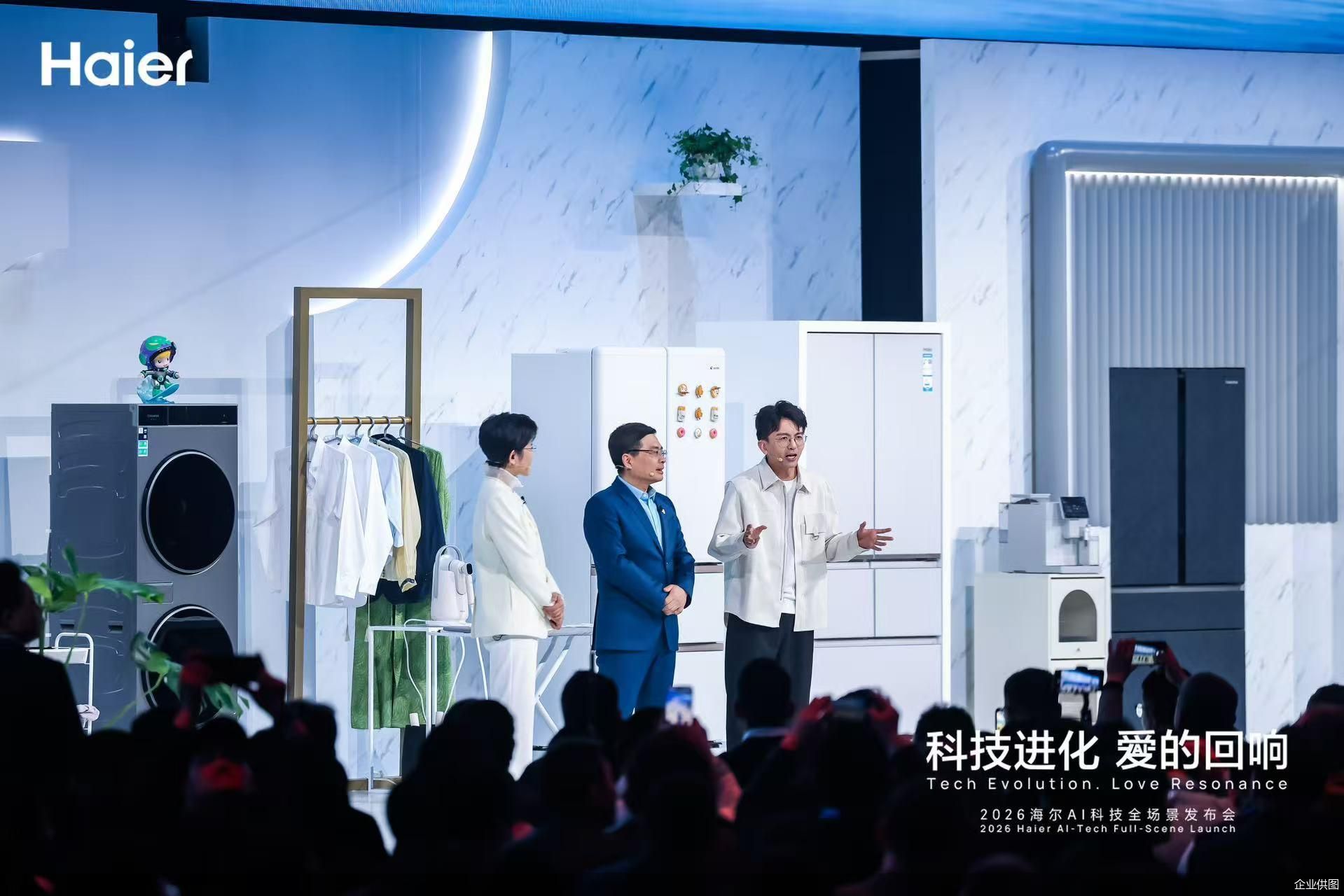
AWE里的海尔智慧家庭:AI之眼2.0与「无人家务」的临界点
36氪· 2026-03-12 15:24
Core Insights - The article discusses the evolution of smart homes, emphasizing the integration of AI technology into household appliances, which transforms them from simple devices into a cohesive intelligent system capable of understanding and responding to user needs [4][5][6]. Group 1: Evolution of Smart Homes - Smart homes have evolved from basic connectivity to complex systems that can understand and interact with users, driven by advancements in AI and robotics [4][5][6]. - The introduction of AI capabilities allows household devices to not only control and link but also to comprehend environmental changes and user behaviors, marking a significant shift in the smart home landscape [5][6][12]. Group 2: AI Integration in Appliances - Haier's AI Eye 2.0 enhances the ability of appliances to perceive their environment, improving recognition accuracy and response speed, thus enabling a more intuitive user experience [17][21]. - The AI Eye technology allows devices to autonomously adjust their functions based on real-time environmental data, enhancing safety and efficiency in household tasks [21][22]. Group 3: Robotics in Smart Homes - Haier has introduced various household robots, including cleaning and companion robots, which leverage AI to perform complex tasks autonomously, thus reducing the need for human intervention [27][28]. - These robots are designed to understand their surroundings and execute tasks such as cleaning and organizing, representing a significant leap from traditional smart appliances [27][28]. Group 4: Decision-Making Systems - The Haier Smart Home Brain serves as the decision-making hub, utilizing a unified operating system to coordinate various appliances and robots, thereby optimizing household management [30][33]. - This system allows for seamless interaction between devices, enabling them to work together to fulfill user needs and enhance overall household efficiency [33][34]. Group 5: Expanding the Concept of Smart Homes - The concept of smart homes is evolving to encompass broader life ecosystems, integrating not just household devices but also connecting to community and urban systems [39][40]. - Haier's vision includes creating a comprehensive ecosystem that links homes with vehicles, communities, and cities, thereby expanding the functionality and relevance of smart home technology [39][40].
十大展区亮相首钢园!好房子科技展解码未来家园
Bei Jing Ri Bao Ke Hu Duan· 2025-11-07 11:02
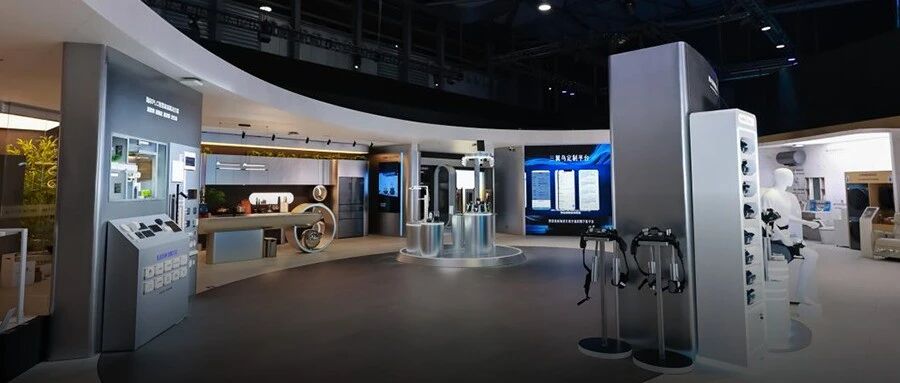
Core Viewpoint - The "Good House Technology Exhibition" held in Beijing showcases the integration of technology in housing, emphasizing the characteristics of a "good house" through practical demonstrations and innovative designs [1][2]. Group 1: Definition of a Good House - A good house is defined by safety, comfort, sustainability, and intelligence, with 18 model rooms presented for public experience [2]. - Innovative designs, such as adaptable spaces in model apartments, allow homes to evolve with family needs over time [2]. - Health considerations are integrated into housing design, featuring eco-friendly materials and advanced plumbing systems to ensure a healthy living environment [2]. Group 2: Construction Standards and Innovations - The exhibition highlights national standards for residential projects, including key indicators like 3-meter ceiling heights and elevator installations in buildings with four or more floors [4][5]. - An interactive voting section allows visitors to express their preferences on construction features, indicating a strong public interest in sound insulation and accessibility [5]. - The "Good Construction" area illustrates the construction process, promoting the concept of industrialized building akin to automobile manufacturing [5][7]. Group 3: Smart Technology in Housing - The exhibition features advanced construction technologies, such as remote-controlled tower cranes, enhancing safety and efficiency on construction sites [7][8]. - Smart home appliances and service robots are showcased, indicating a shift towards more automated and convenient living environments [8][9]. - The event serves as a preview of future living scenarios, demonstrating how technology is deeply integrated into both construction and daily life [11].