AI之眼2.0

Search documents
万联晨会-20260318
Wanlian Securities· 2026-03-18 02:00
Core Insights - The A-share market experienced a collective decline on Tuesday, with the Shanghai Composite Index down 0.85%, the Shenzhen Component down 1.87%, and the ChiNext Index down 2.29%. The total trading volume in the Shanghai and Shenzhen markets was 22,077.03 billion yuan [2][8] - The non-bank financial, banking, and food and beverage sectors led the gains, while the communication, electronics, and defense industries lagged behind. Among concept sectors, new and newly listed stocks, as well as the Shanghai 50 concept, saw significant gains, while packaging optics (CPO), F5G, and optical fiber concepts faced declines [2][8] Important News - The Ministry of Finance announced that it will continue to implement a more proactive fiscal policy in 2026, focusing on expanding fiscal expenditure, optimizing government bond tools, enhancing the effectiveness of transfer payments, and improving the expenditure structure [3][9] - The National Development and Reform Commission has introduced a new batch of 13 major foreign investment projects with a planned investment of 13.4 billion USD, primarily in manufacturing sectors such as electronics, chemicals, and automotive [3][9] Retail Sales Data - In January and February 2026, the total retail sales of consumer goods reached 86,079 billion yuan, with a year-on-year growth of 2.8%, marking a 1.9 percentage point increase from December 2025. Retail sales of goods and catering services both showed significant recovery [10][14] - Online retail sales in January and February 2026 reached 32,546 billion yuan, growing by 9.2% year-on-year, accounting for 37.81% of total retail sales [13] Investment Recommendations - The report suggests focusing on three main lines for investment opportunities in the consumer sector for 2026: 1. Service consumption expansion and quality improvement, particularly in travel and dining sectors [14] 2. Emotional consumption and the rise of domestic brands, with a focus on trendy toys and gold jewelry [14] 3. Demand recovery, especially in the food and beverage sector, which is currently undervalued [14] Machinery Industry Insights - In February 2026, excavator sales in China totaled 17,226 units, a year-on-year decrease of 10.6%, while exports increased by 37.2%. The domestic market is transitioning from incremental expansion to stock replacement, providing a stable support for domestic sales [16][19] - Loader sales in February 2026 reached 9,540 units, with a year-on-year growth of 9.28%, while domestic sales decreased by 14.3% [18][19] Humanoid Robot Industry Insights - According to a report, China is expected to dominate the humanoid robot market in 2025, with a projected shipment of 14,400 units, accounting for 84.7% of global shipments. The market size is estimated to reach 1.55 billion yuan, with a global share of approximately 53.8% [24][25] - The report highlights the importance of technological breakthroughs and cost reductions in the humanoid robot industry, suggesting that 2026 will be a critical year for mass production and market validation [25] Power Equipment Industry Insights - The power equipment index rose by 4.55% as of March 13, 2026, outperforming the broader market. Wind power, battery, and photovoltaic equipment sectors showed strong performance [26][29] - The report emphasizes the growth potential in the lithium battery sector driven by high demand and rising material prices, recommending investment in leading companies in this space [27][30]
人形机器人行业跟踪报告:宇树科技人形机器人2025年出货量和市场占比均居全球第一
Wanlian Securities· 2026-03-17 09:56
Investment Rating - The industry investment rating is "stronger than the market," indicating an expected relative increase of over 10% in the industry index compared to the broader market within the next six months [31]. Core Insights - The humanoid robot industry is transitioning from technological breakthroughs to large-scale commercialization, driven by factors such as aging population and rising labor costs, with significant market potential anticipated in 2026 [28][29]. - As of 2025, China leads the global humanoid robot market, with over 140 manufacturers and a shipment volume of approximately 14,400 units, accounting for 84.7% of global shipments [25][28]. - The report highlights that Yushu Technology ranks first globally in both shipment volume and market share, with over 5,500 units shipped, representing 32.4% of the global market [25][28]. Summary by Sections Market Review - The humanoid robot sector index underperformed compared to the Shanghai Composite Index and the CSI 300 Index, with a decline of 1.41% in the last week [12]. - Year-to-date, the humanoid robot sector index has decreased by 4.37%, significantly lagging behind the broader indices [13]. Industry Dynamics - Haier Smart Home launched AI Eye 2.0 and household robots, enhancing recognition capabilities and integrating AI into home appliances [24]. - The humanoid robot market is characterized by a growing number of enterprises and increasing shipment volumes, with a total global market size of approximately 28.8 billion yuan [25]. Investment Recommendations - The report suggests focusing on companies that can leverage cost advantages and technological breakthroughs in the supply chain, particularly in core components like motors and controllers [28]. - It emphasizes the importance of price reduction for large-scale commercialization, with domestic companies rapidly decreasing robot prices from millions to tens of thousands [28].
海尔智家AWE2026发布AI智慧大厨房,实现无人家务新突破
Zhong Guo Jing Ying Bao· 2026-03-15 13:16
Core Viewpoint - Haier Smart Home is advancing the concept of smart homes towards a reality with the launch of AI-powered solutions, including AI Eye 2.0 and home robots, at the AWE 2026 event [1][2] Group 1: AI Solutions and Innovations - The company introduced the AI Smart Kitchen, which integrates AI technology to enhance the quality of living spaces, addressing pain points in the real estate industry such as design conflicts and increased costs [2] - The AI Smart Kitchen offers a comprehensive smart experience throughout the cooking process, utilizing AI to monitor cooking conditions and adjust appliances accordingly, such as reducing heat when overflow is detected [2] - The integration of IoT and AI technologies allows kitchen products to work in tandem with household robots, transitioning from AI-assisted chores to fully automated home management [2] Group 2: Industry Context and Challenges - The real estate industry in China is currently transitioning towards improving existing housing quality, facing challenges such as disconnection between industry segments and lack of unified standards [1] - The key to overcoming these challenges lies in breaking down industry boundaries and fostering a collaborative ecosystem to activate new productive forces in the real estate sector [1]


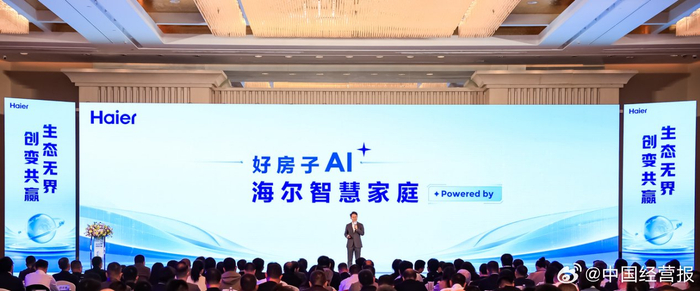
从响应指令迈向执行任务 海尔智家描绘家庭具身智能新图景
Zheng Quan Ri Bao Wang· 2026-03-15 12:56
Core Insights - The 2026 China Household Appliances and Consumer Electronics Expo (AWE2026) showcased advancements in smart home technology, particularly focusing on artificial intelligence applications in household devices [1][2] - Haier Smart Home introduced its AI Eye 2.0, family robots, and Smart Home Brain, emphasizing the transition from simple command-response systems to more autonomous, intelligent home environments [1][3] Group 1: Smart Home Technology Advancements - Haier Smart Home's exhibition highlighted a shift from traditional appliance displays to immersive home environments, demonstrating how devices like refrigerators and air conditioners can now understand and respond to user needs in real-time [2] - The AI Eye 2.0 has improved recognition capabilities, allowing for a broader range of food identification and dynamic adjustments based on user location, enhancing the overall user experience [2][3] - The integration of various appliances into a cohesive smart home system marks a trend towards collaborative functionality rather than isolated device upgrades [2][4] Group 2: Family Robots and Their Role - The new family robots from Haier Smart Home are designed to work in conjunction with other household systems, moving beyond basic cleaning tasks to become integral parts of the home service ecosystem [3] - These robots can now assist in managing food storage and household chores by providing real-time suggestions based on their environment, indicating a shift towards more practical applications of robotics in daily life [3][5] - The evolution of family robots reflects a broader industry trend towards executing tasks rather than merely assisting, which could significantly enhance household efficiency [3][5] Group 3: Competitive Landscape and Future Directions - The competition in the smart home sector is evolving from hardware capabilities to platform and ecosystem strengths, as companies like Haier Smart Home enhance their foundational technologies [4] - The ongoing development of smart home systems is expected to redefine household management, focusing on how technology can alleviate domestic burdens and improve living standards [5] - Industry experts suggest that the future of smart homes will hinge on the ability to genuinely assist users in their daily lives, rather than just the number of smart devices owned [5]
AWE 2026 |从AI辅助到无人家务,海尔智家发布AI智慧大厨房解决方案
Zhong Guo Jing Ying Bao· 2026-03-15 11:15
Core Insights - Haier Smart Home launched AI Eye 2.0 and home robots at AWE2026, advancing towards a fully automated smart home experience [1] - The company introduced the UHomeOS, the first AI-native cross-ecosystem smart home operating system, transforming smart space concepts into reality [1][3] - Haier aims to enhance the quality of living spaces in China, addressing industry challenges through cross-industry collaboration and ecosystem building [3] Group 1 - Haier Smart Home's AI Smart Kitchen showcases a comprehensive smart experience from food storage to cooking and cleaning, utilizing AI technology for enhanced functionality [4] - The kitchen products integrate IoT and AI, enabling collaboration with home robots to transition from AI-assisted chores to fully automated home management [4] - The AI Smart Kitchen solution is adaptable for various sectors, including residential, hotel, and high-end commercial spaces, creating tailored smart environments [4] Group 2 - The real estate industry in China is moving towards quality improvement in existing housing, facing challenges such as disconnection between industry segments and lack of unified standards [3] - Haier Smart Home is positioned as a leading enterprise in creating national model homes, leveraging AI technology to upgrade living experiences [3]
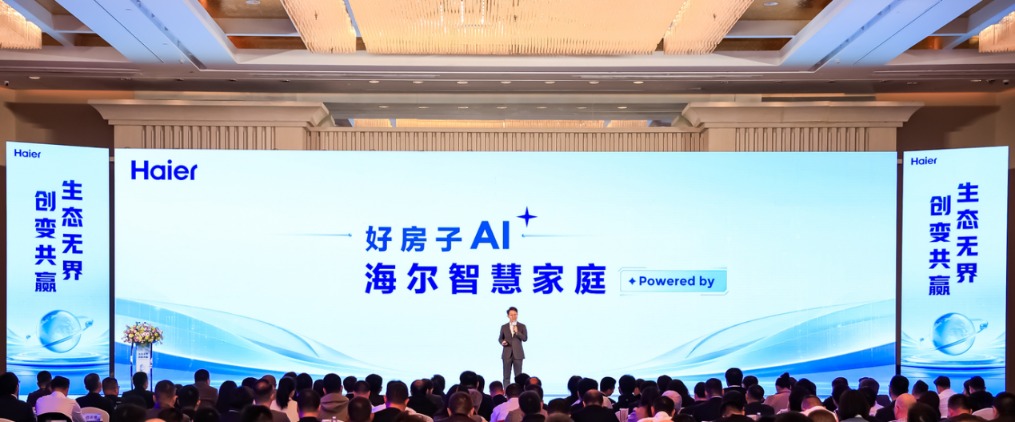
聚焦“无人家务”生态 海尔智家发布AI之眼2.0和家庭机器人
Bei Jing Shang Bao· 2026-03-14 12:13
Group 1 - Haier Smart Home focuses on "unmanned housekeeping" at AWE2026, launching AI Eye 2.0 and three categories of robots for "housework, cleaning, and companionship" [2] - The upgraded AI Eye 2.0 enhances recognition capabilities, making it more comprehensive, accurate, and faster, further liberating consumers from household chores [2] - Haier Smart Home introduces three types of household service robots: "Haiwa Cleaning Robot," "Haiwa Companion Robot," and "Haiwa Housework Robot," each designed to assist users in different aspects of home management [2] Group 2 - Haier Smart Home has upgraded its Smart Home Brain, based on the industry's first AI-native cross-ecosystem smart home operating system, UHomeOS, which adapts to user needs and transforms smart space concepts into reality [3] - The integration of "robots + home appliances" allows for the recognition of various household scenarios, bringing unmanned housekeeping closer to consumers [3] - Haier Smart Home aims to build a platform service-oriented technology ecosystem centered around user needs [3]
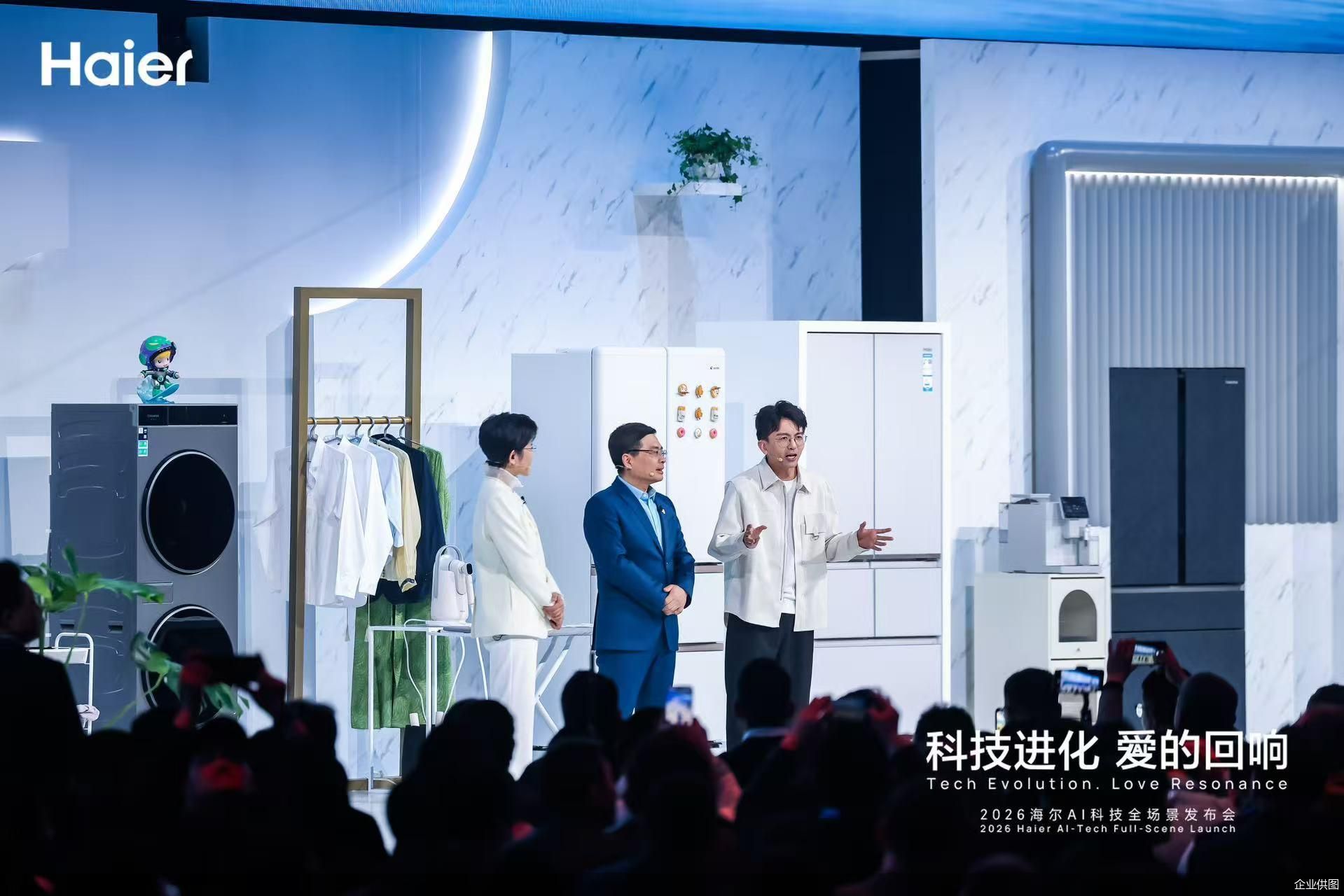
AWE2026:海尔智家展多品类循环生态
Jing Ji Guan Cha Wang· 2026-03-13 02:32
Core Viewpoint - Haier Smart Home showcases its AI Eye 2.0 at AWE2026, emphasizing the liberation of household chores through AI technology and presenting a new experience in smart home living [1] Group 1: Recycling and Circular Economy - Haier Smart Home has recycled nearly 30 million old appliances since 2022, leading the industry in recovery volume [1] - The company has developed a "Five Networks Integration" model, combining marketing, channel, service, logistics, and recycling networks to create a centralized, standardized, and large-scale recycling system [1] - The Haijing Green Recycling platform is the first comprehensive recycling platform in the industry, extending beyond major appliances to include small appliances, 3C electronic products, drones, and even old clothing [1] Group 2: Reprocessing and Sustainability - Haier Smart Home has established a closed-loop system for recycling, disassembly, regeneration, and reuse, facilitating a multi-category circular ecosystem [2] - The company produces recycled plastics with a purity of 99.9% through innovative processes, successfully entering overseas markets and expanding into high-value applications in automotive, daily chemicals, and office automation sectors [2] - The company is building a zero-carbon circular digital platform that is traceable and quantifiable, aiming to make the invisible carbon reduction value visible and measurable [2] Group 3: Green Development Philosophy - Haier Smart Home is committed to promoting green practices in appliance recycling and deepening its circular economy layout, integrating green concepts throughout the product lifecycle from design to manufacturing to recycling [3] - The company aims to enhance user experiences with low-carbon and convenient green lifestyles as its smart home strategy is further implemented [3]
家电回收第一规模!海尔智家AWE展多品类循环生态
Sou Hu Wang· 2026-03-13 01:46
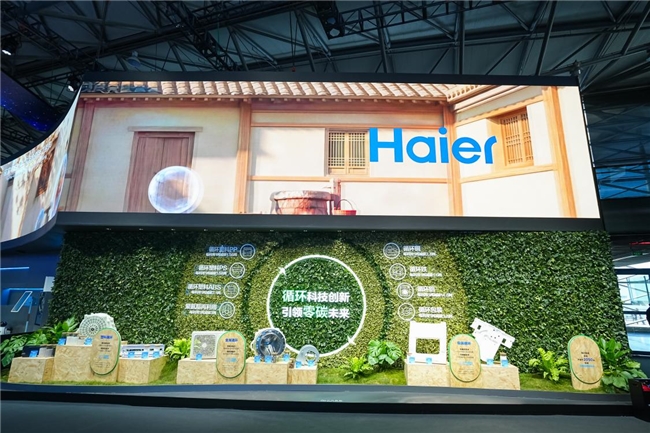
Core Insights - The 2026 China Household Appliances and Consumer Electronics Expo (AWE2026) opened in Shanghai, showcasing Haier Smart Home's AI Eye 2.0, which aims to enhance home management through AI technology [1] - Haier Smart Home has demonstrated its latest achievements in the recycling of old household appliances, leveraging its leading position in appliance recovery to innovate in circular material technology and digital platforms [1] Group 1: Recycling Achievements - Since 2022, Haier Smart Home has recovered nearly 30 million old appliances through a comprehensive channel, leading the industry in recovery volume [3] - The company has developed a "Five Networks Integration" model, combining marketing, channel, service, logistics, and recycling networks to create a specialized recycling system for old appliances, achieving centralized, standardized, and scaled recovery [3] - The Haijing Green Recycling platform, the first of its kind in the industry, extends beyond traditional large appliances to include small appliances, 3C electronic products, drones, and even old clothing, facilitating the recovery of more idle resources [3] Group 2: Recycling Process and Environmental Impact - Haier Smart Home has established a closed-loop system for the entire process of recycling, disassembly, regeneration, and reuse, ensuring a comprehensive approach to recycling [3] - The company has achieved a plastic recycling purity of 99.9% through innovative processes, successfully entering overseas markets in Europe and Japan, and expanding into high-value applications in automotive, daily chemicals, and office automation sectors [3] - The company is building a traceable, quantifiable zero-carbon circular digital platform, demonstrating that 10,000 discarded refrigerators can yield approximately 406 tons of metal, reducing carbon emissions by 744 tons, and that 10,000 old washing machines can yield about 93 tons of plastic, reducing carbon emissions by 270 tons [5] Group 3: Commitment to Green Development - Haier Smart Home is committed to promoting green practices in appliance recycling and processing, continuously deepening its circular economy layout [5] - The company integrates green concepts throughout the entire lifecycle of product design, manufacturing, and recycling, reinforcing its position as a service-oriented technology ecosystem enterprise [5] - As the smart home strategy is further implemented, more users will benefit from a low-carbon, convenient green lifestyle [5]
AWE里的海尔智慧家庭:AI之眼2.0与「无人家务」的临界点
36氪· 2026-03-12 15:24
Core Insights - The article discusses the evolution of smart homes, emphasizing the integration of AI technology into household appliances, which transforms them from simple devices into a cohesive intelligent system capable of understanding and responding to user needs [4][5][6]. Group 1: Evolution of Smart Homes - Smart homes have evolved from basic connectivity to complex systems that can understand and interact with users, driven by advancements in AI and robotics [4][5][6]. - The introduction of AI capabilities allows household devices to not only control and link but also to comprehend environmental changes and user behaviors, marking a significant shift in the smart home landscape [5][6][12]. Group 2: AI Integration in Appliances - Haier's AI Eye 2.0 enhances the ability of appliances to perceive their environment, improving recognition accuracy and response speed, thus enabling a more intuitive user experience [17][21]. - The AI Eye technology allows devices to autonomously adjust their functions based on real-time environmental data, enhancing safety and efficiency in household tasks [21][22]. Group 3: Robotics in Smart Homes - Haier has introduced various household robots, including cleaning and companion robots, which leverage AI to perform complex tasks autonomously, thus reducing the need for human intervention [27][28]. - These robots are designed to understand their surroundings and execute tasks such as cleaning and organizing, representing a significant leap from traditional smart appliances [27][28]. Group 4: Decision-Making Systems - The Haier Smart Home Brain serves as the decision-making hub, utilizing a unified operating system to coordinate various appliances and robots, thereby optimizing household management [30][33]. - This system allows for seamless interaction between devices, enabling them to work together to fulfill user needs and enhance overall household efficiency [33][34]. Group 5: Expanding the Concept of Smart Homes - The concept of smart homes is evolving to encompass broader life ecosystems, integrating not just household devices but also connecting to community and urban systems [39][40]. - Haier's vision includes creating a comprehensive ecosystem that links homes with vehicles, communities, and cities, thereby expanding the functionality and relevance of smart home technology [39][40].
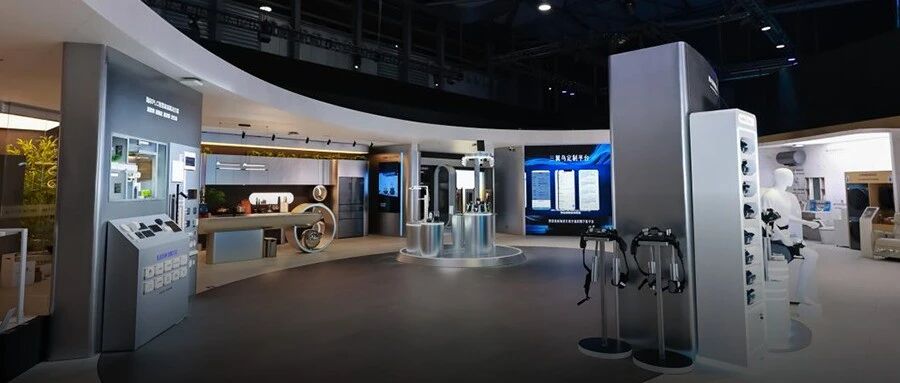
AWE2026海尔智家发布AI之眼2.0,开启无人家务新篇章
Zhong Guo Jing Ying Bao· 2026-03-12 12:00
Core Viewpoint - The AWE2026 event highlights the significant shift in the home appliance industry towards AI-driven technologies, with Haier Smart Home leading the charge in promoting "unmanned household chores" [1] Group 1: Event Overview - AWE2026 took place from March 12 to 15 at the Shanghai New International Expo Center and the Shanghai Oriental Hub, covering an unprecedented area of over 170,000 square meters [1] - The event featured over 1,200 renowned companies from the global home appliance and consumer electronics sectors [1] Group 2: AI Technology in Home Appliances - The event showcased a wave of AI innovations, with many appliance companies launching AI technologies and products, capturing market attention [1] - Haier Smart Home introduced AI Eye 2.0 and household robots, emphasizing a transition from "labor replacement" to "active service" in home appliances [1] - A representative from Haier Smart Home stated that the rise of AI technology allows appliances to break through capability boundaries, marking a new chapter in "unmanned household chores" [1]