激光焊接设备

Search documents
未知机构:天风电子团队大族激光苹果AI硬件创新3D打印导入叠加AI算力PCB扩产-20260227
未知机构· 2026-02-27 02:20
Summary of Conference Call Notes Company and Industry Overview - The focus is on **Dazhu Laser**, a leading platform for laser equipment, which is expected to benefit from the upgrade of consumer electronics and the expansion of AI computing PCB production [1][2]. Core Insights and Arguments 1. **Dual Resonance Driving Growth**: The company's growth is driven by a "dual resonance" effect, where innovations in AI hardware (represented by Apple) lead to upgrades in materials and processes, as well as investments in new equipment. Concurrently, the AI computing infrastructure pushes for upgrades in PCB towards higher layers, higher density, and new materials, resulting in longer process chains and increased precision processing requirements [1][2]. 2. **AI Hardware Innovations**: The innovation cycle at Apple is expected to restart, leading to increased equipment investment due to changes in manufacturing processes. This includes advancements in metal components, 3D glass, heat dissipation, battery structures, and optical components, which will increase the demand for laser cutting, welding, marking, and precision micro-processing equipment [2]. 3. **3D Printing Trends**: The trend towards lightweight and integrated structures in manufacturing is expected to make additive manufacturing (3D printing) an important process route. The complexity of structures produced through metal 3D printing necessitates higher demands for laser and precision processing equipment, creating a new demand chain for "additive equipment + post-processing equipment" [2]. 4. **AI Computing Expansion**: The expansion of AI servers and switches, along with bandwidth improvements, will require PCBs to achieve higher layers, higher density, and stricter processing precision. This will increase the demand for high-end drilling, back drilling, slotting, and fine processing equipment [2][3]. 5. **Profit Elasticity from Product Structure Upgrades**: As trends in SLP (Substrate-like PCB), advanced packaging, and high-end material upgrades progress, the increased processing difficulty will drive demand for high-end equipment like ultra-fast lasers, leading to potential profit elasticity from product structure upgrades [3]. Other Important Insights - Dazhu Laser's accumulated experience in supporting top-tier clients and its engineering delivery capabilities position it advantageously in the market [2]. - The continuous advancement of 3D printing-related business is expected to open up new growth opportunities for the company [2].


研判2026!中国汽车焊装设备行业焊接方法、产业链、市场规模、重点企业及未来前景:汽车产业快速发展,带动焊装设备规模增至360.48亿元[图]
Chan Ye Xin Xi Wang· 2026-02-27 01:20
Industry Overview - The automotive welding equipment industry is crucial for the manufacturing process, which includes stamping, welding, painting, and assembly, with welding being the most complex and quality-determining phase [1][8] - Recent advancements in automation and intelligence in the automotive industry have led to the upgrade of welding equipment technology, transitioning from traditional welding robots to advanced techniques such as laser welding and friction stir welding, enhancing quality and efficiency while reducing labor dependency [1][8] Market Dynamics - The Chinese automotive welding equipment market is projected to reach 36.048 billion yuan by 2025, with a year-on-year growth of 3.96%. The automotive modification sector is expected to grow to 16.391 billion yuan (4.69% growth), while the new capacity sector is anticipated to reach 19.657 billion yuan (3.35% growth) [1][8] - The automotive industry is a pillar of the national economy, with a long industrial chain and strong correlation, playing a significant role in stabilizing industrial economic growth [8] Industry Development Trends - The industry is expected to accelerate towards high automation and intelligent systems, integrating robotic welding, visual guidance, online detection, and autonomous path planning for a fully automated welding process [13] - There will be continuous breakthroughs in high precision and high performance to meet the stringent quality requirements of new energy vehicles and lightweight bodies, with advanced technologies like high-dynamic welding robots and laser welding becoming more prevalent [14] - Flexibility and modular design will become core focuses, allowing for quick switching and expansion of production lines to accommodate various models and materials, thus supporting agile and sustainable development in the welding system [15] Key Companies - Tianyong Intelligent Equipment Co., Ltd. focuses on intelligent automation equipment and has seen a decline in specialized equipment manufacturing revenue, reporting 269 million yuan in the first half of 2025, down 15.94% year-on-year [10][11] - Sanfeng Intelligent Equipment Group Co., Ltd. provides comprehensive solutions for intelligent welding production lines, reporting 573 million yuan in revenue for its intelligent welding production line in the first half of 2025, a year-on-year increase of 1.96% [11][12]


大族激光(002008):苹果创新加速+算力PCB扩产,激光龙头迎接新一轮高成长
CMS· 2026-02-25 15:28
Investment Rating - The report maintains a "Strong Buy" investment rating for the company [2][6]. Core Insights - The company is entering a new growth cycle driven by AI hardware innovations from Apple and the expansion of PCB production capacity, with significant potential for revenue and profit growth [1][6]. - The company is positioned as a leader in the 3D printing sector, which is expected to become a crucial component for future products from major clients [1][6]. - The demand for PCB machinery is increasing, with a notable rise in profitability, indicating a robust growth trajectory for the company's PCB business [1][6]. Summary by Relevant Sections Company Overview - The company is a leading manufacturer of laser equipment in Asia, with diversified operations in consumer electronics, PCB, semiconductor, and renewable energy sectors [5][11]. - The company has experienced multiple growth cycles historically and is now poised for another upward trend due to favorable market conditions [5][19]. AI Hardware Innovations - Apple's AI hardware innovations in 2026-2027 are expected to significantly boost demand for laser equipment, particularly in the consumer electronics sector [1][23]. - The company is the largest supplier of laser equipment to Apple, and its revenue is closely tied to Apple's hardware innovation cycles [1][23]. PCB Business Growth - The PCB machinery segment is entering a new high-end upgrade cycle, with strong demand for drilling equipment and a projected market growth rate of 8.7% CAGR from 2024 to 2029 [1][6]. - The company's PCB business is expected to see a substantial increase in net profit, with estimates suggesting a 177% year-on-year growth in 2025 [1][6]. 3D Printing Sector - The company has established a strong foothold in the 3D printing market, which is anticipated to become a key growth area, especially for new product components [1][39]. - The 3D printing technology is gaining traction in the consumer electronics sector, with applications already being explored in Apple's product lines [1][41]. Financial Projections - Revenue forecasts for the company are projected to reach 183.6 billion, 238.8 billion, and 305.2 billion for the years 2025, 2026, and 2027 respectively, with corresponding net profits of 11.80 billion, 23.24 billion, and 33.03 billion [6][7]. - The company is expected to maintain a strong financial performance, with significant growth potential driven by innovations and market demand [6][7].
北京金店被挤爆,有人卖金还房贷
3 6 Ke· 2026-02-03 07:25
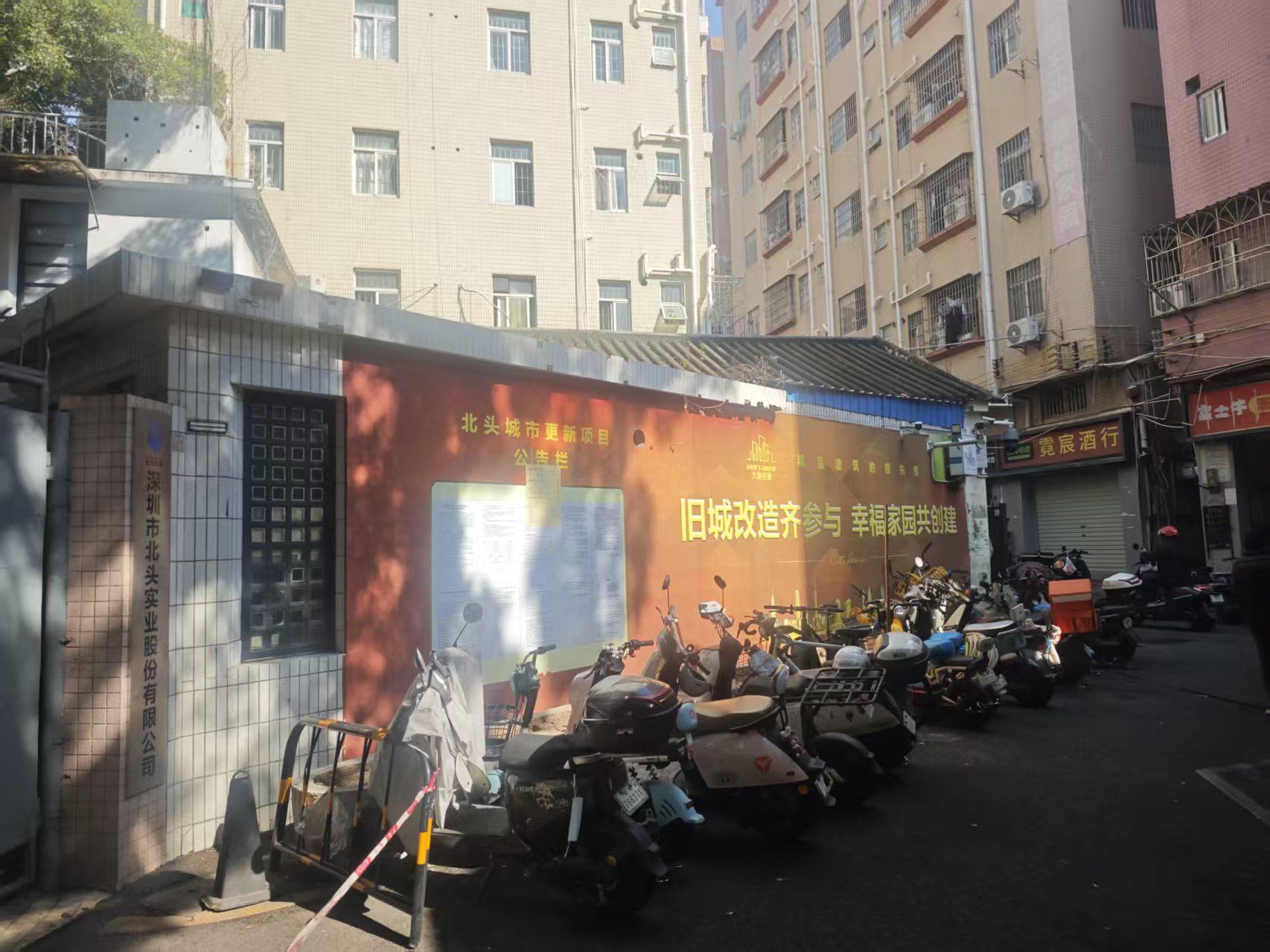
Core Viewpoint - The long-standing urban renewal project in Beitou Village, Shenzhen, has reached a critical breakthrough after 18 years, entering the administrative mediation phase, which signifies a substantial step towards demolition and redevelopment [1][4]. Group 1: Project Background and Progress - Beitou Village has a history of over 500 years and is a key part of the urban renewal in the Nanshan central area, often referred to as one of the "F4" villages [1]. - The project was first included in Shenzhen's urban renewal plan in 2008, with special planning approved in 2011, but faced significant delays due to complex property rights and difficulties in demolition coordination [4]. - A turning point occurred in June 2024 when the revised special planning for Beitou Village was approved, clearing obstacles for the project's restart [4]. Group 2: Challenges Faced - The project has faced three main challenges: "difficulties in demolition," "balancing interests," and "financing difficulties." The market-driven negotiation model has made it hard to achieve 100% owner agreement, leading to high costs and project stagnation [5]. - The decline in property values has not aligned with villagers' compensation expectations, complicating negotiations further [5]. - Financial institutions have become increasingly cautious about funding complex urban renewal projects, leading to a lack of investment and delayed progress [5]. Group 3: Policy and Market Dynamics - Shenzhen's current policy emphasizes "controlling inventory," with a significant number of urban renewal projects awaiting activation, particularly in the Nanshan core area due to its advantageous market conditions [6]. - The government's intervention in the administrative mediation phase is expected to facilitate the resolution of final signing challenges, indicating a shift towards more proactive policy support for stalled projects [6][12]. Group 4: Developer Involvement - The actual developer for the Beitou Village project is Jinhui Rong Real Estate, a wholly-owned subsidiary of Dazhu Holdings Group, which is well-known for its leadership in the laser industry and has diversified into real estate since 2008 [9][10]. - Dazhu Holdings has successfully developed multiple residential and commercial projects in Shenzhen, with a total development area exceeding 5 million square meters [9]. Group 5: Market Implications - The breakthrough in Beitou Village is expected to influence the overall dynamics of the Nanshan central area's urban renewal, with other projects like Xiangnan Village also showing rapid progress [11]. - The surrounding property prices have significantly increased, with the average listing price for nearby properties reaching nearly 100,000 yuan per square meter, highlighting the potential value of urban renewal [12].
联赢激光:在全固态电池上,目前公司已经为两家行业头部客户的中试线提供了全固态电池设备
Zheng Quan Ri Bao Wang· 2026-01-28 10:14
Core Viewpoint - The company has provided solid-state battery equipment for two leading industry clients and has more partnerships for semi-solid batteries, indicating a strong position in the battery technology sector [1] Group 1: Company Developments - The company has supplied solid-state battery equipment to two major clients in the industry for pilot production lines [1] - The company has more partnerships with manufacturers for semi-solid batteries, suggesting an expanding market presence [1] Group 2: Industry Applications - The company's laser welding equipment is primarily used in sectors such as power batteries, consumer electronics, automotive manufacturing, and optical communications [1] - Currently, the company does not have involvement in the aerospace sector [1]

联赢激光(688518.SH):目前已为两家行业头部客户的中试线提供了全固态电池设备
Ge Long Hui· 2026-01-28 07:48
Group 1 - The company has provided solid-state battery equipment for two leading industry clients' pilot lines [1] - The company has more partnerships with manufacturers for semi-solid batteries [1] - The company's laser welding equipment is primarily used in industries such as power batteries, consumer electronics, automotive manufacturing, and optical communications, with no involvement in the aerospace sector [1]
芯碁微装20260120
2026-01-21 02:57
Summary of Conference Call for Chipbond Technology Corporation Company Overview - **Company**: Chipbond Technology Corporation - **Industry**: PCB (Printed Circuit Board) and Semiconductor Equipment Key Points Financial Performance and Orders - The total order amount for 2025 is approximately 2 billion CNY (including tax), nearly 1.9 billion CNY (excluding tax) [2][5] - The company has a historical high order backlog of at least 500-600 million CNY [2][5] - The expected sales target for PCB equipment in 2026 is between 900 to 1,000 units, reflecting strong market demand and customer urgency [2][6] Business Segments - PCB business maintains the leading position in the global exposure machine market, accounting for about 70% of revenue [2][3] - The company produced approximately 620 units of single equipment in 2025, with over 270 production lines [3] - Major clients include Shenghong and Pengding, with the latter expected to double its order volume in 2026 [2][9] Product Development and Technology - The company has launched laser drilling equipment, which has passed production validation from some clients, with expected orders of 70-100 units in 2026 [2][3] - The company plans to achieve mass production of 4-micron and 2-micron ADS process equipment this year [4][10] - In the semiconductor advanced packaging sector, the company anticipates at least 20 WLP (Wafer Level Package) orders in 2026, priced between 17 million to 19 million CNY each [2][3] Market Trends and Future Outlook - The company expects to deliver over 2 billion CNY in sales in January and March 2026, with a strong overall sales forecast for Q1 2026 [2][24] - The advanced packaging market is projected to grow significantly, with equipment demand expected to increase sixfold by 2030 [14] - New infrastructure technologies like Coworks and Copas are expected to enhance equipment demand and utilization rates [16] Competitive Positioning - The company’s laser drilling equipment is 20% more productive than competitors like Mitsubishi, with a competitive price point of around 4 million CNY [26] - The company has made significant advancements in AI materials and ultra-fast laser technology, laying a solid foundation for future growth [18][27] Challenges and Risks - The company faces challenges in maintaining delivery schedules due to high demand and tight production timelines [4][24] - The chairman's share reduction is nearing completion, which may impact investor sentiment [22] Additional Notes - The company plans to issue shares on the Hong Kong Stock Exchange around April 2024, pending regulatory approvals [23] - The first quarter of 2026 is expected to show strong performance, with net profit growth projected between 71% to 84% for the year [3][25] This summary encapsulates the key insights from the conference call, highlighting the company's strong market position, growth prospects, and ongoing challenges in the PCB and semiconductor equipment industry.

通信对话电子-哪些消费电子公司布局商业航天-电池砷化镓外延企业
2026-01-16 02:53
Summary of Conference Call on Commercial Aerospace and GaAs Battery Industry Industry Overview - The conference call discusses the commercial aerospace sector and the GaAs (Gallium Arsenide) battery industry, highlighting the involvement of various consumer electronics companies in these fields [1][2]. Key Companies and Their Contributions - **信维通信 (Swincom)**: Holds a unique position in the connector business for commercial aerospace, with plans to expand into antenna components. The company is currently the sole supplier in the connector sector [2]. - **领益智造 (Lingyi iTech)**: Provides structural components and related products, generating approximately 200 million RMB in revenue last year [1][2]. - **蓝思科技 (Lens Technology)**: Engaged in the production of ground receiving end glass and UTG products, with plans to expand into solar wing boards and coating-related businesses [2]. - **大族激光 (Han's Laser)**: Supplies laser welding machines and robots for the commercial aerospace industry, achieving revenue in the millions [2]. - **3D Printing Companies**: Companies like Platinum, Huashu, Huichuangda, and Jinyang are applying 3D printing technology to aerospace components to meet cost reduction and efficiency demands [2]. Market Dynamics and Growth Potential - The market for micro solar GaAs battery cells is expected to grow significantly due to the surge in satellite launches, increased power requirements per satellite, and emerging applications in space computing [5][6]. - The global low Earth orbit satellite network competition is projected to expand the market size from billions to potentially hundreds of billions or even trillions of RMB [5][6]. - Each launch of 1,000 satellites could correspond to a market size of approximately 2 billion RMB, with annual launches exceeding 5,000 satellites potentially exceeding 10 billion RMB [5][6]. Advantages of GaAs Batteries - GaAs batteries exhibit high energy conversion efficiency (over 30%), strong radiation resistance (90% efficiency retention), long lifespan (15-20 years), and high power-to-weight ratio (over 0.35 W/g) [7][9]. - Despite their advantages, the high cost (60-70 USD per watt) limits their widespread adoption in low-cost satellite constellations [7][9]. Competitive Advantages of Consumer Electronics Companies - Consumer electronics companies possess advantages in production capacity, material reuse, and technological synergies, enabling them to meet the demands of large-scale satellite component production [4]. - Their experience in miniaturization and integration can be effectively applied to the lightweight and cost-control needs of low Earth orbit satellites [4]. Future Outlook for GaAs Technology - The future growth of GaAs batteries is driven by the increasing number of satellites, expanded power requirements, and new space applications [5][6]. - Domestic companies like 干照光电 (Guan Zhao Optoelectronics) and 三安光电 (San'an Optoelectronics) are already producing GaAs products for commercial aerospace, contributing to a stable supply chain [10][11]. Conclusion - The commercial aerospace and GaAs battery sectors are poised for significant growth, driven by technological advancements and increasing demand for satellite capabilities. Consumer electronics companies are well-positioned to capitalize on these opportunities through their existing capabilities and innovations in production and materials.
国联民生俩资深保代遭约谈,森峰科技创业板IPO铩羽细节浮出水面
Sou Hu Cai Jing· 2025-12-01 18:48
Core Viewpoint - Senfeng Laser's IPO on the ChiNext board was terminated after passing multiple rounds of scrutiny, revealing deeper issues behind its failed attempt to go public [2][9]. Group 1: Company Background - Senfeng Laser, established in 2007, specializes in the research, manufacturing, and provision of laser processing equipment and intelligent manufacturing solutions [6]. - The company’s main products include laser cutting, welding, and cladding equipment, as well as flexible processing production lines [6]. Group 2: IPO Journey - Senfeng Laser submitted its IPO application to the Shenzhen Stock Exchange on June 15, 2022, and successfully passed the listing committee's review on August 17, 2023, after three rounds of inquiries [6][8]. - Despite passing the review, the IPO was halted on January 27, 2025, when the company and its sponsor, Minsheng Securities, voluntarily withdrew the application [7][8]. Group 3: Regulatory Issues - The termination of the IPO was linked to regulatory scrutiny, as the Shenzhen Stock Exchange initiated on-site supervision, uncovering issues related to the accuracy of financial controls and revenue recognition [9][10]. - The two lead sponsors, Cao Dong and Cao Wenxuan, faced disciplinary measures for failing to conduct thorough checks on Senfeng Laser's financial practices [9][10]. Group 4: Future Plans - Following the termination of the IPO, Senfeng Laser has shifted its focus to the Beijing Stock Exchange, aiming to reinitiate its listing process with a more favorable regulatory environment [10][23]. - The company has already signed a new listing guidance agreement with Minsheng Securities to facilitate its application to the Beijing Stock Exchange [23][24]. Group 5: Financial Performance - Senfeng Laser's financial performance has shown signs of decline, with a significant drop in net profit in 2024, marking its first revenue decrease since 2020 [25]. - The company's non-recurring net profit growth slowed to just 2.5% in 2023, raising concerns about its ability to maintain previous growth rates [25].


电池厂冲刺中试、材料设备企业送样“卡位” 固态电池产业链公司年末超级忙
Shang Hai Zheng Quan Bao· 2025-11-27 05:31
Group 1 - The solid-state battery industry is gaining significant investor interest, with companies in the supply chain from battery manufacturing to upstream materials and equipment suppliers actively engaging with investors during Q3 earnings calls [1] - Semi-solid batteries are already in market application, while all-solid-state batteries are expected to enter a critical pilot testing phase between 2026 and 2027 [2][4] - Companies like Guoxuan High-Tech and Zhuhai Guanyu have reported advancements in semi-solid battery production, with Guoxuan's G-Yuan semi-solid battery nearing mass production and Zhuhai Guanyu starting to ship semi-solid batteries [2][3] Group 2 - The foundation for solid-state battery commercialization lies in innovations in battery materials, with companies currently in the sample submission phase and some achieving small batch shipments [4] - Key materials such as high-nickel and lithium-rich manganese-based cathodes are becoming mainstream to meet the higher energy density requirements of solid-state batteries [4] - Companies like Better Ray and New Zobang have reported small batch applications of solid electrolytes in semi-solid batteries, while companies like Greeenmei have achieved ton-level shipments of solid-state battery materials [4] Group 3 - Equipment manufacturers are seizing opportunities in the solid-state battery sector, with significant differences in production processes compared to traditional liquid batteries [7] - Companies like Lianying Laser and Delong Laser are already producing equipment for semi-solid and all-solid-state batteries, with expectations of increased orders in the coming year [7][8] - Overall, the solid-state battery industry is transitioning into a phase where semi-solid batteries are being applied, and all-solid-state batteries are moving towards pilot testing, with material and equipment companies accelerating their engagement with downstream partners [8]