烹饪机器人

Search documents
医疗健康活跃度持续,伯汇生物获近亿元融资
2 1 Shi Ji Jing Ji Bao Dao· 2025-12-22 11:39
Group 1: Financing Trends - The technology and manufacturing sectors, along with healthcare, continue to dominate the financing market with a high density of cases and significant funding amounts [1] - In the past week, over 20 financing cases were reported in the technology and manufacturing sectors, including multiple transactions exceeding 500 million RMB [1] - The healthcare sector is also showing steady growth, with large transactions and innovative sub-sectors receiving attention [1] Group 2: Regional Financing Distribution - The majority of financing activities were concentrated in Jiangsu Province, Beijing, and Guangdong Province, with 7, 6, and 5 cases respectively [3] Group 3: Active Investment Institutions - Yizhuang Guotou and Guoke Investment were notably active, each disclosing 2 investments primarily in the technology and manufacturing, as well as healthcare sectors [5] Group 4: Notable Financing Cases in Healthcare - Beijing Bohui Biotechnology completed nearly 100 million RMB in A+ round financing, led by Yizhuang Guotou, to accelerate clinical progress and expand its pipeline [7] - Suzhou Jishi Medical Technology completed A round financing, focusing on eye disease treatment and prevention solutions [8] - Suzhou Baifu Laser Technology completed over 100 million RMB in C round financing to enhance product development and market expansion [9] - Kangyuan Bochuang completed 250 million RMB in B round financing to advance research in tumor immunity and next-generation kinase inhibitors [10] Group 5: Notable Financing Cases in Technology and Manufacturing - Chengdu Xinglian Xintong completed over 100 million RMB in B round financing to strengthen its position in the satellite communication sector [17] - Suzhou Xinshi Nuo Semiconductor Equipment completed over 500 million RMB in A+ round financing to enhance its capabilities in semiconductor automation [18] - Shanghai Fangqing Technology completed over 500 million RMB in Pre-A round financing to advance its distributed AI computing architecture [20] Group 6: Additional Notable Financing Cases - Shenzhen Haodian Technology completed over 100 million RMB in B round financing, focusing on lithium battery adhesive development [21] - Suzhou Junji Gene Technology completed nearly 100 million RMB in A round financing to enhance its automated gene technology applications [22] - Jiangxi Panmeng Semiconductor completed over 100 million RMB in A+ round financing for capacity expansion and technology development [39]


烹饪机器人企业智谷天厨完成数千万元A轮融资,启赋资本投资
Sou Hu Cai Jing· 2025-12-16 04:26
Core Insights - The cooking robot company Zhigu Tianchu has completed several million yuan in Series A financing, with the investment from Qifu Capital, and plans to rebrand as "Qianyi Intelligent" by early 2026 [2] - Since its establishment, the company has raised over 100 million yuan through multiple rounds of financing from well-known institutions like Yunqi Capital [2] Group 1: Company Overview - Zhigu Tianchu Technology Co., Ltd. was founded in November 2018, with founder Geng Kaiping having 20 years of industry experience, collaborating closely with senior culinary experts [2] - The company employs a dual-driven model of "technology research and development + scene implementation," achieving deep integration of products with actual kitchen scenarios [2] - The R&D team comprises over 60% of the workforce, fostering a virtuous cycle of "R&D-driven growth and reputation-driven repurchase" [2] Group 2: Business Segmentation - Zhigu Tianchu has segmented its business into three main areas: domestic social dining, domestic group dining, and overseas markets, establishing a customer-centric, efficient, and refined operational system [2] - The product architecture is designed around various scenarios, including group dining, chain restaurants, and overseas markets, creating clear functional gradients and market positioning [2] Group 3: Technological Advancements - The company has developed an AI dynamic cooking algorithm and full premixed combustion technology, integrating multiple sensors and a smart kitchen cloud platform to provide a "hardware + software + data" integrated solution [2] Group 4: Strategic Developments - Since last year, Zhigu Tianchu has formed a team led by post-90s PhDs focused on developing a "culinary embodied brain," utilizing data from diverse cuisines and cooking processes to enhance smart decision-making and optimization in cooking robots [4] - The company has established deep collaborations with major enterprises such as Muyuan, Goer, and Foxconn, securing a record-breaking single order of 150 million yuan [4] - Zhigu Tianchu anticipates that its order volume will exceed 300 million yuan by 2026, with ongoing repurchases from several leading industry clients [4] Group 5: Market Expansion - Since October of this year, the daily visit rate to overseas market clients has increased three to four times, with an overall transaction rate reaching 50% [4] - The company has built a comprehensive service system comprising "modular products + local hardware support + software remote services," successfully implemented in North America, Europe, Australia, Japan, Vietnam, Thailand, Indonesia, and Malaysia [4]


2026年值得期待的十大技术应用都有啥?
Huan Qiu Wang Zi Xun· 2025-12-04 06:38
Core Insights - The article highlights the rapid advancements in technology expected by 2026, including emotional AI, wearable health devices, renewable energy innovations, and more, which are set to transform daily life and work environments [1]. Group 1: Emotional AI and Personalization - Emotional AI assistants are evolving beyond traditional voice assistants like Siri and Alexa, becoming capable of understanding human emotions through tone and expression, thus providing personalized support [2]. - These AI systems are increasingly being integrated into mental health support and personal development, marking a significant shift in the role of technology in daily life [2]. Group 2: Wearable Health Technology - Next-generation wearable devices are anticipated to monitor vital health metrics in real-time, shifting healthcare from reactive to proactive approaches [3]. - Innovations such as smart skin patches and AI watches are expected to provide early warnings for health risks, contributing to personalized health management [3]. Group 3: Renewable Energy Innovations - New night-time solar panels that capture infrared radiation are expected to overcome previous limitations of solar energy, enabling continuous power supply even in darkness [4]. - Advances in lithium-sulfur and solid-state battery technologies are projected to enhance energy storage, significantly improving electric vehicle performance and promoting sustainable transportation [4]. Group 4: Brain-Computer Interfaces - Brain-computer interface technology is moving from medical applications to everyday use, allowing users to control devices through thought, which could revolutionize rehabilitation and enhance daily life [6]. - This technology is expected to play a role in various fields, including prosthetics and augmented reality [6]. Group 5: Space Economy - The space economy is poised for growth, with reduced costs for suborbital flights and the emergence of zero-gravity hotels, indicating a new era of space exploration and commercial opportunities [7]. - Companies are exploring asteroid mining, suggesting a potential new frontier for resource acquisition [7]. Group 6: AI in Education - AI-driven personalized education is set to replace standardized teaching methods, adapting to individual learning styles and enhancing engagement for both children and adults [8]. - This transformation in education is expected to significantly impact workforce adaptability in response to industry changes [8]. Group 7: Quantum Computing - Quantum computing is anticipated to become practical by 2026, potentially solving complex problems beyond the capabilities of classical computers [9]. - Applications in pharmaceuticals and supply chain optimization could drastically reduce costs and timeframes in various industries [9]. Group 8: Smart Cities - The integration of AI and IoT technologies is expected to create smarter cities, improving traffic management, waste collection, and security systems [10]. - These advancements aim to enhance urban living by making cities cleaner, safer, and more efficient [10]. Group 9: Robotics - Robotics technology is expected to permeate everyday life, with applications in kitchens, construction, and elder care, making robots an integral part of daily routines [11]. - The decreasing costs and advancements in AI are driving this trend, leading to widespread adoption of robotic solutions [11]. Group 10: Bioprinting - The bioprinting field is projected to experience significant advancements, enabling the creation of disease models and personalized medical treatments [12]. - This technology could revolutionize organ transplantation and food production, addressing future challenges in healthcare and food security [12].
2026年值得期待的十大技术应用
Ke Ji Ri Bao· 2025-12-04 00:55
Core Insights - The article highlights the rapid advancements in technology expected by 2026, including emotional AI, wearable health devices, renewable energy innovations, and more, which are set to transform daily life and work environments. Group 1: Emotional AI - The next generation of emotional AI assistants is surpassing traditional ones like Siri and Alexa by understanding human emotions through tone, expression, and wording, providing personalized relaxation recommendations and enhancing customer care [2] - Emotional AI is becoming a partner in daily life, playing a significant role in mental health support and personal growth [2] Group 2: Wearable Devices - By 2026, wearable devices are expected to evolve into "life guardians," with smart skin patches monitoring hydration, stress hormones, and nutrition levels, while AI watches can predict heart disease risks days in advance [3] - These innovations are shifting healthcare from reactive treatment to proactive prevention [3] Group 3: Renewable Energy - New night-time solar panels will capture infrared radiation, allowing for continuous power supply even in darkness, while advancements in lithium-sulfur and solid-state battery technologies will enhance energy storage for electric vehicles [4] - 2026 may mark a historical turning point for the decline of fossil fuels as the dominant energy source [5] Group 4: Brain-Computer Interfaces - Brain-computer interface technology is moving from medical applications to everyday use, enabling paralyzed patients to control devices with their thoughts and enhancing work efficiency through instant data retrieval [6] - By 2026, these interfaces will be integrated into daily life, impacting prosthetics, rehabilitation, and augmented reality experiences [6] Group 5: Space Economy - The space economy is set to flourish, with suborbital flight prices dropping below $100,000 and companies developing zero-gravity hotels, indicating a new era of space exploration and commercialization [7] Group 6: AI in Education - AI-driven personalized education is emerging, adapting courses to individual learning styles and helping adults with career transitions, fundamentally reshaping educational approaches [9] Group 7: Quantum Computing - Quantum computing is expected to solve complex problems beyond the capabilities of classical computers, significantly reducing drug development timelines and optimizing supply chains [10] Group 8: Smart Cities - Cities will become smarter by 2026, with AI traffic systems alleviating congestion, IoT-enabled waste management, and predictive security systems enhancing urban living [11] Group 9: Robotics - Robotics will become ubiquitous in households and various work environments, with cooking robots, construction robots, and personal care robots transforming daily tasks [12][13] Group 10: Bioprinting - The bioprinting field is anticipated to achieve significant advancements, enabling the creation of disease models, personalized medicine, and potentially addressing organ donation shortages [14]
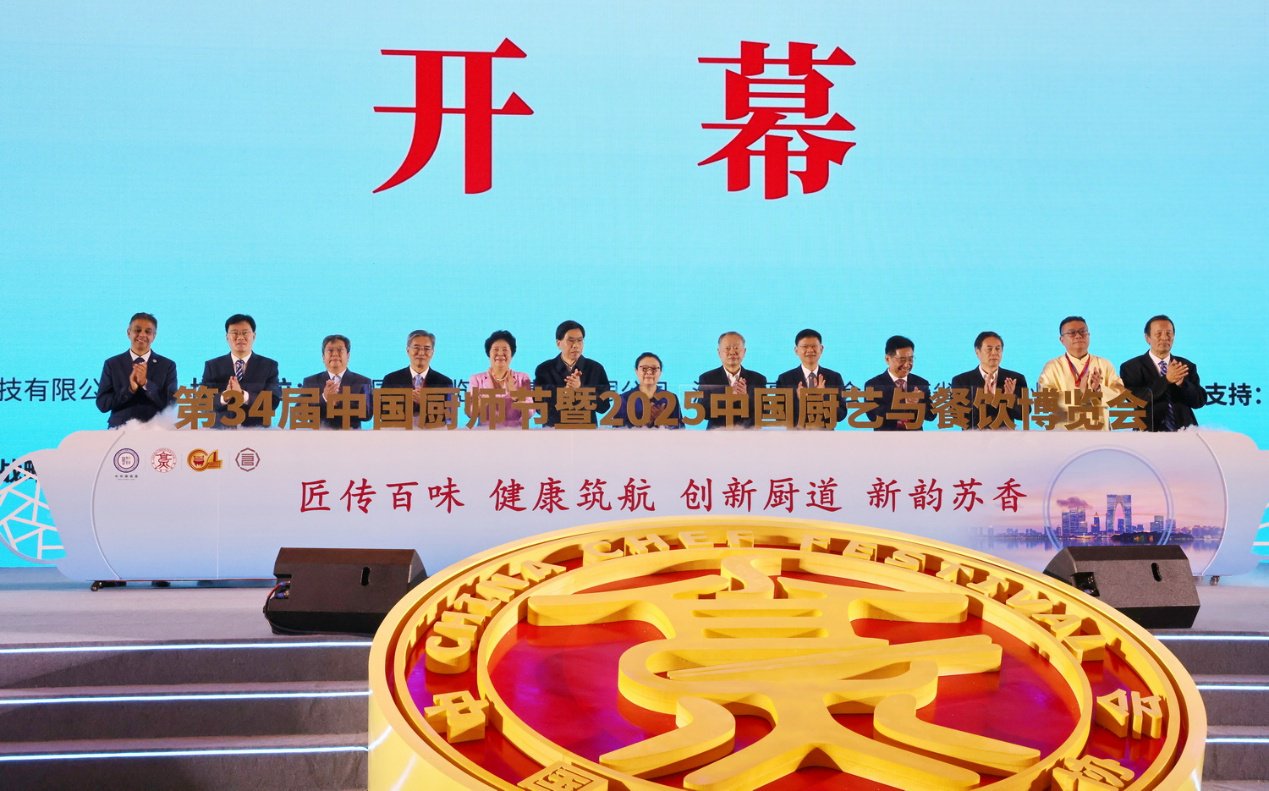
第34届中国厨师节开幕 中外美食汇聚苏州
Zhong Guo Jing Ji Wang· 2025-10-19 03:24
Core Insights - The 34th China Chef Festival and the 2025 China Culinary and Catering Expo opened in Suzhou, showcasing the growing international influence of Chinese cuisine [1][5] Group 1: Event Overview - The event is part of the Ministry of Commerce's 2025 "Chinese Cuisine Gathering" initiative, co-hosted by the China Culinary Association and the Suzhou Jiangnan Food Culture Foundation [1] - The theme of this year's festival is "Crafting a Hundred Flavors, Building Health, Innovating Culinary Arts, New Fragrance of Suzhou" [1] - The festival features a record number of participating countries and attendees, highlighting its expanding scale [5] Group 2: Government and Association Support - The Suzhou government has launched a catering culture revitalization plan, aiming for a restaurant revenue target of over 100 billion yuan this year [5] - The China Culinary Association emphasizes the dual focus on culture and industry, creating a comprehensive activity matrix that includes competitions and exhibitions [7] Group 3: Event Activities - The festival includes forums, cooking competitions, and an expo, providing valuable networking opportunities for industry professionals [9] - The cooking competition features seven professional contests, including the "2025 Chinese Culinary World Championship" and the "2025 Western Culinary Skills Competition," both recognized by the World Chefs Association [10] - The expo spans 40,000 square meters, gathering nearly a thousand quality enterprises, showcasing a wide range of products from ingredients to kitchen equipment [10]
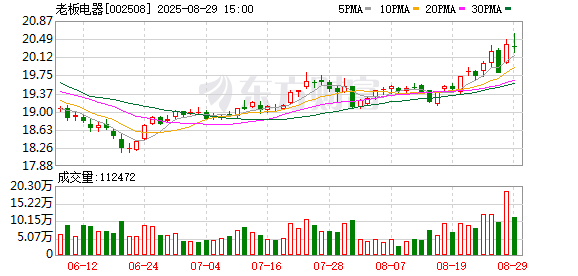
190亿杭州厨电巨头,动用43亿买理财
2 1 Shi Ji Jing Ji Bao Dao· 2025-08-30 10:49
Core Viewpoint - The company is facing challenges in adapting to a market shift from growth to saturation, impacting its revenue and competitive strategy [3][8]. Financial Performance - For the first half of the year, the company reported total revenue of 4.61 billion yuan, a year-on-year decline of 2.58% [3]. - Despite the revenue drop, the company achieved a profit of 710 million yuan during the same period [5]. - The company has authorized management to utilize up to 6.5 billion yuan of idle funds for investment in financial products, with a total of 4.32 billion yuan invested over the past 24 months [5]. Market Strategy - The company is shifting its focus from high-end kitchen appliances to a multi-brand strategy to cover various market segments, including lower-tier markets [8][10]. - The new brand, "Mingqi," has generated revenue of 240 million yuan in the first half of the year, contributing a net profit of 4.21 million yuan [10]. - The company is also exploring overseas markets through a combination of self-built and acquisition strategies, although international revenue currently accounts for less than 1% of total income [10]. Operational Changes - The management team is adapting its channel operations in response to changes in the real estate market, moving away from reliance on real estate-driven sales [12][13]. - The company is expanding its workforce in marketing and e-commerce roles to enhance user engagement and product storytelling [14][16]. Research and Development - The company is increasing its investment in research and development, with R&D spending reaching 160 million yuan in the first half of the year, representing 3.4% of total revenue [22]. - A new AI research institute has been established, focusing on machine vision, voice interaction, and IoT technologies [23]. - The company aims to leverage AI technology to improve production efficiency, reduce costs, and enhance product quality [24].