
玉璋

Search documents
去考古博物馆看年代最早的玉马
Xin Lang Cai Jing· 2026-02-08 08:13
Core Viewpoint - The exhibition "Jade Culture and Chinese Civilization" showcases 155 pieces of precious jade artifacts, highlighting the development of jade culture in China from the Neolithic era to modern times [1] Group 1: Exhibition Overview - The exhibition is held at the China Archaeological Museum and features representative jade artifacts from various historical periods, including the Erlitou culture, Western Zhou, Han tombs, Tang and Song dynasties, and Qing dynasty [1] - The artifacts illustrate the rich history and craftsmanship of jade culture in China, revealing the extraordinary wisdom of artisans throughout the ages [1] Group 2: Thematic Structure - The exhibition is organized into four main chapters: "Jade from the East," "Jade Meets Civilization," "Jade Gifts to the World," and "Jade Enriches China," showcasing the evolution of jade in terms of form, function, and cultural significance [1] - The opening section features the earliest known jade artifacts from the Aohan Xinglonggou site in Inner Mongolia, including jade discs, knives, and pendants [1] Group 3: Notable Artifacts - A notable highlight is the jade horse unearthed from the tomb of Fu Hao in Anyang, Henan, recognized as the earliest known horse representation in China, characterized by its small size and dynamic design [1]
古蜀珍宝到国博“出差”,总共分几步?
Xin Lang Cai Jing· 2026-01-21 19:36
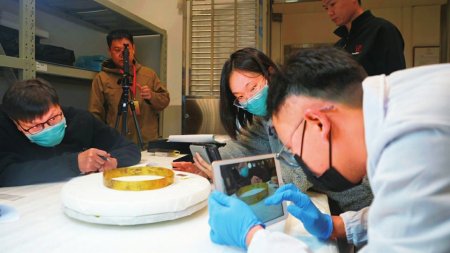
Core Viewpoint - The exhibition "Double Stars Shine in the World - Sanxingdui and Jinsha Site Ancient Shu Civilization Exhibition" opened at the National Museum of China, showcasing over 200 exquisite artifacts from the ancient Shu civilization, highlighting the peaks of the Sanxingdui and Jinsha sites [4]. Group 1: Exhibition Overview - The exhibition features a rich collection of bronze, jade, and gold artifacts, presenting a comprehensive view of the brilliance of ancient Shu civilization during the Bronze Age [4]. - The exhibition is a result of meticulous planning and adherence to legal regulations, ensuring the safe transport and display of cultural relics [5]. Group 2: Artifact Transportation Process - The process of transporting artifacts involves multiple rigorous steps, starting with a health check and maintenance to assess their suitability for travel [5]. - A detailed loan agreement is signed, covering the duration of the exhibition and protection standards before the artifacts are allowed to be displayed [5]. - The artifacts undergo a thorough verification process involving the collection unit, borrowing museum, and transportation company, ensuring all conditions are documented [6]. Group 3: Packaging and Transportation - Artifacts are packaged using multiple layers of protection, following national standards for artifact packaging and transportation [6]. - The transportation vehicles are equipped with temperature and humidity control systems, ensuring a safe environment for the artifacts during transit [6]. - Upon arrival, experienced professionals from the Jinsha Site Museum oversee the exhibition setup, ensuring all display conditions meet protection requirements [9]. Group 4: Special Features of Artifacts - The exhibition includes unique artifacts such as jade and bronze sculptures, each requiring specific handling and transportation methods [8]. - Specialized tools are used for the verification of different types of artifacts, ensuring their condition is accurately assessed [8]. - Custom packaging materials, such as acid-free paper and tailored containers, are utilized to protect the artifacts from environmental damage [8]. Group 5: Future Highlights - Notable artifacts like the Sun God Bird gold ornament and gold mask will be featured later in the exhibition, with specific dates announced for their display [9]. - The exhibition will conclude on August 18, after which all artifacts will be returned to the Jinsha Site Museum [9].

视频丨三星堆及金沙遗址200余件珍贵文物亮相国博
Yang Shi Xin Wen Ke Hu Duan· 2026-01-19 01:07
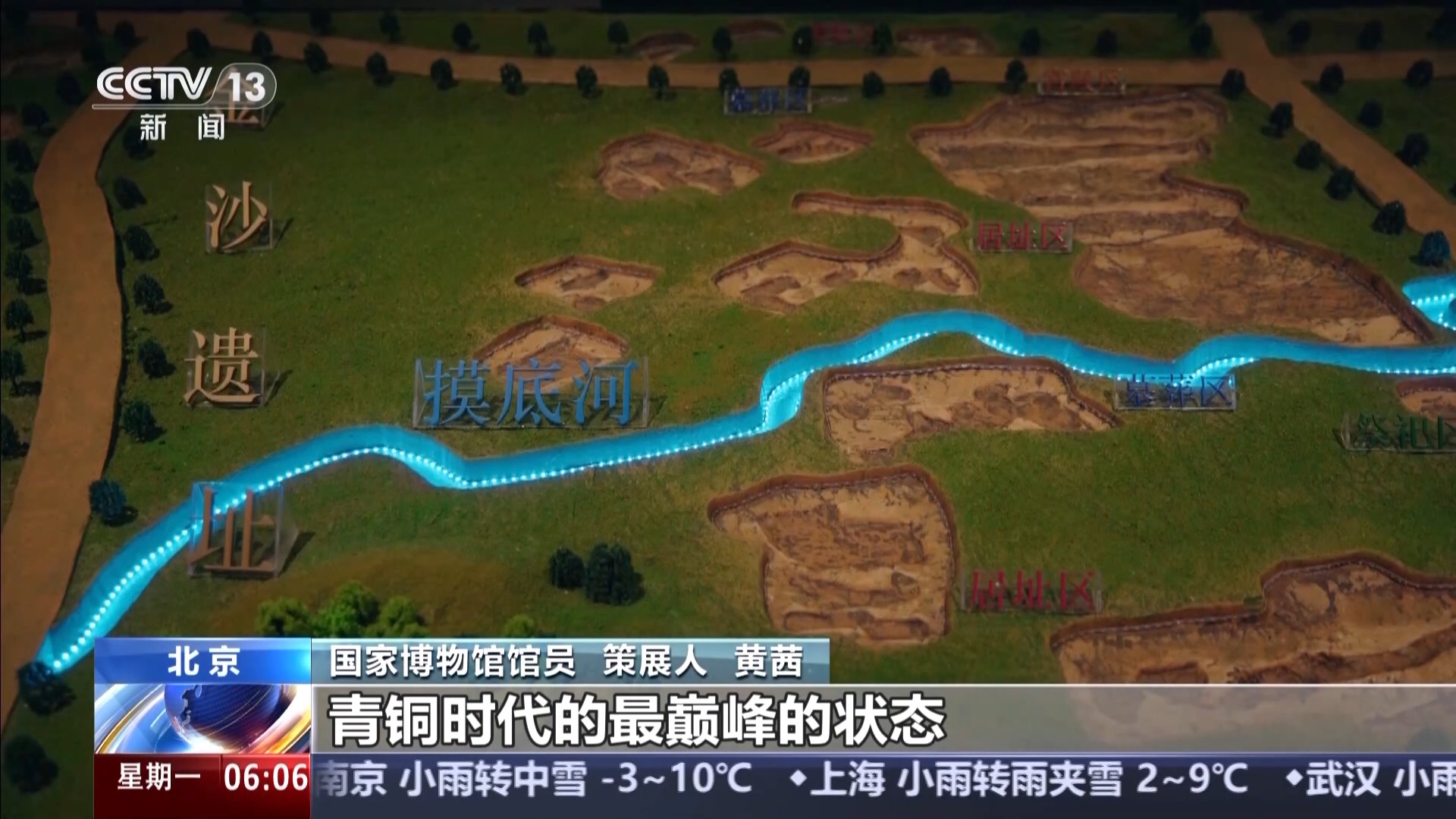
Core Insights - The exhibition at the National Museum showcases over 200 precious artifacts from the Sanxingdui and Jinsha sites, both of which have been recognized as significant archaeological discoveries in the past century, greatly enhancing the understanding of Chinese bronze civilization [1] Group 1 - The artificial carbonized rice and diverse pottery found at the sites reflect the daily life and wisdom of the ancient Shu people, highlighting their culinary practices [2] - Rituals played a crucial role in ancient Chinese culture, as evidenced by various ceremonial artifacts such as bronze masks and jade implements, which illustrate the reverence for nature and the divine [2] - The artifacts symbolize the Shu people's admiration for light and their imaginative cosmology, showcasing their rich cultural expressions [2] Group 2 - The Sanxingdui and Jinsha sites represent the pinnacle of the ancient Shu civilization during the Bronze Age, according to the curator of the National Museum [4] - Many of the unique designs found in the artifacts can be traced back to the historical context of Chinese civilization, indicating a strong cultural connection to the Central Plains during the Shang and Zhou dynasties [6] - The ancient Shu civilization demonstrated significant cultural creativity and subjectivity by incorporating and innovating upon bronze vessel forms from the Central Plains and the lower reaches of the Yangtze River [6]
三星堆及金沙遗址200余件珍贵文物亮相国博
Xin Lang Cai Jing· 2026-01-18 23:36
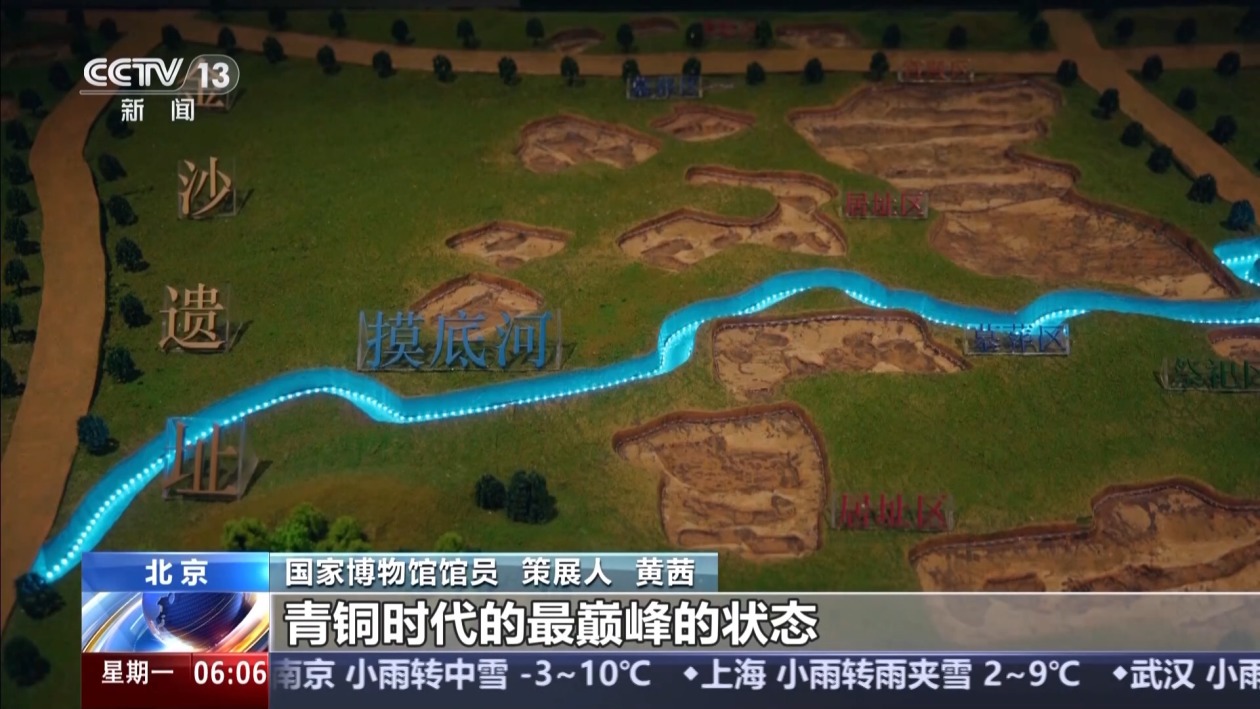
Core Viewpoint - The exhibition of over 200 precious artifacts from the Sanxingdui and Jinsha sites at the National Museum highlights the significance of these archaeological discoveries in enhancing the understanding of Chinese bronze civilization [1][3]. Group 1: Artifacts and Cultural Significance - The artifacts, including artificially cultivated carbonized rice and various pottery, reflect the daily life and wisdom of the ancient Shu people [1]. - Ritual items such as bronze masks and jade ceremonial objects illustrate the importance of rituals in ancient Chinese society, depicting a reverence for nature and the cosmos [1]. - The sun-shaped and eye-shaped artifacts symbolize the ancient Shu people's admiration for light, showcasing their rich imagination and romantic view of the universe [1]. Group 2: Historical Context and Influence - The Sanxingdui and Jinsha sites represent the pinnacle of the ancient Shu civilization during the bronze age, indicating a significant cultural development [3]. - Many designs found in the artifacts, such as the beast face patterns on jade ceremonial axes, have roots in the bronze artifacts of the Shang and Zhou dynasties, indicating a cultural exchange [5]. - The ancient Shu civilization's ability to absorb and innovate upon the bronze forms from the Central Plains and the lower reaches of the Yangtze River demonstrates its strong cultural identity and creativity [5].
通天“神作”:三星堆人的自然、图腾与祖先崇拜
Jing Ji Guan Cha Bao· 2025-12-16 04:46
Core Viewpoint - The article discusses the unique cultural significance of the Sanxingdui archaeological site, highlighting its religious artifacts and the complex belief systems of the ancient civilization that created them [1]. Group 1: Archaeological Findings - The Sanxingdui site has revealed eight burial pits containing a wealth of bronze, jade, and ivory artifacts, with distinct characteristics that allow them to be categorized into two groups [2][3]. - The burial pits show evidence of intentional burning, with many artifacts charred or deformed, suggesting a ritualistic context rather than a violent burial [4]. - The artifacts' stratified arrangement within the pits indicates a systematic approach to their burial, closely linked to ritual practices [5]. Group 2: Ritual Significance - Experts largely agree that the burial pits are associated with sacrificial activities, rather than being the result of a violent conflict [6][7]. - The concept of "yi mai" (burial for sacrifice) is referenced, indicating a cultural practice of interring offerings as part of religious ceremonies [5]. - Different interpretations exist regarding the nature of the pits, with some experts categorizing them as direct products of sacrificial activities, while others view them as burial sites for sacrificial artifacts [6]. Group 3: Belief Systems - The Sanxingdui culture exhibits three primary forms of worship: nature, totem, and ancestor worship, reflecting a rich spiritual life [8]. - Nature worship is exemplified by artifacts such as the bronze sacred tree and sun-shaped vessels, indicating a deep reverence for natural elements [9]. - Ancestor worship is represented by the unique "Zongmu" masks, which are believed to connect the living with their ancestors [10]. Group 4: Artistic Expression - The bronze sacred tree, standing at 396 cm, is noted as the largest of its kind discovered, symbolizing a connection between the earthly and divine realms [11]. - The intricate design of the sacred tree, featuring multiple branches and symbolic elements, showcases the advanced bronze casting techniques and artistic imagination of the Sanxingdui civilization [12].
盛极而落:三星堆至今不为人所知的三部曲
Jing Ji Guan Cha Bao· 2025-12-02 03:28
Core Viewpoint - The article discusses the historical significance and cultural evolution of the Sanxingdui site, highlighting its three distinct cultural phases: rise, peak, and decline, which reflect the complex social and technological developments in ancient China [1][17]. Group 1: Historical Phases - The Sanxingdui site experienced three cultural stages: the initial rise during the late Neolithic period, the peak during the Bronze Age, and the subsequent decline leading to the abandonment of the site [1][17]. - The peak phase lasted approximately 500 years, during which the Sanxingdui culture flourished with advanced bronze casting and significant ritual practices [11][14]. Group 2: Archaeological Findings - The site covers an area of about 12 square kilometers and includes various artifacts such as stone, pottery, jade, gold, and bronze, indicating a rich and stable lifestyle [3][19]. - Notable discoveries include large residential structures, intricate jade artifacts, and a variety of bronze items, which suggest a high level of craftsmanship and social organization [6][14]. Group 3: Cultural Significance - The Sanxingdui culture is characterized by unique artistic expressions, including large bronze masks and ritual objects, which reflect the spiritual and social dynamics of the time [1][14]. - The findings at Sanxingdui challenge previous notions of ancient Chinese civilization, indicating that it was a significant center of cultural development in the Sichuan basin [21]. Group 4: Technological and Social Development - The article notes the emergence of specialized labor and early forms of trade, as evidenced by the variety of artifacts and the presence of shell currency, indicating a developing economy [19][20]. - Water management techniques, possibly akin to the Dujiangyan irrigation system, are suggested to have played a crucial role in the urban planning and sustainability of the Sanxingdui civilization [20].
楚玉风华:楚人如何将浪漫与灵动注入玉石|观展
Jing Ji Guan Cha Bao· 2025-05-17 00:47
Group 1 - The article explores the historical significance of jade in early Chinese civilization, highlighting its dual role as a symbol of both divine and royal power [2][12][32] - Jade artifacts from different periods reflect the evolution of cultural practices, transitioning from spiritual communication tools to symbols of social hierarchy [12][32] - The craftsmanship of jade artifacts, such as the intricate designs and techniques used in the production of jade items, showcases the advanced skills of ancient artisans [5][18][24] Group 2 - The article discusses the transformation of jade from ritualistic objects in the Xia and Shang dynasties to more secular and decorative items in the Ming dynasty, indicating a shift in societal values [24][28][32] - Specific jade pieces, like the jade crown and belt buckles from royal tombs, illustrate the intertwining of art, power, and social status in ancient China [25][30][32] - The exhibition at Hubei Provincial Museum serves as a comprehensive showcase of jade artifacts across various dynasties, providing insights into the cultural and historical context of jade in Chinese civilization [33]