电动客车

Search documents
美最高法否定IEEPA征税权,比亚迪美国子公司此前起诉要求退税
Xin Lang Cai Jing· 2026-02-25 09:13
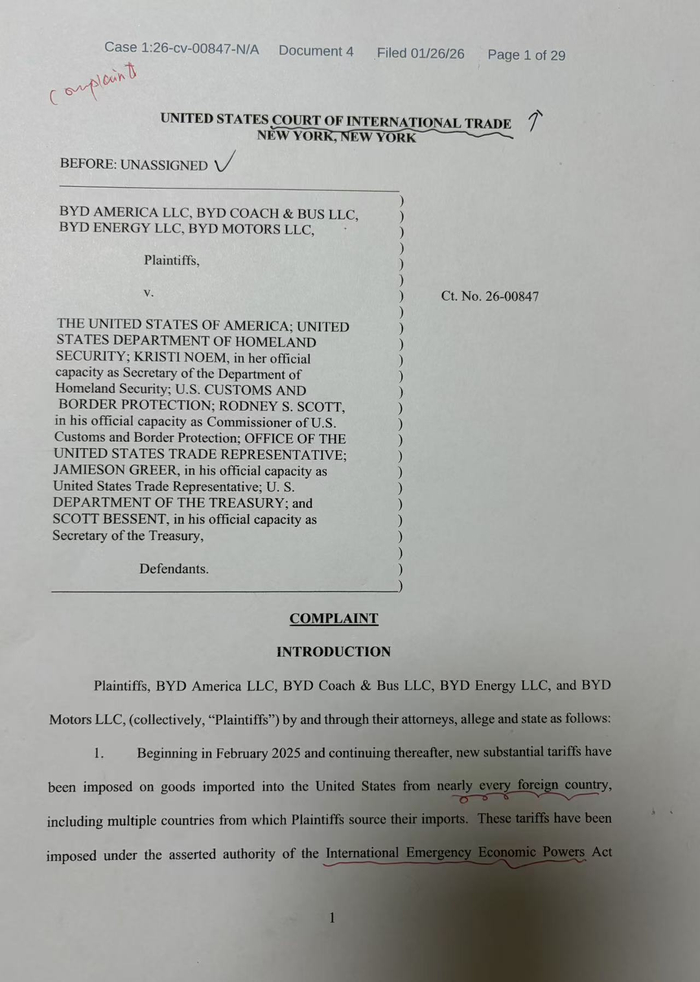
Core Viewpoint - The U.S. Supreme Court has ruled that the International Emergency Economic Powers Act (IEEPA) does not authorize the President to impose large-scale tariffs, impacting various companies, including BYD, which is seeking refunds for tariffs paid under this act [15][23]. Group 1: BYD's Legal Action - BYD has filed a lawsuit against the U.S. federal government through its four subsidiaries registered in the U.S., seeking refunds for IEEPA tariffs paid [6][10]. - The subsidiaries involved are BYD America LLC, BYD Coach & Bus LLC, BYD Energy LLC, and BYD Motors LLC, which have been affected by the tariffs imposed since February 2025 [6][10]. - The lawsuit claims that the President lacked the authority to impose tariffs under IEEPA, rendering the related executive orders illegal [10][11]. Group 2: Tariff Background and Legal Context - The tariffs in question were imposed under the assertion of a national emergency declared by the Trump administration, citing issues like border security and trade deficits [10][23]. - The Supreme Court's ruling indicates that any broad exercise of taxing power must have clear congressional authorization, which IEEPA does not provide [23]. - The total amount collected from IEEPA tariffs is reported to be approximately $133.5 billion as of December 14, 2025 [23]. Group 3: Implications for Refund Process - The Supreme Court did not provide specific arrangements for the refund process, leading to uncertainty about how refunds will be handled [23][24]. - The Customs and Border Protection agency has announced a halt to the collection of IEEPA tariffs but has not clarified the refund procedures for importers [13][23]. - BYD's lawsuit is part of a broader trend, with nearly a thousand companies seeking refunds through the U.S. International Trade Court, highlighting the complexities of institutional risks in mature markets [24].


金龙汽车20260129
2026-01-30 03:11
Key Points Summary of King Long Automobile Conference Call Company Overview - **Company**: King Long Automobile - **Industry**: Automotive, specifically focusing on buses and electric vehicles Core Insights and Arguments - **Sales Performance**: In 2025, King Long's domestic sales reached approximately 21,800 units, while exports accounted for 30,200 units, leading to a total of 52,000 units sold. The net profit attributable to shareholders was 460 million yuan, with a non-recurring net profit of 188 million yuan, reflecting a nearly 200% year-on-year growth [3][4] - **Export Strategy**: The company plans to increase the export ratio of electric vehicles due to their higher value, which positively impacts gross margins. However, traditional fuel vehicles will continue to be the main contributors in the short term, with electric vehicle exports expected to be around 4,000 units in 2025, representing a small portion of total exports [2][7] - **Cost Management**: King Long aims to raise its centralized procurement ratio from 40% to approximately 60% in 2026, with a long-term goal of 80%-90%. This strategy is intended to lower costs and improve resource allocation through the establishment of four key centers: supply chain procurement, technology, sales, and after-sales service [2][10][11] - **Market Expansion**: The company is focusing on strengthening its existing overseas markets, enhancing order stability through partnerships and local assembly plants. As of 2025, King Long has established 16 assembly plants in various countries, including Qatar and Vietnam [2][13] Additional Important Insights - **Material Cost Pressures**: King Long has managed to mitigate the impact of rising raw material costs by locking in battery prices and diversifying suppliers. The company primarily uses batteries from CATL, accounting for 80%-90% of its supply [8][9] - **Future Market Outlook**: The domestic bus market is expected to rebound in 2026, driven by potential subsidies for vehicle replacements and a recovery in tourism and intercity transport. The company anticipates a 10%-15% annual growth in overseas markets over the next three to five years [5][14][20] - **Profitability by Vehicle Type**: The average selling price for electric buses in export markets is around 1.2 million yuan, compared to 800,000 yuan domestically. The gross margin for electric buses is approximately 20%, while for fuel buses, it is about 15% [6][24] - **Integration of After-Sales Services**: The integration of after-sales services is expected to reduce costs and enhance customer experience, although the financial impact will take time to materialize [15] - **Technological Advancements**: The establishment of a technology center is aimed at improving research efficiency and product quality, which is expected to enhance competitiveness in the long run [16][26] Regional Growth Focus - **Key Markets**: King Long's growth will be concentrated in Asia, Latin America, and Africa, with significant potential in Southeast Asia and the Middle East. The company has identified Algeria and Israel as successful markets due to strong government relationships and market trust [18][19] Conclusion King Long Automobile is strategically positioning itself to enhance its market share in both domestic and international markets through increased electric vehicle exports, cost management initiatives, and a focus on technological advancements. The company is optimistic about future growth driven by favorable market conditions and strategic partnerships.

今日最新7项招投标信息汇总2025.12.04
Xin Lang Cai Jing· 2025-12-04 11:25
Summary of Key Points Core Viewpoint - The news highlights significant bidding and winning information related to urban rail transit projects, focusing on equipment, design services, and engineering contracts. Group 1: Winning Bids - The winning bid for the Hangzhou Urban Rail Transit Line 4 Phase III electromechanical, decoration, and system installation project was awarded to China Railway Wuhan Electrification Bureau Group Co., Ltd. with a bid amount of 299,350,000.00 yuan [1]. - The candidate for the Beijing Subway Fangshan Line ground station multi-split air conditioning system update project is China Construction Second Engineering Bureau [1]. - The winning bid for the Shanghai Urban Rail Transit regional line Chongming Line East Jing Road vehicle section process equipment (second batch) procurement project was awarded to Tangshan Baichuan Intelligent Machinery Co., Ltd. with a bid amount of 69,805,976 yuan [1]. - The winning bid for the Guangzhou Urban Rail Transit Line 8 East Extension Project (Wanshengwei to Hualong) concrete procurement was awarded to Guangzhou Jiansheng Concrete Co., Ltd. with a bid amount of 29,007,175.00 yuan (with prepayment plan) and 29,830,161.46 yuan (without prepayment plan) [1]. Group 2: Bidding Information - The procurement project for the Nanchang Metro Station Comprehensive Energy-saving Technology Research and Application aims to address energy consumption management issues and develop a comprehensive energy-saving control technology for metro stations [1]. - The bidding for the second phase of the Nanchang Metro Line 19 (North Extension and North Extension Branch Line) includes the procurement of 2 sets of 8 electric trains, covering various systems such as electrical traction, train control, and monitoring systems [5]. - The bidding plan for the Beijing Subway Line 13 capacity enhancement project involves the re-survey of existing lines due to signal system upgrades, covering approximately 40.5 km of track [3][6].
领跑中国重装“出海” 山东重工集团做对了什么?
Zheng Quan Ri Bao Zhi Sheng· 2025-10-20 13:13
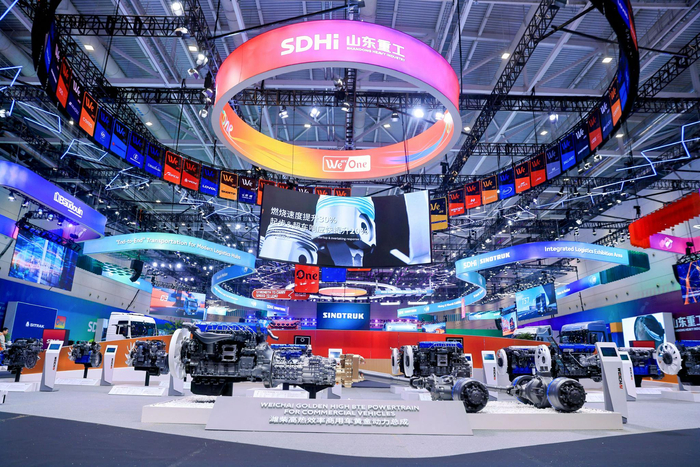
Core Insights - Shandong Heavy Industry Group has demonstrated strong growth despite global economic pressures, achieving nearly 440 billion yuan in revenue in the first three quarters of 2025, a year-on-year increase of over 9% [2] - The group emphasizes technological innovation and R&D investment as key drivers for its competitive edge in international markets [2] Group Performance - The group's export revenue reached 72.7 billion yuan, with a year-on-year growth of 6% to 7%, and is expected to exceed 100 billion yuan for the year, marking a fourfold increase from 20 billion yuan in 2020 [2] - R&D expenses are projected to be 13.6 billion yuan in 2024, maintaining a research intensity of 4.2% [2] Product Development - Weichai Group has released the world's highest thermal efficiency diesel engine, achieving 53% efficiency [2] - The sales of Weichai's large-bore engine data center business have surged by 400% year-on-year in the first three quarters [2] Heavy Truck Sector - China National Heavy Duty Truck Group (CNHTC) exported 111,000 heavy trucks in the first three quarters, a year-on-year increase of 24.5%, maintaining its position as the top exporter of heavy trucks in China [4] - Shaanxi Heavy Duty Truck has become the second-largest exporter of heavy trucks in China [4] New Energy Initiatives - The group showcased its latest products and technologies in the new energy sector at the Global Partner Conference, with expected sales revenue of nearly 30 billion yuan from new energy businesses this year [5] - Weichai Group's new energy segment has seen a 122% year-on-year growth in its "three new" business [5] International Strategy - 30% of the group's overseas revenue comes from its industrial layout in Europe and the U.S., while another 30% is generated from localized manufacturing and sales of domestic products [8] - The group is focused on localizing teams, management, manufacturing, and R&D in overseas markets to enhance resilience against economic fluctuations [8]
既是“先行者”也是“探索者” 智能新能源汽车产业领先优势激活企业出海新动能
Yang Shi Wang· 2025-09-29 04:05
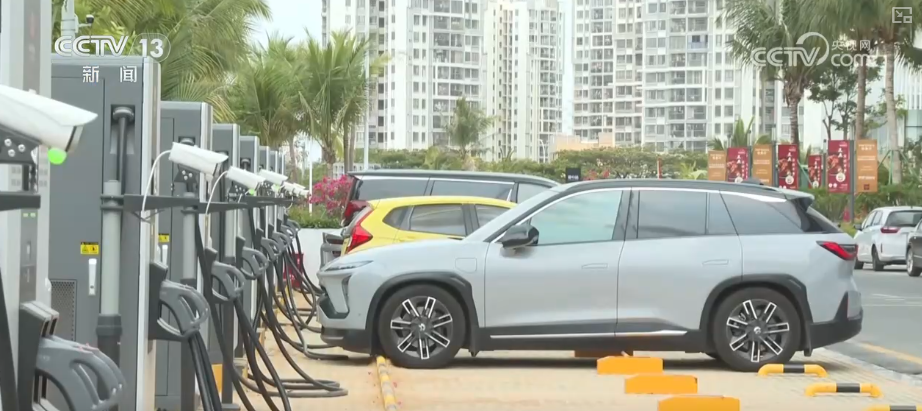
Core Viewpoint - The global electric vehicle (EV) industry is witnessing a shift towards collaborative international expansion, with China emerging as a key player in promoting global cooperation and green transformation in the automotive sector [1][3][15] Group 1: Industry Developments in Hainan - Hainan is set to become a significant base for China's automotive industry to expand internationally, focusing on the establishment of a global exhibition and trade base for EVs and components [1] - The province has achieved a market penetration rate of over 60% for new energy vehicles, ranking first in the country, and is recognized as a pioneer in green low-carbon transportation [2] - Hainan is also exploring autonomous driving through real-world testing along its 900-kilometer tourism highway [2] Group 2: Collaborative Efforts and New Models - Since 2025, China's automotive industry is transitioning from a focus on single product exports to a more integrated approach involving the entire supply chain [3] - Chinese and German automotive industries are expected to foster a competitive yet cooperative relationship, particularly in the fields of battery technology and charging infrastructure [5][6] - Companies like Porsche are increasing collaboration with local Chinese firms, establishing R&D centers in China, and leveraging China's technological advancements in smart EVs [8][10] Group 3: Future Directions and Global Integration - The Chinese government emphasizes the need for international collaboration to share innovations in the EV sector, aiming to create a conducive environment for global industrial development [14][15] - The automotive industry is viewed as a critical driver for economic growth and a key component of the ongoing technological revolution and industrial transformation [15]
万没料到,普京突然对中国,说了句前所未有的话,火速传遍全球!中方的路走对了!
Sou Hu Cai Jing· 2025-08-14 11:56
Group 1 - The core message of the article highlights the emergence of a new international order that is not dominated by the United States, as articulated by Putin during his Victory Day speech [1] - Russia's crude oil exports to China are projected to reach 115 million tons in 2024, a 42% increase from two years ago, with 40% of transactions conducted in RMB [3] - The "Power of Siberia 2" pipeline is expected to generate annual revenues of $46 billion, while helping China reduce its dollar foreign exchange consumption by 30% [3] Group 2 - The increase in import tariffs on Chinese cars by Russian customs has led to a surge in cancellations for brands like Great Wall and Chery, prompting quick adaptations by Chinese automakers [3] - Chinese automotive brands have captured over 57% market share in Russia as of June, demonstrating resilience in Sino-Russian economic cooperation despite external pressures [3] - The U.S. is concerned about the growing trade between Russia and other countries like India and Turkey, which are also moving towards non-dollar transactions [5] Group 3 - The relationship between China and Russia has been deepening, with significant technological collaborations yielding practical results, such as China's polar navigation technology aiding Russian LNG transport [7] - The shift towards using RMB for oil and gas transactions signifies a move away from traditional dollar-based systems, indicating a quiet transfer of power through technology and trade rather than military confrontation [9]
比亚迪商用车欧洲市场有大动作!
第一商用车网· 2025-06-28 13:29
Core Viewpoint - BYD is advancing its localization strategy in Europe through the expansion of its commercial vehicle factory in Komárom, Hungary, which will enhance production capacity for electric buses and trucks, marking a significant step in its European operations [1][3]. Group 1: Expansion and Capacity - The expansion project includes the construction of a 29,000 square meter intelligent production facility, which will increase the annual production capacity to over a thousand units [1]. - The expansion is expected to create hundreds of high-quality jobs in the local area, injecting economic vitality and technical talent into the region [6]. Group 2: Technological Innovation and Sustainability - BYD's Executive Vice President, Li Ke, emphasized that the expansion represents not only an upgrade in capacity but also a commitment to technological innovation and green missions, contributing to Hungary's economic development and supporting Europe's transition to sustainable transportation [2]. - The new facility will integrate digital, intelligent, and green manufacturing technologies to meet the growing demand for zero-emission public transport solutions in Europe [3]. Group 3: Market Presence and Future Strategy - Since entering the Hungarian market in 2005, BYD has established a strong presence in Europe, with its electric buses serving over 160 cities across 26 countries and accumulating over 590 million kilometers in operation, which has led to a reduction of 630,000 tons of CO2 emissions [7]. - Looking ahead, BYD plans to deepen its localization strategy in Europe, providing customized electric solutions for the commercial vehicle sector and contributing more "Chinese wisdom" and "Chinese solutions" to global green transportation development [8].