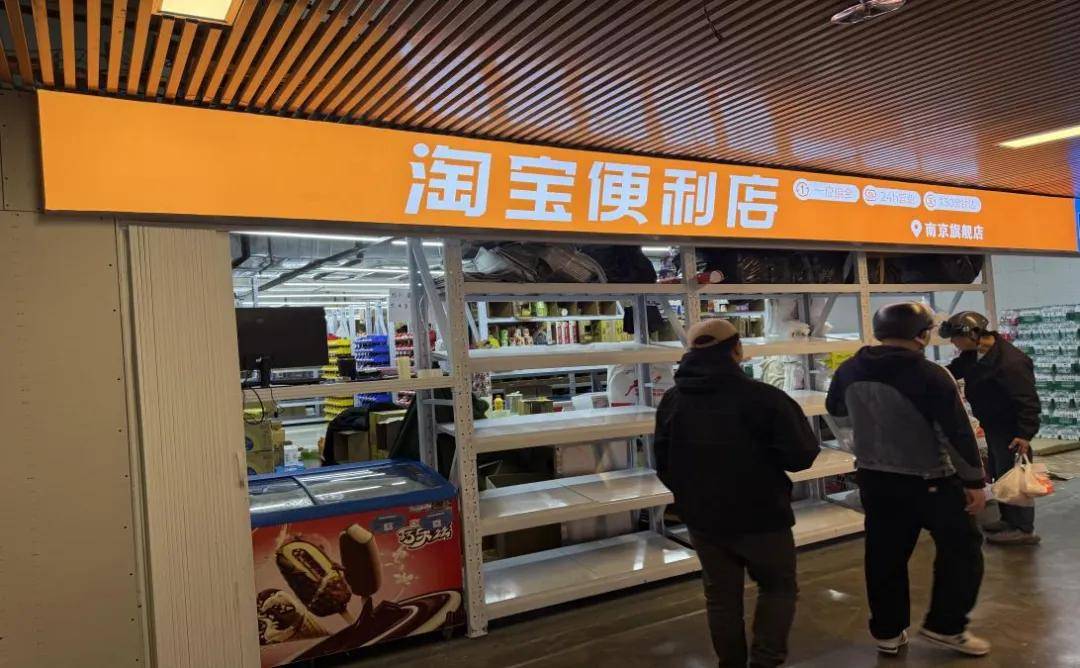
淘宝便利店

Search documents
美团没有被彻底拖住
36氪· 2025-11-30 23:53
Core Insights - The article discusses the intense competition in the food delivery market, highlighting that there are no clear winners in the ongoing battle, particularly in Q3 2025, where both Alibaba and Meituan faced significant losses [4][10]. - Meituan's core local business segment reported a revenue decline of 2.8% year-on-year, resulting in an operating loss of 14.1 billion yuan, marking its first loss since Q4 2022 [4][9]. - Alibaba's aggressive strategy led to a profit drop of approximately 30 billion yuan, with significant investments in subsidies that have nearly exhausted their planned 50 billion yuan budget [10]. Meituan's Performance - Meituan's operating profit for its core local business was 14.6 billion yuan in Q3 2024, contrasting sharply with a loss of 14.1 billion yuan in the same period this year, indicating a significant shift in financial performance [9]. - The increase in sales and marketing expenses by 90.9% to 35.9% of revenue reflects the high cost of maintaining market share amid fierce competition [9][10]. - Despite the losses, Meituan's average order value (AOV) remains significantly higher than competitors, with over 70% market share in orders above 30 yuan [10]. Competitive Landscape - The competition has intensified with new entrants and existing players like Alibaba and JD.com increasing their efforts in the food delivery and local services market [13]. - Douyin (TikTok) is emerging as a formidable competitor, with its life services projected to exceed 800 billion yuan in GTV by 2025, narrowing the gap with Meituan [13]. - The article notes that both Alibaba and Meituan are still in the process of optimizing their user experience (UE) and expanding their instant retail offerings [11][12]. New Business Developments - Meituan's new business segment saw a revenue increase of 15.9% year-on-year to 28 billion yuan, although operating losses increased by 24.5% to 1.3 billion yuan [17]. - The company is expanding its offline retail efforts, with initiatives like the "Happy Monkey" discount supermarket and "Little Elephant" supermarket gaining traction [18]. - Meituan's overseas business, particularly in Brazil, is set to launch in December, with significant investments aimed at capturing market share in a competitive landscape dominated by iFood [19][20]. Future Outlook - Meituan's management expresses confidence in maintaining efficiency and market share despite ongoing losses, emphasizing the importance of patience and strategic focus [7][15]. - The company aims to leverage its strengths in high-value orders and continue exploring new opportunities in both domestic and international markets [10][20].


美团没有被彻底拖住
36氪未来消费· 2025-11-29 12:23
Core Insights - The article highlights the intense competition in the food delivery sector, indicating that there are no clear winners in the ongoing battle, particularly in Q3 2025, where major players like Alibaba, Meituan, and JD.com are facing significant challenges and losses [3][5][8]. Summary by Sections Food Delivery Battle - Alibaba's aggressive strategy led to a profit drop of approximately 30 billion yuan, gaining market share but lacking evidence of successful e-commerce synergy [3][8]. - Meituan experienced a decline in market share and reported an operating loss of 14.1 billion yuan, marking its first loss since Q4 2022 [3][5]. - JD.com has reduced its investment in food delivery, focusing on user experience optimization instead [3]. Financial Performance - Meituan's core local business saw a significant shift, with operating profit dropping from 14.6 billion yuan to a loss of 14.1 billion yuan due to increased user incentives and marketing expenses [7]. - Meituan's sales costs rose by 23.7%, and marketing expenses surged by 90.9%, indicating a heavy reliance on subsidies to maintain market share [7]. - Alibaba's total profit dropped by 30 billion yuan in Q3, with a substantial portion of its planned 50 billion yuan subsidy nearly exhausted [8]. Market Dynamics - The competition has led to a significant change in market dynamics, with Alibaba and Meituan nearly equal in market share, while JD.com has lost about 8% [8]. - Both platforms are now focusing on high-value orders, with Meituan holding over 70% market share for orders above 30 yuan [8]. - The article notes that the intense competition has led to a temporary decrease in subsidy levels, allowing Meituan to regain some market share [8]. New Business Ventures - Meituan's new business segment reported a 15.9% revenue increase to 28 billion yuan, despite a 24.5% rise in operating losses [15]. - The company is expanding its offline retail efforts, with new stores like Xiaoxiang Supermarket and the discount store Happy Monkey [15]. - Meituan's overseas expansion continues, with Keeta achieving profitability in Hong Kong and launching operations in Brazil [16][18]. Future Outlook - Meituan's management expresses confidence in maintaining efficiency and market share despite ongoing losses [5][13]. - The company is preparing for a winter campaign to boost various metrics, including new store openings and promotional activities [12]. - The article concludes that while the core local business faces challenges, Meituan is committed to exploring new opportunities and maintaining its operational rhythm [18].

仓店成为新终端,品牌必须提前占位
3 6 Ke· 2025-11-28 01:03
Core Insights - The core argument presented is that the industry is transitioning from a "traffic war" to a "supply war" in the context of instant retail, emphasizing the need for brands to adapt to the oversupply era to achieve growth [1][4][6]. Group 1: Industry Trends - Instant retail is experiencing a shift where major platforms are investing heavily in supply-side capabilities, moving away from consumer subsidies to focus on supply chain efficiency [1][2]. - The number of Meituan's "Lightning Warehouses" has surpassed 50,000 as of September 2025, with plans to expand to 100,000 by 2027, indicating a significant increase in supply infrastructure [2]. - The competition in instant retail is evolving into a marathon that tests comprehensive capabilities rather than a sprint focused solely on traffic [4]. Group 2: Supply and Demand Dynamics - The logic of instant retail development is centered around supply-demand matching, which is crucial for growth in an oversupply era [10][12]. - Demand can be categorized into general and situational types, while supply can be either standardized or flexible, highlighting the need for brands to adapt their strategies accordingly [12][15]. - The concept of matching is identified as the primary growth principle in an oversupply era, where understanding consumer needs is more critical than merely competing for market share [16][18]. Group 3: Strategic Recommendations - Brands should focus on establishing warehouses as new strategic sales channels, akin to the evolution of traditional retail and e-commerce [7][22]. - A successful strategy involves aligning product offerings with consumer scenarios, ensuring that the right products are available for the right situations [23][24]. - Companies are encouraged to build dedicated teams to manage the unique challenges of instant retail, shifting focus from traditional metrics to warehouse sales [31][32].

社会服务业:酒店免税数据持续改善,双十一总额增14.2%
Haitong Securities International· 2025-11-19 06:04
Investment Rating - The report maintains an "Outperform" rating for the majority of the covered companies in the consumer services and retail sectors [5][9]. Core Insights - The report highlights significant improvements in hotel and duty-free data, recommending stocks such as ShouLai Hotel, JinJiang Hotel, China Duty Free, and Huazhu [4]. - It emphasizes low valuation and high dividend yields, recommending stocks like Action Education, Sumida, and Chongqing Department Store [4]. - The report notes the impact of tax reforms on gold companies, recommending stocks such as Laopu Gold and Caibai [4]. - AI advancements are noted to exceed expectations, with recommendations for stocks like Kangnait Optical, Fenbi, and Tianli International Holdings [4]. Industry Updates - Consumer Services: JD's external delivery service is set to operate independently, while Meituan has launched a campaign to honor Ele.me with a name change and coupon distribution [4]. Meituan's flash purchase platform reported record high transaction volumes and user spending during the Double 11 shopping festival, with nearly 400 product categories seeing over 100% year-on-year growth [4]. - Retail: The 2025 Kuaishou Double 11 shopping festival concluded with a GMV increase of over 77% for major brands, while Hema Fresh opened its first store in Huzhou [4]. The total e-commerce sales during Double 11 reached approximately 1.695 trillion yuan, a 14.2% increase year-on-year [4]. - Company Announcements: Zhiou Technology approved a cash dividend distribution plan, while Anker Innovation plans to issue H shares for global expansion [4]. Financial Projections - The report provides profit forecasts for key companies in the consumer services and retail sectors, indicating expected growth in net profits for various companies over the next few years [5][9]. - For example, Zhou Dafu is projected to achieve a net profit of 80.64 billion yuan in 2025, while Action Education is expected to reach 3.04 billion yuan [5]. Dividend and ROE Analysis - The report includes a detailed analysis of dividend yields, payout ratios, and return on equity (ROE) for key companies, highlighting that Chongqing Department Store has a dividend yield of 12.2% and a payout ratio of 45.4% [9]. - Other notable companies include Haidilao with a 0% dividend yield and a high ROE of 47.4%, and Laopu Gold with a dividend yield of 1.9% and a payout ratio of 46.1% [9].



要闻集锦|马云妻子张瑛1.8亿买下伦敦豪宅;字节Seed研究员任赜宇因泄密被开除;腾讯与苹果达成微信游戏收入新分成协议
Sou Hu Cai Jing· 2025-11-19 01:30
Real Estate - Jack Ma's wife, Zhang Ying, purchased a London mansion for £19.5 million (approximately 180 million RMB), expanding the Ma family's overseas real estate portfolio [2] Technology and AI - Baidu launched the world's first commercially available "self-evolving" superintelligent agent, Baidu Famo, aimed at finding "globally optimal solutions" in various industries including transportation, energy, finance, logistics, and drug development [3] - Alibaba has reportedly initiated a secret project named "Qianwen" to develop a personal AI assistant app, positioning it as a competitor to ChatGPT [11] - Li Feifei, a prominent AI figure, announced the launch of her company's first commercial world model, Marble, which creates high-fidelity 3D worlds from images, videos, or text prompts [12] - Huawei is set to release a significant AI technology that could enhance GPU utilization rates from the industry average of 30%-40% to 70% [12] - Meituan's first AI IDE product, CatPaw, has entered public testing, featuring intelligent programming capabilities [13] Automotive - Li Auto is holding internal accountability for two quality incidents involving the 2024 MEGA and 2025 L series vehicles, identifying multiple responsible parties [5][6] - Chery Automobile issued an apology following an incident during a vehicle challenge at Tianmen Mountain, where a car slipped and damaged barriers [8] - JD Logistics appointed Wang Zhenhui as CEO, succeeding Hu Wei, effective November 13, 2025 [8] E-commerce - Taobao registered the copyright for "Taobao Convenience Store" and has applied for the trademark, indicating a new retail initiative [9] - Vipshop is reportedly considering a Hong Kong listing as early as next year, aiming to broaden its investor base [15] Investment and Financing - Wujie Power completed a 300 million RMB angel financing round, with participation from several prominent investment firms [16] - Luckin Coffee is preparing for a relisting in the U.S. after recovering from a previous scandal, now surpassing Starbucks in China [15]





2025“双11”交卷:为GMV脱水、向大消费开疆,一个理性主义天猫的进击
Xin Lang Cai Jing· 2025-11-16 06:37
Core Insights - The recent "Double 11" event for Tmall has shown significant growth, with nearly 600 brands achieving over 100 million yuan in sales, and many brands experiencing substantial year-on-year growth [1][2][6] - This year's event marks a strategic shift for Alibaba, focusing on AI and instant retail, moving away from traditional live streaming as a primary sales driver [2][3][4] Group 1: Performance Metrics - Tmall's "Double 11" achieved its best growth in four years, with 34,091 brands seeing sales double year-on-year, and 13,081 brands experiencing over 5 times growth [1] - The event also saw significant performance from other Alibaba platforms, with Fliggy achieving over 30% year-on-year growth and Tmall's instant retail orders increasing by over 200% compared to last year [7][8] Group 2: Strategic Shifts - Alibaba's strategy has evolved to emphasize AI and instant retail, with the launch of the "Taobao Convenience Store" aimed at enhancing consumer experience through rapid delivery [4][5] - The company is focusing on supporting quality and original brands, aligning with its 2025 strategy to foster brand growth and high-quality supply [6][7] Group 3: Market Trends - The "Double 11" event reflects a shift from impulsive to rational consumer behavior, with platforms adapting to provide better value and simplified discount structures [8][9] - The competition landscape is changing, with e-commerce platforms pursuing differentiated development strategies rather than merely competing for traffic [8][9]
淘宝闪购发力线下仓配,推出“淘宝便利店”,是要重新回归线下?
Sou Hu Cai Jing· 2025-11-14 05:40
Group 1 - The core viewpoint of the news is that Taobao Flash Sale has launched a new brand "Taobao Convenience Store," indicating Alibaba's deeper engagement in the O2O retail sector [1][3] - The new model does not involve direct store openings or warehouses by Taobao but instead provides support in product selection, supply chain, and delivery to merchants with store-warehouse capabilities [1][3] - Taobao Flash Sale has seen rapid growth since its launch in May, with daily orders reaching 80 million and monthly active users surpassing 300 million by August, making it a key strategic business for Alibaba [3] Group 2 - The "Taobao Convenience Store" will operate 24 hours and offer thousands of SKUs, with strict quality, pricing, and operational standards for partner merchants [3] - The first batch has opened 34 partnership slots, with plans to cover over 200 cities and establish more than 2,000 stores by next year [3] - The initiative is an upgrade to the existing "Lightning Warehouse" model, with over 50,000 lightning warehouses currently in operation, 25% of which supply comes from Hema and Tmall Supermarket [3][5] Group 3 - The rapid development of Taobao Flash Sale is driving the integration of Alibaba's internal retail resources, which were previously scattered across Tmall Supermarket and Hema, leading to internal competition and resource waste [5] - Taobao Flash Sale is unifying the dispersed warehousing system and logistics infrastructure to optimize delivery efficiency, with Tmall Supermarket already achieving dual-store operations in 31 cities offering delivery within 4 hours [5] - The strategy builds on Alibaba's previous O2O business experiences, leveraging insights from the unsuccessful Tao Cai Cai project to enhance cold chain logistics and direct sourcing [5][6] Group 4 - Taobao Flash Sale is fundamentally a supply chain transformation project aimed at optimizing the fast-moving consumer goods distribution system and warehouse delivery links [6] - The initiative is expected to achieve overall supply chain efficiency upgrades and realize collaborative effects of group resources, pushing instant retail services into a new phase [6]
“双11”收官:效率与竞争边界重构
Bei Jing Shang Bao· 2025-11-11 15:49
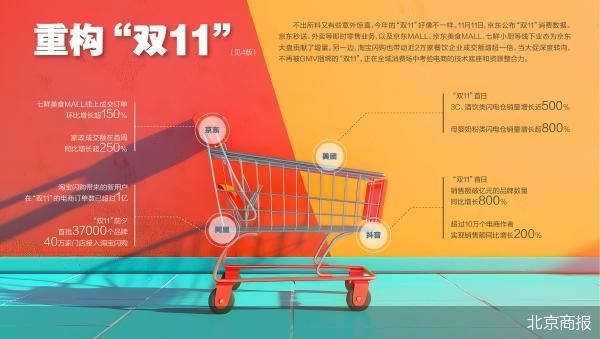
Core Insights - This year's "Double 11" shopping festival has seen significant changes in the consumption market, with local lifestyle sectors and AI applications becoming new highlights for platforms like JD and Taobao [1][3][7] Group 1: Local Lifestyle Market - The local lifestyle market has emerged as a bright spot, with JD reporting over 12% growth in orders from quality restaurants within a 3-kilometer radius during the first week of "Double 11" [3] - JD's home service revenue increased by over 250% year-on-year, while ticket sales for JD Travel soared by 880% [3] - Taobao launched "flash sales" with nearly 19,000 restaurant brands participating, generating over 100 million e-commerce orders on its main site [4] Group 2: AI Integration - AI has been applied on a large scale in merchant operations, with JD's JoyAI model being utilized in over 1,800 scenarios, resulting in a 3.2 times increase in usage compared to the "6.18" shopping festival [5] - During the event, digital live streaming services reached over 40,000 brands, generating more than 2.3 billion yuan in GMV [5] - Taobao introduced six AI tools, improving conversion rates by 15% compared to traditional methods [5] Group 3: Competitive Landscape - The competition has intensified, with Meituan upgrading its "brand flagship lightning warehouse" to shift the focus from price subsidies to brand supply [4] - The number of Meituan's lightning warehouses has exceeded 30,000, with flagship store sales for brands like All Cotton Times and Leifeng increasing by over 10 times [4] - The integration of online and offline operations is becoming crucial as e-commerce giants seek to enhance supply chain capabilities and ecological collaboration [4][6] Group 4: Market Dynamics - The shift from explosive growth to a focus on efficiency and experience is evident, as platforms seek solutions within ecological construction and AI tools [7] - The penetration of instant retail is increasing, and AI technology is being deeply integrated into operations, marking a transition to a new cycle that balances efficiency and experience [7] - Merchants are facing rising operational costs and high return rates, leading to a need for more precise consumer demand assessment [6][7]

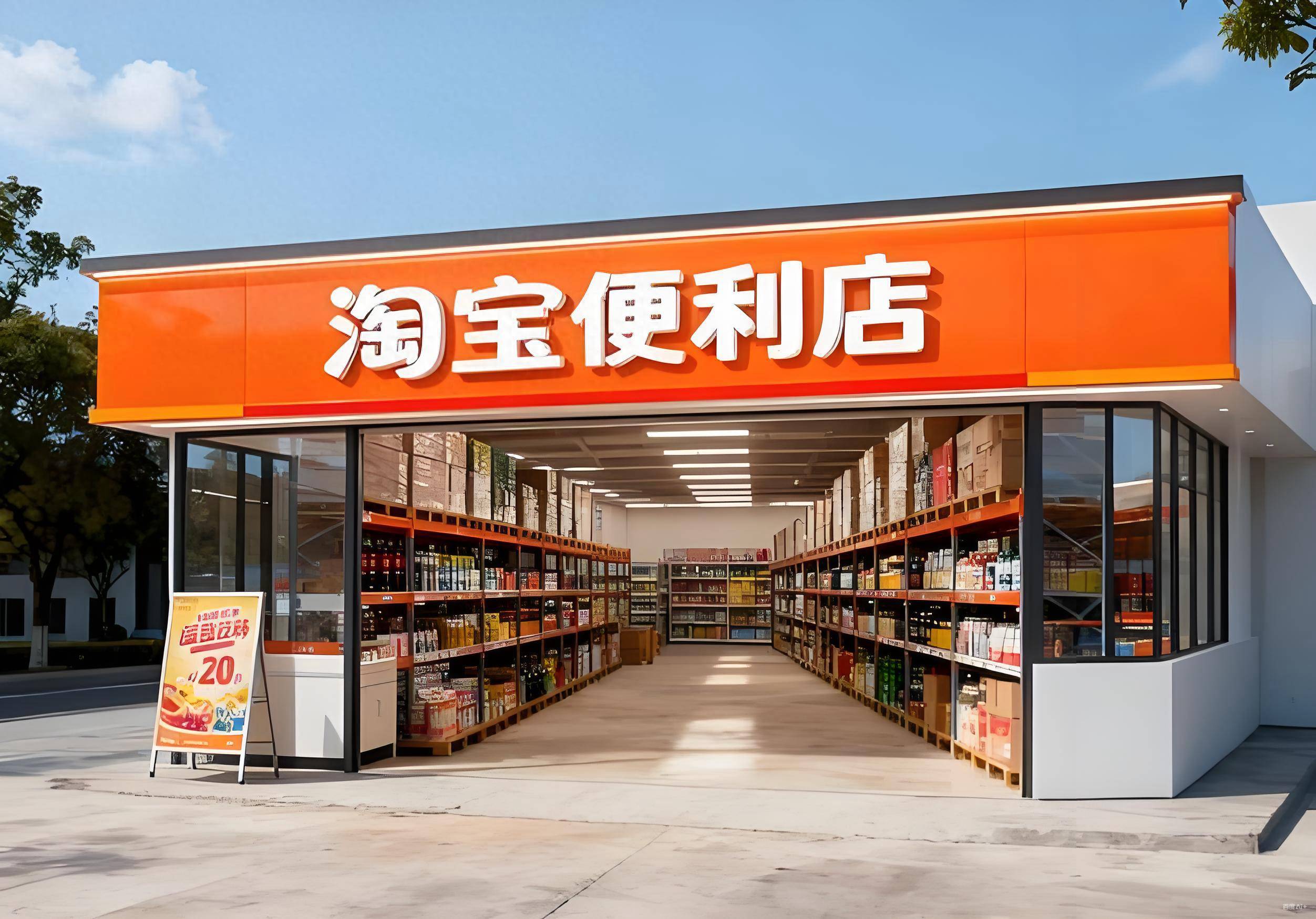
“淘宝便利店”作品著作权已获登记
Qi Cha Cha· 2025-11-11 09:20
Core Points - Taobao (China) Software Co., Ltd. has registered the copyright for "Taobao Convenience Store," categorized as artwork [1] - On October 31, Taobao Flash Purchase officially launched the chain convenience brand "Taobao Convenience Store," which became available to consumers on November 1 [1]
淘宝便利店携20亿入局即时零售,行业格局面临重塑
Sou Hu Cai Jing· 2025-11-08 09:58
Core Insights - Taobao Flash has launched a new convenience store brand "Taobao Convenience Store," marking Alibaba's entry into the instant retail sector with a focus on "comprehensive offerings, 24-hour operation, and 30-minute delivery" [2] - This strategic move signifies a new phase in retail competition and indicates a deep restructuring of the industry value chain [2] Group 1: Business Model and Strategy - Taobao Convenience Store adopts a unique "brand authorization + supply chain empowerment" model, differentiating itself from traditional heavy asset operations [3] - The platform does not build warehouses or stores, nor does it compete with merchants for profits, instead granting brand usage rights to qualified merchants [3] - The first batch of Taobao Convenience Stores will have only 34 slots, with flagship and standard warehouses offering around 10,000 SKUs, approximately three times that of typical convenience stores [5] Group 2: Market Dynamics and Consumer Behavior - The instant retail market has shown significant growth, with 24-hour convenience stores on the platform increasing by over 50% year-on-year [6] - Consumer behavior is shifting from "planned shopping" to "instant response," with instant retail transaction volume growing in double digits in the first eight months of the year [6] - The focus of competition is shifting from price wars to service reliability, with fulfillment capability becoming a core competitive factor [6] Group 3: Industry Restructuring - The rapid development of instant retail is leading to a reallocation of product power, moving away from traditional retail fee policies [7] - Retail strategies may evolve into a combination of 50% private label, 25% differentiated products, and 25% leading brands [7] - Many offline retail stores need to upgrade to an integrated "store-warehouse" model to adapt to new business formats [7] Group 4: Supply Chain Opportunities - Upstream supply chain enterprises are facing significant opportunities, with companies like Taian North Washing Products Co., Ltd. meeting the demands of instant retail channels [8] - Taobao Flash plans to invest 2 billion yuan within a year to assist merchants in building quality warehouses and enhancing logistics [8] - The competition for product power is reigniting, with manufacturers capable of rapid response and quality assurance becoming crucial in the new retail ecosystem [8] Group 5: Future Outlook - The retail industry is in a constant state of evolution, with the next three years likely to see companies that can achieve "30-minute delivery" and "precise demand matching" dominate the trillion-level instant retail market [9] - Strong supply chain capabilities will be a key factor in determining the outcome of this competitive landscape [9]