神玑NX9031智驾芯片

Search documents
看懂这些关键领域,在2026年捡回「上行」信心
36氪· 2025-12-20 10:27
Core Insights - The article discusses the impact of AI on the workplace by 2025, highlighting both opportunities and challenges for job seekers and employers [5][6]. Group 1: AI and Job Market Dynamics - AI is expected to revolutionize job roles, but it also poses risks of job displacement, particularly for those in roles that can be automated [5]. - The emergence of "super individuals" in the workforce may lead to reduced job opportunities for others, as increased productivity from these individuals can displace multiple workers [5]. Group 2: Employer Branding and Recruitment Trends - There is a lack of investment in employer branding among companies, as many prioritize product performance over employee satisfaction [6]. - Companies are increasingly seeking "versatile talents" by expanding job descriptions, which may undermine the value of teamwork and specialized roles [6]. Group 3: Industry-Specific Insights - The advanced manufacturing sector is experiencing a surge in investment, particularly in robotics and 3D printing, with significant growth in talent demand [9]. - The chip manufacturing industry is accelerating its domestic production capabilities, with a reported 90% yield rate for new processes, indicating a strong push towards self-sufficiency [9]. Group 4: Employment Trends and Challenges - The article notes a structural talent shortage in various sectors, including robotics and chip manufacturing, with a reported talent gap exceeding 300,000 in the semiconductor industry [9]. - The article emphasizes the need for companies to adapt to changing market demands and invest in employee development to remain competitive [6][9].


电厂 | 李斌实现盈利目标的关键:新一代蔚来ES8只要29.88万
Xin Lang Cai Jing· 2025-09-25 12:28
Core Insights - NIO aims to achieve profitability in Q4 2023, a goal met with skepticism from the market [1] - The company has raised $2.16 billion in financing to alleviate financial pressures [1] - NIO Day was held earlier than usual, reflecting concerns about the company's future [1] Financial Performance - NIO's revenue continued to grow in Q2, but losses exceeded 5.1 billion yuan, higher than the same period last year [1] - The company has a production capacity of only 40,000 vehicles for the year, which has already been fully booked [1][13] Product Development - The new ES8 was launched at a starting price of 299,800 yuan, significantly lower than the previous generation [1][15] - NIO has invested over 60 billion yuan in R&D over the past decade, with 18 billion yuan specifically in charging and battery swap technology [3][4] - The self-developed NX9031 chip can replace four NVIDIA Orin-X chips, reducing costs by 20,000 yuan [6] Market Strategy - NIO is focusing on a multi-brand strategy, with offerings across various price segments from 100,000 to 800,000 yuan [8] - The company emphasizes the importance of user feedback and learning from competitors [9] - The new L90 model has seen strong demand, with over 10,000 units delivered in its first month [9][10] Future Outlook - NIO's path to profitability in Q4 appears clearer following recent developments and product launches [17] - The company plans to introduce the ES9 and L80 models to strengthen its SUV lineup [16]

蔚来新ES6,小号ET9?
电动车公社· 2025-05-17 15:56
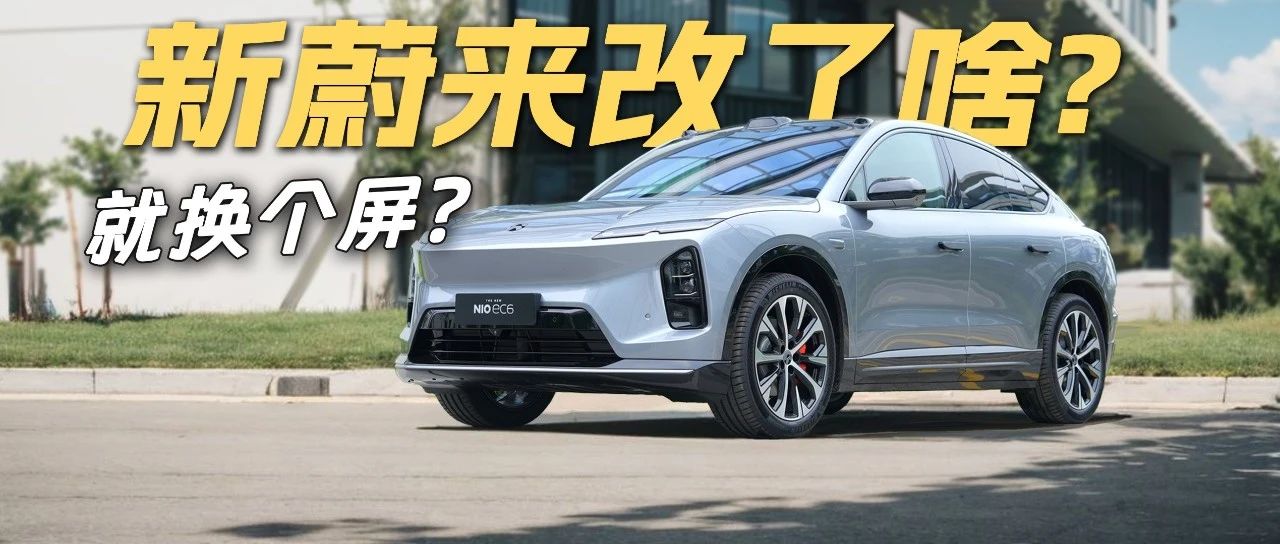
Core Viewpoint - NIO has launched the new ES6/EC6 models with starting prices of 338,000 and 358,000 yuan respectively, emphasizing an upgrade strategy of "more features without increasing price" [1][8]. Group 1: Product Features - The new models have transitioned to the NT2.5 platform, incorporating highly requested features similar to the ET9, such as the 1000 TOPS computing power of the Shenqi NX9031 intelligent driving chip, which enables urban assisted driving and emergency autonomous parking [8]. - Upgrades include a shift to a gear lever design, a 15.6-inch 2K horizontal screen, expanded head-up display area, and enhanced Nomi 3.0 system, with standard features like front seat ventilation and massage, as well as heated steering wheel [8][10]. Group 2: User Experience - Initial user experiences suggest that many enhancements are not immediately visible on the specifications sheet but significantly improve user satisfaction during actual vehicle use [10]. - The ES6/EC6 models are positioned as key products for NIO, with expectations to maintain monthly sales above 20,000 units [10].
「智驾」变「辅助」,亮起的不只是安全黄灯?|氪金·硬科技
3 6 Ke· 2025-05-06 08:03
Core Viewpoint - The rapid advancement of "intelligent driving" has been halted due to regulatory measures following the Xiaomi SU7 accident, which restricts the promotion and functionality of L2 systems [1] Group 1: Regulatory Changes - The Ministry of Industry and Information Technology has issued regulations limiting the promotion of L2 systems, prohibiting terms like "takeover" and disallowing features that the driver cannot fully control [1] - Xiaomi has renamed its "intelligent driving" feature to "assisted driving" on its SU7 order page following the regulatory changes [2] Group 2: Financial Impact and Market Reaction - Prior to the accident, several new energy vehicle companies, including Xiaomi and BYD, raised significant capital through share placements, with Xiaomi and BYD each raising approximately HKD 42.5 billion and HKD 43.5 billion respectively [3] - Following the announcement of these placements, BYD's stock fell over 7%, Xiaomi lost nearly HKD 100 billion in market value in a single day, and NIO's stock dropped over 8% [3] - The cost of intelligent driving systems constitutes a significant portion of vehicle expenses, with R&D for intelligent driving accounting for 38% of total expenditures for car manufacturers last year [3] Group 3: Cost Challenges in Intelligent Driving - The overall cost of intelligent driving systems ranges from several thousand to tens of thousands of yuan, making up 5% to 15% of total vehicle costs [5] - Companies like BYD and NIO are investing heavily in R&D for intelligent driving, with BYD planning to invest up to CNY 100 billion and NIO projecting CNY 46 billion by the end of 2024 [3][6] - The reliance on external suppliers for certain components can increase costs, as seen with the example of Li Auto and BYD's strategies [5][6] Group 4: Market Strategy and Consumer Perception - The push for intelligent driving in mid-range models aims to reduce costs and expand market reach, with BYD's recent strategy to include high-level intelligent driving features in lower-priced models [10][11] - The penetration rate of L2+ intelligent driving in the 10-20 million yuan price range is currently below 0.2%, indicating a significant opportunity for growth [11] - Consumer understanding of intelligent driving remains limited, which poses challenges for adoption, especially in lower-tier models where features may be downgraded [12]


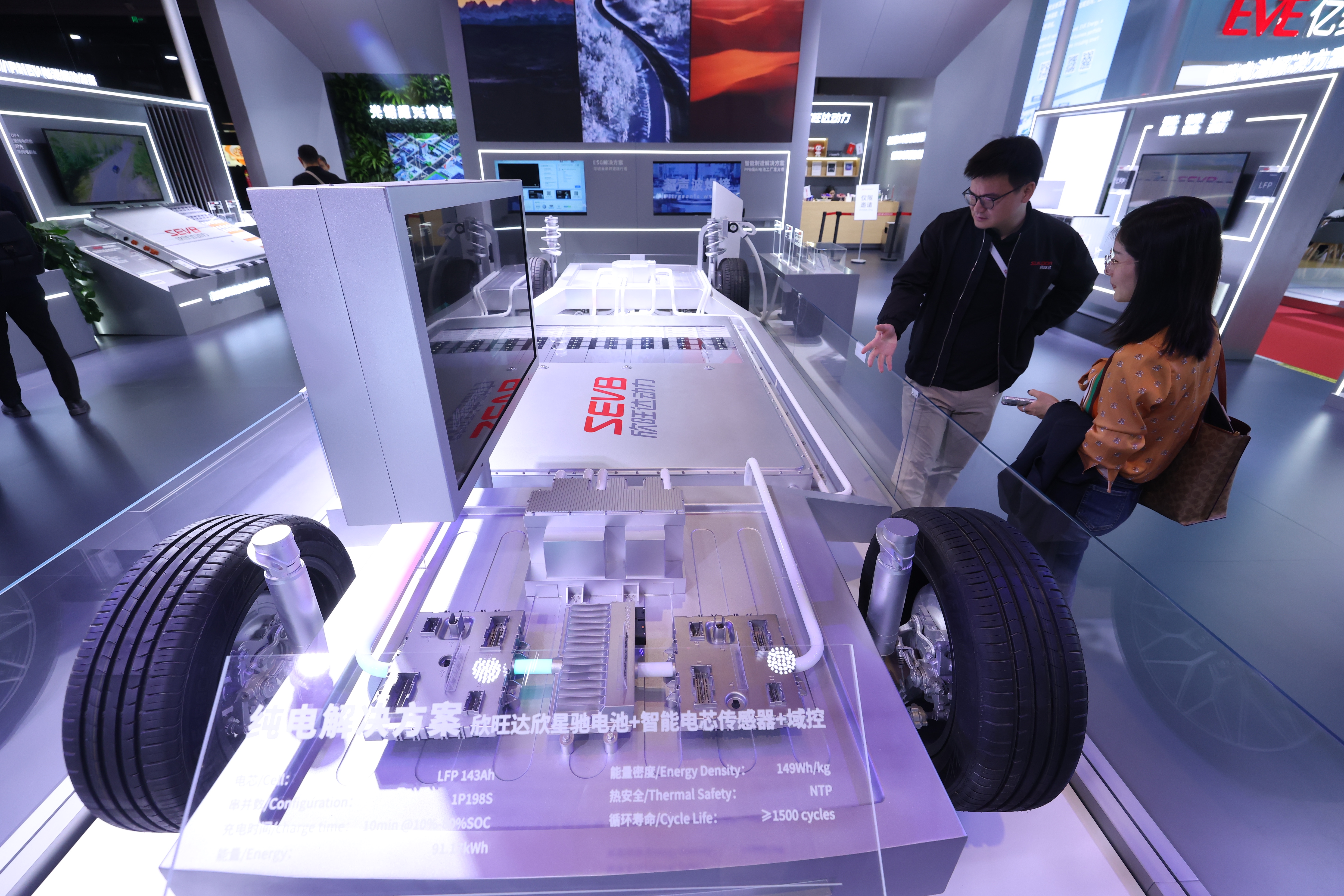
在中国创新,为全球交付:第一财经记者盘点上海车展十大热门技术
Di Yi Cai Jing· 2025-04-30 01:52
Core Viewpoint - The Chinese automotive industry has transitioned to a global innovation leader in new energy and intelligent technology, marking the beginning of the "Joint Venture 2.0 Era" where China innovates for global delivery [1]. Group 1: Industry Overview - The 2025 Shanghai Auto Show, celebrating its 40th anniversary, refocuses on "technological innovation" as the Chinese automotive industry showcases its strong international market appeal [1]. - The event attracted exhibitors and consumers from around the world, highlighting the robust demand in the Chinese market and the high-quality supply of Chinese technological innovations [1]. Group 2: Featured Technologies - **XWANDA Smart Battery Cell 2.0 Technology**: Integrates multi-dimensional smart sensors into a single cell, ensuring data control throughout the battery's lifecycle, enhancing safety warnings, and providing a battery passport [6]. - **Marelli OLED TFT Pixelated Tail Light**: The world's first pixelated tail light using OLED TFT technology, capable of conveying vehicle status and intentions through dynamic images, and seamlessly integrating vehicle-to-everything (V2X) communication [8]. - **Faurecia Transparent Door Technology**: Utilizes advanced projection technology to display external conditions in real-time, providing danger warnings and dynamic ambient lighting for passengers [11]. - **Changan Automobile Solid-State Battery Technology**: The upgraded Jinzhongzhao 2.0 battery features a high energy density of 400 Wh/kg and a wide temperature range (-40 to 80°C), with a range exceeding 1500 km expected by 2026 [14]. - **Dongfeng Motor's Tianyuan Intelligent Model**: A core enterprise-level model that reduces new vehicle development cycles by over 35% and lowers collaboration costs by 30% [18]. - **Great Wall Motors 4.0T V8 Engine**: Combines performance and fuel efficiency, designed for high-end products and specialized off-road applications [22]. - **Pony.ai Seventh-Generation Autonomous Driving System**: Features a complete hardware and software solution with a 70% cost reduction compared to previous generations [23]. - **NIO's NX9031 Intelligent Driving Chip**: The world's first mass-produced 5nm intelligent driving chip, offering performance equivalent to high-end NVIDIA chips [25]. - **Black Sesame's Intelligent Safety Base Solution**: Focuses on hardware-level safety isolation to meet the highest safety standards [27]. - **Chery's Humanoid Robot Mornine Gen-1**: A robot with advanced perception and interaction capabilities, featuring a height of 167 cm and a weight of 65 kg, equipped with multiple sensors for autonomous navigation [31].