
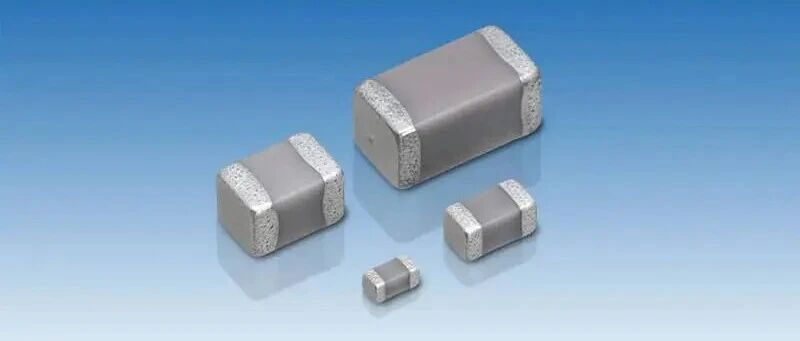
积层陶瓷电容(MLCC)

Search documents
电子行业双周报(2026、01、23-2026、02、05):谷歌业绩超预期,上游多个材料调涨-20260206
Dongguan Securities· 2026-02-06 06:06
Investment Rating - The report maintains an "Overweight" rating for the electronic industry, indicating an expectation that the industry index will outperform the market index by more than 10% over the next six months [31]. Core Insights - Google's Q4 performance exceeded market expectations, with a 17% year-on-year growth in search revenue and a 48% increase in cloud computing revenue, driven by the acceleration of enterprise-level AI products [27][19]. - The passive components industry is experiencing price increases, with multilayer ceramic capacitors (MLCC) seeing price hikes of up to 20% as demand continues to rise [19][27]. - The SW electronic sector's PE TTM (excluding negative values) is at 62.07 times, placing it in the 97.56th percentile over the past decade, indicating high valuation levels [9][14]. Market Review and Valuation - The SW electronic sector has seen a cumulative decline of 6.81% over the past two weeks (01/23-02/05), underperforming the CSI 300 index by 5.68 percentage points, ranking 31st among the Shenwan industries [9][11]. - In February, the sector has declined by 4.70%, again underperforming the CSI 300 index by 3.94 percentage points, ranking 29th [9][11]. - Year-to-date, the sector has increased by 5.31%, outperforming the CSI 300 index by 4.44 percentage points, ranking 18th [9][11]. Industry News - Apple's Q1 FY2026 revenue grew by 16% year-on-year, with iPhone sales revenue increasing by 23%, surpassing analyst expectations [19]. - Anthropic's new AI model, Claude Opus 4.6, shows enhanced programming capabilities and can generate high-quality professional outputs, significantly reducing the time required for financial analysis tasks [19]. - Recent price increases in upstream materials, including copper-clad laminates and electronic fabrics, are expected to persist due to the current supply-demand dynamics [27]. Company Announcements - Shengyi Technology expects a net profit of 3.25 to 3.45 billion yuan for 2025, representing a year-on-year increase of 87% to 98% [19]. - Luxshare Precision's board approved a foreign exchange derivatives trading plan, allowing transactions up to 4.9 billion USD over three years [20]. Industry Data - Global smartphone shipments reached 336 million units in Q4 2025, reflecting a year-on-year growth of 2.28% [21]. - In December 2025, China's smartphone shipments totaled 22.87 million units, a decline of 29.40% year-on-year [21]. - Liquid crystal panel prices for various sizes have shown slight increases, with 32-inch panels priced at 35 USD, reflecting a month-on-month change of 1 USD [24]. Weekly Perspective - Google's Q4 results indicate a significant increase in AI-driven search queries and cloud services, with capital expenditures expected to exceed market forecasts, suggesting ongoing benefits for the Google chain [27].


MLCC 现货价飙升 20%
是说芯语· 2026-02-05 01:09
Core Viewpoint - The passive components industry is experiencing a price increase, particularly in multilayer ceramic capacitors (MLCC), with some distributors in mainland China raising spot prices by up to 20% [2][3]. Group 1: Price Trends - The price increase trend includes tantalum capacitors, chip resistors, magnetic beads, and MLCC, with industry expectations for improved performance from related manufacturers [3]. - Tantalum capacitors have seen price hikes of 20% to 30% due to high demand from AI server applications, leading to a supply-demand imbalance [3]. - MLCC is expected to follow suit in price increases, supported by a significant rise in demand as system designs adapt to include more MLCCs [4]. Group 2: Market Dynamics - The dependency on tantalum capacitors in AI devices has led to a design shift towards using a combination of tantalum capacitors and MLCCs to mitigate supply risks and control costs [4]. - The demand for MLCC is no longer just a reactive response to price increases but is now driven by structural demand expansion, particularly in AI applications [4]. - For the company Yageo, tantalum capacitors account for approximately 18% to 22% of revenue, while MLCC contributes about 18% to 20% [4].

这些芯片,继续涨价
半导体行业观察· 2026-02-04 01:38
Group 1: Memory Market Insights - The general manager of Winbond, Chen Peiming, announced that prices are expected to continue rising, with contract prices for this and next season maintaining similar increases as Q4 of last year [2] - Despite rising prices, demand remains strong, with customers eager to secure production capacity, leading to full bookings for both existing and new capacities through 2027 [2] - The memory market is described as "very good," with Winbond planning to increase prices quarterly while customers are willing to accept these increases [2] Group 2: DRAM and Flash Memory Production - Winbond is expanding production capacity at its Kaohsiung facility, with DRAM installations expected to begin in mid-June, while Flash memory installations will start even earlier [2] - There is a significant supply shortage in DDR4, prompting some customers to downgrade to DDR3, but Winbond aims to maximize output, particularly focusing on the growth potential of LPDDR4 [2] Group 3: Passive Components Price Trends - Passive components, including MLCCs, are experiencing price increases, with recent adjustments in the Chinese market showing price hikes of up to 20% [3] - Major Taiwanese manufacturers like Yageo and Walsin are expected to follow suit with price increases in their contract prices due to the overall upward trend in passive component pricing [3][4] Group 4: Market Dynamics for Passive Components - The demand for tantalum capacitors has surged due to their adoption in high-end AI servers, leading to significant price increases of 20-30% for large-sized polymer tantalum capacitors [4][5] - The increasing use of MLCCs is attributed to their small size and reliability, making them essential in high-density AI server applications [4] Group 5: Financial Outlook for Key Players - Yageo's revenue from tantalum capacitors is approximately 18-22%, with MLCCs contributing 18-20% to its revenue, indicating a diversified product line benefiting from current market trends [5] - Japanese companies Murata and TDK have also reported positive financial forecasts, with Murata's order-to-shipment ratio exceeding 1 for five consecutive quarters, indicating strong demand [5][6]
文晔,又出手了
是说芯语· 2025-07-17 09:30
Core Viewpoint - The article discusses the strategic share exchange between leading global chip distributor Wun-Yeh and Taiwan's largest passive component distributor, Nidec, highlighting the benefits and implications of this partnership for both companies in the semiconductor industry [2][7][11]. Group 1: Share Exchange Details - Wun-Yeh announced a share exchange with Nidec, increasing its stake in Nidec to 36% at a 21% premium, while Nidec's stake in Wun-Yeh rises to 5% [3][5]. - The share exchange ratio is approximately 1 share of Nidec for 0.668 shares of Wun-Yeh, with both companies maintaining independent operations post-exchange [3][5]. - This is not the first collaboration between the two; Wun-Yeh previously invested 13.2 billion NTD in Nidec in 2022, becoming its largest single shareholder [5][12]. Group 2: Strategic Rationale - The share exchange aims to deepen strategic cooperation, allowing both companies to leverage each other's strengths without cash transactions [9][11]. - The partnership is expected to enhance operational performance and shareholder value by expanding market reach and improving service to global suppliers and customers [12][13]. - Wun-Yeh's experience in supply chain management and Nidec's established market presence are anticipated to create synergies in the passive components sector [12][19]. Group 3: Market Position and Growth - Wun-Yeh has been actively expanding through acquisitions, achieving significant revenue growth from 144.15 billion NTD in 2016 to 353.15 billion NTD in 2020, and further to 571.2 billion NTD in 2022 [18][19]. - The company is projected to reach 959.43 billion NTD in revenue by 2024, marking a 61.38% year-on-year increase, and is positioned as the leading global chip distributor with a market share of 12.2% [19][23]. - The collaboration with Nidec is seen as a strategic move to enhance Wun-Yeh's presence in the passive components market, which has higher profit margins compared to traditional IC distribution [20][21]. Group 4: Future Outlook - The article suggests that the partnership may help Wun-Yeh mitigate potential losses from the cancellation of its agency rights with ADI and diversify its market presence [21]. - As the third quarter approaches, Wun-Yeh is optimistic about maintaining strong performance, driven by AI applications and increased demand in the mobile sector [23][24]. - The success of this partnership and Wun-Yeh's ability to join the "trillion club" in revenue will be closely watched in the coming months [25].

芯片分销商老大文晔,又出手了
芯世相· 2025-07-16 06:31
Core Viewpoint - The article discusses the strategic share exchange between leading global chip distributor Wenye and Taiwan's largest passive component distributor, Ritek, highlighting the benefits and implications of this partnership for both companies in the semiconductor industry [3][4][8]. Group 1: Share Exchange Details - On July 15, Wenye announced a share exchange with Ritek, increasing its stake in Ritek to 36% at a 21% premium, while Ritek's stake in Wenye rises to 5% [3][5]. - The share exchange ratio is approximately 1 share of Ritek for 0.668 shares of Wenye, with both companies maintaining independent operations post-exchange [5][12]. - This is not the first collaboration between the two; Wenye previously invested 13.2 billion NTD in Ritek in 2022, becoming its largest single shareholder [7][8]. Group 2: Strategic Motives - The share exchange serves to deepen the strategic alliance between Wenye and Ritek, allowing both to share growth benefits while reducing cash pressure [10][12]. - The primary motive for this exchange aligns with forming a strategic alliance to enhance business development, rather than cash transactions [9][10]. - Wenye aims to expand its market presence in passive components, an area where Ritek has significant expertise and market share [12][24]. Group 3: Market Position and Growth - Wenye has been actively expanding through acquisitions, achieving a revenue increase from 144.15 billion NTD in 2016 to 353.15 billion NTD in 2020, effectively doubling its revenue in five years [17]. - Following the acquisition of Fuchang, Wenye's revenue surged to 959.43 billion NTD in 2024, marking a 61.38% year-on-year increase [18][20]. - Wenye's market share in global electronic component distribution reached 12.2%, with a leading position in the Asia-Pacific region at 14.5% [20][24]. Group 4: Future Outlook - The partnership with Ritek is expected to enhance Wenye's capabilities in the passive components market, which has higher profit margins compared to traditional IC distribution [24]. - Despite challenges such as currency fluctuations and tariffs, Wenye anticipates strong performance in the upcoming third quarter, driven by AI applications and increased demand in mobile applications [25][26]. - The collaboration positions Wenye to potentially join the "trillion club" of companies with revenues exceeding 1 trillion NTD, alongside major players like Foxconn and TSMC [26][28].

全球第二大无源电子元件供应商国巨拟本月 16 日开始协商收购芝浦
Sou Hu Cai Jing· 2025-06-07 23:49
Group 1 - Yageo, the world's second-largest passive electronic component supplier, announced the acquisition of Shibaura Electronics, aiming for a "win-win" situation for both parties [1] - Yageo's chairman, Chen Taiming, stated that discussions regarding potential cooperation will take place in Tokyo on June 16, emphasizing that advanced technology will remain in Japan with stricter controls to prevent leakage [1] - Yageo's revenue last year was approximately $4 billion, and the company plans to expand its market presence, particularly in AI and automotive sectors through this acquisition [1] Group 2 - Yageo, established in 1977, is the largest manufacturer of chip resistors and tantalum capacitors, and the third-largest manufacturer of multilayer ceramic capacitors (MLCC) and inductors, with over 40,000 employees and annual revenue exceeding $4 billion [2] - Shibaura Electronics, founded in 1953, has become a major player in the thermistor market, employing over 4,800 people and generating annual revenue exceeding 32 billion yen [2]