
红木家具

Search documents
(新春见闻)边城浦寨马年上“新” 中越客商共赴 “春日之约”
Zhong Guo Xin Wen Wang· 2026-02-11 06:20
Core Viewpoint - The article highlights the vibrant atmosphere of the border town of Puzhai in Guangxi, China, during the Lunar New Year, showcasing the growing interaction and business opportunities between Chinese and Vietnamese merchants, particularly in the food and retail sectors [1][4]. Group 1: Business Development - The coffee shop "Hua Feng" run by a Vietnamese owner has been a staple in Puzhai for 16 years, offering unique Vietnamese cuisine and attracting both local and tourist customers [3][5]. - The town has seen an increase in Vietnamese merchants, with one-third of the shops operated by them, reflecting a blend of Chinese and Vietnamese cultures [4][5]. - Local entrepreneur Huang Yingzhi has expanded his business from two stores to seven, indicating a growing trend of investment and entrepreneurship in Puzhai, particularly in the context of cross-border trade [5]. Group 2: Cultural Exchange - Visitors, including tourists from China, express appreciation for the unique cultural experience offered in Puzhai, which allows them to enjoy Vietnamese flavors without leaving China [3][5]. - The article emphasizes the warmth of Sino-Vietnamese relations, as seen through the interactions between local residents and Vietnamese merchants, fostering both economic and social ties [5]. Group 3: Market Trends - The article notes a shift towards online sales for some businesses, as seen with Lin Shixiang, who has adapted to market changes by launching an online store to enhance brand visibility [5]. - The Vietnamese e-commerce sector is experiencing rapid growth, prompting local entrepreneurs to explore new opportunities in cross-border e-commerce following the Lunar New Year [5].

董宇辉直播间亿元沙发陷“代工”质疑,顾家家居回应
Qi Lu Wan Bao· 2025-12-30 09:38
Group 1 - The core point of the article highlights the record sales achieved by top streamer Dong Yuhui, with a single live stream generating sales of 3.56 billion yuan, including over 1 billion yuan from a single product by Kuka Home [1] - Kuka Home confirmed that the sofas sold during the live stream are self-manufactured and that the company is accelerating production to meet demand [1][3] - The company reported a total revenue of 15.012 billion yuan for the first three quarters of the year, reflecting an 8.77% year-on-year growth, with a net profit of 1.539 billion yuan, up 13.24% [4] Group 2 - Kuka Home's external cooperation is primarily used to alleviate production pressure and is limited to non-core products, ensuring that core products like sofas and custom furniture are designed and produced in-house [3] - In January 2024, Yingfeng Group became the controlling shareholder of Kuka Home, marking a significant change in control [4] - A nearly 2 billion yuan private placement plan was approved, which will increase the controlling shareholder's stake to 37.37%, aimed at strengthening core categories and investments in smart technology [4]


浇友谊之花 结合作硕果 “数”看东博会发展历程
Xin Hua Wang· 2025-09-17 02:16
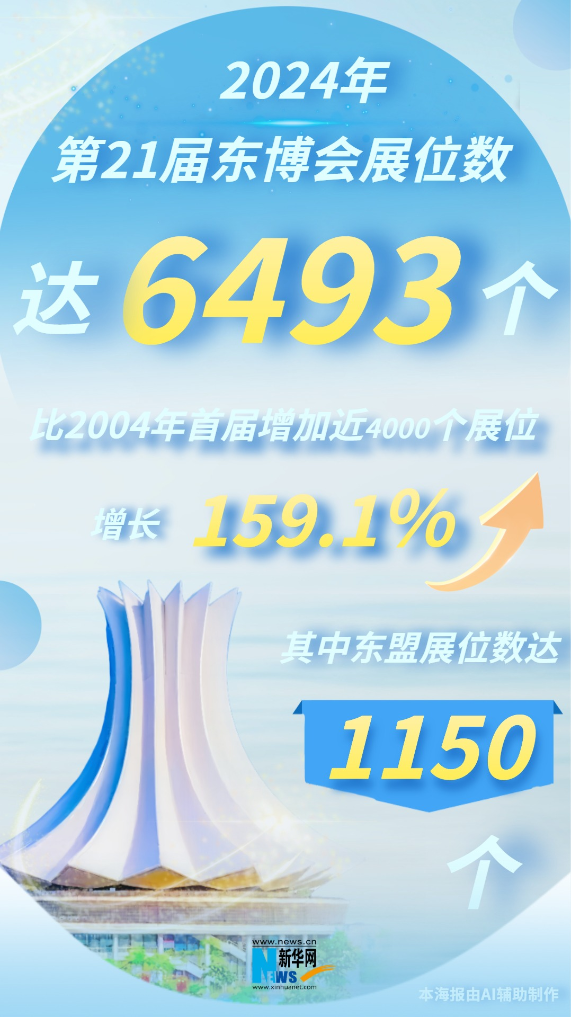
Core Insights - The China-ASEAN Expo (CAEXPO) has evolved into a significant economic and trade bridge between China and ASEAN countries since its inception in 2004, showcasing the robust growth and potential of bilateral trade and cooperation [1] Group 1: Growth Metrics - The total number of exhibition booths has increased from 2,506 in the first expo to 6,493 in 2024, with the newly added Guilin exhibition area contributing 1,093 booths [2] - The exhibition area has expanded significantly from 50,000 square meters in the first expo to 192,000 square meters in the 21st expo, marking a historical high and providing more opportunities for international display and exchange [4] - The number of participating enterprises has risen from 1,505 in 2004 to 3,300 in 2024, reflecting a growing enthusiasm among exhibitors [4] Group 2: Trade Growth - Bilateral trade between China and ASEAN has surged from $105.883 billion in 2004 to $982.34 billion in 2024, representing an increase of 827.7% [10] - The trade volume between Guangxi and ASEAN countries has also seen significant growth, from $1 billion in 2004 to 397.82 billion yuan in 2024, achieving a historical high [10] - The year-on-year growth rates for 2023 and 2024 were 22.8% and 17.2%, respectively, indicating a stable upward trend in trade [10] Group 3: Digital Transformation - The introduction of the "Cloud CAEXPO" in 2020 has attracted 9,473 enterprises over five sessions, averaging about 2,000 participants per session, demonstrating the platform's sustainability and engagement [7] - The total number of economic and trade activities reached 411, showcasing a shift from quantity to quality and enhancing the effectiveness of trade cooperation through digital services [7] Group 4: Diverse Exhibits - The expo has transitioned from showcasing specialty products to advanced processing and smart collaboration, featuring a wide range of exhibits from agricultural products to cutting-edge technology [12] - The 22nd CAEXPO will host 3,200 enterprises from 45 countries and regions, with a total exhibition area of 160,000 square meters, including a new 10,000 square meter AI pavilion [12] - Approximately 1,200 innovative products, including AI and AR technologies, will be presented, highlighting the expo's focus on technological advancement [12] Group 5: Future Outlook - The CAEXPO is entering a new phase aimed at deepening economic cooperation, promoting industrial synergy, and enhancing people-to-people connections, thereby contributing to a closer China-ASEAN community [14]
红木商品不可踩“红线”
Ren Min Wang· 2025-08-28 12:57
Core Points - The redwood furniture market is facing serious issues with counterfeit products and fraudulent certifications, leading to consumer deception and market disorder [1][3] - The definition of redwood furniture is strictly regulated, requiring compliance with national standards, yet many products do not meet these criteria [1][3] - The prevalence of fake certifications undermines the credibility of the industry, as some merchants acquire these certificates in bulk, further complicating consumer trust [3][4] Industry Summary - The high prices and scarcity of redwood furniture have led some merchants to exploit consumer ignorance, using deceptive practices to sell inferior products [3] - Recent media reports have highlighted the widespread nature of these fraudulent activities, prompting calls for stricter enforcement and oversight from regulatory bodies [3][4] - A joint investigation team has been established in Xianyou County to address these issues, with actions already taken to seize counterfeit products and investigate involved parties [3][4]
揭秘红木市场乱象:鉴定证书按斤卖一张0.8元 同款床报价差2.7万
Xin Jing Bao· 2025-08-25 00:43
Core Viewpoint - The redwood furniture market is facing significant issues with material misrepresentation and inflated pricing, leading to consumer complaints and market disorder [1][5][39]. Group 1: Market Issues - Consumers have reported complaints regarding redwood products, highlighting problems such as material discrepancies and inflated prices [1]. - In a comparison of redwood furniture prices, a significant price difference of 27,000 yuan was observed for the same specifications, with prices ranging from 18,000 yuan to 45,000 yuan [5]. - Some merchants are using inferior materials, such as Thai and Laotian wood, while claiming to sell higher-quality Burmese wood, which can reduce costs by up to 10,000 yuan per set [19][16]. Group 2: Quality and Authenticity Concerns - The quality of redwood furniture is often determined by craftsmanship and the amount of wood used, with some merchants employing "material theft" practices to cut costs [7][9]. - There is a distinction between "premium" and "common" products in the market, where visually similar items may have vastly different material qualities [9][14]. - Merchants are known to provide misleading certificates that do not specify the wood's origin, allowing them to evade responsibility for misrepresentation [11][30]. Group 3: Certification and Regulation - The certification process for redwood products is inconsistent, with some certificates lacking detailed information about the wood's origin, which can mislead consumers [37][28]. - There are reports of counterfeit certificates being sold cheaply, undermining the credibility of the certification process [48][50]. - Some businesses are exploiting consumer ignorance by selling low-quality products as high-value items, supported by dubious certification claims [41][53].
财经调查丨一张红木床差价27000元!央视曝光红木市场销售乱象→
Sou Hu Cai Jing· 2025-08-24 12:26
Core Insights - The article highlights consumer complaints regarding the redwood furniture market, specifically issues related to material discrepancies and inflated prices [1] Group 1: Market Behavior - There are significant price variations among different merchants for similar redwood furniture, with a notable example being a 1.8m x 2m Burmese rosewood double bed priced between 18,000 yuan and 45,000 yuan, resulting in a price difference of 27,000 yuan [1] - Merchants are reportedly engaging in practices such as "material theft" to reduce costs, leading to differences in quality and craftsmanship [1] Group 2: Quality Discrepancies - The market contains distinctions between "premium" and "ordinary" products, where items may appear similar externally but differ significantly in internal material quality [1] - The price difference for the same material furniture between premium and "stolen material" versions can approach 10,000 yuan per set [1]
产地造假、证书批发...总台《财经调查》揭秘红木市场销售的“障眼法”→
Sou Hu Cai Jing· 2025-08-24 12:12
Core Viewpoint - The redwood furniture market is experiencing significant issues with material misrepresentation and inflated pricing, leading to consumer rights violations and market disorder [1] Group 1: Market Issues - Numerous consumer complaints have emerged regarding the sale of redwood products, highlighting problems such as material discrepancies and excessive pricing [1] - In a comparison of redwood furniture prices, a significant price difference of 27,000 yuan was found for the same specifications, with prices ranging from 18,000 yuan to 45,000 yuan for a 1.8m x 2m double bed made of Burmese rosewood [5] - Some merchants are employing a "material theft" practice to reduce costs, which can lead to significant price differences for similar products [7][11] Group 2: Material Quality and Sourcing - The distinction between "premium" and "ordinary" redwood products is critical, as the internal material quality can vary significantly despite similar appearances [9] - Merchants are misrepresenting the origin of the wood, with some using Thai rosewood instead of the higher-quality Burmese rosewood to increase profit margins [15][19] - The cost of using Thai rosewood instead of Burmese can reduce the material cost by 10,000 yuan per set of furniture [19] Group 3: Certification and Accountability - Many merchants provide misleading certification that lacks specific details about the wood's origin, which allows them to evade responsibility for misrepresentation [30][37] - The inconsistency in certification practices raises concerns about the authenticity of the products being sold, with some certificates only indicating the type of wood without specifying the origin [36][39] - There are reports of counterfeit certificates being easily obtained, undermining consumer trust and complicating the verification process for buyers [52][56]

河北涞水:电商助农特产品走出大山
Zhong Guo Jing Ji Wang· 2025-08-22 04:47
Core Insights - The article highlights the efforts of Lai Shui County in Hebei Province to leverage media and e-commerce for rural revitalization, particularly focusing on the promotion of local agricultural products like hemp walnuts [1][2][3] Group 1: Media and E-commerce Initiatives - Lai Shui County has implemented a "media + market linkage" strategy to enhance the sales of local agricultural products, resulting in significant sales growth for hemp walnuts [1][2] - A specialized task force has been established to learn from advanced experiences in "media +" empowerment for rural revitalization, aiming to broaden perspectives and explore new cooperation models [2] - The county has organized over 50 events this year, including product exhibitions and competitions, to promote local specialties and train over 3,000 farmers and business personnel in e-commerce skills [2] Group 2: Product Market Expansion - Traditional industries in Lai Shui, such as hemp walnuts, cloisonné, copper hot pot, and redwood furniture, are expanding their market reach beyond the Beijing-Tianjin-Hebei region to southern markets like the Guangdong-Hong Kong-Macao Greater Bay Area [3] - The sales revenue of hemp walnuts has increased by over 100 million yuan compared to the same period last year, indicating strong market demand [3]
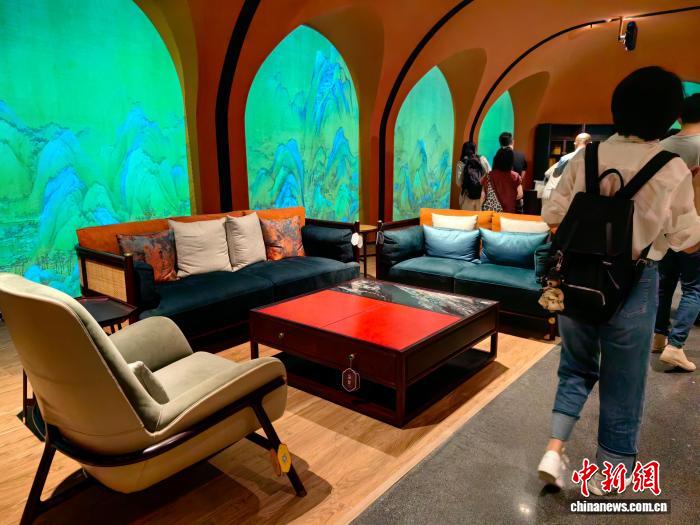
(活力中国调研行)“仙作”红木家具:从“顶天立地”到“铺天盖地”
Zhong Guo Xin Wen Wang· 2025-08-19 02:19
Core Insights - The "Xianzuo" redwood furniture industry in Xianyou County, Fujian Province, is experiencing significant growth, with the craft being recognized as a national intangible cultural heritage and a key player in the high-end redwood market, holding over 70% market share in China [1][2]. Industry Overview - The total output value of the Xianyou arts and crafts industry is projected to exceed 73 billion yuan in 2024, with classical furniture contributing over 50 billion yuan [2]. - The industry has evolved from traditional craftsmanship to incorporating modern design and technology, enhancing efficiency and reducing production costs [3][4]. Technological Advancements - The introduction of CNC equipment has reduced the production cycle of custom furniture by 40%, allowing for a more efficient production process [4]. - Over 60% of enterprises in Xianyou have adopted intelligent carving equipment, leading to a 30% decrease in labor costs and a doubling of production capacity [4]. Market Expansion - The industry is diversifying its sales channels, with a strong emphasis on online sales, including live-stream shopping, to reach a broader consumer base [6]. - The local economy reflects this shift, with over 2,300 craft enterprises and more than 22,000 individual businesses, employing over 200,000 people [4]. Craftsmanship and Quality - The commitment to quality and authenticity remains paramount, with artisans emphasizing the importance of producing genuine, high-quality products [6].
深圳再添离境退税口岸!打造离境退税标杆城市
Zheng Quan Shi Bao· 2025-07-31 08:37
Core Insights - Shenzhen has expanded its outbound tax refund ports to six, enhancing convenience and satisfaction for travelers [1][2] - The outbound tax refund scale in Shenzhen has surged, with sales and business volume increasing by 160% and 390% year-on-year respectively [2] - Shenzhen aims to become a benchmark city for outbound tax refunds, focusing on improving service quality and expanding refund store networks [3] Group 1: Outbound Tax Refund Expansion - Shenzhen has added Luohu Port as a new land port for outbound tax refunds, making it the port with the most refund and customs verification windows [1] - In the first half of the year, Luohu Port saw over 33.7 million inbound and outbound travelers, a year-on-year increase of 11.7%, accounting for 25.9% of the city's total [1][2] - The number of tax refund stores has exceeded 1,000, with 12 "immediate refund" business districts, ranking first in the country [2] Group 2: Service Improvement and Policy Support - The city has introduced a "one order, one package" model to streamline the refund process, reducing processing time by over 50% [2] - A cloud service platform for tax refunds has been launched, enabling "instant refund" capabilities [2] - National policies are being optimized to enhance visa processes and improve inbound travel convenience, signaling a push for high-quality tourism [2] Group 3: Future Development Plans - Shenzhen plans to accelerate the enhancement of outbound tax refund services and expand refund shopping consumption potential [3] - The city will continue to optimize the refund management mechanism and explore the establishment of more land tax refund ports [3] - There is a focus on increasing the scale of refund stores and diversifying the range of refundable products, including local heritage items [3]