
绿色服务

Search documents
商务部等9部门联合发文 强调培育绿色消费新增长点
Zheng Quan Ri Bao Wang· 2026-01-05 10:43
Core Viewpoint - The Ministry of Commerce and nine other departments have jointly issued a notice to promote green consumption during the "14th Five-Year Plan" period, aiming to enhance the green consumption incentive mechanism and foster a green low-carbon lifestyle for high-quality development [1][2]. Group 1: Green Consumption Initiatives - The notice outlines 20 specific measures across seven areas, including agricultural products, home appliances, and hospitality, to promote green consumption [1]. - It emphasizes the importance of enhancing the supply of green products, increasing the availability of green agricultural products, and promoting green home appliances and automotive consumption [1]. Group 2: New Growth Points in Green Consumption - The notice encourages the development of green supply chains, carbon footprint evaluations, and the promotion of green procurement, products, and packaging [2]. - It suggests the establishment of a universal green consumption points system that can be used both online and offline, along with the promotion of green product certification and standardization [2]. Group 3: Resource Efficiency and Recycling - The notice highlights the need for promoting green circular recycling, reducing single-use plastic products, and encouraging the reuse of waste materials [2]. - It advocates for a resource recycling system based on reduction, recycling, and reuse [2]. Group 4: Optimizing the Green Consumption Environment - The notice calls for the promotion of energy-saving facilities and the use of green electricity, as well as the advocacy of green consumption concepts among consumers [2]. - It emphasizes the importance of public awareness campaigns and community activities to promote green consumption and low-carbon living [2].
实施绿色消费推进行动!商务部等9部门联合出台通知
Sou Hu Cai Jing· 2026-01-05 10:41
Core Viewpoint - The Ministry of Commerce and nine other departments have jointly issued a notice to implement green consumption promotion actions, aiming to accelerate the green transformation of consumption patterns and expand green consumption during the 14th Five-Year Plan period [1] Group 1: Specific Measures - The notice outlines 20 specific measures across seven areas, including enriching the supply of green products, enhancing green service consumption, innovating green consumption models, promoting green recycling, optimizing the green consumption environment, solidifying the foundation for green consumption, and increasing policy support [3][4] - It emphasizes the importance of high-quality development by focusing on quality supply in the livelihood sector, promoting green agricultural products, green home appliances, and green automotive consumption [4] Group 2: New Growth Points - The notice encourages the creation of new growth points in green consumption by developing green supply chains, conducting carbon footprint evaluations, and promoting green procurement, products, and packaging [4] - It also suggests the establishment of a universal green consumption points system that can be used both online and offline, along with the promotion of green product certification and standardization of green consumption points collection at retail [4] Group 3: Environmental Optimization - The notice calls for the optimization of the green consumption environment by promoting energy-saving facilities, prioritizing the use of green electricity, and advocating for green travel practices among consumers [5] - It highlights the need for public awareness campaigns to encourage community activities focused on green consumption and low-carbon living [5] Group 4: Policy Support - The Ministry of Commerce plans to work with relevant departments to guide local efforts in promoting green consumption, summarizing successful experiences and practices to further expand green consumption and support comprehensive green transformation in economic and social development [5]

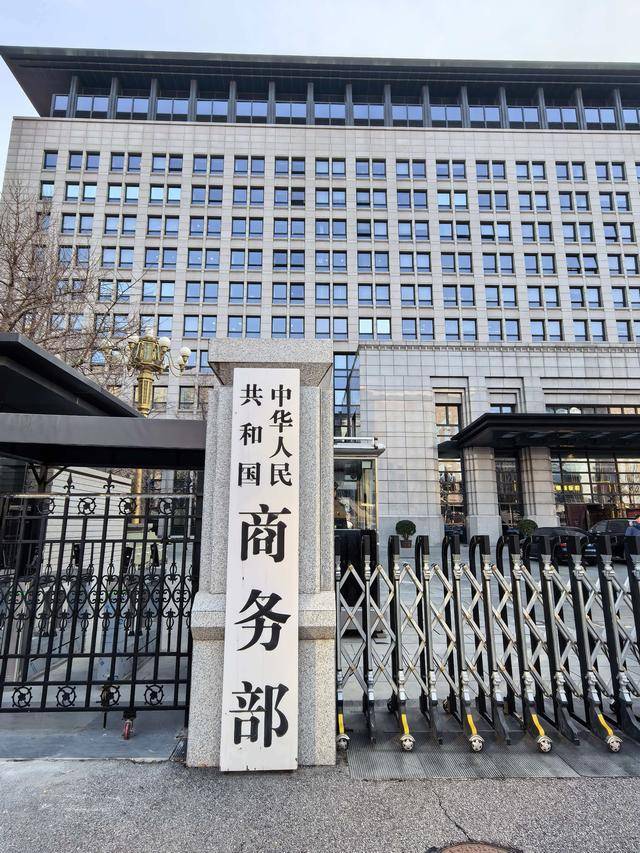
中国九部门发文实施绿色消费推进行动
Zhong Guo Xin Wen Wang· 2026-01-05 08:35
Core Viewpoint - The Chinese Ministry of Commerce and nine other departments have jointly issued a notice to implement green consumption initiatives during the "14th Five-Year Plan" period, outlining 20 specific measures across various sectors to promote a green and low-carbon lifestyle [1][2]. Group 1: Green Consumption Incentives - The notice emphasizes the establishment of a green consumption incentive mechanism, proposing seven areas of focus and 20 specific measures [1]. - It highlights the need to enrich the supply of green products, increase the supply of green agricultural products, promote green home appliances and home decoration, and encourage green consumption in the automotive sector [1]. Group 2: New Growth Points in Green Consumption - The notice aims to cultivate new growth points in green consumption by creating green supply chains and encouraging companies to conduct carbon footprint evaluations of their supply chains [1]. - It promotes green procurement, green products, and green packaging, and encourages the establishment of a universal green consumption points system that can be used both online and offline [1]. Group 3: Resource Recycling and Environmental Optimization - The notice stresses the importance of promoting green circular recycling, reducing the use of single-use plastic products, and developing a resource recycling system based on "reduction—recycling—reuse" [2]. - It calls for optimizing the green consumption environment by promoting energy-saving facilities, prioritizing the use of green electricity, and advocating for green travel and the use of low-carbon products [2].
杨志成:擦亮中国式现代化的鲜明底色
Jing Ji Ri Bao· 2025-12-26 00:03
Group 1: Core Perspectives - Green development is a prominent feature of Chinese-style modernization, emphasizing the need for a comprehensive green transformation in economic and social development as outlined in the 14th Five-Year Plan [1] - The Central Economic Work Conference has prioritized "adhering to 'dual carbon' leadership and promoting comprehensive green transformation" as a key task for the upcoming year [1] Group 2: Ecological Civilization Awareness - Enhancing ecological civilization awareness is crucial for fostering a societal atmosphere that supports environmental protection, requiring the internalization of ecological concepts [2] - There is a need to strengthen public consciousness regarding ecological protection and to integrate ecological education into the national education system [2] Group 3: Industrial Green Transformation - Accelerating the green transformation and upgrading of industries is essential, as industries are significant contributors to energy consumption and pollution [3] - The number of national-level green factories has increased to 6,430, accounting for approximately 20% of total manufacturing output, indicating progress in industrial structure transformation [3] Group 4: Promoting Green Lifestyles - Green development encompasses both production and lifestyle changes, necessitating the promotion of green consumption and living practices [4] - Encouraging the adoption of green products and services, as well as enhancing the supply of such offerings, is vital for fostering a low-carbon lifestyle [4]
世界贸易组织报告指出:全球价值链经历再全球化重塑
Jing Ji Ri Bao· 2025-12-25 02:19
Core Insights - The World Trade Organization's report indicates a transformation in global value chains towards "re-globalization," driven by technological advancements, green transitions, and geopolitical changes [1][2] Group 1: Trade Structure and Dynamics - "De-globalization" is not occurring; instead, "re-globalization" is forming, with global value chain trade still accounting for approximately 46% of global trade, down from a peak of 48% in 2022 but still at a high level [2] - Future trade volumes are not expected to decline systematically, but trade structures, routes, and rules will continue to evolve, leading to a growth model characterized by restructuring rather than rapid expansion [2] - The importance of services and digital trade is expected to rise significantly, with digitalization reshaping value creation methods and increasing the share of services in global value chains [2] Group 2: Policy and Governance Influences - Trade is increasingly driven by policy rather than solely by costs, with industrial policies, green regulations, and security reviews deeply influencing trade flows [2] - The report highlights over 180 "targeted trade agreements" focused on digital trade, critical minerals, and green sectors, indicating a shift from comprehensive agreements to problem-oriented cooperation in trade governance [2] Group 3: Environmental and Technological Shifts - Carbon emissions responsibilities are now integrated into value chain decisions, with green policies directly affecting corporate site selection, trade structures, and intermediate goods division [3] - The green industry is undergoing restructuring, with value chains moving towards "green, circular, and traceable" models, emphasizing recycling, reuse, and local processing [3] - Digital technology is lowering the barriers for participation in global value chains, enabling small and medium-sized enterprises to integrate more deeply into multinational value chains [3]
全球价值链经历再全球化重塑
Sou Hu Cai Jing· 2025-12-24 22:46
Core Insights - The World Trade Organization's report indicates a transformation in global value chains towards "re-globalization," driven by technological advancements, green transitions, and geopolitical changes [1][2] Group 1: Trade Structure and Dynamics - Global value chain trade remains significant, accounting for approximately 46% of global trade, despite a decrease from the 48% peak in 2022 [2] - Future trade growth is expected to be characterized by structural adjustments, technological upgrades, and deepened regional cooperation rather than rapid expansion [2] - The importance of services and digital trade is rising, with digitalization reshaping value creation and increasing the share of digitally deliverable services in global value chains [2] Group 2: Policy and Governance Influences - Trade is increasingly influenced by policy rather than solely cost factors, with industrial policies, green regulations, and security reviews significantly affecting trade flows [2] - The report highlights over 180 "targeted trade agreements" focusing on digital trade, critical minerals, and green sectors, indicating a shift from comprehensive agreements to issue-oriented cooperation [2] Group 3: Environmental and Technological Shifts - Carbon emissions responsibilities are now integrated into value chain decisions, with green policies directly impacting corporate site selection and trade structures [3] - The green industry is undergoing restructuring, with a focus on electric vehicles and critical minerals, leading to a reorganization towards "green, circular, and traceable" value chains [3] - Digital technology is lowering barriers for participation in global value chains, enabling small and medium enterprises to engage more deeply in cross-border value chains [3]
世界贸易组织报告指出——全球价值链经历再全球化重塑
Jing Ji Ri Bao· 2025-12-24 22:38
Core Insights - The World Trade Organization's report indicates a transformation in global value chains towards "re-globalization," driven by technological advancements, green transitions, and geopolitical changes [1][2] Group 1: Trade Structure and Dynamics - "De-globalization" is not occurring; instead, "re-globalization" is forming, with global value chain trade still accounting for approximately 46% of global trade, down from a peak of 48% in 2022 but still at a high level [2] - Future trade volumes are not expected to decline systematically, but trade structures, routes, and rules will continue to evolve, leading to a growth model characterized by restructuring rather than rapid expansion [2] - The importance of services and digital trade is expected to rise significantly, with digitalization reshaping value creation methods and increasing the share of services in global value chains [2] Group 2: Policy and Governance Influences - Trade is increasingly driven by policy rather than solely by costs, with industrial policies, green regulations, and security reviews deeply influencing trade flows [2] - The report highlights over 180 "targeted trade agreements" focused on digital trade, critical minerals, and green sectors, indicating a shift from comprehensive agreements to problem-oriented cooperation in trade governance [2] Group 3: Environmental and Technological Shifts - Carbon emissions responsibilities are now integrated into value chain decisions, with green policies directly affecting corporate site selection, trade structures, and intermediate goods division [3] - The green industry is undergoing restructuring, with value chains moving towards "green, circular, and traceable" models, emphasizing recycling, reuse, and local processing [3] - Digital technology is lowering the barriers for participation in global value chains, enabling small and medium-sized enterprises to integrate more deeply into cross-border value chains [3]
中经评论:发展服务贸易如何“补短锻长”
Jing Ji Ri Bao· 2025-10-11 00:42
Core Insights - China's service trade is projected to exceed $1 trillion for the first time in 2024, marking a historic high and providing greater certainty for global economic development [1] Group 1: Growth and Structural Changes - The service trade's total import and export volume surpassed $737 billion in the first eight months of this year, indicating robust growth [1] - Knowledge-intensive services are emerging as a new growth engine, with significant increases in exports of telecommunications, computer, and information services [2] - The travel service sector is experiencing a strong recovery, with the expansion of visa-free policies attracting more international tourists to China [2] Group 2: Technological Empowerment - The recent China International Service Trade Fair showcased advanced technologies such as AI and 5G/6G, highlighting their integration into various sectors like finance, education, and healthcare [2] Group 3: Current Challenges - Traditional service sectors like logistics and construction still dominate, while high-value services such as finance and legal services have a high dependency on imports [3] - The eastern region contributes nearly 80% to the national service trade, while the central and western regions, despite rapid growth, remain small in scale [3] - China's participation in global digital service trade standard-setting is below 15%, limiting its influence in key areas like data cross-border flow and digital taxation [3] Group 4: Policy Initiatives - Recent policies from the Ministry of Commerce and other departments aim to promote service exports through 13 specific measures targeting financing difficulties and data flow issues [4] - The focus is on supporting new business models like digital and green services, with a comprehensive policy framework to guide future development [4] - The development of high-quality service trade is closely linked to domestic demand expansion, encouraging the supply of quality services through innovative scenarios and business integration [4]
中机认检(301508) - 301508中机认检投资者关系管理信息20250429
2025-04-29 10:48
Group 1: Company Strategy and Initiatives - The company focuses on long-term development strategies, maintaining competitive advantages in pillar areas, and accelerating investments in strategic emerging industries and future industries, particularly in the "dual carbon" sector [3] - The company actively promotes the construction of an industry "dual carbon" ecosystem and has become a member of the China Internal Combustion Engine Carbon Neutrality Industrialization Alliance [3] - The company has been recognized as a green diagnostic service supplier in Beijing for 2024 and is listed among the first batch of "zero carbon factory" and "super energy-efficient factory" third-party service providers in Henan Province [3] Group 2: Workforce and Training - As of December 31, 2024, the company has 690 employees, with 455 in technical positions, accounting for 65.9% of the workforce, and 597 employees holding a bachelor's degree or higher, representing 86.5% [3] - The human resources department employs an integrated management model of "learning map + internal trainers + talent cultivation," utilizing an e-learning platform to develop training maps based on employee qualifications and career development needs [3] Group 3: Financial Performance - In Q1 2025, the company achieved a significant year-on-year improvement in gross margin, driven primarily by an increase in the revenue share of higher-margin testing services, which effectively diluted fixed costs [3] - Cost reduction and efficiency enhancement measures have begun to show results, with the company implementing refined cost control across the entire business chain, leading to reduced operational costs [3] Group 4: Growth Strategy - The company is considering external growth through mergers and acquisitions to implement its new "3+1+3" business strategy, with plans to establish an investment management department in 2024 [3] - The company aims to leverage its listing platform for strategic investments in areas such as new energy vehicle certification and testing, vehicle information security, urban rail communication safety, and unmanned ground equipment in civil aviation [3]