绿色能源产品

Search documents
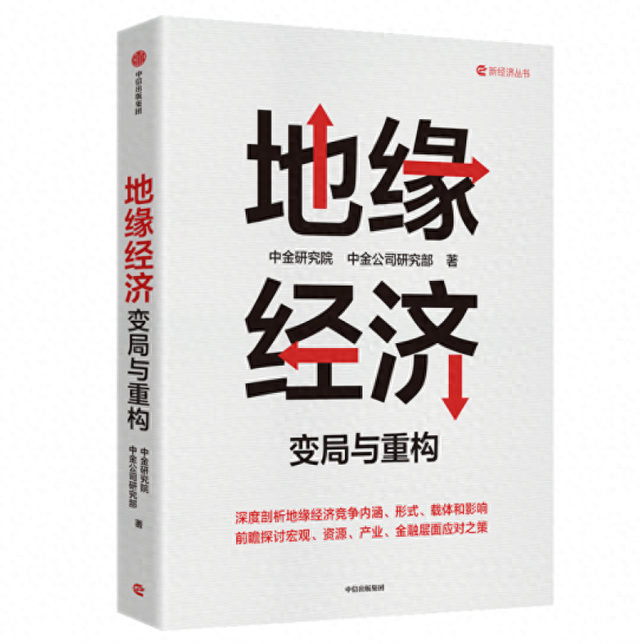
关于地缘经济的几点宏观思考
Hua Xia Shi Bao· 2026-02-04 09:01
Core Insights - Geoeconomics has evolved from an academic concept to a significant topic in global economics and policy, shifting from cooperation in globalization to competition driven by economic means [2] - The analysis by CICC Research Institute and CICC Research Department explores the implications of geoeconomic competition on macroeconomic policies and frameworks [2] Group 1: Historical Context and Policy Shifts - Since the late 1970s, economic liberalism, centered around neoclassical economics, has dominated, leading to globalization and financialization [3] - The macroeconomic policy framework has focused on controlling inflation, with a combination of inflation targeting, floating exchange rates, and trade and financial liberalization [4] - The rise of financial crises and increasing wealth disparity have prompted reflections on neoclassical economics, leading to a shift towards protectionism and increased financial regulation post-2008 financial crisis [5] Group 2: Geoeconomic Competition and Macroeconomic Policy - Geoeconomic competition emphasizes the importance of economies of scale in international trade and global supply chains, challenging traditional trade theories [6] - Technological advancements have become a core area of competition among nations, necessitating increased government involvement in research and development [7] - The non-neutrality of money may manifest in new forms, affecting economic structures and necessitating responses to supply chain risks and trade protection measures [8] Group 3: Supply Constraints and Global Trade Dynamics - The increase in supply constraints has implications for long-term economic growth, with economies of scale being a key driver of global trade expansion [9] - Geoeconomic competition has led to the use of trade protectionism and technology export restrictions, impacting the efficiency of economies of scale [10] - The competition between the U.S. and China highlights the significance of economic scale, with China as a trade surplus nation and the U.S. focusing on enhancing its manufacturing capacity [11] Group 4: Technological and Economic Shifts - The transition to green energy and the rise of the digital economy are significant trends that promote economies of scale, contrasting with the constraints imposed by geoeconomic competition [12] - The dynamics of technological advancement and innovation are critical in understanding the evolving landscape of geoeconomic competition [13] Group 5: Geoeconomic and Technological Interplay - The emergence of "geoeconomic technology" reflects the growing importance of technology in geoeconomic competition, with nations vying for dominance in strategic technologies [14] - The U.S. and China are engaged in intense competition over high-tech resources, impacting global supply chains and economic structures [15] Group 6: Fiscal Policy and Financialization - The trend of de-financialization is evident in the increasing number of financial sanctions and the rising role of fiscal policy in the global economy [18] - U.S. fiscal deficits have risen significantly, impacting monetary supply and economic demand, with implications for inflation and trade balances [19][20] - The increase in defense spending among nations reflects a shift in fiscal priorities, influencing demand without directly enhancing supply capabilities [21] Group 7: Economic Scale and Global Competition - The competition between large economies emphasizes the importance of absolute economic scale, with smaller economies facing challenges in achieving economies of scale [23] - The future of geoeconomic competition will be primarily centered around the U.S. and China, with implications for manufacturing, digital economy, and monetary finance [24] - China's manufacturing sector benefits from economies of scale, while the U.S. leverages its consumer market to influence global trade dynamics [25] Group 8: Conclusion and Future Outlook - The interplay between supply capabilities and demand dynamics is crucial for understanding the ongoing geoeconomic competition, with both nations needing to address structural weaknesses [27] - Fiscal expansion is necessary for maintaining economic stability and supporting the transition to new growth drivers in the face of geoeconomic challenges [28]

四川长虹(600839.SH):目前不涉及商业航天领域
Ge Long Hui· 2025-12-18 08:32
Group 1 - The core viewpoint of the article is that Sichuan Changhong (600839.SH) is focusing on the research and innovation of new energy system technologies through its subsidiary, Sichuan Changhong Power Co., Ltd. [1] - The company specializes in lithium batteries, module power supplies, power systems, and green energy products [1] - Currently, the company does not engage in the commercial aerospace sector [1]

中集集团与青岛机场集团签署战略合作协议
Xin Lang Cai Jing· 2025-12-15 05:20
Core Viewpoint - The strategic cooperation between CIMC Group and Qingdao Airport Group aims to enhance service for national major strategies and promote high-quality local economic development [1] Group 1: Strategic Cooperation - A strategic cooperation agreement was signed between CIMC Group and Qingdao Airport Group during a meeting held on December 12 [1] - The meeting involved discussions on deepening strategic cooperation and aligning with national and local economic development goals [1] Group 2: Product and Service Recognition - Qingdao Airport Group's Chairman, Jiao Mingwei, expressed high appreciation for CIMC's products and services [1] - Several CIMC products have already been introduced and utilized at Qingdao Airport, demonstrating significant cooperation results [1] Group 3: Areas of Collaboration - The collaboration will cover multiple sectors including smart airports, air logistics, cold chain vehicles, aviation material maintenance, and green energy [1]

朱磊谈格力工业制品:当一家公司把“零部件能力”做到极致,就拥有了产业的韧性
Jing Ji Guan Cha Bao· 2025-09-05 06:16
Core Viewpoint - Gree Electric Appliances emphasizes a long-term value strategy over participating in price wars, maintaining optimism for future growth despite a slight decline in revenue [1][2][7]. Financial Performance - In the first half of 2025, Gree reported revenue of approximately 973 billion yuan, a year-on-year decrease of 2.46%, while net profit attributable to shareholders was about 144 billion yuan, reflecting a year-on-year increase of 1.95% [1][2]. - The net profit margin and earnings per share have improved compared to the previous year [2]. Strategic Approach - Gree's strategy is encapsulated in three key terms: structure, efficiency, and discipline [4]. - **Structure**: Focus on healthy home appliances and high-quality supply, promoting categories like air conditioning, refrigeration, washing, and purification [4]. - **Efficiency**: Enhanced operational precision and tighter supply chain collaboration have positively supported profit formation [5]. - **Discipline**: Maintaining a value baseline in price wars, prioritizing profit and quality over short-term sales [6]. Market Positioning - Gree has consistently avoided impulsive participation in price wars, positioning itself as a long-term value player in the market [7]. - The company has undertaken three main initiatives: 1. Upholding product and service quality standards [8]. 2. Strengthening brand recognition and consumer memory [8]. 3. Ensuring operational quality with a focus on profit margins and customer satisfaction [8]. International Growth - Gree's overseas revenue reached 163.35 billion yuan in the first half of the year, marking a 10.19% increase year-on-year, with 70% of exports attributed to its own brand [10]. - The company aims to transition from selling capacity to selling brand value, enhancing its bargaining power and customer loyalty [10]. Second Growth Curve - Gree's second growth curve includes industrial products and green energy, with revenue of 95.91 billion yuan in this segment, reflecting a 17.13% year-on-year increase [11]. - The smart equipment segment also showed strong growth, with a revenue increase of 20.90% [11]. Channel Strategy - The "Dong Mingzhu Healthy Home" initiative focuses on upgrading channels from single product sales to solution-based offerings, with a principle of "same model, same price, same service" [12]. - The integration of online and offline channels is set to enhance long-term customer relationships [12]. Financial Quality and Shareholder Returns - The steady growth in profit and net profit margin indicates a solid foundation of operational quality and brand premium [13]. - Earnings per share increased to 2.60 yuan, reflecting the company's commitment to shareholder returns and long-term value [13]. Future Outlook - Gree plans to focus on structure, brand, channels, and international expansion while maintaining a cautious yet optimistic outlook for the future [14]. - The company believes that the quality of growth is more important than growth itself, aligning with its long-term vision [14].

格力电器(000651):业绩低于预期 静待渠道深度改革成效
Xin Lang Cai Jing· 2025-08-29 06:36
Company Performance - In Q2, the company reported revenue of 55.82 billion yuan, a year-on-year decrease of 12%, and a net profit attributable to shareholders of 8.51 billion yuan, down 10% year-on-year [1] - For the first half of the year, the company achieved total revenue of 97.33 billion yuan, a decline of 2% year-on-year, and a net profit attributable to shareholders of 14.41 billion yuan, an increase of 2% year-on-year [1] - The company's cash flow from operations improved significantly, reaching 28.3 billion yuan, a year-on-year increase of 453% [3] Industry Overview - The domestic household air conditioning industry saw total sales of 123 million units in the first half of 2025, a year-on-year increase of 8%, with domestic sales reaching 66.54 million units, up 9% [2] - The central air conditioning market in China experienced a decline of 15.90% year-on-year, primarily due to weak domestic demand and tightened project investments [2] - The company's revenue from consumer electronics business was 76.28 billion yuan, a decrease of 5% year-on-year, while revenue from industrial products and green energy increased by 17% to 9.59 billion yuan [2] Future Outlook - The company maintains a "buy" investment rating, with profit forecasts for 2025-2027 expected to reach 35.1 billion yuan, 38.6 billion yuan, and 41.7 billion yuan, representing year-on-year growth of 9%, 10%, and 8% respectively [3] - The overseas market revenue grew by 10%, with self-owned brands accounting for nearly 70% of this revenue [2]
【财经分析】10块钱门票,万亿级家底!数据揭秘“苏超”刷屏真相
Xin Hua Cai Jing· 2025-06-09 05:15
Group 1 - Paris Saint-Germain achieved a historic 5-0 victory over Inter Milan in the UEFA Champions League final, marking the largest margin in the history of the finals [1] - The attendance for the Champions League final was 64,500, while the Jiangsu Provincial City Football League, known as "Su Super," had a combined attendance of 22,200 for matches in Xuzhou and Lianyungang [1] - The total market value of Paris Saint-Germain's team exceeded €900 million, while the "Su Super" featured 516 players, with only 29 being professional athletes [1] Group 2 - The popularity of "Su Super" on domestic social media has surpassed that of the Champions League final, with various memes and discussions highlighting local rivalries and cultural references [1] - The economic strength of Jiangsu Province is a key factor in the success of "Su Super," with local teams relying on sponsorships and city subsidies to cover operational costs, which can reach around tens of millions annually [4][5] - Jiangsu Province's GDP is projected to exceed ¥13 trillion in 2024, with all 13 prefecture-level cities achieving GDPs over ¥450 billion, showcasing a balanced economic development across the region [5][8] Group 3 - Nantong and Nanjing are leading in the "Su Super" standings, with Nantong's team achieving three consecutive victories, while Nanjing ranks third with two wins and one loss [9] - Nantong has developed a modern industrial system with six major trillion-yuan industry clusters, including textiles and shipbuilding, contributing to its economic growth [11][15] - Nanjing has established a comprehensive power grid industry chain, with significant advancements in software and information technology, ranking high in both sectors [20][29] Group 4 - Yancheng's automotive manufacturing sector saw a 44% increase in output value in 2024, with a 5.9-fold growth in new energy vehicle production [40] - The competition among mid-tier cities like Xuzhou, Yangzhou, and Taizhou is intense, with each city striving for economic advancement and industrial development [41] - Zhenjiang is recognized for its eyewear industry, producing 400 million pairs of glasses annually, accounting for 75% of the national market [47] Group 5 - Suzhou's GDP reached ¥2.67 trillion in 2024, leading the province with strong growth in electronic information and equipment manufacturing sectors [81] - Wuxi is focusing on traditional manufacturing while also developing emerging industries like IoT and integrated circuits, with the latter expected to exceed ¥200 billion in scale [92][100] - Changzhou is emerging as a leader in green energy and carbon materials, with significant contributions from companies like CATL and BYD [100][102]