美国产大米

Search documents
高市以美国产大米和牛肉招待特朗普
日经中文网· 2025-10-29 03:16
Core Points - The lunch hosted by Japanese Prime Minister Fumio Kishida featured American rice and beef dishes, highlighting the partnership between Japan and the United States [1][4] - The menu included chicken and American rice cheese risotto, American beef steak with traditional Japanese vegetables, and mixed fruit jelly [3] Group 1 - The lunch took place on October 28 at the Akasaka Guest House in Tokyo, attended by U.S. President Donald Trump and his delegation [1] - U.S. Ambassador to Japan, Rahm Emanuel, emphasized that "partnership is also reflected in the lunch" [4]


日本在美日贸易协议中做出了多少让步?丨看天下
Sou Hu Cai Jing· 2025-07-24 11:19
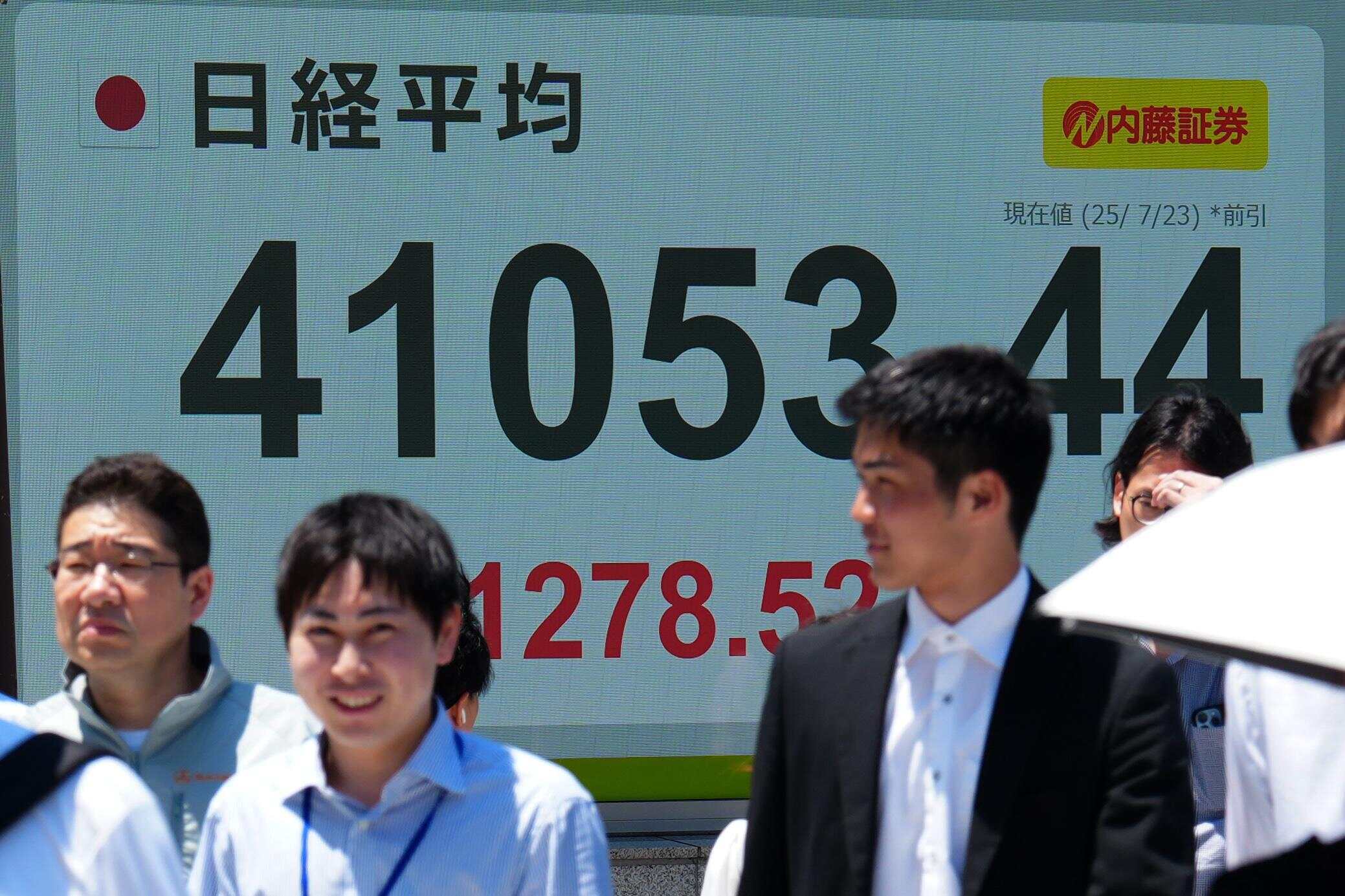
Core Points - The trade agreement between Japan and the U.S. has been reached, with the U.S. imposing a 15% tariff and increasing rice exports to Japan [1][3] - The Japanese stock market reacted positively, with the Nikkei 225 index rising by 3.2% [1] - Japan made significant concessions in various sectors, particularly in agriculture and automotive [5][6] Group 1: Trade Agreement Details - The U.S. will impose a 15% tariff, which is lower than the previously anticipated 25% [3][4] - Japan agreed to increase rice imports from the U.S. by 75% and purchase $8 billion worth of U.S. agricultural products, including corn and soybeans [5] - In the automotive sector, Japan will open its market to U.S. vehicles and assist in creating fair competition for U.S. car manufacturers [5][6] Group 2: Economic Impact - The agreement is expected to have a short-term positive effect on the Japanese economy, as indicated by the market's optimistic response [6] - However, the 15% tariff remains higher than pre-Trump levels, which could pose long-term challenges for Japan's automotive industry [6] - Japan's direct investment in the U.S. is projected to reach a historical high of approximately $731 billion by 2024, accounting for nearly 40% of Japan's total foreign direct investment [6] Group 3: Political Implications - The agreement provides a much-needed victory for Prime Minister Shigeru Ishiba, but its long-term political implications remain uncertain [7] - The concessions made in the agreement may lead to dissatisfaction among Japanese agricultural stakeholders [5][7]
美国这样“宰”日本:每季度都要查,一旦特朗普不满...
Guan Cha Zhe Wang· 2025-07-24 07:58
Group 1 - The core point of the article is the announcement of a significant trade agreement between the United States and Japan, which includes commitments from Japan to purchase 100 Boeing aircraft, increase U.S. rice imports by 75%, and procure $8 billion worth of U.S. agricultural products and military equipment [1][5] - The agreement is described as a "historic" deal that strengthens U.S.-Japan relations, with Japan committing to invest $550 billion in revitalizing key U.S. industries, creating hundreds of thousands of jobs [1][2] - The U.S. will retain 90% of investment profits from this agreement, ensuring that American workers, taxpayers, and communities benefit significantly [2] Group 2 - In the agricultural sector, Japan will immediately increase its imports of U.S. rice by 75% and expand import quotas, while also committing to purchase $8 billion worth of U.S. products including corn, soybeans, fertilizers, bioethanol, and sustainable aviation fuel [5] - The energy sector will see a substantial increase in U.S. energy exports to Japan, with new long-term procurement agreements for Alaskan liquefied natural gas (LNG) being established [5] - In manufacturing and aerospace, Japan has agreed to purchase 100 commercial aircraft from U.S. manufacturers and will increase its procurement of U.S. defense equipment by several billion dollars annually [5] Group 3 - The agreement will eliminate long-standing restrictions on U.S. automobiles and trucks entering the Japanese market, with U.S. automotive standards being recognized for the first time in Japan [5][7] - The U.S. will reduce tariffs on Japanese-made cars from 27.5% to 15%, with no quantity limits under the new tax rate [7] - Concerns have been raised by the U.S. automotive industry regarding the potential negative impact of the agreement on American manufacturers, particularly if tariffs on Japanese imports are lower than those on North American-made vehicles [9]
没有人能拦得住不停上涨的日本物价了……
Sou Hu Cai Jing· 2025-06-30 17:20
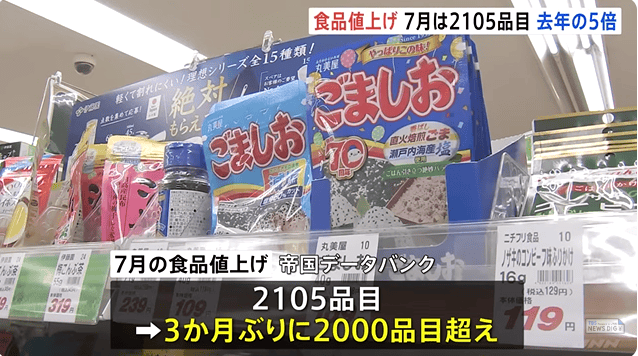
Core Viewpoint - Japan is experiencing a significant price increase in various consumer goods, with 2,105 items set to rise in price in July, marking a fivefold increase compared to the same period last year [1][3]. Price Increase Details - The majority of the price hikes are in seasonings, with 1,445 items affected, followed by beverages like coffee (206 items), snacks such as chocolate and gum (196 items), and processed foods like packaged rice (117 items) [5]. - The primary reasons for these price increases are rising raw material costs and increased production costs due to higher energy prices [9]. Historical Context - Japan began experiencing price increases in 2022, breaking a 40-year trend of stable prices, influenced by global instability, yen depreciation, and rising costs of electricity and grains [11]. - The price index for various food items has significantly increased from 1994 to 2023, with items like chicken eggs rising by approximately 92% and pork by about 65% [12]. Food Supply and Import Dependency - Japan's food self-sufficiency rate is low at 38%, the lowest among G7 countries, meaning 62% of its food supply relies on imports, which becomes more expensive with yen depreciation [17]. - In 2024, Japan is expected to face rice shortages, with rice prices in the Tokyo market increasing by 93.2% year-on-year [13]. Wage Trends - Despite rising prices, many large companies have increased starting salaries for new graduates significantly, sometimes exceeding the salaries of employees with ten years of experience [19].