英伟达Thor

Search documents
公司问答丨天准科技:目前基于英伟达Thor的星智007系列产品正在陆续导入多个头部人形机器人客户 已对部分客户实现小批量销售
Ge Long Hui A P P· 2026-01-27 07:56
天准科技回复称,2025年天准与智元等机器人客户紧密合作,实现了星智系列控制器数千台的批量出 货。目前基于英伟达Thor的星智007系列产品正在陆续导入多个头部人形机器人客户,已对部分客户实 现小批量销售。 格隆汇1月27日|有投资者在互动平台向天准科技提问:请问公司今年天准智星系列在头部客户智元的 出货情况如何,除了灵犀X1,其他型号是否也与天准存在广泛合作,目前配备英伟达Thor的智星007系 列在客户的推广情况如何? ...

中国智能驾驶产业的算力巨变
3 6 Ke· 2025-12-30 10:36
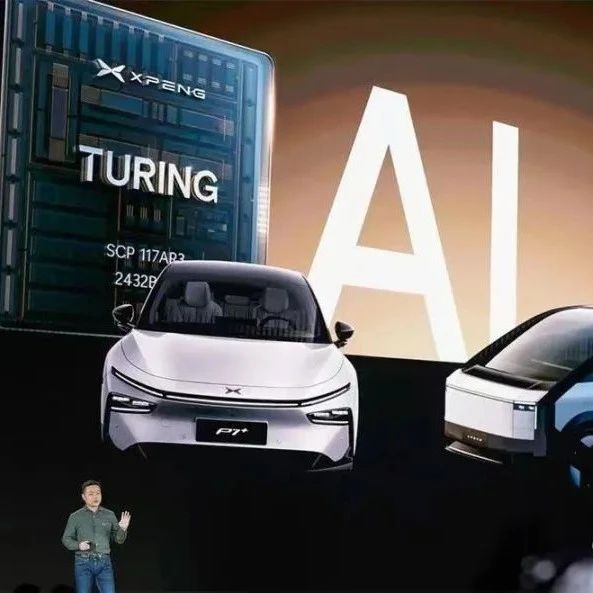
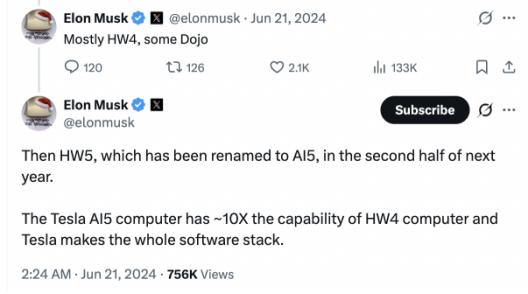
Core Insights - In 2025, the Chinese smart driving industry is experiencing an unprecedented shift in computing power, driven by the evolution of software algorithms and the emergence of competing technical paradigms [1][2] - The differentiation in high-level intelligent driving commercial applications is evident, with a K-shaped market split between affordable and high-end models, leading to fragmentation in the industry [2] - The demand for computing power is increasingly recognized as a core element in the development of smart driving technologies, both at the vehicle and cloud levels [2] Group 1: Technological Evolution - The transition to an end-to-end framework in smart driving is marked by significant advancements, as seen in Tesla's FSD Beta V12 software, which utilizes a computing power standard of 144 TOPS [3][4] - Tesla's shift from HW3 to HW4 signifies a major milestone in its autonomous driving evolution, with the latter becoming the preferred platform for future software updates [5][6] - The upcoming FSD V14 version is expected to have ten times the parameters of its predecessor, indicating a substantial leap in the vehicle's ability to process complex environmental information [6] Group 2: Market Dynamics - Chinese smart driving players, including Xpeng, Li Auto, and NIO, are adopting end-to-end strategies but are initially relying on existing computing platforms, primarily NVIDIA's Orin-X [7][12] - By 2025, a clear division among smart driving companies has emerged, categorized into three main factions based on their computing power strategies: self-developed chips, NVIDIA-based solutions, and Huawei's offerings [12][13] - The self-developed chip faction includes NIO's NX9031 and Xpeng's Turing AI chip, while the NVIDIA faction is represented by the latest Thor platform, which is gaining traction in various models [13][14] Group 3: Cloud Computing and Future Prospects - The industry is witnessing a race for cloud computing power, which is essential for the evolution of smart driving algorithms and the transition from L2 to L4 capabilities [19][20] - The reliance on cloud computing is becoming increasingly critical, as it supports data processing, model training, and simulation necessary for addressing complex driving scenarios [23][24] - The ongoing competition for cloud resources is expected to intensify, with companies recognizing that enhanced cloud capabilities are vital for future advancements in autonomous driving technology [20][21]


国盛证券:智驾核心部件壁垒高筑 国产芯片替代正当时
智通财经网· 2025-08-11 07:25
Core Insights - The report from Guosheng Securities highlights that System on Chip (SoC) is the mainstream trend for automotive computing chips, with high barriers to entry due to design and manufacturing complexities, high capital investment, and long validation cycles, making intelligent driving chips the most valuable core component in intelligent driving systems [1][2] Group 1: Market Trends - The trend of integrated cockpit and driving systems is significant, which can reduce costs, with single-chip solutions like NVIDIA Thor and Qualcomm 8775 expected to achieve large-scale production by 2025 [1] - The penetration of advanced driver assistance systems (ADAS) is accelerating, with the market for L3 and above intelligent driving systems expected to grow significantly, particularly in lower-priced vehicle segments [2] Group 2: Market Size and Growth - According to Frost & Sullivan, the global and Chinese ADAS SoC market sizes are projected to reach 275 billion and 141 billion yuan in 2023, respectively, with expected growth to 925 billion and 496 billion yuan by 2028, reflecting compound annual growth rates of 28% and 29% [2] - The ADS market (L3 to L5) is still in its early development stage, with expectations for the global ADS SoC market to reach 45.4 billion yuan by 2030 [2] Group 3: Competitive Landscape - NVIDIA holds a dominant position in the domestic intelligent driving assistance chip market with a 39% market share in 2024, while Horizon Robotics and Black Sesame Intelligence are expected to increase their market shares due to the trend of domestic substitution [3] - The intelligent driving chip industry is currently characterized by high investment, high growth, and low profitability, with companies generally operating at a loss, but scale effects are beginning to show, leading to a gradual narrowing of loss rates [3] Group 4: Investment Opportunities - The rapid increase in intelligent driving penetration is creating significant market space, leading to high growth in demand for intelligent driving chips, with opportunities for high-cost performance domestic chips [4] - Companies to watch include Horizon Robotics (09660), Black Sesame Intelligence (02533), NVIDIA (NVDA.US), Qualcomm (QCOM.US), XPeng Motors (09868), and Tesla (TSLA.US) [4]
自动驾驶为什么需要NPU?GPU不够吗?
自动驾驶之心· 2025-07-26 13:30
Core Viewpoint - Pure GPU can achieve basic functions of low-level autonomous driving but has significant shortcomings in processing speed, energy consumption, and efficiency, making it unsuitable for meeting the requirements of high-level autonomous driving [39][41]. Group 1: GPU Limitations - Pure GPU can handle certain parallel computing tasks required for autonomous driving, such as sensor data fusion and image recognition, but it was originally designed for graphics rendering, leading to limitations in performance [5][10]. - Early tests with pure GPU solutions showed significant latency issues, such as an 80 ms delay in target detection while driving at 60 km/h, which poses safety risks [5][6]. - The data processing capacity of L4 autonomous vehicles generates approximately 5-10GB of data per second, requiring multiple GPUs to work together, which increases power consumption and reduces vehicle range by about 30% [6][7]. Group 2: NPU and TPU Advantages - NPU is specifically designed for neural network computations, featuring a large number of MAC (Multiply-Accumulate) units that optimize matrix multiplication and accumulation operations, significantly improving efficiency compared to GPU [12][15]. - TPU, developed by Google, utilizes a pulsed array architecture that enhances data reuse and reduces external memory access, achieving a data reuse rate three times higher than that of GPU [14][19]. - In terms of energy efficiency, NPU can achieve an energy efficiency ratio that is 2.5 to 5 times better than GPU, with lower power consumption for the same AI computing power [34][41]. Group 3: Cost and Performance Comparison - The cost of high-end GPUs can be significantly higher than that of NPUs; for instance, the NVIDIA Jetson AGX Xavier costs around $800 per unit, while the Huawei Ascend 310B is approximately $300 [35][36]. - To achieve similar AI computing power, a pure GPU solution may require multiple units, leading to a total cost that is 12.5% of that of a Tesla FSD chip that includes NPU [35][36]. - In practical scenarios, a pure GPU solution consumes significantly more energy compared to a mixed NPU+GPU solution, resulting in a reduction of vehicle range by approximately 53 km per 100 km driven [34][41]. Group 4: Future Trends - The future of autonomous driving technology is likely to favor a hybrid approach that combines NPU and GPU, leveraging the strengths of both to enhance processing efficiency while maintaining software compatibility and reducing costs [40][41].

为什么定义2000 TOPS + VLA + VLM为L3 级算力?
自动驾驶之心· 2025-06-20 14:06
Core Viewpoint - The article discusses the advancements in autonomous driving technology, particularly focusing on Xiaopeng Motors' recent paper presented at CVPR 2025, which validates the scaling laws in the context of autonomous driving and introduces new standards for computing power in Level 3 (L3) autonomous vehicles [4][6][22]. Group 1: Scaling Laws and Model Performance - Xiaopeng Motors' paper systematically verifies the effectiveness of scaling laws in autonomous driving, indicating that larger model parameters lead to improved performance [4][6]. - The research establishes a clear power-law relationship between model performance, parameter scale, data scale, and computational power, originally proposed by OpenAI [4][6]. Group 2: Computing Power Standards - The paper introduces a new computing power standard of 2000 TOPS for L3 autonomous driving, highlighting the exponential increase in computational requirements as the driving level advances [8][20]. - For L2 systems, the required computing power ranges from 80 to 300 TOPS, while L3 systems necessitate thousands of TOPS due to the complexity of urban driving scenarios [8][20]. Group 3: VLA and VLM Model Architecture - Xiaopeng's VLA (Vision-Language-Action) model architecture integrates visual understanding, reasoning, and action generation capabilities, requiring substantial computational resources [10][12]. - The architecture's visual processing module alone demands hundreds of TOPS for real-time data fusion from multiple sensors [10][12]. Group 4: Comparison of Onboard and Data Center Computing Power - The article differentiates between onboard computing power, which focuses on real-time data processing for driving decisions, and data center computing power, which is used for offline training and model optimization [12][15]. - Onboard systems must balance real-time performance and power consumption, while data centers can leverage significantly higher computational capabilities for complex model training [12][15]. Group 5: Market Dynamics and Competitive Landscape - The market for AI chips in autonomous driving is dominated by a few key players, with NVIDIA holding a 36% market share, followed by Tesla and Huawei [20]. - The competitive landscape has shifted significantly since 2020, impacting the development of AI chips and their applications in autonomous driving [17][20].