
英国金边债券

Search documents
“再通胀”担忧卷土重来 美联储货币政策迷雾重重
2 1 Shi Ji Jing Ji Bao Dao· 2026-02-03 23:38
Economic Data and Inflation Concerns - Recent economic data from the U.S. indicates renewed inflation concerns, with the Producer Price Index (PPI) rising by 0.5% month-on-month in December, the largest increase in five months, and a year-on-year increase of 3% [1][10] - The core PPI, excluding food and energy, increased by 0.7% month-on-month and 3.3% year-on-year, both exceeding market expectations [1][10] - The ISM's Purchasing Managers' Index (PMI) for January rebounded to 52.6, marking the first time it has surpassed 50 in 12 months and the highest level since August 2022 [1][10] Manufacturing Expansion and Cost Pressures - The manufacturing sector's expansion in January was the fastest since 2022, attributed to the transmission effects of import tariffs, with companies passing on tariff-related costs to production [4][14] - This cost pressure may continue to push consumer inflation higher in the coming months, potentially allowing the Federal Reserve to maintain stable interest rates for a period [4][14] Market Reactions and Investment Strategies - Major investment firms like BlackRock, Bridgewater Associates, and PIMCO are adjusting their portfolios in anticipation of a new wave of inflation [4][14] - BlackRock is shorting U.S. Treasuries and UK gilts to hedge against falling interest rate expectations, while Bridgewater favors equities over bonds, and PIMCO is optimistic about U.S. Treasuries with embedded inflation protection [4][14] Federal Reserve's Monetary Policy Outlook - The outgoing Atlanta Fed President Bostic believes the Fed should not lower interest rates this year due to the strong economy and stable labor market, which could hinder efforts to bring inflation back to target levels [5][15] - Concerns about the impact of tariffs on inflation have a lagging effect, with many companies still uncertain about the true costs of tariffs [5][15] Future Inflation Projections - Looking ahead to 2026, inflation is expected to exhibit a "front-high, back-low" characteristic, with potential stronger inflation persistence in the first half of the year due to tariff transmission and tax cuts [6][16] - If the tariff transmission rate approaches 70%, the core PCE price index could end 2026 at 2.6% year-on-year [6][16] Federal Reserve Leadership and Policy Direction - The potential nomination of Kevin Warsh as the next Fed Chair could influence monetary policy, as he has historically advocated for a strong monetary policy stance [8][18] - Warsh's leadership may alleviate market concerns about inflation management being overshadowed by political priorities, promoting a data-driven approach to policy [8][18]

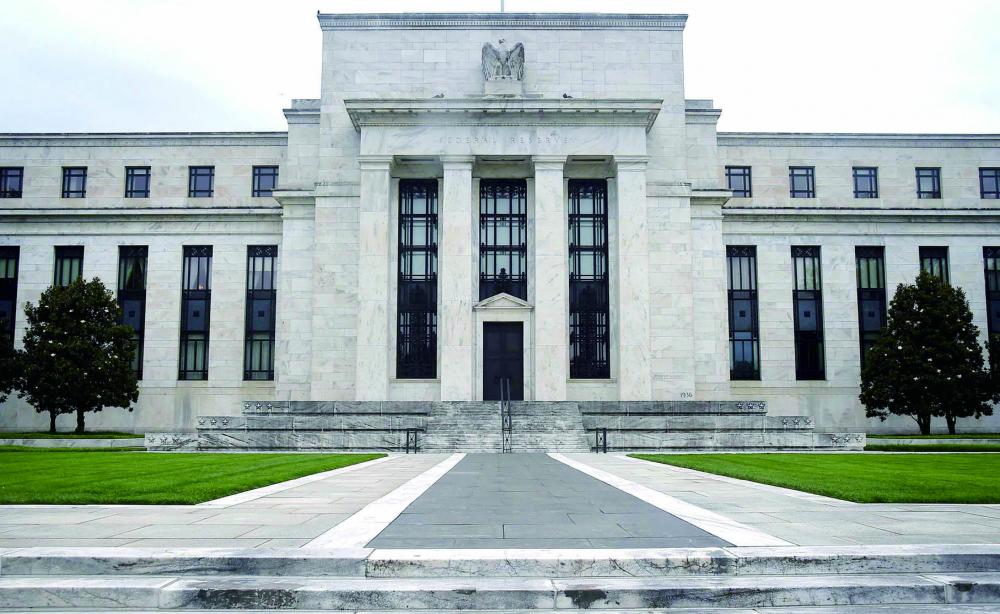
通胀担忧再起!全球资管巨头“未雨绸缪”:贝莱德做空国债,PIMCO增持TIPS
Zhi Tong Cai Jing· 2026-02-01 23:44
Group 1 - BlackRock, Bridgewater, and PIMCO are adjusting their portfolios to guard against a new wave of inflation, with BlackRock establishing short positions in US Treasuries and UK investment-grade bonds, while Bridgewater favors stocks over bonds, and PIMCO looks at Chinese bonds that offer inflation-adjusted yields for protection [1] - There are increasing signs that concerns about inflation are justified, as the yield spread between regular Treasuries and Treasury Inflation-Protected Securities (TIPS) has widened sharply, reaching its highest level in months, and inflation swap rates have also risen [1] - The expectation of a strong US economy reigniting price growth is heightened by the recent nomination of Kevin Warsh as the next Federal Reserve Chair, which could lead to faster or larger rate cuts if he aligns with President Trump's desires [1] Group 2 - UBS's senior trader Ben Pearson believes that the "inflationary boom" led by the US is the most underestimated risk for investors this year, potentially causing the Fed to remain inactive in the first half of the year and forcing the market to adjust to rate hike expectations in the second half [4] - Standard Bank's G-10 strategist Steven Barrow predicts that if the White House's desire for rate cuts is thwarted, the yield on 10-year Treasuries could soar from around 4.25% to 5% [4] - The situation presents challenges for Warsh, who, if confirmed by the Senate, will take over in May when Jerome Powell's term ends, as investors must weigh Warsh's hawkish reputation on inflation against his willingness to meet Trump's rate cut demands [4] Group 3 - The cautious stance of these fund managers contrasts sharply with the broader market belief that inflation, which had previously weighed on bond returns post-pandemic, is now largely under control [5] - In the Eurozone, investors generally believe that price growth will stabilize at or slightly below target levels, despite long-term inflation expectations rising alongside US indicators [5] Group 4 - The outlook in the UK is more uncertain, with recent positive economic data prompting traders to reassess the pace of potential rate cuts, reducing the probability of a second cut this year to about 50% [6] - In Australia, persistent domestic price growth has led traders to increase bets on a rate hike, marking a significant policy shift less than six months after the last cut [6] Group 5 - Diverging views among global investors are most pronounced regarding the US economy, with some, like Amova's Steven Williams, believing price pressures are easing and predicting the Consumer Price Index (CPI) could fall below 2% before summer [7] - Conversely, Lazard's CEO Peter Orszag argues that a rise in US inflation above 4% by year-end is not only possible but the most likely scenario [7] Group 6 - The current environment for predicting inflation is filled with uncertainty due to renewed tariff tensions and the rapid development of emerging technologies, alongside geopolitical threats impacting oil prices and industrial metals [10] - The Fed's recent decision to maintain interest rates signals that inflation remains "somewhat elevated," presenting a challenging task for Warsh to either justify rate cuts or suggest necessary hikes [10] Group 7 - Bridgewater highlights the AI boom as another uncertain factor, suggesting that while it may ultimately reduce inflation through increased productivity, the immediate demand for chips and data scientists could exacerbate challenges for bonds [11] - BlackRock's Tactical Opportunities Fund has been increasing short positions in long-term US Treasuries and UK investment-grade bonds, anticipating that strong economic growth and rising commodity prices will continue to exert upward pressure on consumer prices [11] - TIPS are viewed as a potential hedge against inflation, although they carry their own risks, as noted by Vanguard's senior portfolio manager, who emphasizes the importance of monitoring oil prices in relation to TIPS performance [11]
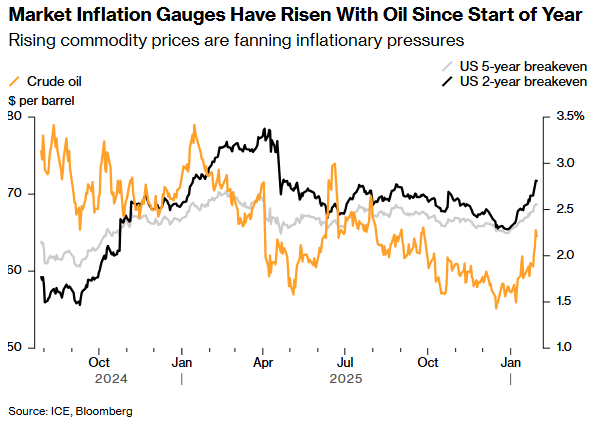
贝莱德桥水等机构警惕被低估通胀风险 美债收益率利差创数月新高 10年期收益率或攀至5%
Sou Hu Cai Jing· 2026-02-01 23:38
Group 1 - BlackRock, Bridgewater Associates, and Pacific Investment Management Company are adjusting their investment portfolios to address the overlooked inflationary risks in the market [1] - BlackRock's Tactical Opportunities Fund has been increasing its short positions in long-term US Treasuries and UK gilt bonds since the end of last year to mitigate risks associated with potential interest rate cuts [1] - Bridgewater Associates is shifting its focus more towards equity assets, while Pacific Investment Management Company is concentrating on US Treasuries with inflation adjustment mechanisms to build an inflation hedge [1] Group 2 - Multiple market indicators since January have confirmed the institutions' assessments, with the yield spread between ordinary US Treasuries and inflation-protected securities reaching its highest level in months [1] - The core source of current inflationary pressure is the strong performance of the US economy, which may further elevate price levels [1] - UBS Group's senior trader Ben Pearson highlighted that the 'inflationary boom' led by the US is a core risk severely underestimated by investors this year [2] Group 3 - Standard Bank's foreign exchange strategy head Steven Barrow predicts that if the White House's interest rate cut demands are blocked, the yield on 10-year US Treasuries could rise to 5% [2] - The prevailing market view suggests that the inflation issue pushing up bond yields in the post-pandemic era is largely under control, yet recent price increases in Australia have forced traders to bet on central bank rate hikes [2] - Investors currently face a dilemma as Kevin Walsh, nominated by President Trump for the next Federal Reserve chair, is known for his inflation hawkish stance but is also willing to accommodate Trump's interest rate cut demands, leading to policy uncertainty [2]

贝莱德、太平洋投资管理公司警惕市场普遍忽视的通胀风险
Xin Lang Cai Jing· 2026-02-01 22:25
Group 1 - Major investment firms like BlackRock, Bridgewater Associates, and Pacific Investment Management Company are adjusting their portfolios in response to a new wave of inflation [1][12] - BlackRock is shorting U.S. Treasuries and U.K. gilts to hedge against potential failures in interest rate cut expectations, while Bridgewater favors equities over bonds [1][12] - The yield spread between regular U.S. Treasuries and inflation-protected securities has surged to its highest level in months, indicating rising inflation concerns [1][12] Group 2 - Global commodity prices are rising, government debt issuance is increasing, and investment in artificial intelligence is intensifying inflationary pressures [3][15] - UBS's senior trader Ben Pearson highlights that the "inflationary boom" led by the U.S. is a significant risk underestimated by investors this year [3][15] - Predictions suggest that if the White House's calls for interest rate cuts are blocked, the yield on 10-year U.S. Treasuries could rise significantly from approximately 4.25% to 5% [3][15] Group 3 - In the Eurozone, investors believe that price increases will stabilize around target levels, with long-term inflation expectations slightly above the European Central Bank's 2% target [4][16] - The situation in the U.K. is more uncertain, with recent positive economic data causing traders to reassess the pace of potential interest rate cuts [4][16] - In Australia, rising domestic prices have led traders to bet on an interest rate hike, marking a significant policy shift less than six months after the last cut [5][16] Group 4 - There is a notable divergence in views regarding inflation in the U.S., with some analysts predicting a decrease in consumer price index below 2% this summer, while others foresee inflation rising above 4% by year-end [6][18] - The inflation outlook is complicated by trade tensions and rapid advancements in emerging technologies, which are creating uncertainty in inflation predictions [10][22] - Bridgewater Associates points out that while AI may eventually reduce costs, the current demand for related resources is creating a challenging environment for the bond market [10][22] Group 5 - The Tactical Opportunities Fund at BlackRock has been increasing its short positions in long-term U.S. Treasuries and U.K. gilts, anticipating continued upward pressure on consumer prices due to strong economic growth and rising commodity prices [10][23] - Inflation-protected securities are viewed as a potential hedge against inflation, despite their associated risks [11][23] - Pacific Investment Management Company considers inflation-protected bonds to be a cost-effective hedging tool, as long-term inflation expectations remain low [11][23]

政策扩张碰撞及算法交易趋同:日债高波动的逻辑和启示
GUOTAI HAITONG SECURITIES· 2025-12-04 02:00
Group 1 - The report highlights that Japan's bond market experienced its most severe sell-off since 1999, driven by a combination of fiscal expansion, central bank policy shifts, and supply-demand imbalances [6][7][8] - The Japanese government's economic stimulus plan of 21.3 trillion yen (approximately 3.5% of GDP) raised concerns about debt sustainability, leading to increased selling pressure in the bond market [6][7] - The Bank of Japan's reduction in long-term bond purchases exacerbated supply pressures, with the 30-year bond yield reaching a historic high of 3.26% [7][8] Group 2 - The report identifies common characteristics of global bond market volatility, noting that developed markets have also experienced significant adjustments in response to central bank policy signals [11][12] - In the UK, a crisis of fiscal credibility led to a surge in 30-year gilt yields to the highest levels since 1998, reflecting concerns over government debt sustainability [12] - Australia's bond market saw a sharp increase in yields following unexpected inflation data, indicating a shift in market expectations regarding interest rate movements [13][15] Group 3 - The report discusses the vulnerabilities of emerging markets, highlighting that their bond markets are particularly sensitive to changes in central bank policies, leading to amplified volatility [20][21] - Argentina's recent crisis exemplifies this vulnerability, with a significant rise in sovereign debt risk premiums amid concerns over fiscal sustainability [21][22] - The report notes that emerging markets face challenges due to shallow liquidity and reliance on foreign capital, which can lead to rapid capital outflows in response to policy shifts [20][23] Group 4 - The report emphasizes the importance of balancing fiscal expansion, central bank operations, and market absorption capacity in the context of Japan's bond market [28][29] - It suggests that while Japan's experience offers lessons, significant differences exist in capital account management and monetary policy tools between Japan and other countries [28][29] - The report warns that ongoing fiscal stimulus in China could lead to reassessments of long-term interest rate levels, particularly if nominal growth does not meet expectations [28][30] Group 5 - The report outlines potential scenarios for Japan's bond market, particularly in light of the upcoming Bank of Japan policy meeting, where tensions between fiscal stimulus and monetary tightening may influence market reactions [33][34] - It notes that the yield curve could steepen if interest rate hikes materialize, but economic data surprises could limit long-term yield increases [34][35] - The report highlights the differentiated risk profiles of various bond maturities, with longer-duration bonds facing greater price volatility in a low liquidity environment [35][36]
