血必净注射液

Search documents
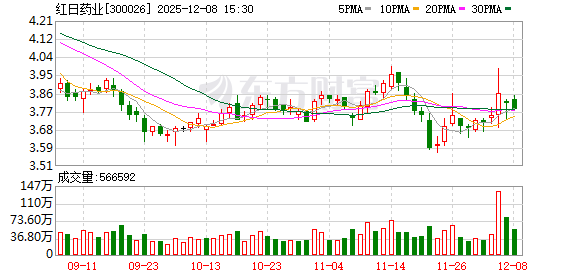
红日药业12月19日获融资买入2154.03万元,融资余额6.16亿元
Xin Lang Cai Jing· 2025-12-22 01:20
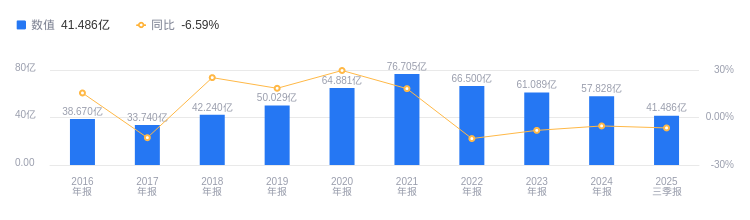
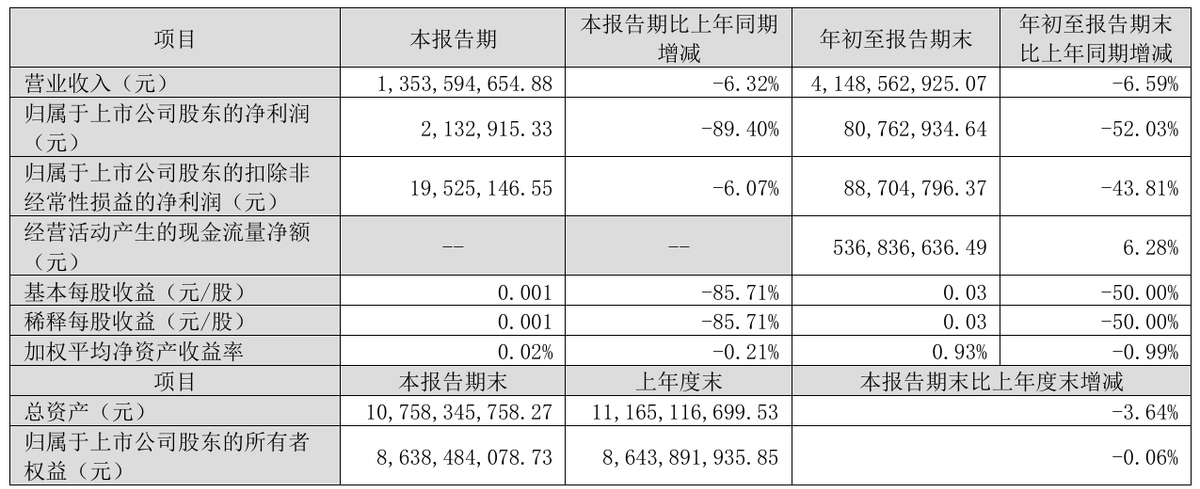
Group 1 - The core viewpoint of the news is that Hongri Pharmaceutical's stock performance and financial metrics indicate a mixed outlook, with a slight increase in stock price but a decline in revenue and net profit [1][2]. - On December 19, Hongri Pharmaceutical's stock rose by 1.40%, with a trading volume of 106 million yuan. The net financing purchase on that day was 13.39 million yuan, while the total financing and securities balance reached 619 million yuan [1]. - The financing balance of Hongri Pharmaceutical is 616 million yuan, accounting for 5.65% of its market capitalization, which is below the 20th percentile level over the past year, indicating a low financing level [1]. Group 2 - As of September 30, the number of shareholders of Hongri Pharmaceutical decreased by 4.48% to 96,300, while the average circulating shares per person increased by 4.69% to 28,435 shares [2]. - For the period from January to September 2025, Hongri Pharmaceutical reported a revenue of 4.149 billion yuan, a year-on-year decrease of 6.59%, and a net profit attributable to shareholders of 80.76 million yuan, down 52.03% year-on-year [2]. - Since its A-share listing, Hongri Pharmaceutical has distributed a total of 1.116 billion yuan in dividends, with 270 million yuan distributed over the past three years [3].

红日药业:关于公司产品继续纳入国家医保药品目录的公告
Zheng Quan Ri Bao· 2025-12-08 13:36
Core Viewpoint - Hongri Pharmaceutical announced that its product, Xuebijing injection, will continue to be included in the new drug catalog for 2026-2027 under the current conditions as per the negotiation results released by the National Healthcare Security Administration and the Ministry of Human Resources and Social Security on December 7, 2025 [2] Group 1 - The announcement confirms that Xuebijing injection will remain part of the updated drug catalog negotiations (Category B) [2] - The decision is based on the negotiations conducted by the National Healthcare Security Administration and the Ministry of Human Resources and Social Security [2]

12月8日晚间重要公告一览
Xi Niu Cai Jing· 2025-12-08 10:32
Group 1 - Cambridge Technology plans to invest 400 million yuan to establish a fund focused on optical devices and chips, aiming to invest in early-stage and growth-stage companies in the hard technology sector [1] - Tunnel Corporation's consortium won a bid for a highway project in Henan with a total investment of 6.49 billion yuan, using a BOT model for a 33.25-year cooperation period [2] - Hongrun Construction won a bid for a project worth 230 million yuan, which represents 3.88% of the company's projected revenue for 2024 [3] Group 2 - Tongrentang's product, Canling Baizhu Powder, received product registration approval from Health Canada, aimed at treating symptoms related to spleen and stomach weakness [4] - Hunan Baiyin announced a scheduled annual maintenance from December 9, 2025, to January 5, 2026, for equipment and facilities [5] - Changchun Gaoxin's subsidiary had two drugs included in the national medical insurance catalog for 2025 [6] Group 3 - Dongfang Securities' chairman resigned due to work relocation [7] - Xuantai Pharmaceutical's product, Sitagliptin Metformin Sustained-Release Tablets, was renewed for inclusion in the national medical insurance catalog [8] - ST Weihai was pre-selected for a smart agriculture EPC project with a bid of 652 million yuan, accounting for 26.27% of the company's projected revenue for 2024 [9] Group 4 - Guoxin Technology successfully tested an anti-quantum password financial POS chip, supporting both traditional and quantum-resistant algorithms [10] - Huaren Health's subsidiary received acceptance for a drug registration application for Lactulose Oral Solution, a common laxative [11] - Ankai Bus reported a 57.71% year-on-year increase in sales for the first 11 months of the year [12] Group 5 - Zhongyan Dadi's subsidiary won a bid for a project worth 73.86 million yuan [13] - Zhejiang Rongtai plans to invest 77 million USD in a factory in Thailand, focusing on mica paper and robot components production [14] - Optoelectronics plans to use up to 450 million yuan of idle funds for cash management [15] Group 6 - Tianyu Biological reported a 45.15% year-on-year decline in sales revenue from pig sales in November [16] - Daqin Railway's cargo transport volume increased by 1.75% year-on-year in November [17] - Yabo Co. won a bid for a heavy truck charging station project worth 3.616 million yuan [18] Group 7 - Hongri Pharmaceutical's product continues to be included in the national medical insurance catalog [19] - Jinggong Steel Structure signed a contract for steel structure installation worth approximately 470 million yuan for an overseas project [20] - Xizang Pharmaceutical's product, Xinhuasuan, continues to be included in the national medical insurance catalog [21] Group 8 - Guangdong Electric Power A announced the successful commissioning of a 1000MW unit at the Maoming Boge Power Plant [22] - Fuan Pharmaceutical's product, Palivizumab Injection, was newly included in the national medical insurance catalog [23] - Lizhu Group reported that 194 products were included in the 2025 national medical insurance catalog [24] Group 9 - Haisan Pharmaceutical's injection of Lantanol was included in the national medical insurance catalog [25] - Zhongtong Bus reported a 39.53% year-on-year increase in sales volume in November [26] - Shaanxi Coal Industry reported a 6.03% year-on-year increase in coal production in November [27] Group 10 - Haooubo's subsidiary received a medical device registration certificate for an IgG4 testing kit [28] - Yaopi Glass plans to invest 690 million yuan in new automotive glass production lines [30] - Huadian International completed the issuance of 2 billion yuan in medium-term notes [31] Group 11 - Zhongzai Zihuan's subsidiary won a bid for a green recycling project worth 205 million yuan [32] - Dabeinong reported a 25.26% year-on-year decline in sales revenue from pig sales in November [33] - Xiangjia Co. reported a 3.77% year-on-year increase in live poultry sales revenue in November [34] Group 12 - Huanxu Electronics reported a consolidated revenue of 5.198 billion yuan in November, a decrease of 3.34% year-on-year [35] - Aonong Biological reported a 72.21% year-on-year increase in pig sales volume in November [36] - Samsung Medical's subsidiary was pre-selected for a procurement project worth approximately 108 million yuan [37]


红日药业(300026.SZ):产品继续纳入国家医保药品目录
Ge Long Hui A P P· 2025-12-08 08:34
Core Viewpoint - Hongri Pharmaceutical (300026.SZ) announced that its product, Xuebijing injection, will continue to be included in the new drug catalog for the years 2026 to 2027 as part of the national medical insurance negotiations, according to the announcement made by the National Healthcare Security Administration and the Ministry of Human Resources and Social Security on December 7, 2025 [1] Group 1 - Hongri Pharmaceutical's Xuebijing injection has been renewed under the current conditions for inclusion in the new drug catalog [1] - The new drug catalog is part of the national basic medical insurance, maternity insurance, and work-related injury insurance [1] - The negotiations for the 2026 to 2027 medical insurance renewal have been successfully concluded for the product [1]
红日药业:公司产品继续被纳入国家医保药品目录
Zheng Quan Shi Bao Wang· 2025-12-08 08:26
Core Viewpoint - Hongri Pharmaceutical (300026) announced on December 8 that its product, Xuebijing Injection, will continue to be included in the new drug catalog for the years 2026 to 2027, following the renewal negotiations based on the recently published National Basic Medical Insurance, Maternity Insurance, and Work Injury Insurance Drug Catalog (2025) by the National Healthcare Security Administration and the Ministry of Human Resources and Social Security [1] Group 1 - The company’s Xuebijing Injection will be renewed under the current conditions and included in the new drug catalog as a Class B drug [1]
红日药业(300026.SZ):公司药品主要分为中药配方颗粒和成品药
Ge Long Hui· 2025-11-28 00:47
Group 1 - The company, Hongri Pharmaceutical, primarily offers two types of products: traditional Chinese medicine formula granules and finished pharmaceuticals [1] - The traditional Chinese medicine formula granules require a doctor's prescription, while the finished pharmaceuticals include prescription drugs such as Xuebijing injection, Anruotai, Bopu Ning, and Bopu Ai [1]
红日药业的前世今生:2025年三季度营收41.49亿行业排14,高于行业平均,净利润9192.87万行业排33
Xin Lang Zheng Quan· 2025-10-31 11:45
Core Viewpoint - Hongri Pharmaceutical is a leading modern traditional Chinese medicine manufacturer in China, focusing on the research, production, and sales of pharmaceuticals and medical devices, with a strong technological advantage in the standardization and conversion of traditional Chinese medicine formula granules [1] Financial Performance - For Q3 2025, Hongri Pharmaceutical reported a revenue of 4.149 billion yuan, ranking 14th among 69 companies in the industry, with the industry leader Baiyunshan generating 61.606 billion yuan and the average revenue being 3.755 billion yuan [2] - The net profit for the same period was 91.9287 million yuan, placing the company 33rd in the industry, while the top performer, Yunnan Baiyao, achieved a net profit of 4.789 billion yuan, with the industry average at 447 million yuan [2] Financial Ratios - As of Q3 2025, Hongri Pharmaceutical's debt-to-asset ratio was 18.24%, down from 21.20% year-on-year and below the industry average of 32.81%, indicating strong solvency [3] - The gross profit margin for the same period was 52.19%, slightly lower than the industry average of 52.44% and nearly unchanged from the previous year's 52.20% [3] Shareholder Information - As of September 30, 2025, the number of A-share shareholders decreased by 4.48% to 96,300, with an average of 28,400 circulating A-shares per account, an increase of 4.69% [5] - The top ten circulating shareholders included Hong Kong Central Clearing Limited and Southern CSI 1000 ETF, with notable reductions in their holdings [5] Business Segment Performance - The revenue from traditional Chinese medicine formula granules was 1.232 billion yuan, down 5.75% year-on-year, while the revenue from Xuebijing injection increased by 2.88% to 467 million yuan [5] - The company is expected to see long-term growth in traditional Chinese medicine formula granules following the implementation of national standards, which will enhance price advantages for patients [5] Management Compensation - The chairman, Wu Wenyuan, received a salary of 912,600 yuan for 2024, while the general manager, Lan Wujun, earned 1.8087 million yuan, reflecting a slight increase from the previous year [4]
前三季利润大跌52.03%,红日药业这味“中药”越熬越苦?
Tai Mei Ti A P P· 2025-10-30 00:50
Core Viewpoint - Hongri Pharmaceutical is experiencing significant declines in both revenue and profit, raising concerns in the investment market about its future performance and management strategies [1][2][9]. Financial Performance - In 2024, Hongri Pharmaceutical reported an operating income of 5.783 billion yuan, a year-on-year decrease of 5.34%, and a net profit attributable to shareholders of 21.47 million yuan, down 95.76% [1]. - For the first three quarters of 2025, the company recorded an operating income of 4.149 billion yuan, a decline of 6.59%, and a net profit of 80.76 million yuan, down 52.03% [1][2]. - The company's non-recurring net profit turned negative, with a loss of 760.71 million yuan in 2024 and a decrease of 43.81% in the first three quarters of 2025 [1][2][3]. Cost Management Efforts - Hongri Pharmaceutical has implemented cost-cutting measures, resulting in a 7.35% reduction in sales expenses, a 0.73% decrease in management expenses, a 13.87% reduction in R&D expenses, and a 64.26% decrease in financial expenses for the first three quarters of 2025 [3]. Product Portfolio and Market Position - The company operates in various sectors, including traditional Chinese medicine (TCM) granules, finished pharmaceuticals, medical devices, and healthcare services, with a primary revenue source from the TCM segment [4]. - Key products include TCM granules and Xuebijing injection, which has been recognized for its efficacy in treating sepsis [4][5]. Market Challenges - The TCM granule market is highly competitive, with major players including China Traditional Chinese Medicine, Huaren Sanjiu, and others, leading to intensified competition due to policy relaxations and market expansions [7]. - Price fluctuations from centralized procurement initiatives have impacted profit margins for TCM products, with significant collective procurement efforts affecting the market [7][8]. Investor Sentiment and Management Response - Investors have expressed concerns regarding the company's prolonged stock price stagnation and declining performance over four consecutive years, questioning the clarity of its management and R&D strategies [9]. - The company's management has outlined a strategy focused on innovation, integration, and market adaptation, but the lack of tangible results raises skepticism about its effectiveness [10].
多起死亡事件后,一批中药注射液或被淘汰
Jing Ji Guan Cha Bao· 2025-10-19 06:44
Core Viewpoint - The recent announcement by the National Medical Products Administration, National Health Commission, and National Administration of Traditional Chinese Medicine regarding the post-marketing research and evaluation of traditional Chinese medicine (TCM) injections marks the strictest regulatory measures in history, aiming to enhance the safety and efficacy of these products for patients [1][2][3]. Group 1: Regulatory Changes - The new policy mandates that all TCM injections approved before the 2019 revision of the Drug Administration Law must undergo post-marketing research, which includes proactive evaluations, mandatory assessments, and legal eliminations of certain products [1][2]. - The policy's implementation is a response to the frequent severe adverse reactions associated with TCM injections, which have raised public concerns about their safety [3][12]. Group 2: Market Impact - The market for TCM injections was over 100 billion in public medical institutions in 2016, but has since halved due to regulatory and reimbursement policies [7][11]. - The new regulations may lead to a significant reshaping of the TCM injection industry, potentially eliminating low-quality products and companies that cannot meet the new standards [13]. Group 3: Safety Concerns - Adverse reactions from TCM injections account for 12% of all reported adverse reactions, with a quarter of these stemming from injections, highlighting the serious risks involved [2]. - The complexity of TCM injection components and their direct intravenous administration increase the likelihood of severe allergic reactions compared to oral TCM [2][6]. Group 4: Research and Evaluation Challenges - Companies face challenges in conducting post-marketing research due to high costs and unclear guidelines for evaluating efficacy, which complicates the process of proving the effectiveness of TCM injections [7][8][11]. - The evaluation process will require a clear understanding of adverse reactions and their causes, as well as the establishment of quality management throughout the production process [12][13]. Group 5: Historical Context - The call for re-evaluation of TCM injections has been ongoing for nearly two decades, with previous attempts failing due to various industry challenges [11][12]. - The establishment of an expert working group in December 2023 signifies a renewed commitment to addressing the safety and efficacy of TCM injections [12].
多起死亡事件后,一批中药注射液或被淘汰
经济观察报· 2025-10-19 06:41
Core Viewpoint - The recent regulatory measures for traditional Chinese medicine (TCM) injection solutions aim to enhance safety and efficacy research, addressing public concerns over adverse reactions and ensuring better patient outcomes [2][4][19]. Regulatory Changes - The National Medical Products Administration, National Health Commission, and National Administration of Traditional Chinese Medicine issued a draft requiring post-marketing studies for TCM injection solutions that were approved before the 2019 revision of the Drug Administration Law [2][19]. - This marks the strictest regulatory approach to TCM injection solutions, which have historically been linked to serious adverse reactions [2][4]. Industry Background - TCM injection solutions emerged during the wartime period, with over 130 varieties currently available, some generating annual sales exceeding 1 billion [2][3]. - Despite their prevalence, TCM injection solutions have faced scrutiny regarding their safety and efficacy, with 12% of adverse reactions attributed to TCM, a quarter of which are linked to injection solutions [3][4]. Adverse Reactions - Serious adverse reactions, including anaphylactic shock and acute liver failure, have been reported, raising public concern and prompting calls for stricter regulations [3][4][19]. - Notable cases include a patient who died after receiving a TCM injection, highlighting the potential risks associated with these products [3][4]. Market Dynamics - The market for TCM injection solutions has seen a decline, with a drop from over 100 billion in 2016 to half of that figure in recent years due to regulatory and reimbursement pressures [11][19]. - Companies are now facing challenges in adapting to the new regulatory landscape, with many unsure about how to conduct post-marketing studies effectively [11][19]. Research and Evaluation - The post-marketing research will involve both non-clinical and clinical studies, focusing on safety and efficacy evaluations [11][12]. - The complexity of TCM formulations poses challenges for clinical trials, as traditional metrics for efficacy may not apply [13][14]. Future Implications - The new regulations are expected to lead to a significant reshaping of the TCM injection market, potentially eliminating low-quality products and companies that cannot meet the new standards [19]. - The establishment of a dedicated expert group for TCM injection evaluation signifies a commitment to improving the quality and safety of these products [18][19].