
豆奶

Search documents
同样是牛奶和面包 吃的先后顺序居然能影响血糖波动
Xin Lang Cai Jing· 2026-01-23 14:47
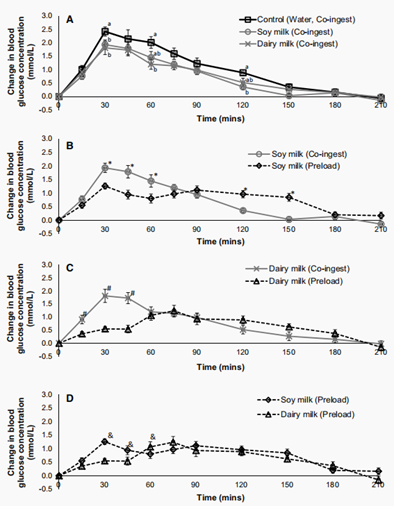
Core Viewpoint - Consuming milk with bread is beneficial for controlling post-meal blood sugar levels compared to drinking water with bread. Milk, soy milk, and nut milk all have similar effects, but milk is slightly more effective for blood sugar control [1][10][17]. Group 1: Research Findings - A study conducted by Singaporean scholars in 2017 compared the post-meal blood sugar changes between milk and soy milk when paired with bread. The study involved 12 healthy Chinese male participants [4]. - The control group consumed white bread with water, while the milk group consumed white bread with low-fat milk, and the soy milk group consumed white bread with sweetened soy milk. All groups had the same carbohydrate content [4][5]. - Results showed that both milk and soy milk with bread led to lower blood sugar levels compared to just eating bread. However, consuming milk before eating bread resulted in even lower blood sugar fluctuations and peak levels [9][10]. Group 2: Mechanisms of Action - The proteins in milk, particularly casein and whey, create a gel-like network in the stomach that slows gastric emptying, which helps to moderate the absorption of carbohydrates from bread [14]. - Additionally, milk stimulates insulin secretion, which helps manage blood sugar levels more effectively when consumed before carbohydrates [14][20]. Group 3: Practical Recommendations - For optimal blood sugar control, it is recommended to drink 200-250 ml of whole milk before breakfast, waiting 15-30 minutes before consuming other foods [22]. - If time is limited, consuming milk first and then eating bread and nuts on the go is still more effective than eating bread on an empty stomach [23].

2025年零售圈十大食品产业事件发布
Tai Mei Ti A P P· 2026-01-12 11:01
Core Insights - The retail food industry in 2025 is undergoing significant changes, influenced by various events that reshape consumer behavior and company strategies [1] - Key themes include a shift from traditional sales and marketing to a focus on consumer needs, product safety, and quality verification [22] Group 1: Company Changes - The leadership of "spicy strip" giant Wei Long has returned to the founding Liu family, marking a shift back to family control after a period of professional management [2] - Qianhe Flavor Industry faced a crisis due to a product safety incident involving its "zero additives" claim, leading to a decline in brand trust and financial performance [3][4] - Wahaha is embroiled in a family inheritance dispute, revealing internal conflicts and impacting its operational stability [5][6] Group 2: Mergers and Acquisitions - Nestlé has fully acquired Xu Fu Ji, ending a 14-year partnership and integrating the brand into its global operations [7][8] - Kraft Heinz announced plans to split into two independent companies, focusing on sauces and North American grocery products, to enhance operational clarity and market focus [11][12] Group 3: Market Trends - The retail landscape is shifting towards direct consumer engagement, with companies like Xiangpiaopiao exploring offline tea beverage experiences to build stronger consumer relationships [20][21] - The industry is witnessing a trend towards modernization in governance, with companies adapting to more agile and market-responsive structures [22]


“涨薪只能靠跳槽”,为什么新员工总比老员工工资高?
3 6 Ke· 2025-12-24 02:49
Core Viewpoint - The year 2025 is expected to be a tumultuous year for the food and beverage industry, primarily characterized by widespread leadership changes across numerous companies, which is a rare occurrence in the industry [1] Group 1: Leadership Changes - A significant number of traditional fast-moving consumer goods (FMCG) companies are undergoing leadership changes, including major players like Coca-Cola, Nestlé China, Unilever, Kraft Heinz, and others [1] - The widespread nature of these changes suggests a collective struggle within the industry, as many companies are facing challenges in sales performance and are seeking new directions through new leadership [4] Group 2: Employee Compensation and Job Market - There is a prevailing sentiment among employees in the FMCG sector that salary increases are unlikely, leading many to consider job changes as the only viable option for salary growth [2][3] - Employees have observed that new hires often receive significantly higher salaries than existing staff, creating a disparity that can lead to dissatisfaction among long-term employees [5][6] - The current environment has led to a situation where companies are more inclined to hire externally, often at higher salaries, rather than promoting from within, which can create tension and feelings of unfair treatment among existing employees [5][6] Group 3: Market Dynamics and Future Outlook - The leadership changes are seen as a response to the challenging sales environment, with companies hoping that new leaders can revitalize performance and restore confidence among stakeholders [4] - The expectation is that new leaders will be given a grace period of about one to one and a half years to stabilize the market before being held accountable for performance [3] - Despite the current difficulties, there is an underlying belief that these traditional companies have the potential for future growth, as they possess the resources and aspirations to navigate through turbulent times [3]

走不出舆论风波 维他奶内地收入再降
Guo Ji Jin Rong Bao· 2025-11-27 15:09
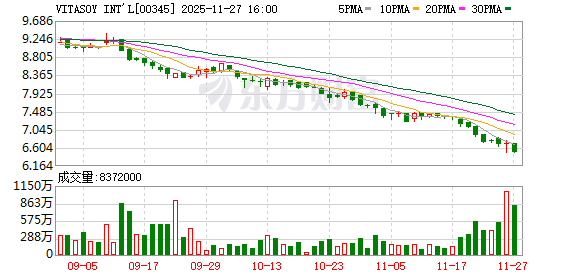
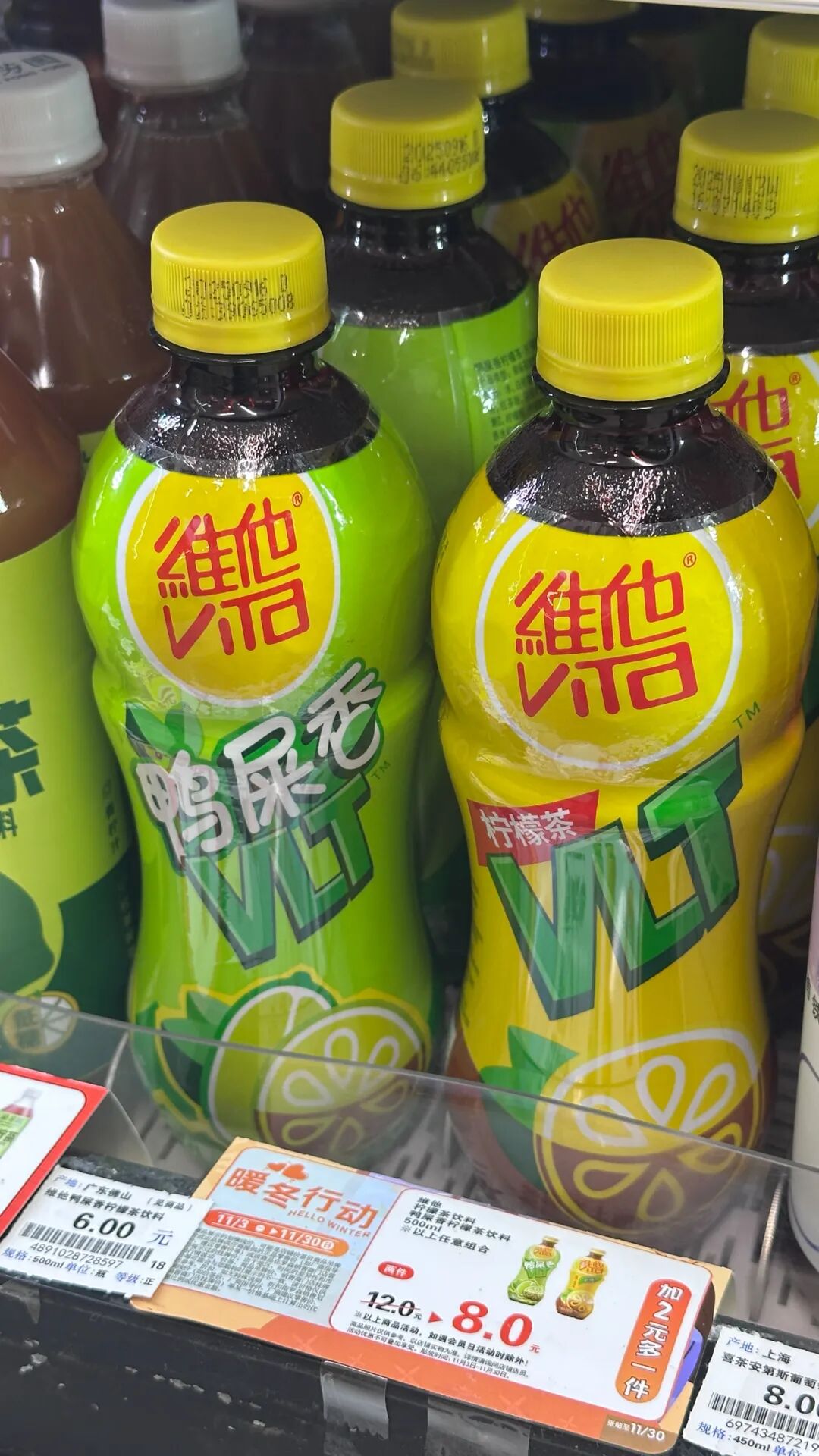
Core Viewpoint - Vitasoy International's performance in the mainland China market has been adversely affected by a previous public relations crisis, leading to a decline in revenue and market competitiveness. Group 1: Financial Performance - For the six months ending September 30, Vitasoy International reported a revenue of HKD 3.227 billion, a year-on-year decrease of 6% [2] - Operating profit was HKD 247 million, down 4% year-on-year, while profit attributable to shareholders slightly increased by 1% to HKD 172 million, largely due to cost-cutting measures that reduced total operating expenses by 7% [2] - Revenue from the mainland market was HKD 1.778 billion, a decline of 9% year-on-year, with a slight decrease in gross margin to 51.1% due to lower product prices and increased promotional spending [3] Group 2: Market Challenges - The decline in Vitasoy's mainland revenue is attributed to a long-standing impact from a public relations crisis in July 2021, which led to significant brand damage and a 22.77% drop in revenue for the 2022 fiscal year [3] - The company has faced ongoing revenue declines in the mainland market, with a slight recovery only expected in the 2025 fiscal year [3] - Vitasoy's product and channel strategies are losing competitiveness in a fiercely competitive mainland market, with traditional retail channels slowing down and consumers shifting towards e-commerce and chain snack stores [4] Group 3: Competitive Landscape - The plant-based milk sector is still growing, but the market growth rate has slowed, with increased competition from both new and established brands [5] - In the tea beverage segment, competition has intensified, particularly with the rise of new brands and the proliferation of chain tea shops, which have impacted Vitasoy's lemon tea sales and market share [5] Group 4: Management and Future Outlook - Since the public relations crisis in July 2021, Vitasoy's leadership has seen two changes, with the founder's second-generation leader, Lo Yau Lee, being 84 years old and not yet retired [6] - Despite short-term challenges in the mainland market, the executive chairman expressed confidence in the long-term growth potential and plans to optimize channels and innovate products, focusing on low-sugar and no-sugar options [6]

走不出舆论风波,维他奶内地收入再降
Guo Ji Jin Rong Bao· 2025-11-27 15:09
Core Viewpoint - Vitasoy International's performance in the mainland China market has been significantly impacted by a previous public relations crisis, leading to a decline in revenue and market competitiveness. Group 1: Financial Performance - For the six months ending September 30, Vitasoy International reported a revenue of HKD 3.227 billion, a year-on-year decrease of 6% [1] - Operating profit was HKD 247 million, down 4% year-on-year, while net profit attributable to shareholders slightly increased by 1% to HKD 172 million, largely due to cost-cutting measures that reduced total operating expenses by 7% [1] - Revenue from the mainland China market was HKD 1.778 billion, a decline of 9% year-on-year, with a slight decrease in gross margin to 51.1% due to lower product prices and increased promotional spending [1] Group 2: Market Challenges - The decline in Vitasoy's mainland market performance is attributed to a long-standing issue stemming from a public relations crisis in July 2021, which led to a significant drop in revenue and a shift from profit to loss in the 2022 fiscal year [3] - The company has faced ongoing revenue declines in the mainland market for two years, with only a slight recovery projected for the 2025 fiscal year [3] - Vitasoy's product and channel strategies are losing competitiveness in a rapidly evolving market, with traditional retail channels slowing down and consumers shifting towards e-commerce and chain snack stores [3] Group 3: Competitive Landscape - The plant-based milk sector is experiencing growth, but the market's growth rate is slowing, with increased competition from both new and established brands [6] - The tea beverage segment is highly competitive, with a surge in demand for sugar-free tea leading to new brands gaining market share, impacting Vitasoy's lemon tea sales [6] Group 4: Management Perspective - Since the public relations crisis, Vitasoy has seen two changes in leadership for its mainland operations, with the founder's second-generation leader, Lo Yau Lee, still at the helm at the age of 84 [7] - The executive chairman expressed confidence in the long-term potential for growth in the mainland market, emphasizing plans to optimize channels and innovate products, focusing on low-sugar and sugar-free options [7]
“豆奶大王”未能扭转业绩颓势,84岁掌舵人不敢退休
Xin Lang Cai Jing· 2025-11-26 07:26
Core Viewpoint - Vitasoy International is struggling to reverse its declining performance, with a 6% year-on-year drop in revenue for the first half of the 2026 fiscal year, primarily due to a 9% decline in revenue from the mainland China market [1][2]. Group 1: Financial Performance - For the first half of the 2026 fiscal year, Vitasoy reported revenue of HKD 3.227 billion, a decrease of 6% year-on-year [1]. - The company's operating profit was HKD 247 million, down 4% year-on-year, while the profit attributable to shareholders increased by 1% to HKD 172 million [1]. - The gross profit margin slightly decreased from 51.6% to 51.1% due to falling product prices in mainland China [1]. Group 2: Market Challenges - Vitasoy's revenue from the mainland China market was HKD 1.778 billion, representing a 9% decline year-on-year, which is the main reason for the overall revenue drop [1][2]. - The plant-based beverage market, where Vitasoy operates, has seen significant growth slow down, with a mere 2% year-on-year growth in 2023 [2]. - Increased competition from major players like Mengniu, Yili, and Dali Foods, who have launched their own soy milk products, is squeezing Vitasoy's market share [2]. Group 3: Strategic Responses - Vitasoy is undergoing leadership changes, with a new head for mainland operations appointed in April 2024, following several leadership transitions [3]. - The company has introduced new products such as sugar-free lemon tea and plans to increase the proportion of low-sugar or no-added-sugar products to 80% by the 2030/31 fiscal year [3]. - To address channel weaknesses, Vitasoy has partnered with over 800 Lawson convenience stores and various dining establishments to launch breakfast sets aimed at boosting sales [3]. Group 4: Leadership Transition - Vitasoy was founded by the Lo family in 1940, and after the passing of founder Lo Kwai Sang in 1995, his son Lo Yau Lee has led the company for 30 years [4]. - In November 2023, Lo Yau Lee's daughter, Lo Chi Mei, was appointed as vice-chairman of the board, signaling a potential succession plan [4][5]. - Lo Yau Lee has indicated that the transition of leadership will be gradual over the next two to three years [5].
维他奶内地不好卖,84岁掌舵人不敢退休
3 6 Ke· 2025-11-26 04:48
Core Viewpoint - Vitasoy International (00345.HK) continues to struggle with declining performance, reporting a 6% year-on-year decrease in revenue for the first half of the 2026 fiscal year, primarily due to a significant drop in sales in the mainland China market [1][2]. Group 1: Financial Performance - For the first half of the 2026 fiscal year, Vitasoy reported revenue of HKD 3.227 billion, a decrease of 6% year-on-year [1]. - The company's operating profit was HKD 247 million, down 4% year-on-year, while the profit attributable to shareholders increased by 1% to HKD 172 million [1]. - Revenue from the mainland China market was HKD 1.778 billion, representing a 9% decline year-on-year, which was the main contributor to the overall revenue drop [1]. Group 2: Market Dynamics - Vitasoy's market share in the plant-based beverage sector has been pressured by increased competition from major players like Mengniu, Yili, and Dali Foods, which have launched their own soy milk products [2]. - The overall growth of the plant-based beverage market in China has slowed, with a reported year-on-year growth rate of only 2% in 2023 [2]. - The rise of new consumption channels such as social e-commerce and membership stores has further challenged Vitasoy, which has traditionally relied on conventional retail networks [2]. Group 3: Strategic Initiatives - Vitasoy is attempting to revitalize its product line by introducing new offerings such as sugar-free lemon tea and high-fiber soy milk, with plans to increase the proportion of low-sugar or no-added-sugar products to 80% by the 2030/31 fiscal year [5]. - The company has implemented price reductions of approximately 10%-15% on its lemon tea products in the mainland market to stimulate sales [5]. - Vitasoy has also partnered with over 800 Lawson convenience stores and various dining establishments in regions like Hunan and Hubei to launch breakfast sets aimed at boosting sales [5]. Group 4: Leadership Changes - Vitasoy has experienced several leadership changes in its mainland operations, with the latest appointment of Wang Dong, a former executive from Procter & Gamble and PepsiCo, as the head of mainland operations [3]. - The company is in a transitional phase regarding its leadership, with the founder's daughter, Luo Qimei, being seen as a potential successor to the current chairman, Luo Youri [6].
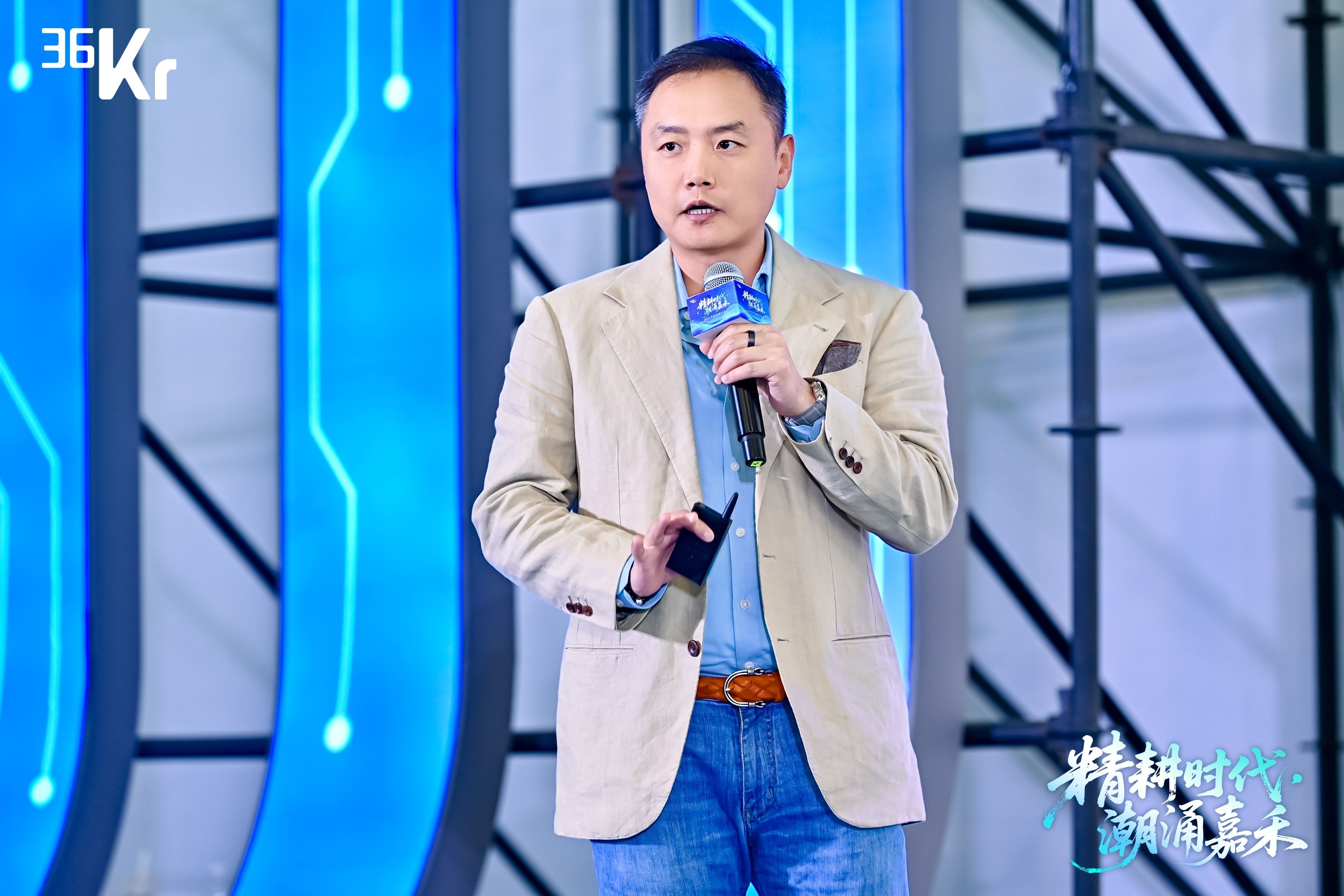
独立演讲:全球视野,本地深耕:消费投资的“Glocal”之道|2025年36氪产业未来大会
3 6 Ke· 2025-09-22 10:25
Core Insights - The conference held in Xiamen, China, focused on five key sectors: artificial intelligence, low-altitude economy, advanced manufacturing, new energy, and consumer goods, aiming to discuss development paths and industry future [1] - The event emphasized the collaboration between government, capital, and industry to address pain points and bottlenecks in industrial development [1] Company Overview - The company, founded in 1989, is the largest investment institution focused on the consumer sector globally, managing approximately $37 billion across nine different investment strategies [4] - The company has invested in over 300 representative consumer brands over the past 30 years, emphasizing long-term partnerships with enterprises [4] Investment Strategy - The company adopts a "Glocal" approach, combining global methodologies and consumer insights with local market applications, particularly in China [5] - The focus is on building brands that convey emotional value and resonate deeply with consumers, leveraging China's strong supply chain capabilities and mature digital commerce [5] Market Focus - The company prioritizes investments in China and the United States, while also exploring opportunities in Japan, India, Australia, New Zealand, Europe, and South America [4] - The company identifies sustainable consumer behavior trends, such as "contactless" payments and the rise of "solo economy," to guide investment decisions [8] Brand Development - The company aims to assist local emerging brands in achieving dual upgrades in branding and distribution, helping them secure advantageous positions in broader markets [9] - The company emphasizes the importance of emotional value in branding, illustrated by successful collaborations like the partnership between Heytea and FENDI [10] Localization Strategy - The company recognizes the need for localized understanding in the Chinese market, tailoring strategies to different regional consumer preferences and characteristics [11] - The company integrates local capabilities with global experience to support the growth of outstanding Chinese brands into industry leaders on a global scale [11]
燕塘乳业(002732) - 002732燕塘乳业投资者关系管理信息20250919
2025-09-19 09:34
Sales Performance - In the first half of 2025, online platform sales reached 137 million CNY, showing a significant increase compared to 2024 [1] - The company is actively expanding its market presence in Hong Kong and Macau through strategic product introductions and partnerships [1] Market Development - The company has become the exclusive milk brand for the "Milk and Soy Milk Program" in Macau for the 2024/2025 academic year, targeting early childhood and primary education [1] - Efforts to enhance brand influence in the Greater Bay Area include entering Hong Kong and Macau's central government canteens [1]

临沂打造“中国食品之都”新名片
Da Zhong Ri Bao· 2025-08-29 03:08
Core Viewpoint - Linyi is establishing itself as "China's Food Capital" through a modern industrial chain that integrates raw material cultivation and deep processing, achieving significant growth in the grain and oil industry [1] Industry Overview - By 2024, Linyi will have 161 large-scale enterprises in the premium grain and oil processing industry, with a production value exceeding 30 billion yuan [1] - From January to July this year, the number of large-scale enterprises increased to 177, achieving a production value of 19.69 billion yuan, representing a year-on-year growth of 25.2% [1] Raw Material Base - Linyi is a major grain and oil production base in China, with 9 national grain-producing counties and 6 top peanut counties [1] - The peanut planting area is 2.303 million acres, with a total output of 713,000 tons, ranking first in the province; wheat planting area is 4.388 million acres with a total output of 1.881 million tons; soybean planting area is 294,000 acres with processing capacity exceeding 1 million tons [1] Processing Industry - The processing sector is described as the "heart" of the industrial chain, with a focus on cluster development and intelligent transformation [1] - Three major processing clusters have emerged: - Peanut and vegetable oil processing cluster, centered in Ju County, with 222 peanut processing enterprises, including 21 large-scale ones, producing about 1/6 of the country's refined peanut oil [1] - Baked goods processing cluster, with over 670 enterprises producing more than 6 million tons of processed foods annually, covering over 1,000 varieties [1] - Grain processing industry chain, featuring the world's largest single flour mill and innovative products like zero-additive natural tofu [1] Technological and Collaborative Efforts - Linyi has 26 provincial-level specialized and innovative enterprises and 18 provincial-level R&D centers, collaborating with universities to tackle key processes [1] - The establishment of a 60-member "expert think tank" and various initiatives to support enterprise development have been implemented to enhance the industrial ecosystem [1] Future Outlook - The continuous efforts in "supplementing, strengthening, and extending" the industrial chain are expected to enhance Linyi's status as "China's Food Capital" [1]