货币桥

Search documents
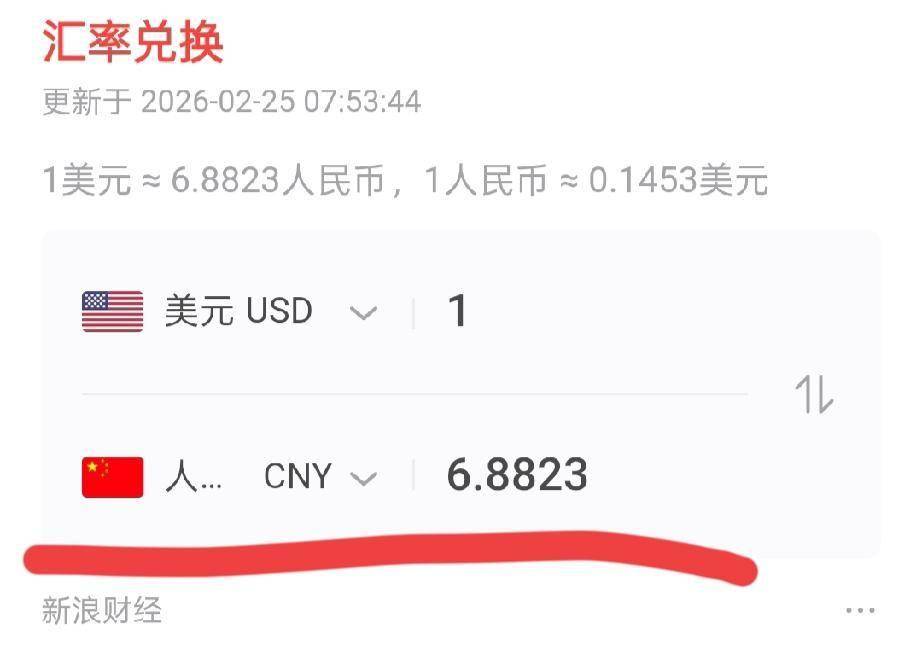
6.8823:1!人民币汇率一飞冲天,中国GDP凭空多出一个“阿根廷”
Sou Hu Cai Jing· 2026-02-25 11:31
Core Viewpoint - The recent appreciation of the Renminbi (RMB) against the US dollar has significant implications for China's GDP when converted to USD, highlighting a shift in the global economic landscape and the increasing strength of the RMB [4][12][56]. Group 1: Currency Appreciation and GDP Impact - The RMB has appreciated over 6% from 7.3 to 6.88 against the USD in three years, resulting in a substantial increase in China's GDP when calculated in USD, from approximately 19.63 trillion to 20.37 trillion [4][12]. - This appreciation translates to an additional USD 740 billion in GDP, equivalent to the GDP of Argentina for 2024, showcasing the impact of currency fluctuations on economic metrics [8][13]. Group 2: Factors Behind RMB Strength - The RMB's appreciation is driven by multiple factors, including improved US-China trade relations and a shift in US monetary policy towards interest rate cuts, which has weakened the dollar [15][16]. - Seasonal factors, such as the end-of-year foreign exchange settlement practices, have also contributed to the RMB's strength, as businesses and individuals convert foreign earnings into RMB [16]. Group 3: RMB Internationalization - The RMB's rise is not just a temporary phenomenon but is part of a broader trend towards its internationalization, supported by infrastructure developments like the revised Cross-Border Interbank Payment System (CIPS) [20][21]. - The use of RMB in international trade settlements is expanding, with significant increases in transactions with countries along the Belt and Road Initiative and notable shifts in energy trade, such as Saudi Arabia's decision to price oil exports to China in RMB [24][25]. Group 4: Global Economic Context - The decline of the US dollar's dominance is evident, with its share in global official foreign exchange reserves falling below 60% for the first time since 1995, indicating a shift in global financial dynamics [30]. - The increasing gold reserves held by countries, surpassing US Treasury holdings for the first time in decades, reflect a growing distrust in the dollar and a search for alternative assets [31]. Group 5: Strategic Approach of China - China's strategy regarding the RMB is focused on building a more diverse and equitable international monetary system rather than outright replacing the dollar, emphasizing the importance of maintaining a robust industrial base [34][39]. - The RMB's value is supported by China's comprehensive industrial system, ensuring that it is backed by tangible goods rather than debt, which is crucial in times of economic uncertainty [39][40]. Group 6: Implications for Individuals and Investors - The appreciation of the RMB has practical implications for individuals, making overseas travel and purchases cheaper, while also presenting challenges for export-oriented businesses due to reduced profit margins [45][47]. - For investors, the attractiveness of RMB-denominated assets is increasing, with a growing number of central banks incorporating RMB into their foreign exchange reserves, indicating a potential shift in global asset allocation strategies [49].

中国银行黑龙江省分行落地省内首笔“货币桥”业务 开辟数字时代跨境支付新通道
Zhong Guo Jin Rong Xin Xi Wang· 2025-12-19 13:32
Core Viewpoint - The successful execution of the first cross-border RMB remittance based on the multilateral central bank digital currency bridge in Heilongjiang Province marks a significant breakthrough in financial technology innovation and application by the Bank of China Heilongjiang Branch, establishing a new cross-border payment channel in the province [1] Group 1: Financial Technology Innovation - The cross-border financial infrastructure known as the "currency bridge" was jointly developed by the central banks of Thailand, the UAE, the People's Bank of China Digital Currency Research Institute, and the Hong Kong Monetary Authority [1] - This infrastructure aims to optimize traditional cross-border payment processes, addressing issues such as long processing times, low efficiency, and high costs, thereby creating a more convenient, efficient, and secure digital channel for cross-border fund flows [1] Group 2: Strategic Development - As a primary channel bank for global RMB cross-border services, the Bank of China leverages its global advantages and comprehensive features to expand new application scenarios for cross-border RMB [1] - During the 14th Five-Year Plan period, the Bank of China Heilongjiang Branch will continue to deepen the application of the multilateral central bank digital currency bridge in cross-border payments, advancing financial services in the digital realm and broadening the coverage of the digital RMB ecosystem [1]

一场技术与场景碰撞的创新秀
Jin Rong Shi Bao· 2025-07-25 00:57
Group 1: Digital Currency Development - Digital RMB has developed applications across various sectors including retail, dining, education, and public services, forming a replicable model for online and offline use [1][7] - As of April 2025, the cumulative transaction amount of digital RMB in pilot areas reached 10.8 trillion yuan, with 2.1 billion personal wallets opened through the digital RMB app [1][7] Group 2: Supply Chain Finance and Smart Contracts - Agricultural Bank of China has integrated digital RMB smart contracts into the supply chain of Luzhou Laojiao, enabling precise control of loan funds for 2,259 downstream distributors, resulting in 2.418 billion yuan in loans [2] - Smart contracts are effectively addressing financing challenges for small and micro enterprises, enhancing fund management efficiency and reducing compliance costs [2] Group 3: Prepaid Consumption Management - Postal Savings Bank has utilized smart contract technology to address the issue of "easy recharge, difficult refund" in prepaid consumption, covering over 700 merchants and preventing consumer losses [3] - Agricultural Bank has established a regulatory system for prepaid funds, incorporating over 4,000 merchants and 1.5 billion yuan into its network, ensuring consumer protection [3] Group 4: Inclusive Finance Innovations - CITIC Bank is exploring digital RMB loan services, launching products like "信保贷" and "政采e贷" to support small and micro enterprises [4] - Postal Savings Bank has created a payment loop from planting to retail in agricultural scenarios, demonstrating the practical application of digital RMB in rural finance [4] Group 5: Cross-Border Payment Enhancements - The "Currency Bridge" project aims to improve cross-border payment efficiency and reduce costs, with 35 banks from four jurisdictions participating in real transactions [8][9] - The platform can process cross-border payments in 6 to 9 seconds, significantly cutting costs compared to traditional methods [9] Group 6: Expanding Digital RMB Usage - Didi Group has integrated digital RMB into its services, allowing users to pay for bike rentals and freight services in over 250 cities [5][6] - Tencent is enhancing the digital RMB experience for foreign visitors in China, enabling them to use digital RMB in various scenarios through WeChat [10]





金融科技迎政策利好!发挥海量金融数据优势,大数据产业ETF(516700)盘中涨超1%,冲击日线3连阳!
Xin Lang Ji Jin· 2025-06-25 02:40
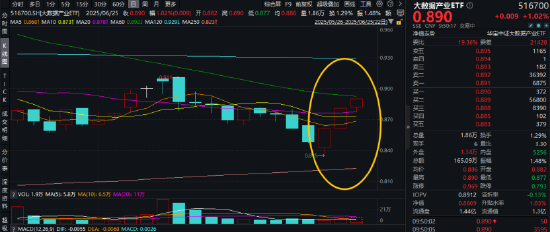
Group 1 - The big data industry continues to show activity, with companies like Aofei Data and Kehua Data rising over 5% [1] - The big data industry ETF (516700) is actively trading, with a morning increase of 1.02%, aiming for a third consecutive day of gains [1] - The People's Bank of China plans to develop a new stage financial technology development plan to enhance financial digitalization and intelligence [3] Group 2 - CITIC Construction Investment Securities notes that the domestic third-party payment industry is experiencing a continuous improvement in industry prosperity due to supply-side clearing and demand-side warming [4] - The payment sector is expected to see new growth points from service expansion and infrastructure development, particularly in cross-border payment systems [4] - The "golden triangle" of the Xinchuang industry is being built through policy support, AI empowerment, and the urgent need for domestic alternatives [4] Group 3 - The big data industry ETF (516700) tracks the CSI Big Data Industry Index, focusing on sectors like data centers and cloud computing [6] - Investors interested in technology self-reliance should pay attention to three catalysts: high-level calls for technology leadership, the activation of digital productivity, and the acceleration of the Xinchuang 2.0 wave [7] - The Xinchuang ETF (562030) covers core segments of the Xinchuang industry chain, including hardware, software, and information security, and is characterized by high growth and elasticity [7]
中信建投:25H2计算机或迎结构性行情 聚焦AI、跨境支付与信创三大方向
Zhi Tong Cai Jing· 2025-06-17 07:26
Group 1: AI Industry - The AI industry has become a core focus for both China and the US, with accelerated implementation of AI technologies [2] - Domestic models have entered the global first tier, driven by high demand for reasoning models and multi-modal technologies [2] - AI revenue share for industry chain companies is expected to gradually increase due to the rising demand for tokens [2] Group 2: Cross-Border Payment - The cross-border payment industry is expected to experience a comprehensive acceleration due to the combination of supply-side clearing and demand-side warming [3] - New technologies and market scenarios are likely to open up growth opportunities in the payment industry [3] - The development of alternative payment systems like CIPS and currency bridges is anticipated to grow rapidly, benefiting third-party payment and bank IT-related companies [3] Group 3: Autonomous Driving and Domestic Production - Strong policy support for domestic production and intelligent driving is driving the acceleration of these emerging sectors [4] - The opening of road and airspace rights is facilitating the automation and intelligent reconstruction of industries like logistics [4] - The domestic production sector is expected to recover after a slowdown, supported by national policies and the need for supply chain security [4]

中信建投:关税博弈下 CIPS、数字人民币与货币桥支付或将迎来新机遇
智通财经网· 2025-05-05 04:09
Group 1 - The core payment models for cross-border transactions include agency model, interconnected model, single platform model, and peer-to-peer model, with the SWIFT-based agency model dominating the landscape [2][20][39] - The SWIFT system is the most widely used financial communication infrastructure globally, but its governance structure has led to a centralized weakness, making it susceptible to being used as a tool for U.S. financial sanctions [2][10][17] - Future development paths for cross-border payments include creating payment systems based on local currencies, expanding coverage through national payment systems, building independent payment networks via third-party payments, and utilizing blockchain technology for new payment systems [2][20][21] Group 2 - The CIPS (Cross-Border Interbank Payment System) has been established as a crucial infrastructure for the internationalization of the Renminbi, with increasing business volume and participant engagement since its inception in 2015 [23][39] - As of March 2025, CIPS had 170 direct participants and 1,497 indirect participants, covering 119 countries and regions, with a total transaction volume of 175.49 trillion yuan in 2024, reflecting a year-on-year growth of 42.60% [39][26] - The digital Renminbi and the currency bridge project aim to enhance the internationalization of the Renminbi and facilitate cross-border transactions, with significant progress in pilot programs and real transactions [40][41][35] Group 3 - The SWIFT system's reliance on the U.S. dollar as the primary settlement currency poses challenges, as the dollar's dominance is expected to continue despite increasing calls for a multipolar payment system [16][19] - The governance structure of SWIFT has raised concerns about its ability to protect member countries' monetary sovereignty, leading to questions about its credibility [17][19] - The ongoing U.S.-China trade tensions and tariff escalations are driving the urgency for China to develop alternative payment systems to mitigate reliance on SWIFT and the dollar [38][39]