多边央行数字货币桥

Search documents
广东清远 铺就跨境人民币结算“高速路”
Jin Rong Shi Bao· 2026-02-24 03:38
Core Insights - The People's Bank of China (PBOC) in Qingyuan has focused on the core demands of foreign enterprises for "risk avoidance, cost reduction, and efficiency improvement," driving the growth of cross-border RMB settlement business since 2025 [1] Group 1: Cross-Border RMB Settlement Growth - As of October 2025, the cross-border RMB settlement scale in Qingyuan reached 22.518 billion yuan, a year-on-year increase of 20.8%, surpassing the provincial average growth rate by 1.9 percentage points [1] - The cross-border RMB settlement accounted for 35.1% of the total foreign and domestic currency payments, an increase of 3.8 percentage points compared to the same period last year [1] - The business has expanded its reach to 74 countries and regions, with 371 enterprises participating, significantly supporting local foreign trade stability and the development of the real economy [1] Group 2: Customized Services and Training - The PBOC organized 17 service meetings with eight key banks to provide tailored solutions for enterprises, addressing over ten queries related to transaction scenarios and settlement practices [2] - A total of 239 enterprises have been served by financial institutions in Qingyuan for cross-border RMB transactions over the past three years [2] - In the first ten months of 2025, the cross-border RMB payment amount in the fields of current account and direct investment reached 18.557 billion yuan, growing by 22.1%, which is 4.6 percentage points higher than the provincial average [2] Group 3: Enhanced Efficiency and Risk Management - The use of RMB for settlements has reduced the fund arrival time from three working days to within one working day, effectively mitigating exchange rate risks [3] - The number of "first-time users" of cross-border RMB settlements increased by 93, generating a business increment of 318 million yuan since 2025 [3] - Qingyuan has engaged in RMB settlement cooperation with 14 RCEP member countries, with a transaction scale exceeding 284 million yuan [3] Group 4: Quality Improvement in Cross-Border Transactions - A high-tech enterprise in Guangdong improved its RMB settlement ratio from 10% in 2022 to over 50% in 2025 after being included in the list of quality enterprises for cross-border RMB [4] - The PBOC has implemented a "white list" management for eligible enterprises, transitioning business processing online and shortening processing time by approximately two working days [4] - In the first ten months of 2025, 39 quality enterprises in Qingyuan processed 15.15 billion yuan in convenient transactions, marking a year-on-year increase of 2.7% [4]
数字人民币迈入“2.0时代” 规模化普及再提速
Zheng Quan Ri Bao· 2026-01-09 16:47
Core Insights - The launch of the "Carbon Inclusive" service marks the beginning of the "2.0 era" for digital RMB, indicating a shift towards deeper ecosystem development and systematic operations [1][3] Group 1: Digital RMB 2.0 Era - The digital RMB app was upgraded to version 2.0 on January 2, 2026, and the "Carbon Inclusive" service was launched on January 8, 2026, focusing on green finance applications [1][2] - The "Carbon Inclusive" service allows users to earn carbon credits for low-carbon activities, which can be converted into digital RMB, enhancing user engagement and promoting sustainable behaviors [2][3] Group 2: Strategic Upgrades - The introduction of interest on real-name wallet balances signifies a transition from "digital cash" (M0) to "digital deposit currency" (M1), enhancing the value storage function of digital RMB [3] - The combination of the "Carbon Inclusive" program and interest-bearing wallets is seen as a dual engine driving the accelerated adoption of digital RMB, integrating it into daily life and green development [3] Group 3: Future Trends - The People's Bank of China has outlined a new management and service framework for digital RMB, set to be implemented on January 1, 2026, with significant transaction volumes already recorded [4][5] - Future trends for digital RMB include accelerated scaling, expanded application scenarios, enhanced cross-border payment capabilities, and improved regulatory frameworks, positioning it as a key infrastructure for global payments [5]

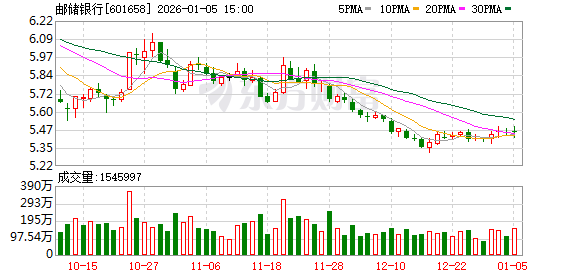
邮储银行:我行立足资源禀赋 植根本土发展
Zheng Quan Ri Bao· 2026-01-05 15:05
Core Viewpoint - Postal Savings Bank emphasizes its commitment to local development and comprehensive cross-border services for both individual and corporate clients, leveraging its extensive network and online channels [2] Group 1: Services for Individual Clients - The bank offers a range of services including foreign currency savings, international remittances, foreign exchange trading, currency exchange, and issuance of foreign currency carrying certificates [2] - It has partnered with DBS Bank to launch cross-border wealth management services (Southbound) for clients in the Greater Bay Area, facilitating diversified global asset allocation [2] Group 2: Services for Corporate Clients - The bank provides 24/7 cross-border settlement, financing, and foreign exchange services, collaborating with overseas branches of Chinese banks, globally significant banks, and core regional banks in overseas financial markets [2] - It aims to build a global international cooperation layout and supports the "Belt and Road" initiative through overseas project financing, cross-border syndication, and guarantees [2] Group 3: Digital Currency Initiatives - Since 2024, the bank has successfully connected to a multilateral central bank digital currency bridge, which serves various industries including finance, manufacturing, retail, construction, wholesale, logistics, and precious metal processing [2] - The digital currency bridge offers advantages such as instant transactions and full traceability, effectively supporting the bank's overseas business development [2]


数字人民币时代来临:揭秘2026年金融革命,重塑你的钱包和生活!
Sou Hu Cai Jing· 2026-01-01 21:40
Core Viewpoint - The official launch of the digital renminbi on January 1, 2026, marks a significant milestone in China's financial development, transitioning from a trial phase to a fully integrated payment method in daily economic life [1]. Group 1: Definition and Characteristics - The digital renminbi is a state-issued currency with the same legal status as physical cash, fundamentally different from speculative cryptocurrencies like Bitcoin [3]. - It operates as a digital wallet linked to bank accounts, allowing users to access their funds directly, which can also accrue interest [3]. Group 2: Strategic Importance - The digital renminbi is designed to enhance financial stability and prepare for potential future risks, ensuring that basic economic transactions can continue even in extreme situations, such as natural disasters [4]. - It provides a new payment channel that reduces reliance on Western-dominated payment systems, enhancing China's position in global trade and finance [5]. Group 3: Economic Management Tool - The digital renminbi's programmable features allow for more effective government subsidies, ensuring funds reach their intended targets without loss through intermediaries [7]. - It can protect consumer rights through smart contracts, ensuring that funds are only released under specific conditions, thus preventing fraud [7]. Group 4: Integration with Existing Systems - Digital renminbi will coexist with existing payment platforms like WeChat and Alipay, enhancing their functionality by allowing transactions directly from digital wallets [8]. - It features a controllable anonymity design, protecting user privacy during small transactions while enabling regulatory oversight for serious crimes [9]. Group 5: Societal Impact - The digital renminbi will facilitate smarter management and resource allocation, allowing the government to better understand market dynamics and consumer needs [11]. - It aims to enhance financial security for individuals, preventing fraud and theft while promoting better personal financial management through its features [11].
人民银行副行长陆磊:数字人民币跨境使用将支持离岸金融业务创新
Bei Jing Shang Bao· 2025-12-29 02:45
Core Viewpoint - The People's Bank of China has introduced an action plan to enhance the management and service system for digital currency, with a new framework set to launch on January 1, 2026 [1] Group 1: Digital Currency Infrastructure - The action plan includes the establishment of an international operation center for digital currency in Shanghai and the promotion of a multilateral central bank digital currency bridge, showcasing the practical application of blockchain technology [1] - The digital currency international operation center will build a blockchain service platform and digital asset platform based on a unified ledger, providing on-chain settlement tools and cross-chain transfer capabilities [1] - The multilateral central bank digital currency bridge aims to address issues of "business sovereignty and currency sovereignty" across jurisdictions, ensuring equal rights and responsibilities among all participants [1] Group 2: Future Development and Applications - The cross-border use of digital currency will continue to expand through technological iterations, reducing service costs and facilitating cross-border trade and investment [2] - The development of digital currency will focus on meeting the needs of the real economy, adopting a balanced approach to account-based and value-based digital currency models [2] - The digital currency will be designed to cater to various scenarios and different business entities, promoting innovation in offshore financial services [2]
创新数字人民币应用场景
Sou Hu Cai Jing· 2025-12-28 23:25
Core Insights - The People's Bank of China (PBOC) in Yangzhou has facilitated a significant cross-border payment using the multi-currency central bank digital currency (CBDC) bridge, marking a payment of 25 million yuan, which is the largest single transaction of its kind in Yangzhou [1] - The multi-currency CBDC bridge significantly reduces payment processing time from 5-6 hours to approximately 40 minutes, enhancing efficiency in international procurement and production planning [1] - Jiangsu province has actively promoted the adoption of digital yuan, integrating it into over 100 innovative scenarios and technical products across various sectors, including public services and transportation [1][2] Group 1 - The multi-currency CBDC bridge has processed a cumulative transaction amount exceeding 18 billion yuan across 13 cities in Jiangsu, showcasing its effectiveness in cross-border payments [1] - Digital yuan payment has been implemented in various public services, with over 80% coverage in key areas such as public transportation and utility payments [1] - Jiangsu's digital yuan initiatives are part of a broader strategy to enhance consumption, promote high-level openness, and support the development of a digital economy [2] Group 2 - Specific regions like Huai'an and Xuzhou have tailored digital yuan service packages for over 300 specialized and technology-driven enterprises, achieving a transaction volume of 1.5 billion yuan [2] - Jiangsu has launched over 4,400 prepaid consumer products, generating transaction amounts exceeding 20 million yuan, indicating a shift towards large-scale applications of smart contracts [2] - By the end of November 2025, Jiangsu is projected to have a digital yuan transaction volume exceeding 5 trillion yuan, with a 90% year-on-year growth, leading the nation in cumulative transaction and consumption amounts [2]
八部门发文!西部陆海新通道建设迎来金融支持重点举措
Xin Hua Wang· 2025-12-24 10:59
Core Viewpoint - The People's Bank of China and eight other departments have jointly issued 21 key financial support measures to promote the high-quality development of the Western Land-Sea New Corridor, focusing on enhancing the core financial functions of "financing" and "settlement" [1][2]. Group 1: Financial Support Measures - The opinion outlines key measures to deepen financial reform, innovation, and openness, aiming to improve the financial service system for the Western Land-Sea New Corridor [1]. - It emphasizes the integration of financial resources and encourages financial institutions to explore a unified credit mechanism for branches along the corridor [1]. - A fund will be established in Chongqing to support infrastructure and industrial park construction along the corridor [1]. Group 2: Financial Open System - The opinion supports the establishment of financial hubs in various regions, including the China-ASEAN Financial City in Guangxi and a cross-border investment and financing platform in Guangdong Zhanjiang [2]. - It promotes participation in multilateral central bank digital currency bridge projects and encourages the use of digital currencies for cross-border payments with countries like Thailand and the UAE [2]. - The People's Bank of China plans to work with local governments to implement these measures, leveraging financial services to create a new pattern of open cooperation [2].
中国银行黑龙江省分行落地省内首笔“货币桥”业务 开辟数字时代跨境支付新通道
Zhong Guo Jin Rong Xin Xi Wang· 2025-12-19 13:32
Core Viewpoint - The successful execution of the first cross-border RMB remittance based on the multilateral central bank digital currency bridge in Heilongjiang Province marks a significant breakthrough in financial technology innovation and application by the Bank of China Heilongjiang Branch, establishing a new cross-border payment channel in the province [1] Group 1: Financial Technology Innovation - The cross-border financial infrastructure known as the "currency bridge" was jointly developed by the central banks of Thailand, the UAE, the People's Bank of China Digital Currency Research Institute, and the Hong Kong Monetary Authority [1] - This infrastructure aims to optimize traditional cross-border payment processes, addressing issues such as long processing times, low efficiency, and high costs, thereby creating a more convenient, efficient, and secure digital channel for cross-border fund flows [1] Group 2: Strategic Development - As a primary channel bank for global RMB cross-border services, the Bank of China leverages its global advantages and comprehensive features to expand new application scenarios for cross-border RMB [1] - During the 14th Five-Year Plan period, the Bank of China Heilongjiang Branch will continue to deepen the application of the multilateral central bank digital currency bridge in cross-border payments, advancing financial services in the digital realm and broadening the coverage of the digital RMB ecosystem [1]

台资银行首笔数字人民币“货币桥”跨境业务落地
Zhong Guo Jing Ying Bao· 2025-12-16 02:14
Core Insights - Fubon Bank's Suzhou branch, in collaboration with Industrial Bank's Shanghai branch, successfully executed the first cross-border digital RMB currency bridge (mBridge) transaction, marking a significant milestone for Taiwanese banks in the digital currency space [1] Group 1: Digital Currency Bridge - The mBridge project is a cross-border financial initiative launched by the People's Bank of China, Hong Kong Monetary Authority, Bank of Thailand, and Central Bank of the United Arab Emirates, aimed at facilitating the issuance and exchange of central bank digital currencies (CBDCs) on a unified platform [1] - The currency bridge significantly reduces payment processing time from "daily settlement" to "minutes," addressing issues of high costs, low efficiency, and lack of transparency in traditional cross-border payment systems [1] Group 2: Technological Implementation - Fubon Bank utilized distributed ledger technology (DLT) through the mBridge platform to assist Jiangsu Hengtong Optic-Electric Co., Ltd. in efficiently completing cross-border remittances for goods trade [1]
央行副行长陆磊:运用数字人民币探索跨境支付新方案
2 1 Shi Ji Jing Ji Bao Dao· 2025-11-03 14:19
Core Insights - The People's Bank of China (PBOC) emphasizes the importance of cross-border payment cooperation with Hong Kong, leveraging financial technology innovations to enhance economic integration [1] - The digital yuan is being actively explored for cross-border payment solutions, with China being a pioneer in the development and application of central bank digital currencies (CBDCs) [1][2] - The establishment of the Digital Yuan International Operation Center in Shanghai and the Digital Yuan Operation Management Center in Beijing marks a significant step in the infrastructure for digital currency [2][3] Group 1 - The PBOC is expanding the Renminbi Cross-Border Payment System (CIPS) in Hong Kong and promoting interconnectivity between rapid payment systems [1] - The digital yuan international operation center in Shanghai has launched three major platforms: cross-border digital payment, blockchain service, and digital asset platforms [2] - The digital yuan operation management center in Beijing will oversee the core infrastructure of the digital yuan system and promote its development [3] Group 2 - The PBOC is pushing for a multilateral central bank digital currency bridge to explore new paradigms in cross-border payments [5] - The digital yuan cross-border payment platform is designed to facilitate bilateral cooperation with various monetary authorities, enhancing cross-border connectivity [5] - The integration of the "blockchain + digital asset" dual platform aims to improve regulatory efficiency and asset digitization, thereby optimizing economic resource allocation [5]