贷款贴息

Search documents
“六箭齐发”彰显宏观调控创新
Sou Hu Cai Jing· 2026-01-25 23:11
Core Viewpoint - The Ministry of Finance, in collaboration with the central bank and other relevant departments, has launched a series of coordinated fiscal and financial policies aimed at boosting domestic demand as the main driver of economic growth, emphasizing the importance of policy and execution collaboration [2][3]. Group 1: Policy Innovation - A new package of policies has been introduced, including interest subsidies for loans to small and micro enterprises, a special guarantee plan for private investment, and a risk-sharing mechanism for private enterprise bond issuance, aimed at addressing financing difficulties and costs [3]. - The policies utilize a combination of tools such as loan interest subsidies and guarantees to support both indirect and direct financing, enhancing the effectiveness of fiscal and monetary policy collaboration [3]. Group 2: Policy Optimization - Among the six policies released, three focus on optimizing existing measures, including interest subsidies for equipment upgrades and personal consumption loans, which have proven effective in expanding domestic demand [4]. - The optimization includes extending implementation periods, broadening support areas, and increasing the number of participating banks, thereby enhancing the precision and effectiveness of existing policies [4]. Group 3: Policy Strength - The new policies demonstrate significant financial commitment, with a special guarantee plan for private investment amounting to 500 billion yuan, and increased loan limits for service sector entities and small enterprises, effectively reducing their financing costs [5]. - The interest subsidy for small and micro enterprises is set at 1.5% of the total loan amount for a maximum period of two years, with individual loan amounts reaching up to 50 million yuan, showcasing a proactive macroeconomic policy approach [5].


加强商务金融协同 促消费“组合拳”再加码
Sou Hu Cai Jing· 2025-12-17 10:40
Core Viewpoint - The recent Central Economic Work Conference emphasizes the need for financial institutions to enhance support for expanding domestic demand, leading to the issuance of a notification aimed at boosting consumption through 11 policy measures [1][3]. Group 1: Policy Measures - The notification outlines 11 policy measures focusing on key areas such as commodity consumption, service consumption, new consumption types, consumption scenarios, and consumer assistance [1][3]. - It encourages local business departments to collaborate with financial management departments to establish effective coordination mechanisms to address challenges in implementing financial support for consumption [3][7]. Group 2: Financial Support - The notification highlights the importance of enhancing financial services for durable goods and digital products, aiming to unlock the potential for upgrading commodity consumption [5]. - It proposes innovative financial products and services tailored to various service consumption sectors, including home services, hospitality, entertainment, education, tourism, and elder care [5][6]. Group 3: Consumption Scenarios and Assistance - The notification calls for the development of diverse consumption scenarios and assistance measures, including specialized loan products for rural e-commerce and county-level commercial improvements [6]. - It emphasizes the integration of financing, settlement, and insurance services to support the construction of international consumption centers and convenient living circles [6]. Group 4: Cooperation and Information Sharing - The notification encourages a collaborative approach among government, financial institutions, and enterprises to conduct diverse consumption promotion activities and share information effectively [7]. - It suggests establishing a regular "government-finance-enterprise" platform to facilitate information sharing and risk-sharing, addressing the issue of short-term credit withdrawal after promotional activities [7][8].
【省农业农村厅】陕西银企精准对接助推乡村产业全链升级
Shan Xi Ri Bao· 2025-12-08 23:17
Group 1 - The core objective of the financing conference held by the provincial agricultural and rural affairs department is to address the "difficult and expensive financing" issues in the agricultural sector, promoting precise connections between banks and enterprises, and enhancing the integration of industrial and financial chains to support rural revitalization [1] - The current agricultural entities in Shaanxi are generally "small, scattered, and weak," with only 2 out of over 700 provincial-level leading enterprises achieving annual sales exceeding 10 billion yuan, leading to a lack of collateral and varied credit levels among operators, which makes financial institutions hesitant to lend [1] - During the 14th Five-Year Plan period, financial institutions have implemented various supportive policies, resulting in a total agricultural loan scale of 970 billion yuan and a reduction in comprehensive financing costs by over 3 percentage points, significantly enhancing agricultural industrialization in Shaanxi [1] Group 2 - The Shaanxi agricultural and rural system has been actively implementing a five-year action plan for key industrial chain construction, exploring a "chain leader + bank leader" mechanism, and promoting collaboration among government, banks, and enterprises to strengthen leading enterprises and enhance local industrial chains [2] - By 2025, the comprehensive output value of 8 key industrial chains in the province is estimated to reach 664.9 billion yuan, driving the development of 26 municipal chains exceeding 10 billion yuan and 131 county-level chains exceeding 1 billion yuan [2] - The provincial agricultural and rural department emphasizes the broad prospects for government-bank cooperation and plans to continue facilitating connections between banks and enterprises, ensuring effective alignment of financial policies with the financing needs of key industrial chains [2]
高效落实“两项贴息政策”,湖北21家商业银行累计为116亿元贷款办理贴息
Sou Hu Cai Jing· 2025-10-30 10:36
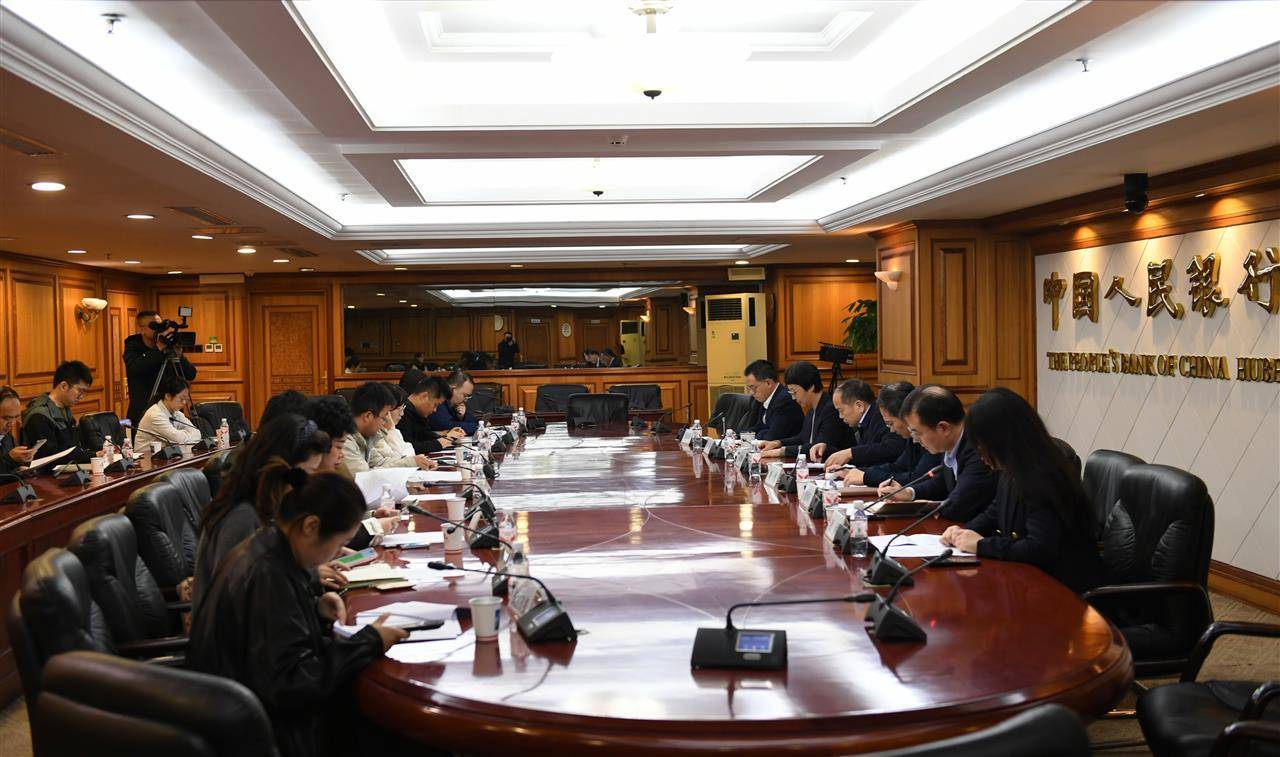
Core Insights - The People's Bank of China (PBOC) Hubei Branch has effectively implemented a series of financial policies to support the local economy, focusing on major projects and key industries, resulting in significant increases in credit and loan support for businesses and consumers [3][4]. Group 1: Financial Support and Policy Implementation - As of the end of September, 21 commercial banks in Hubei provided convenient interest subsidies for 5,500 service industry entities and 88,000 consumers, amounting to 7.9 billion yuan and 3.7 billion yuan in loans respectively [2][3]. - The total credit amount for investment projects exceeding 100 million yuan in Hubei has surpassed 2 trillion yuan, contributing to a 12.6% year-on-year increase in medium to long-term loans for the manufacturing sector, which is 2.64 percentage points higher than the previous year [3][4]. Group 2: Focus on Key Sectors - Financial resources in Hubei are increasingly concentrated on key areas such as technological innovation, green development, and small and micro enterprises, with the balance of various structural policy tools reaching 249.3 billion yuan, a 13.5% year-on-year increase [4]. - The balance of re-loans for agriculture and small enterprises reached 98.5 billion yuan, marking a 42% year-on-year increase and setting a historical high [4]. Group 3: Enhancements in Financial Services - The province has utilized digital tools to enhance financial service efficiency, with loans issued through the "301" online credit model totaling 447.1 billion yuan, and 352 billion yuan through a credit information platform for small enterprises [5]. - The average interest rate for newly issued corporate loans in September dropped to 2.99%, a decrease of 0.46 percentage points compared to the same month last year, reflecting efforts to lower financing costs [5]. Group 4: Future Directions - The PBOC Hubei Branch plans to continue implementing a moderately loose monetary policy and enhance financial support measures to improve service quality and provide robust financial backing for Hubei's "pivot construction" [5].
财政部部长蓝佛安最新发声!
天天基金网· 2025-07-30 05:12
Core Viewpoint - The article emphasizes the importance of utilizing proactive fiscal policies to enhance economic performance and stability, focusing on measures such as issuing long-term special bonds and local government bonds to stimulate growth and improve microeconomic circulation [1][2]. Group 1: Fiscal Policy Measures - The Ministry of Finance plans to accelerate the issuance and utilization of ultra-long-term special bonds and local government special bonds to create tangible work volume as soon as possible [1]. - A total of 14.1 trillion yuan was spent from the national general public budget in the first half of the year, ensuring strong support for key areas [1]. - By the end of June, the central government had allocated 9.29 trillion yuan in transfer payments to local governments, with over 90% of central budget investments disbursed [1]. Group 2: Debt Management and Economic Support - The Ministry of Finance has implemented a one-time increase of 6 trillion yuan in the debt limit for 2024, with 3.8 trillion yuan in new replacement bonds issued by the end of June [2]. - The average interest cost of replaced debt has decreased by over 2.5 percentage points, significantly alleviating repayment pressure and freeing up more funds for development and public needs [2]. - The focus is on promoting consumption to expand domestic demand, with policies aimed at enhancing service consumption in areas such as elderly care, childcare, culture, and tourism [2]. Group 3: Social Spending and Employment Support - In 2025, the budget for education, social security, and employment is set to be nearly 4.5 trillion yuan, with year-on-year growth of 6.1% and 5.9% respectively [3]. - The central government has allocated 1.1 trillion yuan for basic pension insurance subsidies, ensuring timely and full payment of pensions [3]. - Policies to support employment, such as job retention subsidies and tax reductions, are being strengthened to protect key groups in the labor market [3]. Group 4: Fiscal and Tax System Reform - The article discusses the need for a modern budget system and improved budget management practices to enhance local fiscal autonomy [4]. - There are plans to optimize the consumption tax system and improve the value-added tax refund policy to align with new business models [4]. - The Ministry of Finance is promoting zero-based budgeting reforms at the central level to support local governments in similar reforms [4].