
超值套餐

Search documents
麦当劳Q4业绩超预期股价涨2.28%,2026年计划全球新开2600家店
Jing Ji Guan Cha Wang· 2026-02-12 19:53
Core Viewpoint - McDonald's stock rose by 2.28% on February 12, 2026, driven by better-than-expected Q4 2025 earnings report released on February 11, 2026 [1] Performance Overview - Key performance indicators exceeded market expectations, with global same-store sales growth of 5.7%, significantly above the analyst average forecast of 3.7% [2] - In the U.S. market, same-store sales increased by 6.8%, surpassing the expected 5.1%, marking the third consecutive quarter of growth [2] - Adjusted earnings per share for the quarter were $3.12, higher than the anticipated $3.04, and revenue reached $7 billion, slightly exceeding expectations [2] - The strong performance was attributed to effective marketing strategies focused on value meals, which successfully attracted customers and increased foot traffic [2] Executive Changes - CEO Chris Kempczinski stated that the company's value strategy is proving effective by listening to customer needs, enhancing foot traffic, and strengthening price advantages [3] - CFO Ian Borden highlighted that the fourth quarter's growth was particularly strong, driven by popular promotional activities such as "Monopoly" and "Christmas Character" [3] - Management's confidence in the current strategy has bolstered market sentiment [3] Company Expansion Plans - The company announced an aggressive expansion plan, with projected capital expenditures between $3.7 billion and $3.9 billion for 2026 [4] - Plans include adding approximately 2,600 new restaurants globally (net increase of 2,100), with 750 new locations in the U.S. market [4] - This expansion is expected to contribute 2.5% growth to global system sales in 2026, providing visibility for future performance [4]
股价不断攀升!业绩超预期!麦当劳四季度美国营收增速创两年新高!超值套餐重塑性价比优势
美股IPO· 2026-02-12 00:54
Core Viewpoint - McDonald's has achieved its fastest sales growth in over two years in the U.S. during the fourth quarter, driven by value meals appealing to cost-conscious consumers [2] Group 1: Financial Performance - In Q4, McDonald's revenue reached $7 billion, a 9.5% year-over-year increase, exceeding expectations by $160 million [2] - Adjusted earnings per share were $3.12, surpassing forecasts by $0.07 [2] - Comparable sales at existing U.S. restaurants grew by 6.8% compared to the same period last year, marking the highest growth rate in 2023 [2] - The company's adjusted profit also exceeded average expectations, with comparable sales in its two international segments also outperforming forecasts [2] Group 2: Expansion and Strategy - McDonald's aims to achieve a global target of 50,000 restaurants by the end of 2027, with an accelerating pace of new openings [3] - The company is focused on re-establishing its position as an affordable dining option in the wake of rising prices post-pandemic, with Q4 performance indicating success in this strategy [3] - CEO Chris Kempczinski noted that the focus on affordability has improved customer traffic in Q4, aided by successful marketing campaigns [3] Group 3: Product Performance and Market Share - The Grinch meal performed exceptionally well, contributing to what the company described as the highest sales day in its history [4] - McDonald's gained market share among low-income consumers in December, with momentum from value meals continuing into January [4] - The company plans to introduce new beverages this year following a pilot of a small drink concept called CosMc's [4] Group 4: Competitive Landscape - Despite challenges, McDonald's is gaining market share as consumers adjust their spending habits due to rising costs [5] - Competitor Yum Brands reported better-than-expected sales, largely driven by Taco Bell's strong performance with its low-priced menu items [5] - Chipotle Mexican Grill indicated strong performance in early 2026, although it provided a pessimistic outlook for the full year due to disruptions from a winter storm [5]


超值套餐重塑性价比优势,麦当劳(MCD.US)四季度美国营收增速创两年新高
Zhi Tong Cai Jing· 2026-02-11 23:48
Core Viewpoint - McDonald's has achieved its fastest sales growth in over two years in the U.S. during the fourth quarter, driven by value meals appealing to cost-conscious consumers [1] Group 1: Financial Performance - McDonald's reported fourth-quarter revenue of $7 billion, a year-over-year increase of 9.5%, exceeding expectations by $160 million [1] - Adjusted earnings per share were $3.12, surpassing forecasts by $0.07 [1] - Comparable sales at existing U.S. restaurants grew by 6.8% year-over-year, marking the highest growth rate in 2023 [1] Group 2: Strategic Initiatives - The company aims to achieve a global target of 50,000 restaurants by the end of 2027, with an accelerating pace of new openings [1] - McDonald's has focused on re-establishing its position as an affordable dining option post-pandemic, with successful initiatives including value menu items and meals priced as low as $5 [1] Group 3: Marketing and Consumer Engagement - CEO Chris Kempczinski noted that a focus on affordability has improved customer traffic in the fourth quarter [2] - Successful marketing campaigns, including the reintroduction of the "Monopoly" game and the "Grinch" themed meal, contributed to increased customer spending [2] - The "Grinch" meal performed exceptionally well, leading to the highest sales day in the company's history [2] Group 4: Competitive Landscape - Despite challenges, McDonald's is gaining market share as consumers adjust their spending habits due to rising costs [3] - Competitors like Yum Brands and Chipotle have also reported strong sales, with Taco Bell's low-priced menu items gaining popularity [3]
麦当劳Q3净利润小幅下滑,同店销售超预期,“超值套餐”推动美国市场复苏 | 财报见闻
Hua Er Jie Jian Wen· 2025-11-05 13:07
Core Insights - McDonald's third-quarter revenue and adjusted earnings per share fell short of market expectations, but global same-store sales growth exceeded forecasts, indicating the effectiveness of the company's "value meal" promotions in attracting cautious consumers [1][2]. Financial Performance - Third-quarter revenue was $7.08 billion, a 3% year-over-year increase, but slightly below the expected $7.1 billion [2]. - Adjusted net income for the quarter was $2.31 billion, a slight decrease from $2.32 billion in the same period last year [2]. - Adjusted earnings per share were $3.22, missing analyst expectations of $3.32 and down from $3.23 a year ago [2]. Same-Store Sales Growth - Global same-store sales increased by 3.6%, slightly above the analyst average expectation of 3.55% [2]. - In the U.S. market, same-store sales grew by 2.4%, primarily driven by an increase in customer spending per visit, significantly higher than the 0.3% growth in the same quarter last year [5]. Market Response - Following the earnings report, McDonald's stock initially dropped in pre-market trading but later recovered to rise by 0.9% [2]. - Year-to-date, the company's stock has increased by 3.2%, underperforming compared to the S&P 500 index's 15% gain during the same period [2]. Promotional Strategies - The "value meal" initiative has been pivotal in reviving the U.S. market, with the $5 value meal promotion maintained for over a year and additional discounts introduced in August [5]. - The introduction of a $2.99 snack wrap in July significantly boosted demand, although growth momentum slowed in August and September [6]. International Market Performance - International sales grew by 4.3%, with Germany and Australia being key contributors to this growth [6]. - Sales from restaurants operated by local partners surged by 4.7%, largely driven by the Japanese market [6]. Customer Traffic Challenges - Despite the positive sales figures, overall customer traffic declined by 3.5% from July to September, compared to a 2.3% decline in the fast-food sector overall [6]. - Analysts express concerns about the long-term sustainability of the value meal strategy, particularly regarding the financial support needed to maintain significant discounts for franchisees [6].
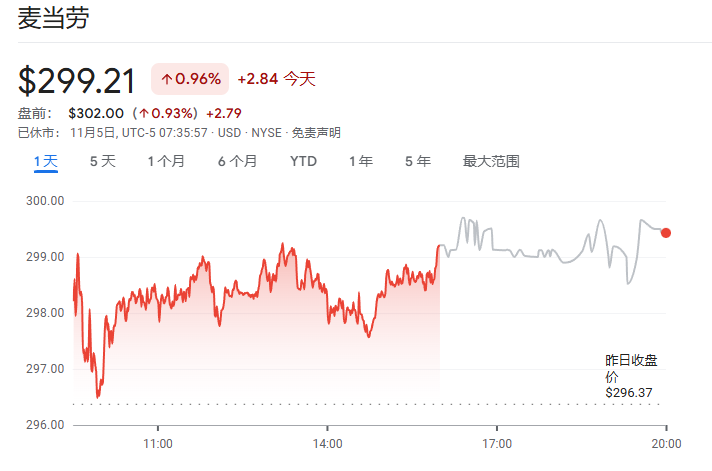
财报前瞻 | 超值策略获顾客青睐 麦当劳(MCD.US)Q3同店销售额料再度增长
智通财经网· 2025-11-05 07:17
Core Viewpoint - McDonald's is set to report its Q3 2025 earnings, with Wall Street expecting revenue of $7.1 billion and earnings per share of $3.33, indicating a focus on consumer spending trends and the company's strategic responses [1] Group 1: Financial Performance - Wall Street anticipates a 3.5% increase in global same-store sales for McDonald's in Q3, with U.S. same-store sales expected to grow by 1.9% [1] - The company is projected to achieve same-store sales growth for the second consecutive quarter, benefiting from its value strategy [1] Group 2: Product Strategy - McDonald's has reintroduced the "Snack Wraps," a portable chicken wrap product, for the first time in nine years, and has also launched value meals that were previously paused during the pandemic [1] Group 3: Market Sentiment - Despite concerns from investors regarding the restaurant industry and the overall economy, McDonald's stock has only risen by 3% this year [1] - The company is viewed as a barometer for consumer financial health, particularly among low-income consumers, who have shown reduced spending over the past year [1]
麦当劳如何应对美国“双层经济”困境?
财富FORTUNE· 2025-09-12 13:17
Core Insights - McDonald's is leveraging its sales of burgers and fries to reflect broader economic trends in the U.S. The CEO, Chris Kempczinski, is responding to what he calls a "dual economy" by lowering value meal prices to cater to different consumer spending behaviors [1][2] Group 1: Economic Trends - The economic landscape is characterized by a "dual structure," where high-income consumers continue to spend freely, while middle and low-income consumers are tightening their budgets [2][5] - McDonald's has seen a double-digit decline in customer traffic among middle and low-income groups, who are either skipping breakfast or eating at home [2][4] Group 2: Pricing Strategies - In response to rising menu prices, McDonald's is promoting a revamped $5 meal deal and increasing promotional activities to attract low-income consumers [4][6] - The company is focusing on a "value" theme in its advertising to appeal to cost-conscious families [4][6] Group 3: Labor and Wage Issues - McDonald's is open to discussions about raising the federal minimum wage, which has not been adjusted since 2009, and is currently at $7.25 per hour [3] - Proposed legislation aims to gradually increase the federal minimum wage to $17 by 2030, indicating a shift towards higher wage standards after years of stagnation [3] Group 4: Competitive Landscape - McDonald's ability to lower prices without severely impacting profitability is a competitive advantage that smaller rivals may not possess [4][6] - The broader retail environment reflects similar trends, with major retailers like Walmart and Target reporting that many customers can only afford basic necessities [5][6] Group 5: Future Outlook - The sustainability of McDonald's balanced strategy will largely depend on how long the dual economy persists in the U.S. [6]
美国人吃不起麦当劳了?麦当劳CEO称将恢复“超值套餐”,最低只要5美元
Sou Hu Cai Jing· 2025-09-05 01:34
Group 1 - McDonald's CEO Chris announced the return of "value meals" in the U.S. on September 8, with prices starting at $5 for a sausage McMuffin with egg and $8 for a Big Mac meal, following a strategy that was popular during the 2008 financial crisis [1] - Recent months have seen a significant decline in sales among low-income customers, with a nearly double-digit drop compared to the previous quarter [1] - The economic pressure on low-income consumers is reflected in their dining habits, with many skipping breakfast, indicating growing financial strain as of 2025 [1] Group 2 - McDonald's will offer eight meal options during breakfast, lunch, and dinner, with prices 15% lower than purchasing items separately [2] - The CFO Ian Borden emphasized the need to appeal to all consumers, including low-income individuals [2] - Economic experts warn that rising prices could lead to cautious consumer behavior, potentially creating a vicious cycle of layoffs and reduced spending power [2]