
通用具身机器人灵犀X2

Search documents
中国三大国际科创中心如何成为全球创新“关键极”?
Xin Lang Cai Jing· 2026-02-06 13:45
Core Insights - The article emphasizes the establishment of three major international technology innovation centers in China: Beijing (Jing-Jin-Ji), Shanghai (Yangtze River Delta), and the Guangdong-Hong Kong-Macau Greater Bay Area, which are seen as strategic choices to enhance China's global competitiveness and foster new productive forces [1][3]. Group 1: Regional Advantages - The Jing-Jin-Ji region, centered in Beijing, boasts the highest quality research resources in China, including top universities and research institutions, and is at the forefront of basic research in fields like artificial intelligence and quantum information [3][5]. - The Yangtze River Delta, leveraging Shanghai's resource aggregation capabilities, has formed a complete industrial system that competes with global leaders in integrated circuits and biomedicine, with Shanghai ranked 10th globally in the GIHI2025 index [5][6]. - The Guangdong-Hong Kong-Macau Greater Bay Area utilizes its unique "one country, two systems" advantage to lead in applications like 5G and new energy, achieving a global ranking of 2nd in innovation hubs [5][6]. Group 2: Global Innovation Dynamics - The article draws parallels with international innovation centers, highlighting that successful models like Silicon Valley and Boston are characterized by deep integration of top research institutions and enterprises, open markets for innovation factors, and a culture that tolerates failure [6][7]. - China's innovation cities are transitioning from "catching up" to "keeping pace" and even "leading" in certain areas, with 21 cities making it to the global top 100, second only to the United States [7][8]. Group 3: Future Development Strategies - To build globally influential innovation centers, China must focus on enhancing original innovation capabilities, improving talent attraction and development mechanisms, and deepening the integration of innovation and industrial chains [8][11]. - The article suggests constructing an open and collaborative innovation ecosystem to enhance global resource allocation capabilities, breaking down regional administrative barriers and fostering cooperation with top global innovation clusters [11].

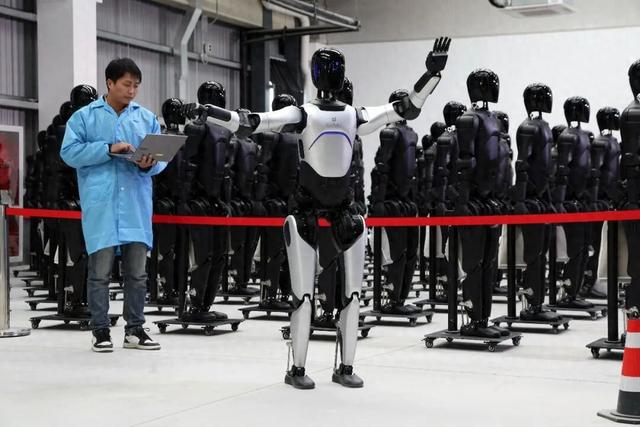
智元机器人2025年出货量超过5100台,2026年出货量预计“可达数万台”
Xin Lang Cai Jing· 2026-01-05 09:09
Core Insights - The company Zhiyuan Robotics is projected to exceed a total shipment of 5,100 units by the end of 2025, with potential shipments reaching tens of thousands in 2026 [1] - The company’s 5,000th general-purpose humanoid robot, Lingxi X2, was officially mass-produced and delivered on December 8 of the previous year [1] - The founder and CEO, Deng Taihua, indicated that the sales revenue for 2024 is expected to be in the tens of millions, with a significant opportunity to surpass 1 billion in 2025 [1] - Deng also predicts that both shipment volume and sales revenue will continue to grow exponentially in 2026, marking a transition to a faster commercialization phase [1]

「机器人+」机器人租赁的“滴滴”要来了?智元机器人推出擎天租平台,目标明年拿下超40万客户
Hua Xia Shi Bao· 2025-12-26 07:15
Core Viewpoint - The demand for robot rental services is rapidly increasing, as evidenced by the recent performance of robots at public events, leading to the launch of the "Qingtian Rental" platform by Zhiyuan Robotics, which aims to establish a comprehensive ecosystem for robot rentals by 2026 [2][3][4]. Group 1: Market Overview - The robot rental market is still in its early stages but is expected to experience significant growth in the next two years, with a market size projected to exceed 10 billion yuan this year and potentially reach 100 billion yuan next year [3][4]. - The current demand in the robot rental market is driven by novelty and interest, with an estimated annual demand of around 8 billion yuan, indicating a trend towards commercialization and platform integration [4][5]. Group 2: Company Strategy - Zhiyuan Robotics aims to create an open third-party rental platform that welcomes various robot manufacturers, with a target of onboarding over 10 manufacturers by next year [6][7]. - The "Qingtian Rental" platform not only facilitates rentals but also offers customization and collaborative services, enhancing the overall rental experience [6][7]. Group 3: Challenges and Opportunities - The main challenges for the rental platform include competition among different robot brands, compatibility issues, and the need for standardized services and pricing mechanisms [7][9]. - Despite these challenges, the Robot as a Service (RaaS) model is seen as a key driver for market expansion, allowing for lower entry barriers and catering to temporary needs and small to medium enterprises [9].

智元邓泰华:2025单年出货量或将达5000台,年销售收入有望超10亿元
Xin Lang Cai Jing· 2025-12-22 08:45
Core Insights - The core viewpoint of the article highlights the significant growth and future potential of Zhiyuan Robotics, with expectations of substantial sales and production increases in the coming years [1] Group 1: Company Performance - Zhiyuan Robotics is expected to achieve an annual shipment of 5,000 units by the end of this year [1] - The company’s 5,000th general-purpose embodied robot, Lingxi X2, has officially entered mass production and delivery [1] - Sales revenue for Zhiyuan Robotics is projected to exceed 1 billion yuan this year, with future revenues expected to reach several hundred million yuan in 2024 [1] Group 2: Future Projections - The company anticipates continued growth in both shipment volume and sales revenue, entering a faster commercialization phase [1]
从三个“5000”,看上海经济活力与潜力
Ren Min Ri Bao· 2025-12-22 04:05
Group 1 - The first "5000" refers to the Shanghai Port's container throughput, which reached 50.56 million TEUs from January to November, surpassing the 50 million TEU mark a month earlier than last year, indicating strong port activity and economic resilience [1][2] - The second "5000" is related to the innovative achievement of Zhiyuan Robotics, which celebrated the production of its 5,000th general-purpose embodied robot, marking a significant milestone in the commercialization of embodied robotics [2][4] - The third "5000" represents financial support from the Shanghai government, which has approved measures to provide up to 50 million yuan for key projects in advanced fields such as intelligent terminals and 6G technology, demonstrating a commitment to technological innovation [4][5] Group 2 - The active port trade reflects the robust resilience and potential of the Chinese economy, with several international institutions raising their 2025 economic growth forecasts for China [2] - Shanghai's GDP exceeded 4 trillion yuan in the first three quarters, with a 12.7% year-on-year increase in financial market transaction volume and an 8.5% increase in the output value of the three leading industries [4] - The central economic work conference emphasized the construction of Shanghai as an international technology innovation center and the promotion of "AI+" initiatives, indicating a strategic focus on enhancing economic dynamism and vitality [5]

东海证券晨会纪要-20251218
Donghai Securities· 2025-12-18 07:27
Group 1: Key Recommendations - Focus on the commercialization progress of embodied intelligent robots, anticipating the establishment of industry standards and ecosystem co-construction [5] - Yushu Technology recently launched a humanoid robot "App Store," facilitating model training and sharing, which is expected to lay the foundation for product ecosystem development [5] - UBTECH has signed a humanoid robot sales contract worth over 50 million yuan, primarily involving the Walker S2 robot, which will be delivered within the year [6] - ZhiYuan Robotics has achieved mass production of its 5000th general-purpose embodied robot, indicating a significant scale-up in production capabilities [6][7] Group 2: Industry Tracking - The establishment of industry standards and evaluation systems is accelerating, which is expected to guide the orderly development of the industry [7] - The "Humanoid Robot Intelligence Grading" standard has been developed, categorizing humanoid robots into five levels (L1-L5), aiding companies in clarifying technological development directions [7][8] - The Beijing Humanoid Robot Innovation Center is building a public service platform for embodied intelligent robots, providing comprehensive services from technology development to industrial application [8] Group 3: U.S. Employment Market Observations - The U.S. non-farm employment data for November 2025 showed an increase of 64,000 jobs, slightly above expectations, but the unemployment rate rose from 4.4% to 4.6%, the highest since October 2021 [11][12] - The increase in the unemployment rate is primarily attributed to a surge in re-employment, with 293,000 re-employed individuals in October and November, contributing significantly to the unemployment figures [12][16] - The labor market is exhibiting signs of "tight balance" vulnerability, with an increase in both immigrant and domestic labor supply, while demand remains weak [12][16] Group 4: Financial News - From January to November 2025, the national general public budget revenue was 200,516 billion yuan, a year-on-year increase of 0.8%, with tax revenue growing by 1.8% [19] - The general public budget expenditure for the same period was 248,538 billion yuan, reflecting a year-on-year increase of 1.4% [19]
机械设备行业周报:关注具身智能机器人商业化进展,期待行业标准与生态共建-20251217
Donghai Securities· 2025-12-17 09:24
Investment Rating - The industry investment rating is "Overweight" indicating that the industry index is expected to outperform the CSI 300 index by 10% or more in the next six months [29]. Core Insights - The report emphasizes the commercialization progress of embodied intelligent robots and the expectation for the standardization system to further improve, promoting the development of the robotics industry [3][4]. - Key developments include the launch of a humanoid robot "App Store" by Yushu Technology, which facilitates model sharing and training, and the signing of a sales contract by UBTECH for humanoid robots worth over 50 million yuan [4][9]. - The establishment of the "Humanoid Robot Intelligence Grading Standard" aims to classify humanoid robots into five levels, providing a framework for technology development and product selection [12][11]. Summary by Sections 1. Robotics Industry Dynamics - Yushu Technology launched a humanoid robot "App Store" to enhance model sharing and ecosystem development [4][9]. - UBTECH signed a contract for the sale of humanoid robots with a total value exceeding 50 million yuan, focusing on the Walker S2 model [4][9]. - ZhiYuan Robotics achieved the mass production of its 5000th general-purpose humanoid robot, indicating a significant scale-up in production capabilities [4][10]. - The report highlights the need for industry standards to address issues like product homogeneity and data sharing challenges [11]. - The establishment of a public service platform for embodied intelligence aims to support technology development and resource sharing [13]. 2. Refrigeration Equipment Industry Tracking - Daikin's acquisition of Chilldyne marks a strategic move into the liquid cooling sector for data centers, enhancing its technological capabilities [14]. - Vertiv's acquisition of PurgeRite for approximately 1 billion USD reflects the industry's trend towards integrating product and service offerings in liquid cooling solutions [15]. - The demand for efficient refrigeration equipment is expected to rise due to the growth of data centers, with a projected 19% CAGR in global data center capacity from 2023 to 2030 [16][18]. 3. Market Review - The report notes that the mechanical equipment sector outperformed the CSI 300 index, with a weekly increase of 1.38%, ranking 4th among 31 sectors [23].
深度丨场景、数据、量产!三大关键词透视“具身智能元年”含金量
Xin Lang Cai Jing· 2025-12-12 00:29
Core Insights - 2025 is referred to as the "Year of Embodied Intelligence," where embodied intelligent robots are transitioning from laboratories to commercial applications, evolving from mere demonstrations to practical productivity tools [1][15] - The industry recognizes that high-quality data is essential for the evolution of embodied intelligence, serving as the "fuel" for its development [1][15] - The ability of companies to scale production and establish a commercial closed loop will be a critical test for the entire industry [1][15] Industry Trends - Companies are focusing on deploying robots in specific manufacturing and service scenarios, with most robots currently limited to simple tasks such as guiding, education, and delivery [16][18] - The industry is adopting a "job specialization" strategy, where robots are developed to excel in specific roles, such as delivery robots evolving from basic platforms to specialized functions for hotels and hospitals [18][20] - The path recognized by the industry involves starting with high controllability and fault tolerance areas like industrial and logistics sectors to accumulate real data before moving to more complex home service scenarios [18][20] Data as a Foundation - The key to making robots more useful lies in training data, which is scarce and costly to collect, prompting efforts to build data collection factories and standardized datasets [22][24] - Companies are utilizing a combination of real machine data, simulated data, and expert skill databases to train robots effectively [22][24] - A stable data system is being established, where real machine data helps refine simulated data, and expert data sets high standards for robot skills [22][24] Production Capabilities - The industry is beginning to demonstrate production capabilities, with companies like Zhiyuan announcing the mass production of their general-purpose embodied robot, Lingxi X2, marking a shift to commercial viability [10][24] - The demand for humanoid robots is being scrutinized, with experts urging the distinction between production driven by genuine market needs versus those driven by subsidies and investment hype [24][25] - The upcoming year is seen as crucial for testing production capabilities, with companies preparing for increased order fulfillment and potential challenges in meeting demand [12][24] Future Outlook - The development of embodied intelligence is expected to take at least another decade to mature, although societal openness may accelerate commercialization [13][25] - The industry is still navigating a lengthy development period, with ongoing debates about core technologies and the evolution of robot intelligence [25][26]
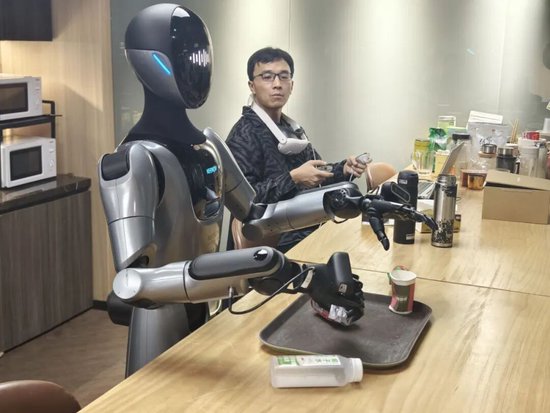
场景、数据、量产!三大关键词透视“具身智能元年”含金量
Zheng Quan Shi Bao· 2025-12-12 00:16
Core Insights - 2025 is anticipated to be the "Year of Embodied Intelligence," with embodied intelligent robots transitioning from laboratories to commercial applications, evolving from mere demonstrations to practical productivity tools [1] - The industry recognizes that the evolution of robots from being merely functional to intelligent relies heavily on high-quality data, which serves as the "fuel" for this transformation [1] Industry Trends - The primary focus for embodied intelligence companies this year is to deploy robots in specific manufacturing and service scenarios, making them effective productivity tools [2] - Most robots currently perform simple tasks such as guiding, education, transportation, and delivery, indicating that the practical application of embodied intelligence is still in its early stages [2] - The development of humanoid robots is compared to that of a toddler, emphasizing the need for gradual learning and skill acquisition [2] Company Strategies - Shanghai Qingtong Intelligent Technology Co., Ltd. has deployed over 100,000 robots globally, particularly excelling in delivery service robots, and has developed a "job-oriented" strategy to deepen expertise in specific roles [4] - The "job-oriented" strategy involves starting with a basic platform and gradually adding specialized features for different sectors, such as hotels and hospitals [4] - Companies like Shanghai Kepler Robot Co., Ltd. focus on creating "blue-collar humanoid robots" to enhance intelligent manufacturing and logistics, addressing challenges in dynamic environments and heavy load handling [4] Data Utilization - The industry has shifted focus from hardware and algorithms to the importance of training data, which is scarce and costly to collect [8] - Companies are actively building data collection factories and standardized data platforms to provide essential data for training embodied intelligent robots [8] - A stable "inverted triangle" data system is proposed, combining real machine data, simulated data, and expert skill databases to enhance robot training [8] Production Capabilities - The industry is beginning to demonstrate mass production capabilities, with companies like Zhiyuan announcing the mass production of their general-purpose humanoid robot [9] - The demand for humanoid robots is being scrutinized, with concerns about whether production is driven by genuine market needs or merely by policy incentives and investment trends [10] - Companies are preparing for a critical year ahead to validate their production capabilities and ensure they can meet order demands [10] Market Challenges - The commercial viability of robots hinges on their ability to either increase revenue or reduce costs, with many robots priced in the hundreds of thousands, making them difficult to justify in real-world applications [11] - The industry is expected to undergo a lengthy development cycle, with a consensus that it will take at least another decade for embodied intelligence to mature [11] - Despite the challenges, there is a societal openness towards embodied intelligence, which may accelerate the commercialization process [11]
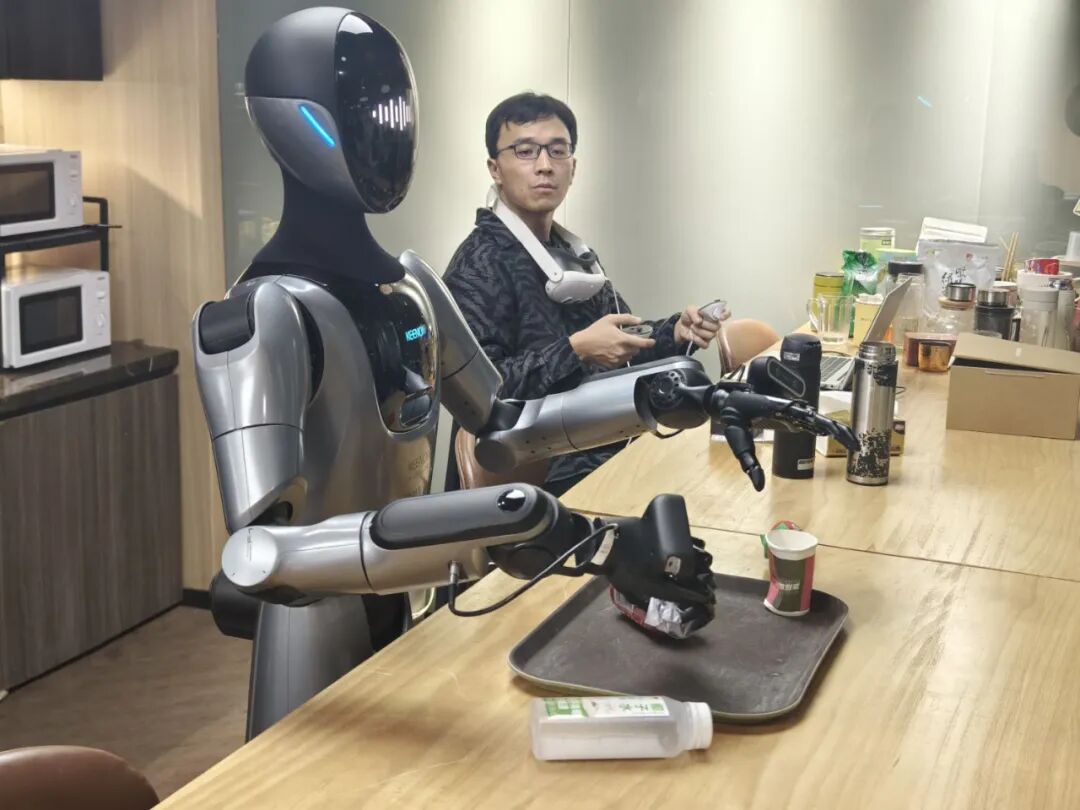
场景、数据、量产——三大关键词 透视“具身智能元年”含金量
Zheng Quan Shi Bao· 2025-12-11 22:21
Core Insights - 2025 is referred to as the "Year of Embodied Intelligence," with collaborative efforts from capital, policy, and industry chains driving embodied intelligent robots from laboratories to commercial applications, transitioning from technical demonstrations to practical productivity tools [1] Group 1: Industry Trends - The primary focus of embodied intelligence companies this year is to move robots from laboratories into specific manufacturing and service scenarios, making them effective productivity tools [2] - Most robots currently perform simple tasks such as guiding, education, transportation, and delivery, indicating that the practical application of embodied intelligence is still in its early stages [2] - The industry recognizes a common path of starting with high controllability and fault tolerance areas like industrial and logistics sectors to accumulate real data before advancing to more complex home service scenarios [3] Group 2: Company Strategies - Shanghai Qingtong Intelligent Technology Co., Ltd. has deployed over 100,000 robots globally, particularly excelling in delivery service robots, and has developed a "job-oriented" strategy focusing on deep specialization in single roles [2] - Shanghai Kepler Robotics Co., Ltd. aims to create "blue-collar humanoid robots" to empower intelligent manufacturing and logistics, addressing core pain points in dynamic environments and heavy load precision handling [3] - Shanghai Zhuoyide Robotics Co., Ltd. has achieved commercial closure in scenarios like guiding and performance, with plans to expand into home needs such as health companionship and household chores within five years [4] Group 3: Data and Training - The industry has shifted focus from hardware and algorithms to the importance of training data, which is scarce and costly to collect, leading to the establishment of data collection factories and standardized data platforms [5] - The data sources for robot training include real machine data, simulated synthetic data, and expert skill databases, forming a stable data system that enhances training quality [6] - Training for robots involves two stages: foundational training in industrial scenarios and specialized adaptation training in specific fields, with the latter requiring significantly less time [7] Group 4: Production and Market Challenges - The ability to mass-produce robots is a key indicator of the industry's maturity, with companies like Zhiyuan announcing significant milestones in production capacity [8] - The commercial viability of humanoid robot orders is questioned, as the industry must differentiate between demand driven by genuine market needs versus subsidies and investment hype [8] - The cost of robots, often in the hundreds of thousands, poses a challenge for market entry, necessitating sustained investment and data accumulation to improve operational capabilities and achieve cost reductions [9]