邃思1.0

Search documents
燧原科技,腾讯供养的中国AMD
3 6 Ke· 2026-02-04 04:17
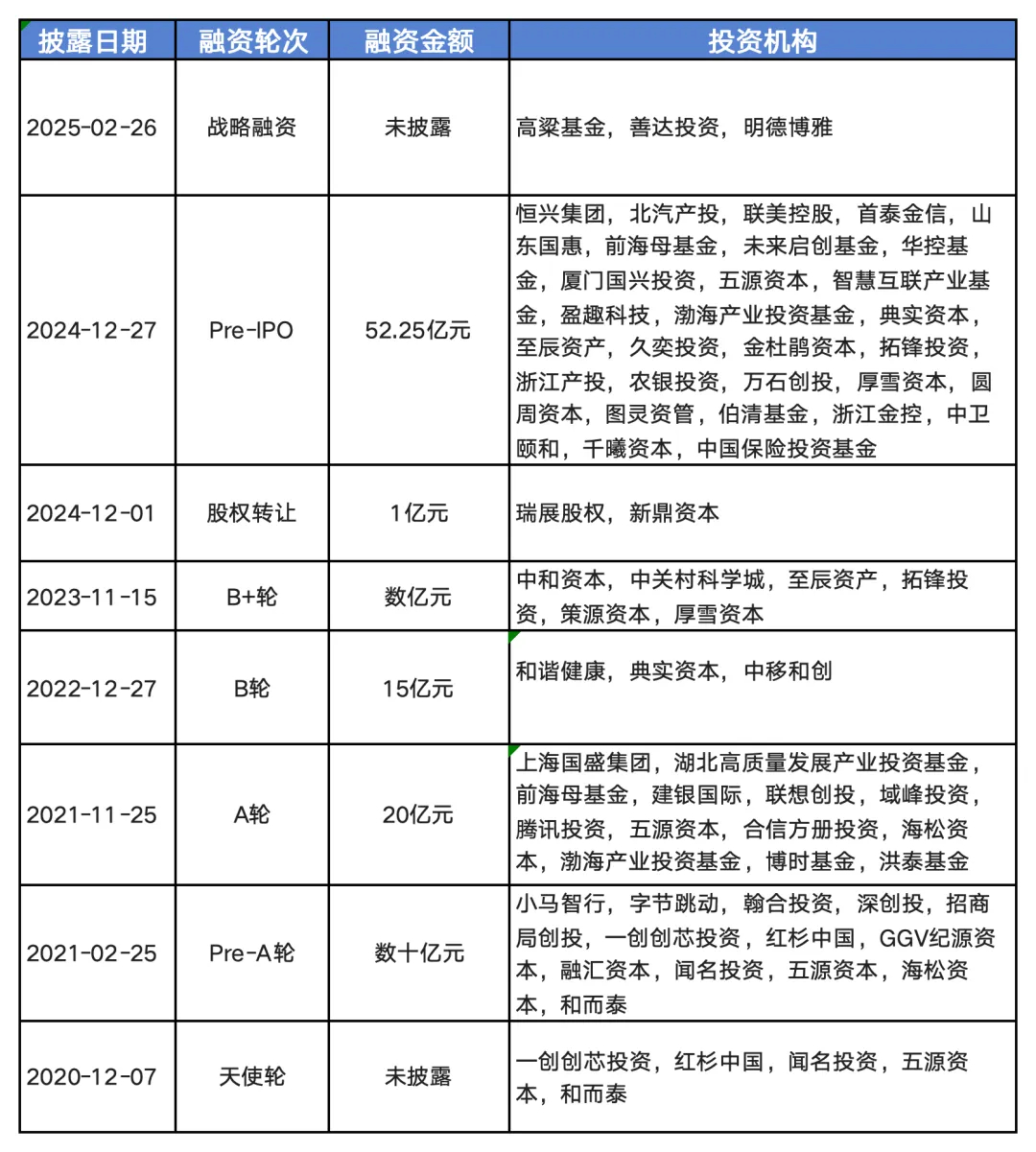
Group 1 - The term "BAT" is making a comeback in the AI era, with Baidu, Alibaba, and Tencent actively investing in AI technologies and chip development [1] - Baidu's Wenxin Yiyan is continuously updated, and plans to spin off Baidu Kunlun Chip for a Hong Kong IPO; Alibaba's Qianwen has announced a 3 billion yuan investment for a "Spring Festival Treat Plan" and is rumored to spin off its chip business, Pingtouge, for independent listing [1] - Tencent is also heavily investing in AI, with its subsidiary, Suiruan Technology, aiming for an IPO on the Sci-Tech Innovation Board to raise 6 billion yuan for advanced AI product development [1][3] Group 2 - Suiruan Technology is one of the earliest established companies among the "four little dragons" of domestic GPUs, and its successful IPO will mark a new phase of capitalizing the domestic GPU industry [3] - The founders of Suiruan Technology have strong backgrounds in the semiconductor industry, having previously worked at AMD, which adds to the company's credibility and attractiveness to investors [4][10] - Tencent is the largest shareholder and customer of Suiruan Technology, having invested over 3.4 billion yuan in various funding rounds, significantly contributing to the company's growth [12][15] Group 3 - Suiruan Technology's revenue is heavily reliant on Tencent, with Tencent contributing 71.84% of its revenue in the first nine months of 2025, up from 8.53% in 2022 [16][17] - The company has adopted a unique approach by focusing on specialized computing architecture (ASIC/DSA) rather than general-purpose GPUs, which differentiates it from competitors [19][20] - Suiruan Technology has developed its own programming ecosystem, "Yusuan TopsRider," which does not support compatibility with NVIDIA's CUDA, presenting both opportunities and challenges for market adoption [23][30] Group 4 - In 2024, NVIDIA held a 70% market share in AI accelerator card shipments in China, while Suiruan Technology's sales volume was only 38,800 units, representing approximately 1.4% market share [26] - The company plans to allocate 25% of its IPO proceeds to the development of fifth-generation AI chips and 20% to sixth-generation chips, indicating a focus on future technological advancements [27] - Suiruan Technology's close relationship with Tencent poses risks, as changes in Tencent's strategic direction could impact Suiruan's business stability [30][31]

燧原IPO闯关,国产GPU四小龙为何集体“亏损上市”?
Sou Hu Cai Jing· 2026-01-28 03:34
Core Viewpoint - Suirian Technology, a domestic GPU company, has submitted its prospectus to apply for an IPO on the Sci-Tech Innovation Board, aiming to raise 6 billion yuan despite not achieving profitability in its 8 years of operation [2][4]. Group 1: Financial Performance - Suirian Technology's revenue is projected to reach 722 million yuan in 2024, representing an almost 8-fold increase from 2022 to 2024 [4]. - The company reported a revenue of 90.1 million yuan in 2022, with a net loss of 1.116 billion yuan, and a revenue of 301 million yuan in 2023, with a net loss of 1.665 billion yuan [9]. - For the first three quarters of 2025, the company expects a revenue of 540 million yuan but still anticipates a loss of 888 million yuan [10]. Group 2: R&D and Investment - Suirian Technology has invested a total of 3.529 billion yuan in R&D from 2022 to 2024, with R&D personnel accounting for 78.41% of its workforce [10][11]. - The company follows a Fabless model, focusing on design and sales while outsourcing manufacturing and testing [11]. - The IPO proceeds will be allocated as follows: 55% for advanced AI hardware and software innovation, 25% for the fifth-generation AI chip development, and 20% for the sixth-generation chip industrialization [20]. Group 3: Market Position and Competition - The domestic GPU sector is characterized by high investment and long development cycles, with Suirian Technology facing significant competition from both domestic and international players [16][19]. - The company relies heavily on a few major clients, with over 71.84% of its revenue coming from Tencent in the first three quarters of 2025 [12][22]. - The global AI accelerator card market is expected to grow from over 100 billion USD in 2024 to over 500 billion USD by 2028, with a compound annual growth rate exceeding 40% [18]. Group 4: Challenges Ahead - The high dependency on a limited customer base poses risks, as major clients may switch suppliers or develop in-house capabilities [24]. - The need for continuous investment in ecosystem development and technology iteration creates a cycle of high expenditure and potential profit erosion [25][27]. - The path to profitability is expected to be long, with companies in the GPU sector needing to navigate significant challenges related to customer structure and ecosystem building [22][26].
燧原科技科创板IPO获受理 腾讯系AI芯片独角兽冲刺科创板
2 1 Shi Ji Jing Ji Bao Dao· 2026-01-26 23:28
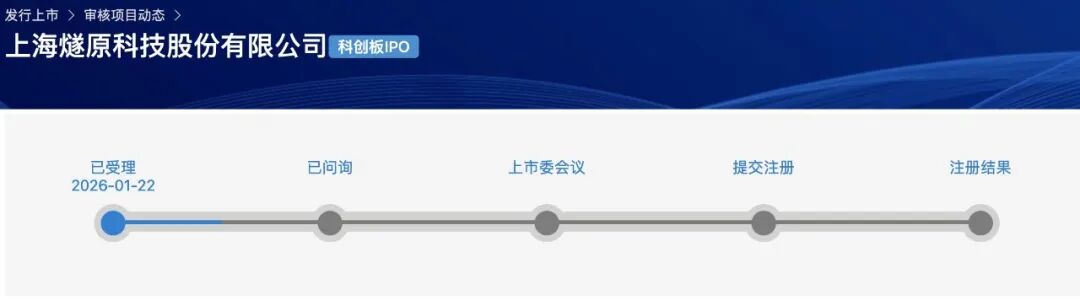
Core Viewpoint - Shanghai Suyuan Technology Co., Ltd. has received acceptance for its IPO application on the Sci-Tech Innovation Board, marking it as another leading domestic AI chip company entering the secondary market after several others [1] Group 1: IPO and Fundraising - The company plans to issue no less than 43.04 million shares and no more than 68.35 million shares, aiming to raise approximately 6 billion yuan for the development and industrialization of its AI chip series products [1] - The estimated valuation of Suyuan Technology is 18.2 billion yuan as of August 2025 [1] Group 2: Shareholding Structure - Suyuan Technology has no single controlling shareholder, with co-founders Zhao Lidong and Zhang Yalin collectively controlling 28.1% of the voting rights through direct holdings and employee stock ownership platforms [2] Group 3: Strategic Partnerships - Tencent is the largest shareholder, holding 20.26% of the shares, and has been a significant customer and capital supporter, providing strong backing for the commercialization of Suyuan's AI chips [4] - The collaboration with Tencent dates back to 2020, with Suyuan's first training chip being tested and launched on Tencent Cloud [4] Group 4: Revenue and Client Dependency - A significant portion of Suyuan's revenue comes from Tencent, with 57.28% of sales directly to Tencent and 71.84% when including designated final customers [5] - As of September 2025, accounts receivable from Tencent accounted for 29.92% of Suyuan's total accounts receivable [5] Group 5: Research and Development - Suyuan Technology has high R&D expenditures, with 9.88 billion yuan, 12.29 billion yuan, and 13.12 billion yuan spent from 2022 to 2024, totaling 35.29 billion yuan, which is over 316% of its revenue during the same period [6] - The company reported net losses of 1.15 billion yuan, 1.57 billion yuan, and 1.50 billion yuan for the years 2022 to 2024 [7] Group 6: Market Position and Product Development - Suyuan Technology focuses on building its own chip ecosystem, differentiating itself from competitors that rely on NVIDIA's CUDA ecosystem [8] - The company has developed a full-stack AI computing and programming software platform called "Yusuan TopsRider" to enhance the performance of its hardware products [9] - Suyuan's AI accelerator card sales reached 38,800 units, capturing approximately 1.4% of the Chinese AI accelerator card market in 2024 [9] Group 7: Future Outlook - The company is expected to reach breakeven by 2026, assuming no significant changes in external trade conditions [7] - Suyuan is actively expanding into government-led intelligent computing center projects, with significant revenue contributions expected from these initiatives [5]
腾讯系AI芯片独角兽冲刺科创板
2 1 Shi Ji Jing Ji Bao Dao· 2026-01-26 23:18
Core Viewpoint - Shanghai Suyuan Technology Co., Ltd. has received acceptance for its IPO application on the Sci-Tech Innovation Board, marking it as another leading domestic AI chip company entering the secondary market after several others [1] Company Overview - The company plans to issue no less than 43.04 million shares and no more than 68.35 million shares, aiming to raise approximately 6 billion yuan for the development and industrialization of its AI chip series products [1] - As of August 2025, the company's valuation is projected to be 18.2 billion yuan [1] Shareholding Structure - Suyuan Technology has no single controlling shareholder, with co-founders Zhao Lidong and Zhang Yalin collectively controlling 28.1% of the voting rights [2] Strategic Partnerships - Tencent is the largest shareholder, holding 20.26% of the shares, and has been a significant customer and capital supporter, enhancing Suyuan's commercial viability [4] - The collaboration with Tencent dates back to 2020, with Suyuan's first-generation training chip being tested and utilized within Tencent's cloud services [4] Revenue and Client Dependency - A significant portion of Suyuan's revenue comes from Tencent, with 57.28% of sales directly to Tencent and 71.84% when including designated final customers [5] - The company anticipates that its high sales dependency on Tencent will continue, which poses risks if Tencent's procurement strategy changes [5] Financial Performance - Suyuan Technology has incurred substantial losses, with net losses of 1.15 billion yuan, 1.57 billion yuan, and 1.50 billion yuan from 2022 to 2024 [7] - The company has negative cash flow from operating activities, with net cash flow of -0.99 billion yuan, -1.21 billion yuan, and -1.80 billion yuan during the same period [7] Research and Development - The company has invested heavily in R&D, with expenses of 0.99 billion yuan, 1.23 billion yuan, and 1.31 billion yuan from 2022 to 2024, accounting for over 316% of its revenue during that period [6] - Suyuan aims to reach breakeven by 2026, assuming no significant changes in external conditions [7] Technology and Product Development - Suyuan Technology focuses on building its own chip ecosystem, emphasizing specialized AI accelerators rather than following the GPGPU technology route [8] - The company has developed a comprehensive technology system, including hardware, software, and computing cluster solutions, to support AI applications [8] - The fourth-generation training and inference chip, "Sui Si 400," is set to meet the demands of large-scale AI models, supporting low-precision computing and extensive interconnectivity [10] Market Position - In 2024, the overall shipment of AI accelerator cards in China is expected to exceed 2.7 million units, with Nvidia holding a 70% market share [9] - Suyuan's sales of AI accelerator cards reached 38,800 units, capturing approximately 1.4% of the market [9]
估值超200亿,腾讯重仓的AI芯片冲刺科创板
3 6 Ke· 2026-01-23 11:43
Core Insights - The IPO heat for AI chips remains strong in 2026, with companies like Baidu, Alibaba, and Tencent making significant moves in the market [1] - Suiruan Technology, an AI chip unicorn, has initiated its IPO application on the Sci-Tech Innovation Board, aiming to raise 6 billion for advanced AI product development and industrialization [1][2] Company Overview - Suiruan Technology, founded in 2018, has developed four generations of AI chip architectures and a complete product system covering AI chips, AI acceleration cards, intelligent computing systems, and software platforms [2][4] - The company has received substantial backing from notable investors, including Tencent, the National Integrated Circuit Industry Investment Fund, and various local investment institutions, achieving a post-financing valuation exceeding 20 billion [2][5] Financial Performance - Suiruan Technology's revenue has shown significant growth, with figures of 0.90 billion, 3.01 billion, 7.22 billion, and 5.40 billion for the years 2022, 2023, 2024, and the first three quarters of 2025, respectively, reflecting a compound annual growth rate of 183.15% [13][14] - Despite the revenue growth, the company has not yet achieved profitability, with net losses reported at 11.16 billion, 16.65 billion, 15.10 billion, and 8.88 billion for the same periods [13] Market Position and Client Relationships - Tencent is the largest shareholder of Suiruan Technology, holding 20.26% of the shares, and has been a significant supporter throughout the company's financing rounds [7][9] - The sales to Tencent have dramatically increased, with the proportion of revenue from Tencent rising from 8.53% in 2022 to 71.84% in the first three quarters of 2025 [9][11] Future Outlook - Suiruan Technology plans to use the proceeds from its IPO to fund the development and industrialization of its fifth and sixth-generation AI chip series and advanced AI hardware-software collaborative innovation projects [15] - The company anticipates reaching a breakeven point by 2026, contingent on stable external conditions [15]
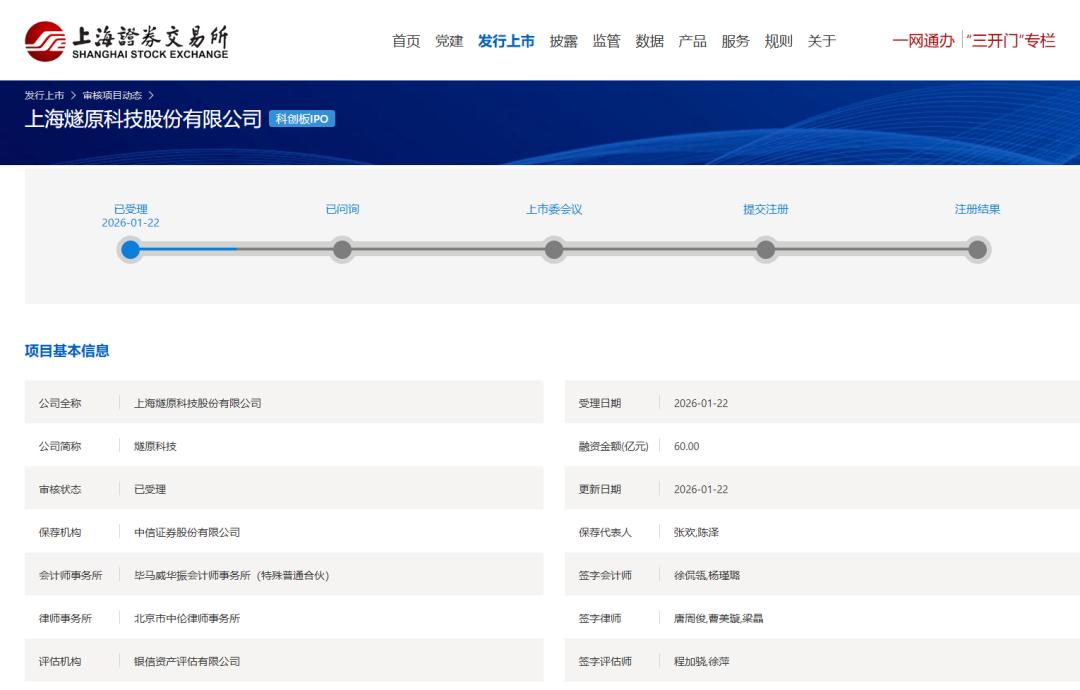
燧原科技科创板IPO获受理,腾讯系AI芯片独角兽冲刺科创板
2 1 Shi Ji Jing Ji Bao Dao· 2026-01-23 11:10
Core Viewpoint - Shanghai Suiruan Technology Co., Ltd. has received acceptance for its IPO application on the Sci-Tech Innovation Board, marking it as another leading domestic AI chip company entering the secondary market after several others [1] Group 1: IPO Details - The company plans to publicly issue no less than 43.04 million shares and no more than 68.35 million shares, aiming to raise approximately 6 billion yuan for the development and industrialization of its AI chip series products [1] - The estimated valuation of Suiruan Technology is 18.2 billion yuan as of August 2025 [1] Group 2: Ownership Structure - Suiruan Technology has no single controlling shareholder, with co-founders Zhao Lidong and Zhang Yalin collectively controlling 28.1% of the voting rights through direct holdings and employee stock ownership platforms [2] Group 3: Strategic Partnerships - Suiruan Technology is viewed as a "Tencent system" AI chip unicorn, with Tencent being its largest shareholder, holding 20.26% of the shares [4] - The collaboration with Tencent dates back to 2020, with significant joint developments, including the first-generation training chip and the AI inference chip [4] Group 4: Revenue and Financial Performance - In the first three quarters of 2025, Suiruan Technology's revenue was 540 million yuan, with a net loss of 912 million yuan after deducting non-recurring gains and losses [7] - The company has a high dependency on Tencent, with 57.28% of its revenue coming from Tencent and 71.84% when including designated final customers [5] Group 5: Research and Development - Suiruan Technology has invested heavily in R&D, with expenses of 988 million yuan, 1.229 billion yuan, and 1.312 billion yuan from 2022 to 2024, totaling 3.529 billion yuan, which is over 316% of its revenue during the same period [6] - The company is not expected to reach profitability until at least 2026, assuming no significant changes in external conditions [7] Group 6: Technology and Market Position - Suiruan Technology emphasizes a proprietary AI accelerator system, diverging from the GPGPU technology route taken by other domestic AI chip companies [8] - The company has developed its own software platform, "Yusuan TopsRider," to reduce programming difficulties and costs associated with its hardware [8] - In 2024, the company aims to capture a 1.4% market share in China's AI accelerator card market, with a sales volume of 38,800 units [10]

巨变2025:国产GPU集体冲线
3 6 Ke· 2025-12-31 03:35
Group 1 - The core point of the article highlights the significant rise of domestic AI chip companies in China, particularly the "Four Little Dragons" of domestic GPUs, driven by the ongoing enthusiasm for domestic large models and the certainty of generative AI trends, with IPOs leading to substantial market valuations [1][3][31] - Companies like Moore Threads and Muxi Co., Ltd. have recently gone public on the Sci-Tech Innovation Board, experiencing market capitalizations that surged 6-7 times post-IPO, indicating a new height of investment enthusiasm in A-shares [1][31] - Barclays' Asia-Pacific executive Matt Toms expressed that if China produces low-cost, competitive chips by 2026 or 2027, it could disrupt Nvidia and its supply chain, emphasizing the critical moment for Chinese AI chips represented by the "Four Little Dragons" [1][3] Group 2 - The "Four Little Dragons" of domestic GPUs include Moore Threads, Muxi Co., Ltd., Suiruan Technology, and Biran Technology, each founded by individuals with backgrounds in major international chip companies like Nvidia and AMD [5][17] - Moore Threads, founded by Zhang Jianzhong, has rapidly developed its GPU technology and established a CUDA-compatible ecosystem called MUSA, positioning itself as the "Chinese version of Nvidia" [7][21] - Muxi Co., Ltd., led by Chen Weiliang, focuses on general-purpose GPU (GPGPU) technology, with products aimed at AI training and inference, emphasizing open-source compatibility with major frameworks [10][23][24] Group 3 - Biran Technology, founded by Zhang Wen, emphasizes high-end GPGPU technology, with its BR100 series chip achieving performance levels surpassing Nvidia's A100, targeting cloud data centers and AI applications [15][26] - Suiruan Technology, founded by Zhao Lidong, specializes in AI training acceleration cards, focusing on large model training and developing proprietary architectures for AI applications [13][28] - The article notes that the domestic GPU sector is experiencing a historical window of opportunity due to Nvidia's exit from the Chinese market, allowing local companies to fill the gap [28] Group 4 - The investment landscape for the "Four Little Dragons" has become increasingly favorable, with significant backing from prominent investment firms and a growing market presence, as evidenced by their recent IPO successes [31][32] - The market capitalization of Moore Threads reached 289 billion yuan and Muxi Co., Ltd. reached 246.1 billion yuan shortly after their IPOs, showcasing the high investor interest in domestic AI chip companies [31][32] - The article concludes that the GPU sector, as a foundational element of artificial intelligence, is poised to be a symbol of the industry's evolution and impact in 2025 [29]
国产“英伟达”们集体冲刺IPO
Tai Mei Ti A P P· 2025-10-29 12:17
Core Insights - A significant trend is emerging as leading domestic GPU companies are rapidly pursuing IPOs, with notable examples including Moer Thread and Muxi Co., which have set records for the speed of their listing processes [1][3][10] - This capital frenzy is driven by the expectation for self-controlled computing power and the exit demands of numerous VCPEs during their fund lifecycle [2] Group 1: Moer Thread and Muxi Co. - Moer Thread's IPO process is remarkable, with its application accepted on June 30, 2025, and approval granted on September 26, 2025, taking only 88 days. The IPO aims to raise 8 billion yuan [3][7] - Founded in 2020 by Zhang Jianzhong, a former NVIDIA executive, Moer Thread focuses on full-function GPUs and has developed the MUSA architecture to support AI computing and graphics rendering on a single chip [3][4] - Moer Thread's revenue figures show a growth trajectory, with revenues of 46.09 million yuan in 2022, projected to reach 438 million yuan in 2024, and 702 million yuan in the first half of 2025, marking a compound annual growth rate of 208% [7][9] - Muxi Co. followed closely, with its IPO approved on October 24, 2025, after 116 days of review, aiming to raise 3.904 billion yuan for the development of next-generation GPU chips [10][12] - Muxi, also founded in 2020, focuses on high-performance general-purpose GPUs and has established a complete domestic supply chain for design, manufacturing, and testing [10][12] Group 2: Other Companies and Market Dynamics - Suiruan Technology is taking a more cautious approach to its IPO, currently in the counseling phase, with a complex shareholder structure potentially affecting its progress [13][17] - Suiruan's products include the domestic cloud training chip "Suis 1.0" and the fourth-generation training and inference chip "Suiruan L600," which features significant advancements in computing power and storage [14][15] - Wallran Technology's IPO path remains uncertain, with reports suggesting it has submitted a confidential listing application to the Hong Kong Stock Exchange [19][24] - Tian Shu Zhixin is also rumored to be pursuing a listing, focusing on GPGPU products that have already achieved commercial success [25][27] Group 3: Industry Trends and Challenges - The market for AI computing power is expanding rapidly, with national strategies emphasizing self-sufficiency in computing capabilities, and the Sci-Tech Innovation Board providing a pathway for unprofitable but technologically critical companies to go public [28][30] - Companies are seizing the historic opportunity for domestic substitution, particularly in light of supply constraints from NVIDIA, creating a significant market gap [29][30] - The collective IPO rush signals a broader industry trend where national interests and capital markets are aligning to promote high-end computing autonomy [30][31] - The limited capacity of the capital market means that the first companies to successfully list will gain a competitive financing advantage, potentially leading to a "Matthew effect" in the industry [31][32]