
邮享贷

Search documents
邮储银行滨州市分行:金融“惠民生”促“消费”双向激活市场活力
Qi Lu Wan Bao· 2026-02-26 13:39
Core Viewpoint - Postal Savings Bank of China (PSBC) is enhancing financial services to integrate deeply into people's livelihood security and consumption upgrades, focusing on four key initiatives to empower both "benefiting people's livelihood" and "promoting consumption" for sustained local economic development [1][2] Group 1: Livelihood Security - The bank is focusing on housing security by supporting urban renovation projects since 2016, improving living conditions for low-income groups, with a current balance of housing loans reaching 909 million yuan [1] - The bank has partnered with local employment agencies to offer "re-employment entrepreneurship guarantee loans" with a 2% interest subsidy, and tailored credit loans for veterans, resulting in a balance of 40.72 million yuan in such loans [1] Group 2: Consumption Support - PSBC is expanding its consumer finance offerings by collaborating with various departments to create a comprehensive service system, launching a new consumer loan product "Postal Enjoy Loan" with online processing, covering diverse customer needs with loan terms up to 5 years and credit limits of up to 1 million yuan [1] - The bank is also focusing on the elderly care and health sectors by introducing specialized loan products, with a maximum single credit loan of 500,000 yuan and a guarantee loan of 3 million yuan, aiming to meet the financial needs of the elderly care industry [2] Group 3: Future Plans - The bank plans to continue deepening the integration of financial benefits and consumption promotion, dynamically optimizing product services to better meet the needs of the public and activate consumption potential [2]

邮储银行高管变动与行业政策影响股价波动
Jing Ji Guan Cha Wang· 2026-02-19 02:34
Recent Events - On February 13, 2026, Postal Savings Bank announced that Lu Wei officially took office as the bank's president and executive director, with qualifications approved by the National Financial Supervision and Administration Bureau, effective immediately [1] - Concurrently, banking regulatory data revealed that in 2025, commercial banks' net profit grew by 2% year-on-year, with large banks also seeing a 2% increase, and the net interest margin remained stable at 1.42%, indicating overall stable asset quality in the industry [1] - A new personal consumption loan policy was implemented in January 2026, with Postal Savings Bank's "Postal Enjoy Loan" annual interest rate ranging from 3.1% to 12.4%, aligning with the regulatory lower limit set for state-owned banks [1] Stock Performance - In the past week, Postal Savings Bank's A-share price exhibited significant volatility, closing at 5.07 yuan on February 13, 2026, with a single-day decline of 0.78% and a trading volume of 564 million yuan; the closing price on February 12 was 5.11 yuan, down by 1.54% [2] - The cumulative decline over the period was 2.31%, with a price fluctuation of 2.70%; fund flow data indicated a net outflow of 38.14 million yuan from major investors on February 13, while retail investors showed a net inflow [2] - In the Hong Kong stock market, as of February 16, the closing price was 5.11 HKD, reflecting a slight increase of 0.39% [2] Institutional Perspectives - Institutions maintain a neutral outlook on Postal Savings Bank, with a comprehensive target price of 6.63 yuan as of February 19, 2026, indicating a potential upside of 31.03% from the latest price [3] - Profit forecasts from 39 institutions predict a 15.26% year-on-year increase in net profit for 2025, with growth expected to slow to 4.82% in 2026 [3] - Early research reports highlighted the resilience of non-interest income in the company's Q3 2025 report, although net interest margin is under pressure [3]
锚定“十五五”发展蓝图 写好金融“五篇大文章”
Nan Fang Du Shi Bao· 2025-11-24 23:11
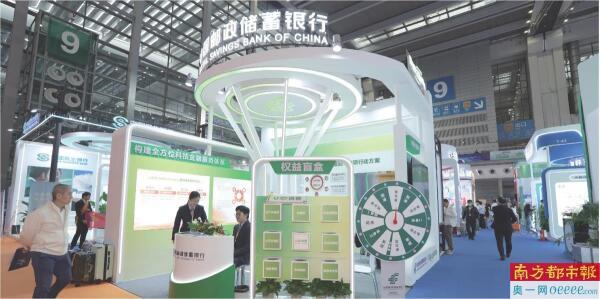
Core Viewpoint - The article emphasizes the role of China Postal Savings Bank's Shenzhen branch in supporting the real economy through targeted financial services aligned with national strategies, particularly focusing on the "14th Five-Year Plan" and its five key areas of financial development [2][6]. Group 1: Financial Support for Real Economy - The Shenzhen branch integrates its services with the "14th Five-Year Plan" by focusing on the development of a modern industrial system and strengthening the real economy [2]. - The branch has developed a comprehensive service system that aligns with the "20+8" industrial cluster strategy, ensuring a precise match between financial resources and the needs of Shenzhen's real economy [2][3]. Group 2: Inclusive Finance Initiatives - The branch utilizes its 69 outlets across the city to enhance financial accessibility, particularly in urban agriculture and rural revitalization, launching products like "U Grain Easy Loan" to support the grain industry [3]. - It has served over 3,000 small and micro enterprises, issuing loans exceeding 15 billion yuan, focusing on advanced manufacturing and technology-driven businesses [3]. Group 3: Technological and Green Finance - The branch has established a dedicated technology finance division, offering specialized products like "Tech Innovation Loans" and "Intellectual Property Pledge Loans" to support key sectors such as integrated circuits and artificial intelligence [4]. - It is actively involved in green finance, supporting Shenzhen's dual carbon goals through various financial instruments, including green loans and bonds, particularly in sectors like new energy vehicles and green buildings [4]. Group 4: Regional Development and Strategic Partnerships - The branch has signed strategic cooperation agreements with local governments and organizations, channeling over 1 trillion yuan into major projects within the Guangdong-Hong Kong-Macao Greater Bay Area [5]. - It is committed to enhancing service capabilities through digital transformation and risk management improvements, ensuring robust support for the local economy [6]. Group 5: Focus on Livelihood and Consumer Finance - The branch has launched initiatives to boost local consumption, including personal loan subsidies and partnerships with merchants to enhance consumer experiences [7][8]. - It has developed a comprehensive pension finance system, supporting various aspects of elderly care and financial literacy, with significant growth in personal pension accounts [8]. Group 6: Commitment to Continuous Improvement - The Shenzhen branch aims to deepen its financial services' precision and effectiveness, contributing to the high-quality development of the real economy and supporting Shenzhen's role as a model for socialism with Chinese characteristics [8].


还剩3天!你也许能少付一笔利息钱
Sou Hu Cai Jing· 2025-08-28 11:43
Core Viewpoint - The implementation of the personal consumption loan interest subsidy policy is imminent, with banks preparing to offer related products and services to consumers [3][4]. Group 1: Policy Implementation - The personal consumption loan interest subsidy policy is set to be officially implemented on September 1, with several banks already preparing their products [3]. - Banks like Postal Savings Bank and Shanghai Pudong Development Bank have clarified that the subsidy will be directly deducted from the loan interest at the time of payment [4][7]. - The Industrial and Commercial Bank of China (ICBC) has not yet specified the details of the subsidy but is promoting its consumption loan products [4][6]. Group 2: Loan Details and Limits - The subsidy applies to personal consumption loans issued by banks, excluding credit cards, with a maximum subsidy limit of 3,000 yuan per borrower [6][11]. - For loans under 50,000 yuan, the maximum subsidy is capped at 1,000 yuan [7][11]. - ICBC's personal credit consumption loan product "Rong e Borrow" offers a maximum limit of 1 million yuan with interest rates starting as low as 3% [6]. Group 3: Compliance and Monitoring - Banks emphasize the importance of compliance regarding the use of loan funds, prohibiting any diversion to stock or real estate markets [9]. - Financial institutions are encouraged to enhance monitoring of loan purposes and fund flows to prevent misuse of the subsidy [10]. - Regulatory recommendations include the establishment of a credit monitoring system to improve oversight of loan usage and to deter fraudulent activities [10][11].


消费贷贴息落地倒计时!银行细则相继公布“直接扣减”即将上线
Bei Ke Cai Jing· 2025-08-28 05:17
Core Viewpoint - The implementation of the consumer loan interest subsidy policy is approaching, with several banks already preparing related products and guidelines to ensure compliance and prevent misuse of funds [4][21]. Group 1: Bank Actions and Policies - Postal Savings Bank and Shanghai Pudong Development Bank have clarified that the subsidy will be directly deducted from the loan interest at the time of collection [2][10]. - Industrial and Commercial Bank of China (ICBC) has begun promoting its consumer loan products with the slogan emphasizing the benefits of the national subsidy, although specific details on the subsidy implementation are still pending [6][8]. - The subsidy policy allows for a maximum of 3,000 yuan in interest subsidies per borrower, with specific limits based on the loan amount [11][23]. Group 2: Loan Usage and Compliance - The subsidy is intended for personal consumption loans used in designated areas such as home appliances, education, and healthcare, with strict controls to prevent funds from being diverted to prohibited sectors like real estate and stock markets [3][15][16]. - Banks are implementing measures to ensure that loan funds are used appropriately, including monitoring transaction information and prohibiting fraudulent activities [17][20]. Group 3: Financial Implications - The annual subsidy rate is set at 1%, with the maximum subsidy not exceeding 50% of the loan contract interest rate, which is expected to lower effective interest rates for consumers [21][22]. - The financial burden of the subsidy is shared between central and local governments, with the central government covering 90% and local governments 10%, which may encourage local government participation [23].
“金融国补”倒计时!多家银行抢先“预热”消费贷产品
Bei Jing Shang Bao· 2025-08-26 14:50
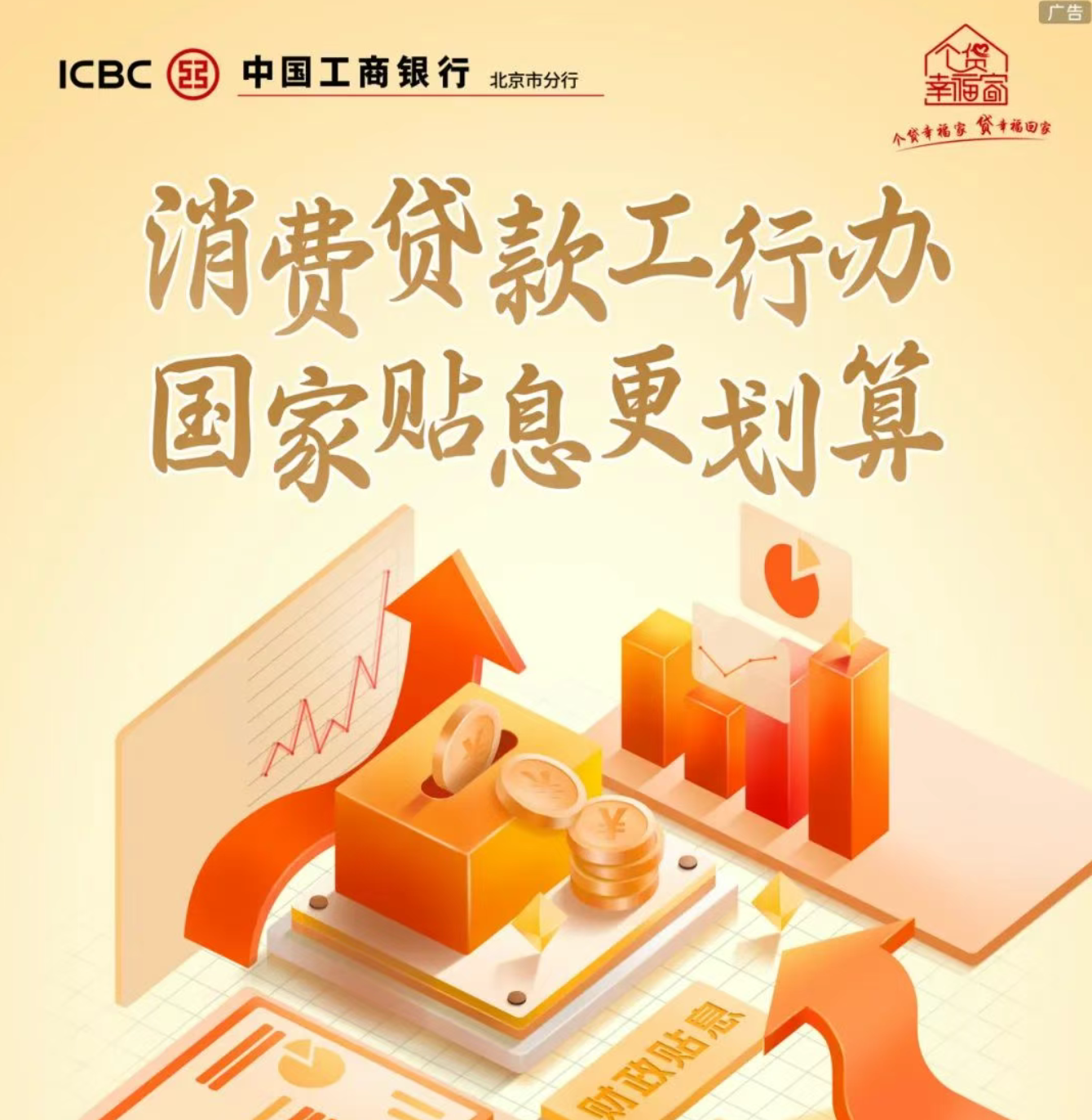
Core Viewpoint - The implementation of the personal consumption loan interest subsidy policy is approaching, leading to a competitive "customer acquisition battle" among banks to promote their consumption loan products [1][6]. Group 1: Policy Implementation and Bank Responses - The personal consumption loan interest subsidy policy, effective from September 1, offers a 1% annual subsidy, with 90% funded by the central government and 10% by provincial governments, allowing borrowers to receive up to 3000 yuan in subsidies for eligible purchases [1][6]. - Major banks, including Postal Savings Bank and Industrial and Commercial Bank of China, are actively promoting their consumption loan products, highlighting the benefits of the subsidy and providing easy access to product information through various channels [3][4]. - Banks are upgrading their systems to ensure compliance with the new policy, including using merchant category codes (MCC) to track the use of loan funds and requiring that funds be transferred to the borrower's debit card before making purchases [8][9]. Group 2: Product Offerings and Features - Postal Savings Bank's "Postal Enjoy Loan" offers up to 1 million yuan for credit loans and 5 million yuan for mortgage loans, with a maximum loan term of seven years [3]. - Industrial and Commercial Bank's "Rong e Borrow" allows loans up to 100 million yuan, with an annual interest rate of 3% before subsidies [4]. - Construction Bank offers various products, including "Jian Yi Loan" and "Kuaidai," with loan amounts up to 100 million yuan and terms of up to seven years, starting at an annual interest rate of 3% [5]. Group 3: System Upgrades and Risk Management - Banks are focusing on system upgrades to ensure the effective implementation of the subsidy policy, with many institutions, including China Bank and Agricultural Bank, confirming their readiness to start offering subsidies from September 1 [7][8]. - The policy aims to enhance the transparency of fund usage and prevent misuse, ensuring that loans are used for compliant consumption purposes [9]. - Financial institutions are emphasizing the importance of compliance and risk management, advising consumers to use loans for legitimate expenses and avoid engaging with intermediaries that may lead to potential risks [10][11].

优化金融供给助消费市场复苏
Xin Hua Wang· 2025-08-12 06:15
Group 1: Economic Recovery and Consumer Confidence - The "May Day" holiday saw a resurgence in consumer activity, with retail and catering sectors showing recovery, as evidenced by a 18.9% year-on-year increase in sales for key retail and catering enterprises [1] - Consumer confidence is crucial for economic stability, and banks are enhancing consumer credit offerings to support this recovery, with personal loan balances reaching 7.9 trillion yuan and new loans of 358.4 billion yuan in Q1 [2][3] - The service sector is experiencing a strong rebound, supported by government policies and improved employment and income prospects, which are expected to enhance consumer willingness and ability to spend [4] Group 2: Innovative Financial Products and Services - Banks are innovating credit card offerings to stimulate consumption, with activities such as installment plans and fee waivers, leading to significant user engagement and spending [5][6] - The introduction of targeted consumer loan products, such as "Xing Shuan Loan" by Industrial Bank, aims to meet everyday consumer needs and enhance accessibility to credit [3] - The rise of consumption finance companies, which have seen a loan scale of approximately 8% of the short-term consumer loan market, indicates a growing sector that complements traditional banking services [8][9] Group 3: Digital and Inclusive Financial Services - Financial institutions are leveraging digital platforms to distribute consumer vouchers and enhance financial inclusion, with significant amounts of government vouchers being issued to stimulate spending [3][4] - The use of big data and digital tools is emphasized for tailoring financial products to meet the needs of diverse consumer groups, particularly new citizens [9][10] - The focus on responsible lending practices is highlighted, with a need for regulatory guidance to prevent over-lending and ensure sustainable growth in the consumer finance sector [10]
指尖上的银行 让金融服务更便利
Jin Rong Shi Bao· 2025-08-08 07:55
Group 1 - The core viewpoint is that Postal Savings Bank of China is accelerating its digital transformation to enhance financial services accessibility and efficiency for rural customers [1][2][3] - The bank has introduced products like "Jisu Loan" and "Youxiang Loan," allowing customers to apply and receive loans through mobile banking, significantly reducing time costs for rural clients [1][3] - The establishment of rural cash withdrawal points and financial literacy campaigns has improved financial service accessibility in remote areas, benefiting local farmers [2] Group 2 - The bank has processed and disbursed over 3 billion yuan in various loans through online channels this year, contributing positively to local economic development [3] - Future plans include strengthening technological foundations, improving data management, and expanding digital financial services to support rural revitalization and local economic growth [3]
消费贷“价格战”降温后银行开始卷额度?1200万元可借7年,利率回归3%以上
Xin Lang Cai Jing· 2025-07-29 12:37
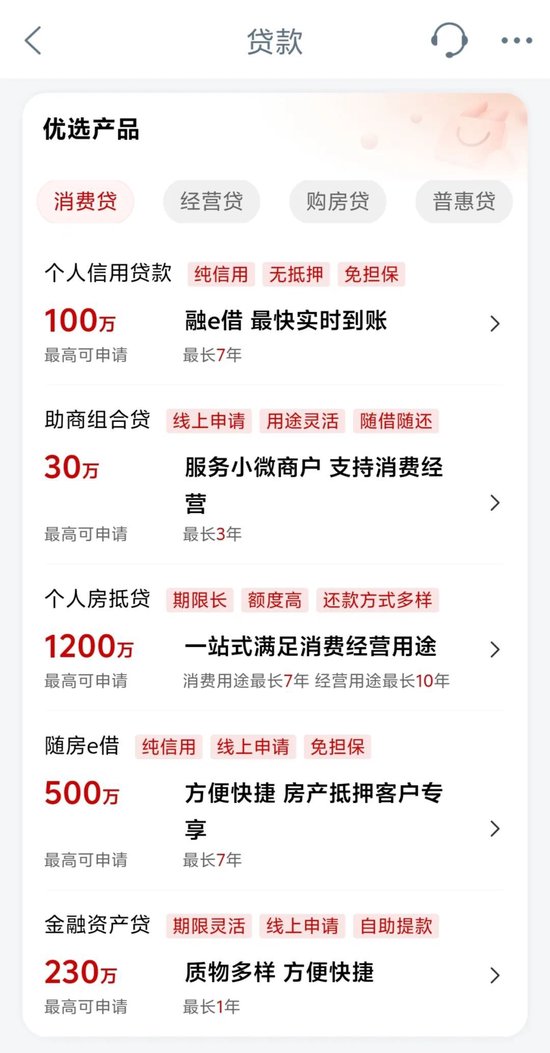
Core Viewpoint - The implementation of the regulatory notice on consumer finance has led banks to increase the limits and extend the terms of consumer loans, with some products offering limits up to 25 million yuan and terms extending to 7 years [1][7]. Summary by Sections Consumer Loan Limits and Terms - Banks are introducing higher limits for consumer loans, with some products offering maximum amounts of 25 million yuan and terms extending up to 7 years [1][7]. - The new consumer loan products are primarily aimed at high-quality customers, with strict eligibility criteria based on employment, financial status, income sources, and repayment ability [6][8]. Interest Rates - Following a period of declining interest rates, most consumer loan products now have annual rates above 3%, with state-owned banks offering rates around 3% and some joint-stock banks exceeding 4% [1][2]. - The competitive landscape saw a "price war" in consumer loans, but regulatory measures have since halted this trend, leading to a general increase in interest rates [2][8]. Product Offerings - Various banks have launched large consumer loan products, with limits ranging from 100,000 yuan to 2.5 billion yuan, and terms varying from 5 to 7 years [5][6]. - Specific examples include China Bank's "Good Guest Loan" with a maximum of 200,000 yuan and an interest rate of 5.4%-23.725%, and Agricultural Bank's "Net Quick Loan" with a maximum of 1 million yuan at a starting rate of 3.1% [2][3]. Regulatory Framework - The central government has issued guidelines to encourage financial institutions to increase personal consumer loan offerings while ensuring risk control [7][9]. - The regulatory notice allows for higher loan limits and extended terms, aiming to stimulate consumer spending and support economic recovery [7][8]. Market Dynamics - The recent policy changes have invigorated the consumer loan market, allowing banks to better meet diverse consumer needs and enhance consumer confidence [8][9]. - However, experts caution against excessive loan amounts and low interest rates, advocating for a balanced approach to risk management and customer segmentation [9].
银行鏖战大额消费贷 额度最高达千万
Zhong Guo Jing Ying Bao· 2025-07-25 19:11
Core Insights - The shift from "interest rate competition" to "credit limit competition" is becoming a significant strategy for banks to capture the consumer loan market [1] - Banks are upgrading their consumer loan products, offering limits exceeding 1 million yuan, with some products allowing for a repayment period of up to 10 years [1][5] - The government is encouraging financial institutions to increase consumer loan issuance while maintaining risk control [4][9] Consumer Behavior - Consumers are increasingly applying for higher consumer loan limits, with individuals like Sun Yao successfully obtaining 1 million yuan loans to avoid the hassle of multiple applications [2][3] - Many consumers view these loans not as a sign of financial distress but as a strategic financial planning tool, using low-interest loans for daily expenses while keeping investments intact [2][3] Bank Product Offerings - Major banks such as China Construction Bank and Agricultural Bank of China have introduced various consumer loan products with high limits and competitive interest rates, targeting high-quality clients [5][6][7] - Agricultural Bank's "House Mortgage e-loan" offers up to 10 million yuan for business owners, while Postal Savings Bank's "Postal Enjoy Loan" has a maximum limit of 1 million yuan [6][7] - Local banks are also entering the market with competitive offerings, such as Harbin Bank's and Hunan Bank's mortgage-backed consumer loans, with limits ranging from 3 million to 5 million yuan [8][9] Regulatory Environment - The State Council has issued guidelines to encourage financial institutions to increase personal consumer loan issuance while ensuring risk is manageable [4] - The upper limit for self-paid personal consumer loans has been raised from 300,000 yuan to 500,000 yuan, and loan terms have been extended from 5 years to 7 years [5] Risk Management - Banks are implementing strict risk controls and setting high thresholds for loan approvals, focusing on high-net-worth individuals and existing customers [1][9] - The evaluation of loan applications heavily relies on personal income, debt levels, and property valuations, ensuring that banks maintain a robust risk management framework [9]

