
酸汤米线

Search documents
【新春走基层】夫妻小店生意火
Xin Lang Cai Jing· 2026-02-24 00:50
Core Viewpoint - The article highlights the booming business of a couple's restaurant in Lanzhou, particularly focusing on their successful preparation and sale of traditional New Year dishes, which have attracted a significant number of orders, including from distant locations like Hainan and Guangxi [1]. Group 1: Business Performance - The restaurant has seen a surge in orders this year, with nearly 50 orders still pending delivery as of early January [1]. - The couple has been operating their restaurant for 11 years and has been preparing New Year dishes for four years, emphasizing the importance of food quality [1]. Group 2: Product Offerings - The restaurant's New Year menu includes traditional dishes such as marinated pork, spicy meat, and meatballs, which have been well-received by customers [1]. - New dishes are being introduced, including tofu balls and a Yunnan-Guizhou style sour soup rice noodle, which have attracted returning customers [1]. Group 3: Customer Engagement - The couple actively engages with their customers, ensuring that each order is accurately prepared and delivered [1]. - They plan to introduce more new dishes based on customer preferences and aim to balance their business with family time [2].
酸汤米线“闯关记”
Xin Lang Cai Jing· 2026-02-11 03:19
Core Viewpoint - The article highlights the rigorous selection process of products by the live e-commerce company "Yuhui Tongxing," emphasizing the importance of quality control and consumer satisfaction in the evolving landscape of live commerce. Group 1: Product Selection Process - The product selection meetings involve a detailed scoring system where team members taste and evaluate various products, ensuring they meet quality standards before being featured in live broadcasts [2][3] - Each product undergoes a thorough pre-screening process, including verification of the seller's qualifications, product testing, and compliance checks before reaching the selection meeting [4] Group 2: Quality Control and Supplier Relationships - "Yuhui Tongxing" has established deep partnerships with over 4,900 suppliers, offering a total of 44,056 products and achieving a total shipment volume of 328 million orders by 2025 [4] - The stringent quality control measures have led some manufacturers to improve their product formulations and simplify ingredient lists to meet the company's standards [4] Group 3: Market Trends and Consumer Behavior - The live commerce industry has evolved, with consumers becoming more rational and prioritizing quality, affordability, and emotional value over mere influencer popularity [4] - Supply chain stability remains a challenge for primary agricultural products, affecting quality during various stages from harvesting to transportation [4]


从贵州深山到湾区舌尖,“媒体+”粤黔协作产地溯源助力贵品出山!
Nan Fang Nong Cun Bao· 2026-02-04 10:35
Core Viewpoint - The article highlights the collaboration between Guangdong and Guizhou provinces to promote local products from Guizhou, particularly focusing on the successful marketing of unique agricultural products like blueberries, prickly pears, and sour soup through innovative media and e-commerce strategies [1][4][66]. Group 1: Blueberry Industry - The "乡村振兴购物车" initiative aims to enhance the visibility and sales of Guizhou's blueberries, leveraging the region's ecological advantages and modern agricultural practices [6][12]. - Majiang County, known as the "Blueberry Town," has established a modern agricultural industrial park, promoting organic cultivation and achieving national geographic indication product certification for its blueberries [16][17]. - The blueberry industry in Majiang is projected to reach a planting area of 250,000 acres and a total output of 150,000 tons by 2028, with an estimated annual output value of 6 billion yuan [28][29]. Group 2: Prickly Pear Industry - The initiative also focuses on the prickly pear industry in Longli County, which benefits from favorable climatic conditions and has been recognized for its high vitamin C content [31][34]. - Longli County is developing a comprehensive prickly pear processing industry, integrating standardized planting, large-scale harvesting, and high-tech processing to transform prickly pears into valuable products [39][40]. - The prickly pear industry has expanded significantly, with over 100,000 acres planted and more than 7,000 households involved, contributing an average income increase of 4,000 yuan per household [49]. Group 3: Sour Soup Industry - The sour soup industry in Anshun is highlighted as a key player in promoting local cuisine, with the potential to reach a total output value of approximately 8 billion yuan by 2025 [62]. - The industry is supported by technological advancements and market strategies, with companies like Nanshanpo leading the way in production capacity and innovation [58][60]. - Anshun aims to establish itself as a core production area for sour soup, leveraging its historical significance and culinary heritage to drive regional economic development [64][65].

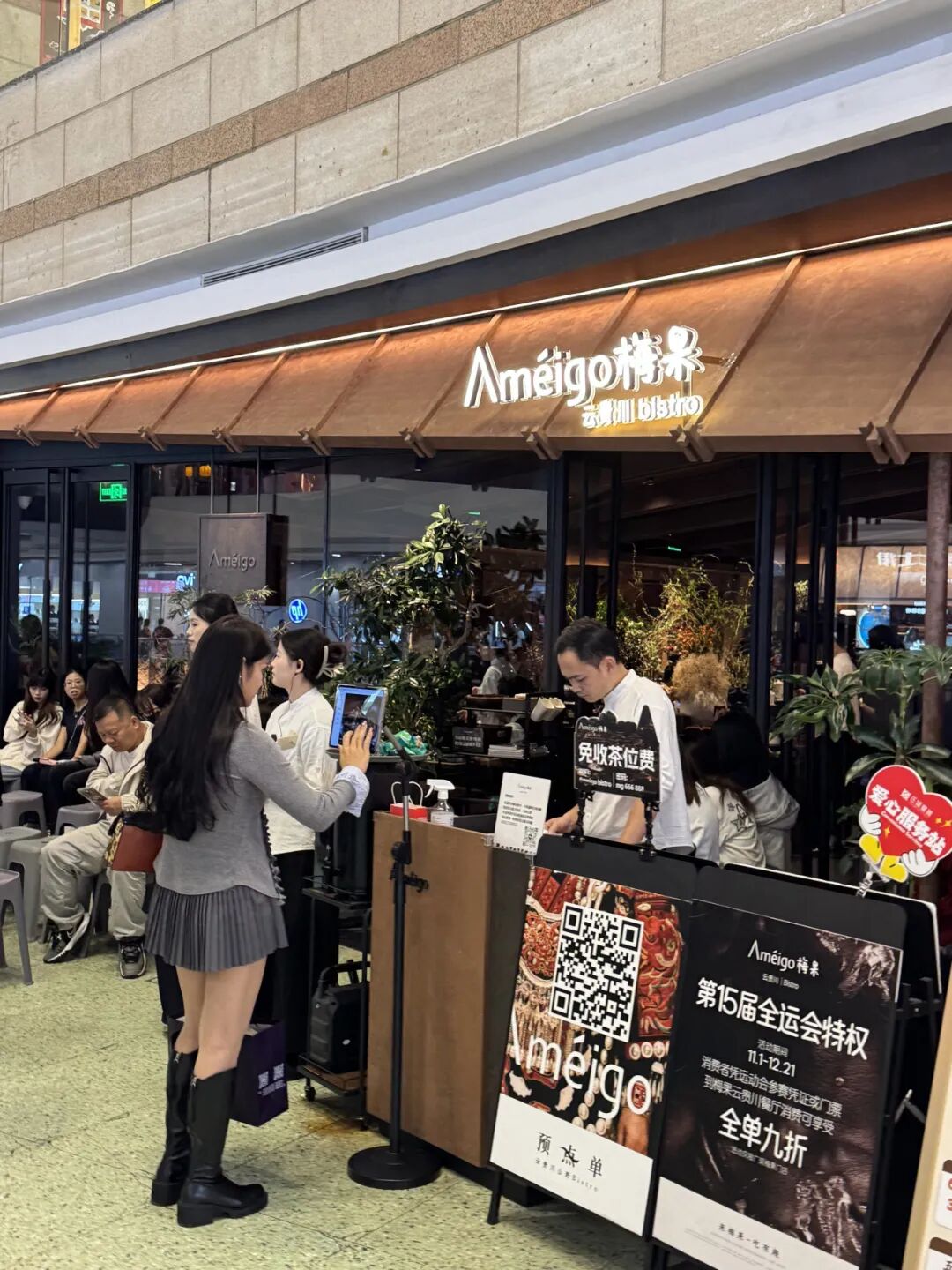
8元米线卖48元,有人排队3小时!人均上百的云贵川bistro为何让年轻人上头
2 1 Shi Ji Jing Ji Bao Dao· 2025-11-23 06:20
Core Insights - The rise of Yun-Guizhou-Sichuan bistro culture has captivated young consumers in major cities, leading to long queues and high demand for these dining experiences [1][3][5] - The pricing strategy of these bistros has sparked discussions on value perception, with significant markups compared to traditional local eateries [1][14] Group 1: Market Trends - The trend of Yun-Guizhou-Sichuan bistros is rapidly expanding, with notable presence in cities like Shanghai (35 locations), Beijing (22), and Guangzhou (14) [5] - Popular brands such as Ameigo have opened over 120 locations nationwide, indicating strong market penetration and consumer interest [5][6] - The bistro concept has transformed local cuisine into a nationwide dining trend, driven by social media and cultural influences [9][21] Group 2: Consumer Behavior - Young consumers are drawn to the emotional value and aesthetic appeal of these bistros, often prioritizing the dining experience over traditional taste [10][21] - The phenomenon of "emotional consumption" is evident, as consumers are willing to pay premium prices for the ambiance and presentation of dishes [10][21] Group 3: Product Innovation - Bistros are innovating traditional dishes by incorporating unique ingredients and presentation styles, moving away from conventional ethnic food perceptions [11][12] - The integration of local ingredients with modern culinary techniques has created a new dining experience that appeals to a broader audience [12] Group 4: Competitive Landscape - The market is facing challenges of homogenization, with many bistros offering similar menus and experiences, leading to consumer fatigue [20] - Established brands in the hot pot sector are entering the bistro space, intensifying competition and putting pressure on newer entrants [20][21] - The profitability of bistro brands is reportedly declining, with some founders acknowledging increased operational challenges [20][21]

8元米线卖48元,云贵川bistro为何让年轻人上头?
2 1 Shi Ji Jing Ji Bao Dao· 2025-11-23 02:13
Core Insights - The rise of "Yunnan-Guizhou-Sichuan bistro" has become a trend among young consumers in major cities, leading to long queues and high demand for these dining experiences [1][3][4] - The average spending at these bistros is significantly higher than traditional local restaurants, with some dishes marked up by as much as six times [1][10] - The popularity of these bistros is attributed to a combination of social media influence, innovative menu offerings, and a unique dining atmosphere that appeals to younger generations [6][7][8] Market Expansion - A rapid expansion of Yunnan-Guizhou-Sichuan bistros is observed in cities like Shanghai, Beijing, and Guangzhou, with a notable number of establishments opening in a short period [3][4] - Brands like Ameigo and Shanyeban have quickly established a strong presence, with Ameigo operating over 120 locations nationwide [4] Consumer Behavior - Young consumers are drawn to the emotional value and aesthetic appeal of the dining experience, often prioritizing the ambiance and presentation over traditional taste [7][8] - The trend is fueled by social media, where users share their experiences and promote the bistros, creating a sense of community and shared experience [6][7] Menu Innovation - The bistros are known for their creative reinterpretations of traditional dishes, incorporating unique ingredients and presentation styles that differentiate them from conventional offerings [8][9] - The use of high-quality, locally sourced ingredients is supported by a mature supply chain, ensuring freshness and authenticity [9] Competitive Landscape - The market is becoming increasingly competitive, with traditional hotpot brands entering the space, intensifying the pressure on new bistro brands [16] - Concerns about brand differentiation and consumer retention are emerging, as many bistros face challenges related to homogeneity in branding and menu offerings [16][17] Financial Viability - Some bistro founders have reported increasing difficulties in profitability, indicating a potential shift in market dynamics as initial novelty wears off [17] - The sustainability of the bistro trend may depend on balancing quality, pricing, and consumer expectations in a rapidly evolving market [17]
九毛九20250911
2025-09-11 14:33
Summary of the Conference Call for Jiumaojiu Company Overview - **Company**: Jiumaojiu - **Industry**: Restaurant and Food Service Key Points and Arguments Business Model and Performance - Jiumaojiu has launched a new model focusing on fresh ingredients, transitioning from a single dish (sour fish) to three signature dishes with a variety of hot dishes. As of July, 64 new model stores have been established, with a target of over 150 by the end of the year and full implementation by the end of 2026 [2][3][5] - The new model has shown a 10% year-on-year increase in revenue and a 15% increase in dine-in revenue for July and August, significantly outperforming the old model [2][5] - In the first half of 2025, the company reported a net profit of 61 million RMB, maintaining a net profit margin of 2.2%, consistent with the previous year [3][5] Store Optimization and Closure - The company is actively optimizing its store structure, planning to close 68 self-operated stores and 3 franchise stores in the first half of 2025, with an additional 40 to 50 closures expected in the second half [2][3] - These closures are anticipated to impact short-term revenue but are viewed as beneficial for long-term health [2][3] Supply Chain and Cost Management - The introduction of live fish delivery to stores has been implemented, with the supply chain focusing on vegetable cleaning, rough processing, and sauce preparation. The self-supply ratio of bass fish remains below 30% [2][9] - The new model has slightly reduced gross margins by 1-2 percentage points, but future gross margins are expected to stabilize around 64% [7][8] Consumer Trends and Market Positioning - The company has observed a shift in consumer demographics, with a decrease in young customers and an increase in family diners, leading to higher expectations for food quality and dining experience [4][11] - To adapt, Jiumaojiu is enhancing its fresh ingredient offerings and overall dining experience to meet these evolving consumer demands [4][11] Future Plans and Financial Outlook - The company aims to achieve over 18% operating profit margin per store and plans to complete the renovation of all stores by 2026, with a capital expenditure budget exceeding 300 million RMB [7][19][20] - Retail business revenue is projected to grow, with sales contributions expected to reach 110-120 million RMB in the first half of 2025 [16] Challenges and Strategic Adjustments - The company has decided to discontinue pre-packaged sour fish due to negative brand perception, with plans to reintroduce it after establishing a fresh concept across all stores [17][18] - The sour fish category is still expanding, and the company plans to enhance customer retention by diversifying its menu offerings [18] Conclusion - Jiumaojiu is undergoing significant transformation with a focus on fresh ingredients and improved customer experience, while strategically closing underperforming stores to strengthen its market position and profitability in the long term [2][3][4][5][11]