醇氢电动客车

Search documents
人民日报海外版:海口国家高新区“绿”意正浓
Ren Min Ri Bao Hai Wai Ban· 2026-01-22 03:08
Core Viewpoint - Haikou National High-tech Zone has been selected as the only national zero-carbon park in Hainan, aiming to create a model for zero-carbon development within five years, contributing to the province's low-carbon island initiative [2][4]. Group 1: Zero-Carbon Park Development - The Haikou National High-tech Zone will establish a zero-carbon park that aligns with the characteristics of Hainan Free Trade Port, serving as a demonstration area for low-carbon development [2]. - By 2030, the park aims to achieve an energy saving of 91,200 tons of standard coal per year and reduce total carbon emissions by 1,093,900 tons annually [3]. Group 2: Green Factory and Industry - The zone focuses on developing "green factories," which are characterized by land efficiency, harmless raw materials, clean production, resource recycling, and low-carbon energy [3]. - There are over a dozen green factories in the Haikou National High-tech Zone, with six recognized as national-level green factories [3]. Group 3: Innovation and Green Transition - The Haikou National High-tech Zone is promoting green park construction by leveraging innovative practices from frontline enterprises, particularly in the pharmaceutical sector, to create carbon reduction models [4]. - The zone has completed the renovation of 38 boiler sets from 2023 to 2024, resulting in a reduction of approximately 25 tons of carbon dioxide emissions annually [4]. Group 4: Energy Structure and Investment - The zone plans to optimize its energy supply structure by accelerating the development of solar, wind, and hydrogen energy projects, aiming for a 90% reduction in both total carbon emissions and intensity [4]. - There will be an increased focus on attracting investments in emerging industries such as green computing, hydrogen energy, and energy conservation [4][5].
汽车视点丨甲醇技术路线重构商用车绿色发展版图,加速进入主流市场
Xin Hua Cai Jing· 2026-01-21 03:53
Core Viewpoint - The methanol-based alcohol-hydrogen electric technology route is accelerating towards mainstream commercial vehicle markets due to its unique advantages, providing a new solution for overcoming the application bottlenecks of pure electric and hydrogen fuel cell technologies [1]. Group 1: Market Overview - China is the largest commercial vehicle market globally, with rapid development expected in electric, hydrogen fuel cell, and methanol technologies, driven by policies and both domestic and export demands [2]. - By 2025, domestic sales of commercial vehicles are projected to reach 3.237 million units, with 871,000 units being new energy commercial vehicles, resulting in a penetration rate of 26.9% [2]. - The penetration rate of new energy in commercial vehicles remains low compared to passenger vehicles, which have surpassed 50% [2]. Group 2: Challenges and Opportunities - The slow development of new energy in commercial vehicles is attributed to the limitations of existing technologies, which do not meet the specific needs of commercial vehicle usage scenarios [3]. - The alcohol-hydrogen electric technology route, centered on methanol, has shown practical and economic advantages in various regions, making it a viable solution for commercial vehicles [3][4]. Group 3: Technological Advantages - Alcohol-hydrogen electric vehicles combine methanol fuel engines with battery technology, allowing for operation across diverse conditions, from extreme cold to high temperatures [4]. - Compared to pure electric vehicles, alcohol-hydrogen electric vehicles offer stronger endurance, less impact from climate, efficient refueling, and lower infrastructure costs [5]. - The latest generation of alcohol-hydrogen power systems has achieved a thermal efficiency of 50.3%, with comprehensive energy costs reduced by 32%-52% compared to diesel vehicles [5]. Group 4: Infrastructure and Policy Support - Existing oil and gas infrastructure can be utilized for the low-cost transportation of liquid methanol, with conversion costs for existing gas stations to methanol refueling stations being significantly lower than building new hydrogen stations [6]. - The Chinese government has introduced over 70 policy documents to support the promotion of alcohol-hydrogen vehicles, indicating strong institutional backing for the methanol energy sector [8][9]. Group 5: Global Trends and Future Outlook - European car manufacturers are increasingly developing methanol as a vehicle fuel, with models expected to enter the market post-2035 [7]. - The global methanol industry is projected to expand significantly, with 414 ships confirmed to adopt methanol fuel by the end of 2025 [7]. - The integration of green hydrogen, ammonia, and methanol is becoming a crucial path for clean energy consumption and industrial innovation [10].
海口国家高新区“绿”意正浓
Ren Min Ri Bao· 2026-01-20 19:19
Core Viewpoint - Haikou National High-tech Zone has been selected as the only park in Hainan for the first batch of national zero-carbon park construction, aiming to create a model for low-carbon development in Hainan Free Trade Port by the end of 2025 [1] Group 1: Green Development Initiatives - Haikou National High-tech Zone focuses on enhancing ecological quality to drive high-quality development, emphasizing a "green" approach in its industrial development [2] - The park aims to achieve an energy saving of 91,200 tons of standard coal per year and reduce total carbon emissions by 1,093,900 tons annually by 2030 [2] - The zone hosts several "green factories," with 6 recognized as national-level green factories, promoting sustainable production practices [2] Group 2: Innovation and Transition - The transition from individual "green factories" to a "green park" ecosystem reflects a shift in production methods and development philosophy, with a focus on innovation and pollution reduction [3] - The park has completed the renovation of 38 boiler sets, reducing approximately 25 tons of CO2 emissions annually [3] - Haikou National High-tech Zone is committed to optimizing energy supply structures and expanding the coverage of renewable energy projects, aiming for a 90% reduction in both total carbon emissions and intensity [3] Group 3: Strategic Development Goals - The strategic focus is on building a green low-carbon industrial system, driven by biodegradable materials and the new energy vehicle industry [4] - The park is actively attracting investments in emerging industries such as green computing, hydrogen energy, and energy conservation [3] - Existing enterprises are encouraged to undergo green transformation and enhance their capabilities in green product research and development [3] Group 4: Future Outlook - Haikou National High-tech Zone is evolving into a stronghold of green development, fostering robust growth in sustainable initiatives [5]
100辆新能源客车大单签约!双方“掌门人”出席
第一商用车网· 2025-12-13 04:33
Core Viewpoint - The strategic cooperation between Yuan Cheng New Energy Commercial Vehicle Group and Beijing Xing Shun Da Passenger Transport Co., Ltd. marks a significant step towards the large-scale application of new energy vehicles in public transport, particularly focusing on hydrogen-electric buses and heavy-duty trucks [1][10]. Group 1: Strategic Cooperation - A strategic cooperation agreement was signed during the ceremony, which included the launch of the Yuan Cheng Star Interstellar New Energy Highway Bus U11E [3]. - The cooperation aims to deepen collaboration in green transportation across various scenarios, starting with the large-scale application of highway vehicles and extending to the forward-looking layout of heavy-duty trucks [10][13]. Group 2: Company Background - Beijing Xing Shun Da Passenger Transport has been dedicated to ground public transportation since its establishment in 1999, achieving nearly 100% electrification in its bus fleet [5]. - Yuan Cheng New Energy Commercial Vehicle is the first commercial vehicle brand in China to focus on the new energy sector and has completed the electrification of its entire product line, maintaining the top market share in the new energy commercial vehicle sector [7]. Group 3: Market Expansion - The cooperation includes an intention to purchase 100 hydrogen-electric buses, laying a solid foundation for future large-scale applications in the new energy bus sector [10]. - Both companies will work together to promote the market expansion and operational implementation of hydrogen-electric and pure electric heavy-duty trucks in regions such as Beijing and Tianjin [13][14]. Group 4: Future Outlook - Yuan Cheng New Energy Commercial Vehicle Group plans to continue driving innovation and open cooperation, aiming to create a new chapter in the zero-carbon transformation of the commercial vehicle industry with high-quality products and a comprehensive service ecosystem [16].

醇氢电动客车,北方寒区绿色出行新范式
Guo Ji Jin Rong Bao· 2025-10-31 08:21
Core Insights - The introduction of 300 methanol-hydrogen electric buses in Harbin aims to enhance public transportation services with green and intelligent designs [1] - The Heilongjiang Provincial Department of Industry and Information Technology has issued a draft policy to promote methanol vehicles, focusing on clean energy solutions suitable for cold regions [1] - Methanol-hydrogen electric buses are becoming a key driver for green transportation development in northern cold regions due to their operational stability and economic advantages [1] Group 1: Technology and Performance - Methanol-hydrogen electric buses have been developed to address the challenges of operating in cold climates, such as low-temperature performance and maintenance costs [2] - These buses utilize a unique methanol-hydrogen technology and a self-developed methanol engine, demonstrating stable performance even at temperatures as low as -25°C, with a range exceeding 600 kilometers [2] - The refueling time for these buses is only 7-10 minutes, significantly improving operational efficiency in cold regions [2] Group 2: Economic Benefits - The operational data indicates that methanol-hydrogen electric buses save approximately 0.2 yuan per kilometer compared to pure electric buses, leading to significant cost savings over their lifecycle [3] - A single bus can save around 180,000 yuan in operating costs over an 8-year lifespan, showcasing excellent energy-saving performance [3] - The market for methanol-hydrogen electric buses is expanding, with over 1,700 units deployed across multiple cities, reflecting strong customer demand and brand growth [3] Group 3: Market Position and Future Outlook - The competitive landscape for new energy buses is intensifying, with the company achieving a market share of 10.5% and ranking second in the industry with 532 units registered in September [3] - The ongoing implementation of China's "dual carbon" strategy is expected to further enhance the application prospects for methanol-hydrogen electric buses, positioning them as essential for the green transformation of public transportation [3]
吉利旗下300台醇氢电动客车在哈尔滨上线,最快7分钟可补能
Bei Ke Cai Jing· 2025-10-31 03:24
Core Insights - The article reports that Geely Group has launched 300 methanol-hydrogen electric buses in Harbin, covering multiple routes [1][3] - The buses utilize a pioneering methanol-hydrogen electric technology with a self-developed methanol engine, significantly reducing fuel costs compared to diesel buses [1] - In extreme cold conditions of -25°C, the buses maintain a range of over 600 kilometers, which is more than double that of pure electric buses under similar conditions, with a refueling time of only 7-10 minutes [1] Cost Efficiency - Operational data indicates that the new bus model saves an additional 0.2 yuan per kilometer compared to pure electric buses [3] - Over an 8-year lifecycle, each bus can accumulate savings of approximately 180,000 yuan in operating costs, showcasing excellent energy-saving performance [3]

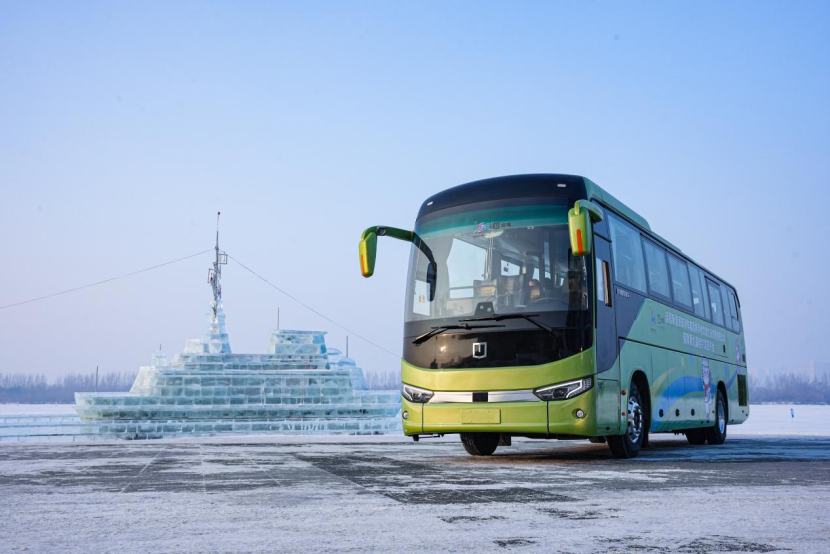
270辆订单!远程醇氢产品内蒙古正式下线
第一商用车网· 2025-08-10 13:28
Core Viewpoint - The launch of methanol-hydrogen electric vehicles in Hohhot marks a significant step in promoting the methanol ecological strategy, addressing the challenges of traditional electric vehicles in cold climates and leveraging local resource advantages [1][4][5]. Group 1: Industry Context - Inner Mongolia, known as the "Coal Sea of the North," has a high potential for methanol production, which can effectively address the challenges of new energy vehicle adoption in cold regions [4][10]. - In the first half of the year, China's new energy commercial vehicle sales reached 378,000 units, a year-on-year increase of 55%, with a penetration rate rising from 15.7% to 22.8%, while Inner Mongolia's penetration rate was only 9.8% [4]. Group 2: Company Initiatives - In 2024, a cooperation agreement was signed between the company and the Hohhot government to promote methanol electric commercial vehicles, aiming for a green and low-carbon transformation in transportation [5][14]. - The plan includes promoting 4,000 methanol vehicles and establishing over 50 refueling stations by the end of 2026, with the cost of converting existing gas stations to methanol refueling stations being significantly lower than building hydrogen or fast-charging stations [5][10]. Group 3: Product Advantages - Methanol-hydrogen electric vehicles combine liquid methanol with efficient range extenders, overcoming the limitations of pure electric vehicles in terms of range and performance in low temperatures [8][10]. - Compared to Euro VI diesel vehicles, methanol-hydrogen electric vehicles reduce PM emissions by 98%, carbon monoxide by 88%, and nitrogen oxides by 82%, while fuel costs decrease by 32%-45% [10][12]. - The vehicles can operate efficiently in extreme cold, maintaining stability at temperatures as low as -25°C, and have been validated for reliability in high-frequency operations during winter [10][12]. Group 4: Future Outlook - The company plans to leverage its technological and industrial advantages to accelerate the development of the methanol-hydrogen electric liquid energy industry in Inner Mongolia, contributing to high-quality development in the new energy sector [14].