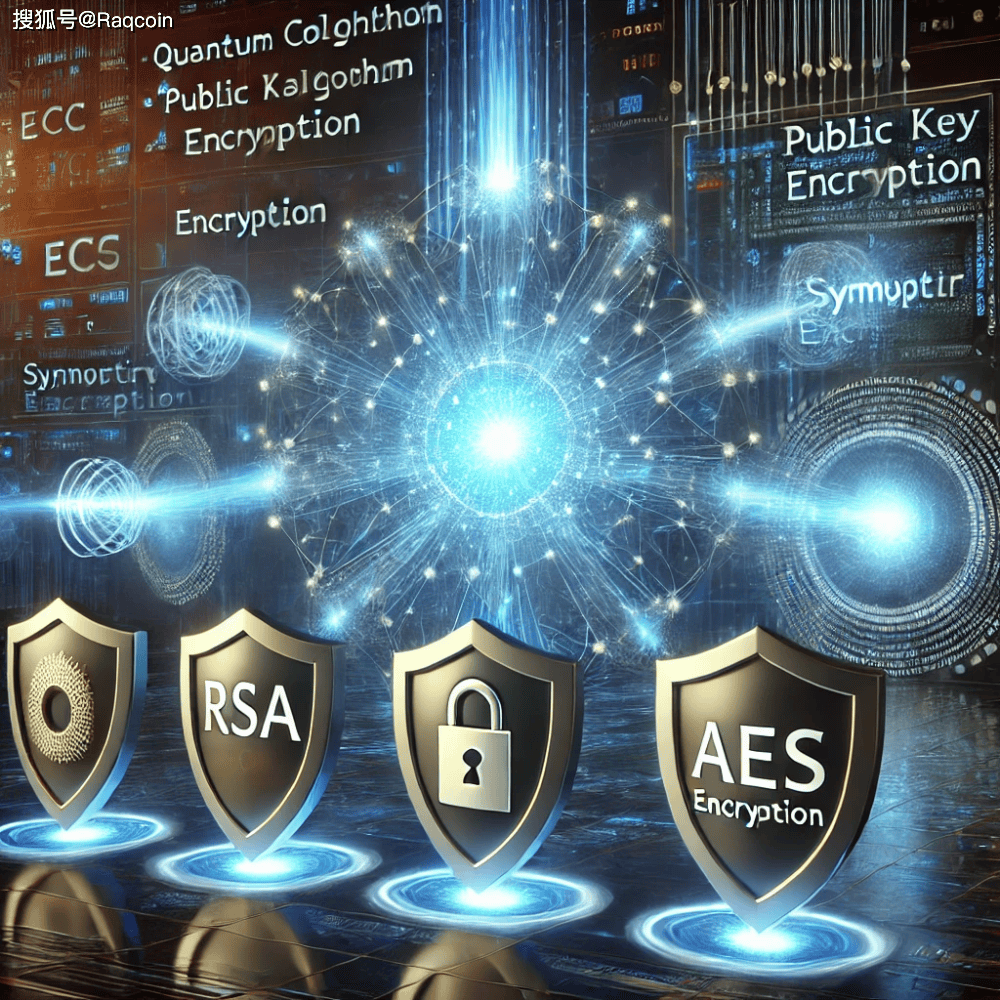
量子密钥分发(QKD)

Search documents
2026量子科技产业发展前景、产业链布局、中美竞争现状及相关标的分析报告
欧米伽未来研究所2025· 2026-03-24 15:57
Core Insights - Quantum technology is transitioning from laboratory research to industrial applications, with the global quantum industry expected to reach $97 billion by 2035 and potentially exceed $198 billion by 2040 [1] - Quantum computing is identified as the most valuable segment in the long term, while quantum communication and quantum measurement are leading in commercial deployment [1] Group 1: Quantum Technology Segments - The report outlines three core areas of quantum technology: quantum computing, quantum communication, and quantum precision measurement, each with distinct technological logic, industry structure, and market prospects [2] - Quantum computing is projected to create global value between $28 billion and $72 billion by 2035, with optimistic estimates suggesting a rise from approximately $5 billion in 2024 to nearly $220 billion by 2030, potentially reaching about $807.8 billion by 2035 [2][3] - Quantum communication is advancing more rapidly, with the global quantum key distribution (QKD) market expected to exceed $7.5 billion by 2030, and the quantum random number generator (QRNG) market projected to grow from $0.8 million in 2023 to over $3 billion by 2030, reflecting a compound annual growth rate (CAGR) of 71% [4] - The quantum precision measurement market is smaller but is expected to reach nearly $4 billion by 2035, with a CAGR of about 8% from 2023 to 2035 [4] Group 2: US-China Competition - The report analyzes the competitive landscape between the US and China in quantum technology, highlighting structural differences and rapid convergence [6] - In quantum communication, China holds a 38% share of global research output compared to the US's 13%, while the US leads in quantum computing patents with a 49.34% share [6][7] - China faces a "bottleneck" risk in the upstream core equipment for quantum computing, particularly in dilution refrigerators, which are essential for maintaining the ultra-low temperatures required for quantum computing [7] Group 3: Policy and Investment Landscape - The report emphasizes the importance of global policy competition in quantum technology, which has become a core issue of national security and strategic competition [8] - The US has invested approximately $7 billion in quantum technology, while other countries like the UK, South Korea, and India are also increasing their investments [8][9] - China's government investment in quantum technology is approximately $11.18 billion, the highest globally, with a strategic focus on enhancing public investment and financing efficiency [9] Group 4: Future Outlook - The report concludes that quantum technology is at a critical juncture, transitioning from theoretical principles to practical applications, with significant implications for market dynamics [10] - The anticipated performance breakthrough in quantum computing around 2027-2028 could reshape the industry landscape, while quantum communication and measurement are already finding commercial applications in high-security sectors [10]


未知机构:中泰机械量子科技系列在不确定性中超越未来1量子科技行业-20260228
未知机构· 2026-02-28 02:30
Summary of Quantum Technology Industry Conference Call Industry Overview and Growth Expectations - **Industry Positioning and Growth Rate**: The quantum technology industry is positioned as a future industry, with a significant catalytic year expected in 2026. The annual compound growth rate from 2025 to 2035 is projected to reach 70% to 80%, indicating a doubling in size each year. The commercialization window is anticipated to be within the next 5-10 years [1][1][1] - **National Strategy and International Competition**: Quantum technology is recognized as a strategic industry by national policies, with ongoing competition among the US, EU, and China. The 14th Five-Year Plan elevates the development of the quantum industry, focusing on enhancing public investment and social financing efficiency to catch up. In the first three quarters of 2025, US quantum companies raised over $4 billion, while China's social financing was less than one-tenth of that amount, primarily relying on public industrial investment [1][1][1] Quantum Communication and Security Technology - **Technical Features and Implementation**: The core value of quantum communication lies in its security, relying on quantum state measurement collapse and the no-cloning theorem. Currently, the industry is focused on Quantum Key Distribution (QKD), which transmits keys via quantum channels and messages via classical channels, enhancing security levels. Domestic company GuoAn Quantum has already implemented this in some backbone and local networks [2][2][2] - **Derivative Technology Pathways**: QKD serves as a temporary solution, while Post-Quantum Cryptography (PQC) is a new encryption system based on classical computing that needs to be advanced before large-scale quantum computing is realized. This involves system modifications and multi-party collaboration, currently in the standardization and verification phase, with varying technology quality [2][2][2] - **Industry Leadership Attributes**: Quantum communication security is the first area where quantum technology is being applied, driven by high-security demands in military and defense as well as industry cultivation [2][2][2] Quantum Computing Industry - **Technical Route Landscape**: Quantum computing is exploring four main technical routes: superconducting, ion trap, photonic, and neutral atom, with no mature quantum computers yet. The superconducting route is the most developed, relying on semiconductor micro-nano processing technology, while ion trap and photonic routes have some industrial chain foundations. The neutral atom route has seen rapid development in the past 2-3 years, driven by the US [2][2][2] Key Industry Components - **Dilution Refrigerators**: A core supporting device for the superconducting route, with the US banning exports to China after 2023. Domestic company Liangqi Technology has achieved breakthroughs, with revenues of 70 million yuan in the first half of 2025 and an expected net profit of over 50 million yuan, holding a 31% market share. The global market is approximately $500 million, with potential to reach $10 billion by 2030 if the superconducting route explodes [3][3][3] - **Superconducting Quantum Chips**: Manufacturing relies on electron beam lithography and other equipment, with low material costs but high R&D and maintenance costs. If the superconducting route becomes central, the market size could exceed $10 billion by 2030 [3][3][3] - **Low-Temperature Cables**: These connect ultra-low temperature chips with room temperature control systems, accounting for 8%-10% of total costs, and are a critical component of quantum computers [4][4][4] Commercialization Timeline - **General Quantum Computer Commercialization**: The commercialization window for general quantum computers is expected within the next 5-10 years, with 2030 being a crucial milestone. Companies like IBM and Google plan to deliver quantum computers with general computing capabilities by 2029-2030, supporting experimental quantum error correction and some commercial scenarios. Domestic superconducting manufacturers are slightly behind the US but are expected to catch up within the same timeline [4][4][4] - **Specialized Quantum Computers**: Key players include D-Wave internationally and Boson Quantum domestically (planning to go public in 2026), focusing on combinatorial optimization problems with lower preparation difficulty and better application realization than general machines. The global market for specialized quantum computers is expected to reach over $10 billion by 2027 [4][4][4] Quantum Technology Ecosystem and Policies - **China-US Industry Ecosystem Gap**: China has comparable technology to the US (with some indicators even superior), but there is a significant gap in industrialization and application ecosystems. The US is industry-led, with major companies and startups forming a closed loop through early investments. In contrast, China has relied on policy leadership, with major companies like Alibaba and Baidu retreating due to sanction concerns, primarily driven by national key laboratories [5][5][5] - **14th Five-Year Policy Direction**: The core goal is to promote industrialization, focusing on hardware manufacturing capabilities and foundational application realization. Policies emphasize simultaneous advancement of upstream industrial chain development and downstream enterprise application layout, exploring scenarios. Local governments execute differentiated strategies, with regions like Beijing, Anhui, and Guangdong fostering industrialization while weaker areas focus on research [5][5][5] Key Companies and Investment Directions - **Quantum Communication and Security**: Keda GuoAn Quantum is a global leader in quantum communication equipment manufacturing and security solutions, turning profitable last year. They provide integrated secure communication networks and deliver superconducting quantum computers and core components to research clients, participating in subsequent research projects [6][6][6] - **Quantum Measurement and Hardware**: - Hexin Instruments plans to acquire a 56% stake in Liangqi Technology, a core supplier of domestic dilution refrigerators (holding a 31% market share) [6][6][6] - Guangdian Measurement collaborates with GuoAn Quantum to establish a joint laboratory for quantum precision measurement, along with the Shenzhen Innovation Institute of the China Metrology Institute to create a quantum precision measurement service platform in the Guangdong-Hong Kong-Macao Greater Bay Area [6][6][6] - **Investment Layouts**: - CIMC Vehicles indirectly invests in Liangxuan Technology through the Shenzhen Bay Angel Phase III Fund, which completed C-round financing and successfully delivered superconducting systems overseas in early 2020 [6][6][6] - Jinka Intelligent indirectly holds less than 1% of Guokexin Quantum Communication Company with an investment of 50 million yuan, exploring applications in government affairs and finance, as well as quantum encryption for IoT and big data [6][6][6] - **Undiscovered Niche Directions**: - Precision instruments and measurement testing equipment, such as Puyuan Precision's quantum computing microwave measurement and control systems, and vacuum environment/sample pretreatment equipment from companies like Zhu Guang Technology and Xuedilong [7][7][7] - Optical components and laser equipment from companies like Yongxin Optical, Fujing Technology, and Huagong Technology, which are core supports for photonic/ion trap routes [7][7][7] - Refrigeration, vacuum, and low-temperature equipment from companies like Western Superconducting's low-temperature cables [7][7][7] - Semiconductor/precision processing equipment from companies like Jingce Electronics and Zhongwei Company, which support superconducting quantum chip equipment [7][7][7]
量子技术将深刻影响人类日常生活
Ke Ji Ri Bao· 2026-02-24 00:45
Core Insights - Quantum technology is transitioning from theoretical concepts to practical applications, with IBM launching two new quantum computers and Denmark planning to build the world's most powerful commercial quantum computer [1] Group 1: Impact on Medicine and Materials - Quantum computers can explore vast molecular combinations for drug discovery and material science, enabling faster identification of new drugs and innovative materials [2] - The ability of quantum bits to exist in multiple states allows for parallel exploration of possibilities, surpassing the limitations of classical computing [2] Group 2: Quantum Sensors - Quantum sensors can detect minute changes in the environment, such as gravitational fluctuations and trace pollutants, enhancing navigation and medical diagnostics [4] - These sensors can provide early warnings for seismic activities and improve the detection of contaminants in air and water [4] Group 3: Optimization in Logistics and Finance - Quantum algorithms can quickly identify optimal solutions in complex logistical and financial scenarios, improving efficiency in various sectors [6] - Future applications include real-time route adjustments for logistics, automatic flight reconfigurations, and precise energy matching [6] Group 4: Secure Communication - Quantum communication, particularly Quantum Key Distribution (QKD), offers fundamentally secure solutions against eavesdropping, ensuring the safety of sensitive information [8] - This technology is crucial for protecting financial transactions, personal health records, and government secrets [8] Group 5: Advancements in Artificial Intelligence - Quantum computing has the potential to overcome current limitations in AI by accelerating machine learning and optimizing neural networks [9] - This could lead to more sophisticated AI applications, such as personalized medical treatments and advanced scientific research [9] Group 6: Strategic Importance of Quantum Technology - Global investments in quantum technology are significant, with countries and companies viewing it as a strategic asset that will reshape various sectors, including education and governance [10] - The ongoing development and testing of quantum prototypes indicate a shift towards practical implementation in the near future [10]

顶尖科学家建言中国量子发展:鼓励年轻学者好奇心驱动研究
Di Yi Cai Jing· 2025-09-22 09:28
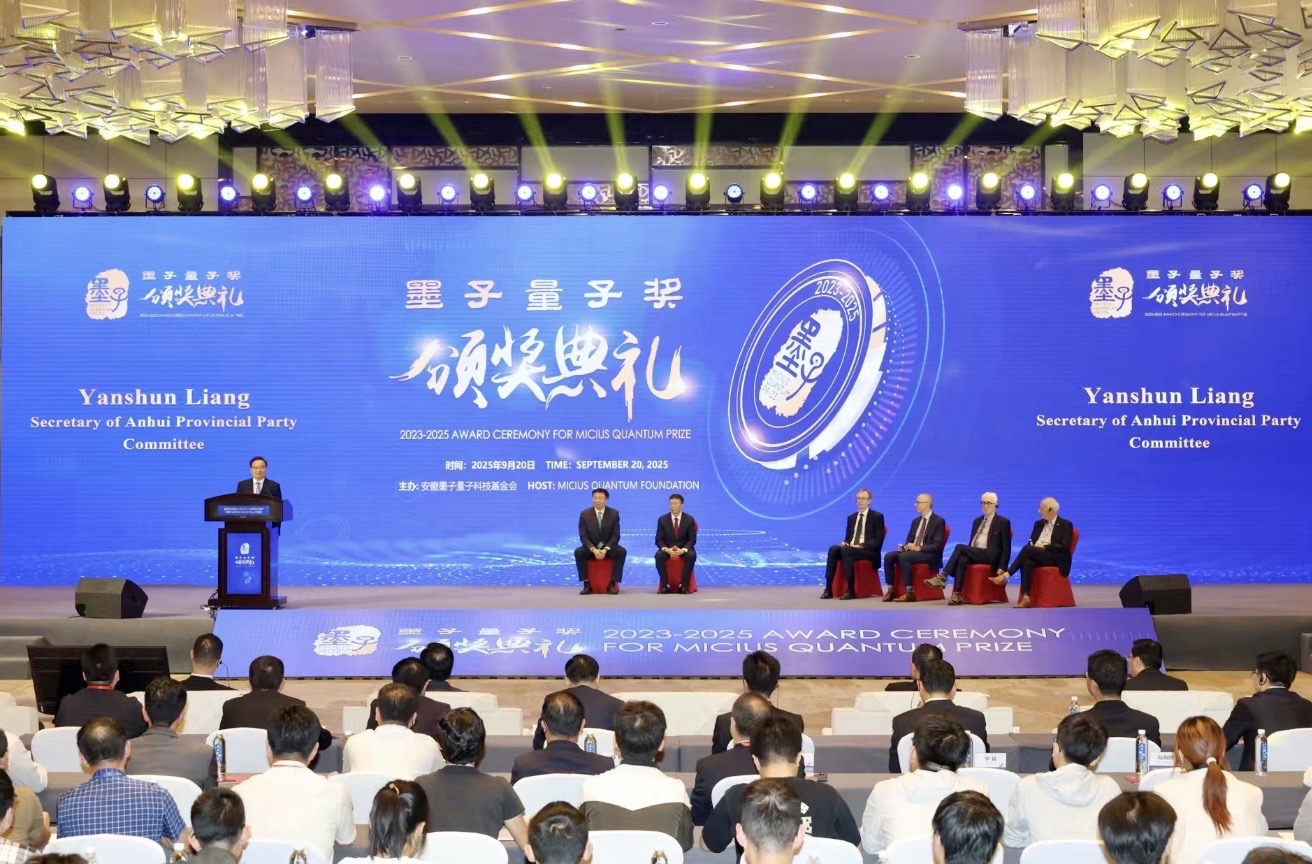
Group 1 - The third International Conference on Emerging Quantum Technologies highlighted China's leading position in quantum technology development, with experts discussing advancements and awarding the "Mozi Quantum Prize" [1][3] - The A-share quantum technology sector saw significant gains, with Guoshun Quantum (688027.SH) rising by 4.4%, Keda Guokong (300520.SZ) increasing by 3.7%, and Shenzhou Information (000555.SZ) up by 2.5% [1] Group 2 - The "Mozi Quantum Prize" for 2025 was awarded to three scientists in the field of quantum simulation, recognizing their contributions to the advancement of quantum science [3] - China's quantum communication capabilities have been demonstrated with the establishment of a 300-kilometer quantum direct communication network, showcasing the feasibility of long-distance secure communication [4] Group 3 - The development of the "Zuchongzhi No. 3" quantum computing prototype has set a new record in superconducting quantum computing, further establishing China's competitive edge in this area [4] - The National Natural Science Foundation of China has launched a major research plan with funding up to 7 million yuan for projects aimed at advancing quantum information science [6]
2025年未来网络发展大会:量子互联网与算网协同体系架构白皮书
Sou Hu Cai Jing· 2025-08-25 08:29
Quantum Internet Overview - The white paper outlines the technical foundation, architecture design, key technologies, and the synergy between quantum computing and networking, providing a reference for the engineering realization of quantum internet [1][24]. - Quantum internet is defined as a network connecting quantum nodes to support applications that classical internet cannot achieve, currently in its early stages with immature hardware and software [4][24]. Quantum Information Technology Basics - Core concepts include quantum mechanics principles such as superposition, entanglement, quantum operations, and quantum measurement, which are essential for quantum computing and communication [1][2]. - Quantum state evolution follows the Schrödinger equation, providing theoretical support for quantum computing and communication [1]. Typical Quantum Applications - Quantum communication includes quantum key distribution (QKD), quantum teleportation, and quantum secure direct communication (QSDC), ensuring secure information transfer [2][51]. - Quantum computing utilizes quantum superposition for parallel computation, currently in the Noisy Intermediate-Scale Quantum (NISQ) stage, with key algorithms like Shor's and Grover's [2][65]. - Quantum precision measurement aims to surpass the standard quantum limit, with applications in global quantum clock networks and long-baseline telescopes [2]. Quantum Internet Architecture and Key Technologies - The architecture of quantum internet is still developing, with various stages proposed by researchers, including trusted relay and entanglement distribution [4]. - Quantum relay technology is categorized into four generations, addressing long-distance quantum signal attenuation [5][6]. Quantum Internet Protocol Stack - Different research teams propose varied protocol stacks, adapting classic internet architecture to quantum needs, with layers for physical, link, network, and application [7]. Initial Quantum Internet Operation Mode Design - A centralized control scheme is proposed for initial quantum devices, focusing on network layout and node types to manage limited resources effectively [9][10]. Quantum Application Protocol Examples - The BBM92 protocol for quantum key distribution involves a process of path selection, entanglement channel construction, and security checks to generate a secure key [12][13]. - Distributed quantum computing connects multiple quantum processors through entangled channels, overcoming limitations of single-chip systems [14]. Quantum Computing and Networking Synergy - The trend towards quantum cloud computing and integration with supercomputing highlights the need for resource modeling and scheduling frameworks to optimize quantum and classical resource allocation [15][16]. - The necessity for collaboration arises from high fidelity requirements and short coherence times in quantum applications, demanding precise communication timing [16]. Summary and Outlook - The current stage of quantum internet development faces challenges in practical quantum relay and data exchange technologies, with potential cost reductions through the reuse of classical internet infrastructure [18]. - Future directions include breakthroughs in quantum relay and error correction, as well as the development of a resource modeling and scheduling system to support large-scale quantum applications [19].
量子算力跨越临界点
2025-06-19 09:46
Summary of Quantum Computing and Communication Conference Call Industry Overview - The conference focused on the **quantum computing** and **quantum communication** industries, highlighting their current status, challenges, and future potential [1][2][16]. Key Points and Arguments Quantum Computing - **Quantum Computing Basics**: Quantum computing utilizes quantum bits (qubits) that can exist in multiple states simultaneously, allowing for exponential speedup in specific algorithms compared to classical computing [5][14]. - **Current Technologies**: The main technologies in quantum computing include: - **Superconducting**: Used by companies like Google and IBM, known for high gate fidelity and long coherence times [6]. - **Trapped Ions**: Represented by companies like INQ, offering higher fidelity but facing scalability challenges [6]. - **Neutral Atom Optical Tweezers**: Lower environmental requirements but longer operation times [6]. - **Industry Stage**: The quantum computing industry is still in its early stages, primarily serving the education and research markets, with potential applications in materials, chemicals, biomedicine, and finance [1][21]. Quantum Communication - **Key Technologies**: Quantum communication includes: - **Quantum Key Distribution (QKD)**: Ensures secure key distribution using quantum properties, making interception detectable [9][33]. - **Quantum Teleportation**: Transfers quantum states using entangled particles, with significant implications for future information transmission [10]. - **Advantages**: Quantum communication offers enhanced security due to its fundamental properties, although it still relies on classical channels for information transmission [15]. Challenges and Development - **Key Issues**: The development of quantum computing faces challenges such as: - Environmental noise affecting qubits [17]. - The need for quantum error correction to achieve fault-tolerant quantum computing [4][53]. - Weak upstream supply chains, particularly for dilution refrigerants [17][18]. - **Measurement Systems**: Current measurement systems require optimization for low-temperature environments, and specialized equipment is needed for effective quantum control [19]. Market and Future Outlook - **Market Applications**: The primary market for quantum technologies is currently in education and research, but significant potential exists in materials science, biomedicine, and finance due to their complex computational needs [21][28]. - **Future Projections**: By 2025-2030, specialized quantum computers for optimization problems are expected to emerge, with general-purpose quantum computers gradually becoming more prevalent [23]. - **Technological Maturity**: Technologies like quantum key distribution and quantum random number generators are nearing practical application, particularly in high-security sectors [24]. Notable Companies and Developments - **Leading Companies**: Key players in the quantum computing space include IBM, Google, and IONQ, with significant advancements in superconducting and trapped ion technologies [30][32]. - **Investment Trends**: The potential for breakthroughs in quantum technology could lead to significant shifts in funding towards successful companies, particularly if major milestones are achieved [46]. Additional Important Content - **Quantum Measurement**: Quantum measurement technologies are advancing rapidly, with applications in military and research fields [27]. - **Economic Challenges**: Each technology route faces unique economic challenges, and the lack of a decisive breakthrough currently prevents a clear funding shift [46]. - **Security and Commercial Value**: Enhancing security through quantum technologies can create commercial value, particularly in sectors requiring high security [47]. This summary encapsulates the key insights from the conference call, providing a comprehensive overview of the quantum computing and communication landscape, its challenges, and future opportunities.
量子计算机破解比特币椭圆曲线ECC研究
Sou Hu Cai Jing· 2025-05-12 16:34
Core Perspective - The article discusses the dual nature of quantum computing as both a threat to existing cryptographic systems, particularly in blockchain technology, and an opportunity to enhance security for Advanced Air Mobility (AAM) systems [1][2]. Group 1: Understanding Cryptography and Its Vulnerabilities - Cryptographic systems are essential for securing online banking, communications, and blockchain technologies, relying on public-key cryptography, symmetric key encryption, and hashing algorithms [3]. - Public-Key Cryptography includes algorithms like RSA, ECC, and DSA, which secure data exchange and digital signatures [3]. - Symmetric Key Encryption, such as AES, protects data at rest or in transit [3]. - Hashing Algorithms like SHA-256 ensure data integrity and are critical for blockchain technology [3]. Group 2: Key Threats Posed by Quantum Computing - Quantum computing poses significant threats to traditional cryptographic systems by utilizing phenomena like superposition and entanglement [5]. - RSA and ECC are particularly vulnerable to Shor's Algorithm, which can break these systems, while AES's security can be reduced by Grover's Algorithm [6]. - SHA-256's collision resistance is also at risk, with quantum computing speeding up collision detection [6]. Group 3: Bitcoin and Blockchain Security - Bitcoin's security relies on public-private key pairs, and Shor's Algorithm could allow quantum computers to derive private keys from public keys, enabling attackers to forge signatures and steal funds [7]. - Mining operations depend on solving hash problems, and Grover's Algorithm could allow quantum miners to outperform classical miners, threatening network integrity [8]. - Quantum computers could facilitate double spending attacks by allowing attackers to rewrite portions of the blockchain [11]. Group 4: Quantum-Resistant Solutions - The aviation industry must adopt quantum-resistant blockchain technologies to counter the threats posed by quantum computing [17]. - Key solutions include lattice-based algorithms, hash-based algorithms, and quantum key distribution (QKD) to ensure secure communication [18]. Group 5: Blockchain Vulnerabilities in the Context of AAM - Blockchain is proposed as a secure solution for managing AAM systems, but quantum threats to blockchain security are particularly concerning due to aviation safety and operational reliability [21][22]. - Potential failures in AAM include hacked flight operations, manipulated maintenance logs, and passenger data breaches [22]. Group 6: Navigating the Quantum Horizon for AAM Security - The industry is at a critical juncture where quantum computing presents both challenges and opportunities for innovation in securing AAM systems [23][24]. - Adapting quickly to quantum threats will be essential for the success of AAM systems, transforming vulnerabilities into strengths [24][25].